
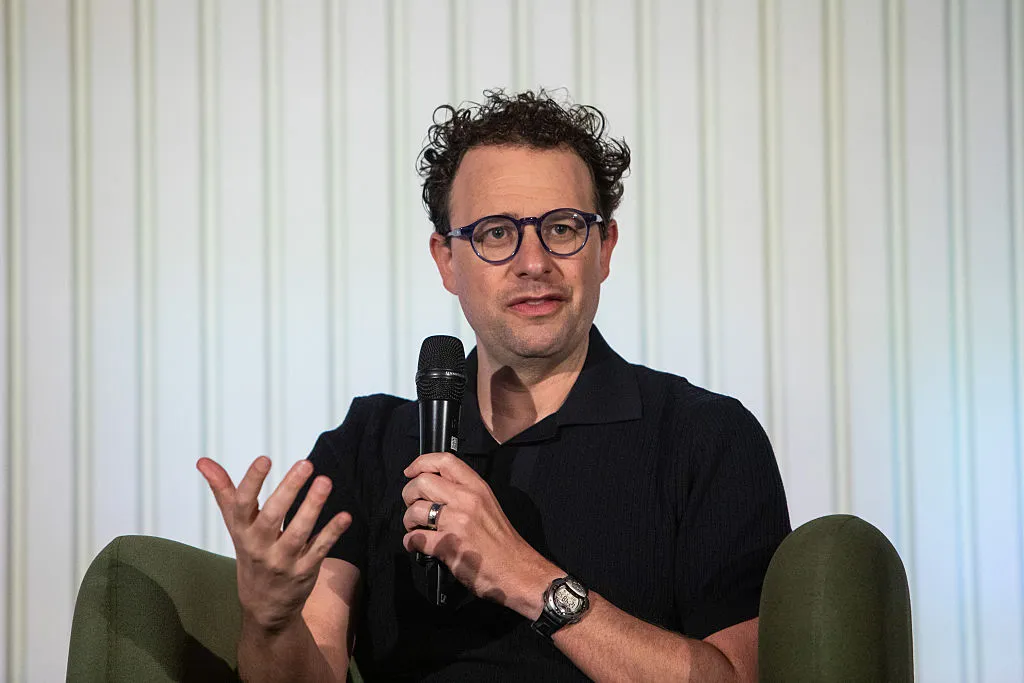
Anthropic CEO Dario Amodei recently pushed back against the idea that he’s been painting an overly pessimistic picture of artificial intelligence and how it might shape the future.
Key Takeaways
- Balanced Perspective:Anthropic CEO Dario Amodei refutes claims of overly negative AI messaging, asserting his public statements consistently balance both the significant risks and transformative benefits of artificial intelligence.
- Trust Crisis, Not Messaging Flaw:Amodei posits that public skepticism towards AI stems not primarily from AI leaders’ warnings, but from a broader, decades-long “crisis of trust” in corporations, governments, and the tech industry at large.
- Strategic Regulation for Equity:He defends Anthropic’s advocacy for AI regulation, framing it as a necessary tool to counteract AI’s inherent power-concentrating tendencies and to foster a more level playing field for smaller competitors, rather than a path to regulatory capture.
Dario Amodei Pushes Back: Rethinking AI’s Public Narrative, Trust, and Regulation
In the rapidly evolving discourse surrounding artificial intelligence, Anthropic CEO Dario Amodei has found himself at the center of a debate concerning the tone and impact of his public messaging. Recently, Amodei directly addressed accusations that he has contributed to a negative perception of AI, vigorously defending his approach as balanced and realistic, rather than overly pessimistic.
The catalyst for this renewed discussion came from investor Gavin Baker. Baker, voicing his opinions on the All-In podcast and social media platform X, contended that Amodei’s frequent warnings about the potential dangers of AI have inadvertently fueled a backlash, particularly within the United States, against critical infrastructure like data centers. Baker went so far as to claim that Amodei has “lost the argument” on AI regulation – a policy area where Anthropic has advocated for measures like a California bill imposing transparency requirements on large AI companies. Given Amodei’s position at the helm of “one of the most important companies in the world,” Baker respectfully suggested he should strive to be “a more positive advocate for his own industry.”
Beyond Doom & Gloom: Amodei’s Defense of Balanced Communication
Baker’s perspective is not isolated; many observers suggest that a natural response to dire warnings from some AI executives is increased skepticism and even calls for government intervention. However, Amodei strongly disagrees with the notion that his “messaging has been disproportionately negative.” In a detailed post, he clarified his stance, stating that his writing has been “about equally balanced between risks and benefits.” To underscore this point, Amodei referenced his essay “Machines of Loving Grace,” which he penned specifically because he felt “the AI industry was painting an inspiring enough picture of how the technology could radically transform the world for the better.” This essay, he argues, serves as a testament to his commitment to showcasing AI’s positive potential alongside its challenges.
While Amodei rejected the premise of his own negativity, he readily acknowledged a significant challenge: “the public has a negative view of AI,” and he agreed that “this is a big problem.” Yet, his divergence from Baker’s viewpoint lay squarely in the attribution of this negativity. Amodei contended that it is not “primarily caused” by his or any other AI leader’s warnings about risks. Instead, he painted a broader, more systemic picture.
The Root Cause: A Decades-Old Crisis of Trust
Amodei attributed public apprehension to a much deeper issue: “I think it is fundamentally a crisis of trust,” he asserted. “I think that ordinary people don’t trust companies, governments, or the tech industry and always suspect that we are cooking up some new way to screw them over.” This sentiment resonates across various sectors, often surfacing in discussions around other prominent tech figures, including OpenAI CEO Sam Altman. Amodei frames the current AI backlash not as a new phenomenon but as “just the latest iteration” of a crisis that has been decades in the making, born from a consistent pattern of unfulfilled promises and perceived corporate self-interest.
For Amodei, the most legitimate criticism against AI companies, including Anthropic, isn’t about their messaging, but about their performance. “I think by far the most accurate criticism of AI companies including Anthropic is that we haven’t yet delivered on our big promises to benefit the world,” he stated unequivocally. “That is totally on us, and I think it’s the criticism you should be making, instead of all this stuff about messaging and marketing.” He distilled this perspective into a powerful analogy: merely promising that AI will “cure cancer” has become “more a cliche than it is inspiring.” What would truly shift public opinion, Amodei argues, is “actually curing cancer” – tangible, demonstrable benefits that profoundly impact people’s lives.
Regulation: A Tool for Equity, Not Just Control
Turning to the contentious topic of regulation, Amodei challenged Baker’s framing of a “false choice” between widely distributing AI without regulation versus concentrating the technology through regulatory measures. He critiqued what he called the “Silicon Valley shorthand where regulation=regulatory capture=concentration of power,” dismissing it as an “overly simplified picture of the world.” Amodei highlighted that outside this tech bubble, many perceive regulation as a mechanism to constrain corporate power and benefit ordinary citizens – a perspective he acknowledges without fully endorsing himself, but recognizes as valid in public discourse.
This nuanced understanding underpins Anthropic’s cautious approach to policy proposals. “We try very hard to make proposals that disadvantage (slow down) frontier AI companies while *advantaging* smaller competitors,” Amodei explained. This strategic intent is crucial. Why advocate for such measures at all? Amodei believes that “AI is *structurally* a technology that tends to concentrate power.” While open-weights models offer some decentralizing potential, he asserts they are “nowhere near a sufficient solution because they simply shift the concentration somewhat to those with the most compute and chip.”
Therefore, for Amodei, well-crafted “rules of the road” serve multiple critical functions simultaneously. They can, firstly, “address AI’s cyber/bio/alignment risks.” Secondly, they can “institutionally constrain the power of the frontier AI companies.” And thirdly, they can “leave room for open-weights models while also addressing the specific risks that they bring.” This comprehensive view positions regulation not as an impediment to progress, but as an essential framework for ensuring AI’s development is safe, equitable, and ultimately serves the broader public good.
This post has been updated to include more quotes from Amodei’s posts, including those around open weights.
Bottom Line
Dario Amodei’s robust defense shifts the conversation from superficial messaging critiques to fundamental issues within the AI industry. He argues that genuine public trust will be earned not through optimistic rhetoric alone, but through transparent communication of both risks and benefits, coupled with the tangible delivery of promised societal value. Furthermore, Amodei advocates for strategic regulation as a vital mechanism to prevent power concentration and ensure that AI’s transformative potential is realized safely and equitably, benefiting all, not just a select few frontier developers. This nuanced perspective underscores the complex interplay between innovation, ethics, and public perception that defines the current AI landscape.
When you purchase through links in our articles, we may earn a small commission. This doesn’t affect our editorial independence.
{content}
Source:{feed_title}