
Key Takeaways:
- Escalating Retail Loss & Security Investment:The incident at Costco underscores a nationwide trend of rising retail theft and organized retail crime (ORC), forcing companies to allocate significant capital to enhanced security measures, impacting operational expenses and ultimately, profitability.
- Brand Reputation & Consumer Confidence:High-profile security breaches can erode consumer trust, potentially deterring foot traffic and impacting membership renewal rates for subscription-based retailers like Costco, thus posing a threat to long-term revenue stability.
- Operational Resilience & Insurance Burden:While large retailers like Costco are equipped with robust loss prevention protocols and insurance coverage, the cumulative effect of such incidents places increasing pressure on gross margins and insurance premiums, serving as a persistent operational headwind for the sector.
Check out what’s clicking on FoxBusiness.com.
A recent armed robbery attempt at a South Carolina Costco, where a man wielding a machete and pickaxe allegedly smashed into a jewelry display before being detained by customers and employees, highlights a growing operational and financial challenge facing the retail sector. While the immediate focus is on public safety and law enforcement, the incident at the Greenville Costco on Woodruff Road carries significant implications for retailers’ bottom lines, security investments, and brand perception in an increasingly volatile environment.
Police identified the suspect as 24-year-old Jose Alejandro Giraldo, who allegedly entered the warehouse store and targeted display cases at the high-value jewelry counter. Reports indicate Giraldo was equipped with a machete and pickaxe and allegedly indicated he had a gun when confronted by store personnel. This brazen act, occurring during operating hours, underscores the evolving threat landscape that retailers must navigate daily.
FOX Carolina further detailed that initial caller reports described the weapon used to break the display cases as a hammer, before police later confirmed the presence of a machete and pickaxe. The critical intervention of customers and store employees who helped detain Giraldo until officers arrived prevented further damage and potential widespread loss, though one customer reportedly sustained injuries during the apprehension, necessitating emergency medical response.
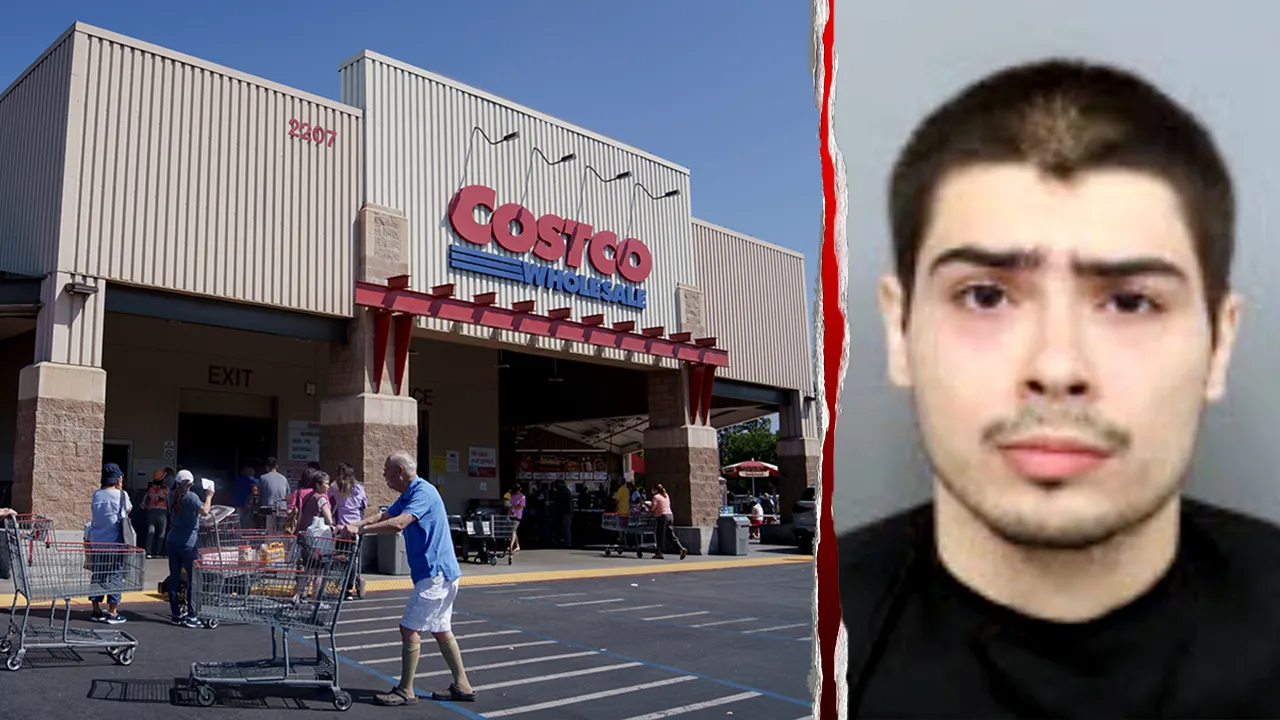
A Costco storefront and suspect Jose Giraldo. (Gary Hershorn/Getty Images; Greenville County Detention Center)
Giraldo has since been charged with armed robbery and third-degree assault and battery, with his mugshot released by the Greenville County Detention Center. While the specific financial impact of this isolated incident on Costco’s inventory is likely minimal for a company of its scale, it serves as a stark reminder of the systemic “shrinkage” problem plaguing the retail industry, a term encompassing theft, fraud, and administrative errors that collectively cost retailers billions annually.

Costco shoppers scramble for a free sample of Phillips Foods Lobster Meat during the grand opening of a new store in North Port, Florida.(Mike Lang/Sarasota Herald-Tribune/USA Today Network via Imagn Images)
The Mounting Cost of Retail Crime
For a membership-based warehouse club like Costco (NASDAQ: COST), which prides itself on operational efficiency, competitive pricing, and a secure shopping environment, incidents of this nature pose a multifaceted challenge. Costco’s business model relies heavily on high volume, low margins, and recurring membership fees. Any factor that increases operational costs, such as enhanced security, higher insurance premiums, or direct inventory losses, can compress these tight margins and potentially impact the value proposition for its millions of members.
The National Retail Federation (NRF) consistently reports record levels of retail shrinkage, with losses often exceeding $100 billion annually across the U.S. retail landscape. A significant portion of this is attributed to external theft, including sophisticated organized retail crime (ORC) rings that target high-value merchandise for resale. While this specific incident appears to be an individual act, it contributes to the broader narrative of escalating retail violence and theft, which directly impacts retailers’ profitability statements and investor confidence.
In response to these trends, retailers are significantly increasing their capital expenditure on security measures. This includes investments in advanced surveillance technology, such as AI-powered cameras, expanded security personnel, reinforced display cases, and stricter access controls. These investments, while necessary to protect assets and ensure customer safety, represent a growing overhead that can strain operating budgets. For a company like Costco, which operates on a high-volume, low-cost structure, every additional dollar spent on security is a dollar not directly contributing to membership benefits or lower pricing.
A Costco store in Vallejo, California, on May 29, 2025.(David Paul Morris/Bloomberg)
Impact on Brand Perception and Consumer Behavior
Beyond the direct financial losses and security costs, incidents like the Greenville robbery can have a more subtle yet profound impact on a brand’s reputation and consumer behavior. Costco cultivates an image of a safe, family-friendly shopping destination. A high-profile act of violence or theft can introduce an element of fear or apprehension among shoppers, potentially leading to reduced foot traffic or, in extreme cases, impacting membership renewals if customers perceive the environment as less secure. Maintaining customer confidence is paramount for a subscription-based model.
Furthermore, such events also affect employee morale and safety. The intervention of Costco employees in subduing the suspect, alongside customers, highlights the risks faced by frontline retail workers. Companies are increasingly investing in de-escalation training and support systems for employees, which adds another layer of operational cost and complexity. Ensuring a safe working environment is not just a moral imperative but also crucial for talent retention and productivity.
For the insurance industry, the escalating frequency and severity of retail theft claims translate into higher premiums for commercial property and casualty policies. This ripple effect means that even retailers with robust loss prevention strategies can face increased operating expenses due to sector-wide risks. The cost of doing business in retail is unequivocally rising, pressured by these external factors.
FOX Business has reached out to the Greenville Police Department for comment and additional details about the incident, as the retail community continues to grapple with these multifaceted challenges. The incident serves as a microcosm of the broader security and financial pressures that retailers, from big-box stores to specialty boutiques, are confronting in today’s economic climate, where theft is no longer just a loss prevention issue, but a critical factor in business strategy and profitability.
Market Impact:
The Greenville Costco incident, while localized, serves as a stark indicator of persistent systemic risks within the retail sector that can influence investor sentiment and company valuations. Investors are increasingly scrutinizing retailers’ balance sheets for robust loss prevention strategies and the potential impact of rising security expenditures on gross margins and operating income. Companies like Costco, with strong membership revenue and robust financial health, are better positioned to absorb these costs than smaller, more vulnerable retailers. However, a sustained trend of escalating retail crime could necessitate further capital allocation for security, potentially diverting funds from growth initiatives or share buybacks. The broader market may begin to price in an “anti-theft premium” or discount for companies perceived as having inadequate security, leading to a re-evaluation of sector-wide operational risks and impacting long-term profitability outlooks across the retail landscape.