
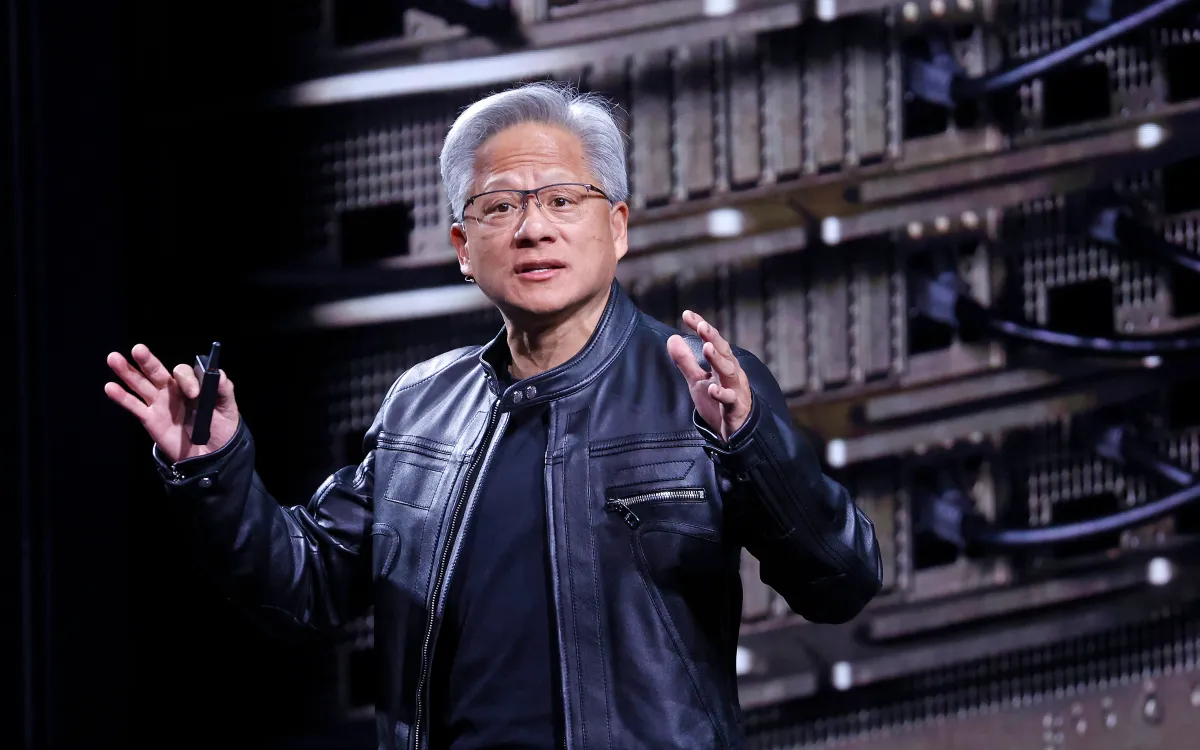
Nvidia is doing everything it can to keep fueling the AI buildout that has underpinned its own good fortunes. On Friday, it announced a partnership with Cloverleaf Infrastructure, a company that lays the groundwork for data centers.
Key Takeaways
- Nvidia’s Strategic Expansion:The chip giant is actively investing in the foundational infrastructure of AI, moving beyond silicon to secure and accelerate the data center ecosystem that relies on its GPUs.
- Tackling Infrastructure Bottlenecks:Investments like the one in Cloverleaf directly address critical power and site development challenges, ensuring a smoother and faster buildout of AI data centers globally.
- Securing Future Demand:By enabling robust AI infrastructure, Nvidia is strategically de-risking its own future, guaranteeing a sustained demand for its high-performance AI systems and solidifying its market dominance.
Nvidia, the undisputed titan of artificial intelligence silicon, is rapidly evolving its strategy beyond merely supplying the brains of AI. The company is now actively investing in the very nervous system and circulatory system of the burgeoning AI industry: the data centers themselves and the critical infrastructure that powers them. This shift underscores a profound recognition that even the most advanced chips are useless without the massive, purpose-built environments required to house, cool, and energize them. The latest demonstration of this proactive approach comes with Nvidia’s announcement of a significant partnership and investment in Cloverleaf Infrastructure.
Cloverleaf Infrastructure, a relatively nascent but ambitious player founded in 2024, made waves early in its existence by raising an impressive $300 million in its founding year. Its mission is deceptively simple yet critically complex: to act as an essential intermediary, streamlining the often-arduous process of establishing power sources and other pivotal infrastructure for new data center developments. In an era where data center buildouts are measured in gigawatts rather than megawatts, and where securing reliable, massive power grids is paramount, Cloverleaf’s specialized expertise positions it as a vital facilitator in the AI arms race.
Nvidia’s Multi-Million Dollar Bet on Foundational Infrastructure
While specific financial terms of the Nvidia-Cloverleaf collaboration were not publicly disclosed, industry reports offer a glimpse into the scale of Nvidia’s commitment. The Wall Street Journalreportsthat Nvidia’s investment in Cloverleaf is expected to total several hundred million dollars. Furthermore, Reutersindicatedthat this substantial capital injection grants the chipmaker a minority stake in the infrastructure company. These figures are not trivial, even for a company of Nvidia’s immense valuation, signaling a deep strategic alignment rather than a superficial venture.
This deal is not an isolated incident but rather a clear component of Nvidia’s broader, calculated push to leverage its staggering profits—fueled almost entirely by the insatiable demand for its AI accelerators—to keep the AI flywheel spinning at an ever-increasing velocity. The company is consciously transcending its traditional role as a hardware vendor. It is increasingly adopting a more direct and hands-on role in financing, developing, and de-risking the very AI data centers that, in turn, become its largest customers, purchasing its cutting-edge AI systems.
An Ecosystem Play: From Chips to Power Grids
Just days before the Cloverleaf announcement, Nvidia made headlines with another significant infrastructure commitment: a formidable $1.5 billion investment in SB Energy. SB Energy is a pivotal player in an OpenAI-linked data center project situated in Ohio. This dual strategy – investing in power supply/site development (Cloverleaf) and direct data center projects (SB Energy) – paints a comprehensive picture of Nvidia’s intent. The company recognizes that the bottleneck to AI adoption and innovation isn’t just about having enough GPUs; it’s about having the physical and electrical capacity to deploy those GPUs at scale.
The sheer computational demands of modern AI models, particularly large language models (LLMs) and generative AI, require an unprecedented amount of electrical power. Building a new hyperscale AI data center isn’t merely a construction project; it’s a complex logistical and engineering feat involving land acquisition, securing massive and reliable power supplies, designing advanced cooling systems, and laying miles of fiber optics. Cloverleaf’s expertise in bridging the gap between utility companies and data center developers is therefore invaluable. They navigate the intricate regulatory landscape, plan for future energy needs, and ensure that a site is not just ready for construction but is truly “power-ready” for the demands of AI.
Why Nvidia is Becoming an Infrastructure Investor
Nvidia’s strategy here is multi-faceted and highly intelligent. Firstly, by investing in the foundational infrastructure, it helps to **accelerate the overall buildout of AI capacity**. Faster data center construction means a quicker pathway for its GPUs to be deployed, driving sales and expanding its market reach. Secondly, it acts as a **de-risking mechanism**. If data center development stalls due to power shortages, regulatory hurdles, or site selection challenges, it directly impacts Nvidia’s core business. By proactively addressing these issues, Nvidia ensures a smoother runway for its own growth.
Thirdly, it’s about **solidifying ecosystem lock-in**. The more deeply integrated Nvidia is with the entire AI value chain, from chip manufacturing to data center operations, the stronger its competitive moat becomes. It’s not just selling components; it’s enabling the entire edifice upon which AI innovation rests. This strategic depth helps to future-proof the company against potential competitive threats and market fluctuations. Finally, these investments offer Nvidia a direct stake in the **lucrative data center market itself**, diversifying its revenue streams and potentially yielding significant returns as the AI economy continues its exponential expansion.
The Broader AI Infrastructure Landscape
The scale of the AI infrastructure boom is difficult to overstate. Analysts project billions, even trillions, of dollars will be poured into data center construction and upgrades over the next decade. Companies like Microsoft, Amazon (AWS), Google (Google Cloud), and Meta are already spending unprecedented sums on their AI-optimized data centers. However, the unique demands of AI, particularly the dense compute requirements and associated power and cooling needs, are creating new challenges and opportunities for specialized infrastructure providers. Cloverleaf represents a new breed of company specifically designed to tackle these bottlenecks, making them attractive targets for strategic investors like Nvidia.
The energy implications alone are staggering. AI data centers are projected to consume a rapidly increasing share of global electricity, raising questions about sustainability and grid capacity. Companies like Cloverleaf that can efficiently source and deliver clean, reliable, and scalable power solutions will become indispensable. Nvidia’s investment is, therefore, not just about building more data centers, but about building *smarter* and *more sustainable* data centers, aligning with broader industry goals and regulatory pressures.
Bottom Line
Nvidia’s strategic investments in foundational AI infrastructure, exemplified by its partnership with Cloverleaf, mark a pivotal evolution in its business model. By actively participating in the development and powering of AI data centers, Nvidia is moving beyond its role as a mere hardware supplier to become a comprehensive ecosystem enabler. This proactive approach not only accelerates the global AI buildout and de-risks its core business by eliminating potential bottlenecks but also solidifies its long-term dominance by deeply integrating itself into every layer of the AI value chain. In essence, Nvidia isn’t just selling shovels in the AI gold rush; it’s helping to build the entire infrastructure for the mines themselves, ensuring its continued prosperity as the AI revolution reshapes the global economy.
{content}
Source:{feed_title}