
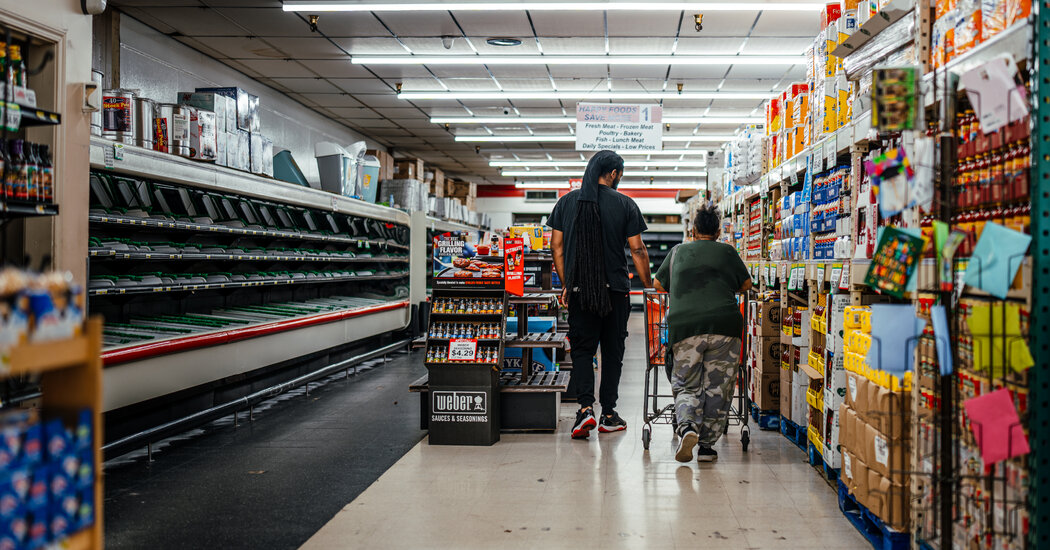
**Gary, Indiana –** On Saturday, residents in Gary, Indiana, faced their eleventh consecutive day without electrical power following severe thunderstorms. Pierre Ervin, 46, a resident impacted by the prolonged outage, expressed significant frustration with the situation. Unable to prepare breakfast at home due to widespread food spoilage from his non-operational refrigerator, Ervin began his work day hungry, navigating streets still affected by downed trees and power lines across the industrial city. He described the period as “terrible.”
As of Saturday evening, approximately 30,000 customers across northern Indiana remained without electricity. This prolonged outage occurred nearly two weeks after a series of intense thunderstorms, characterized by hurricane-force winds, impacted the region and caused extensive flooding in local neighborhoods.
Of those still affected, about 56 percent are located in Gary, a city with a population of 67,000, which is predominantly African-American. Gary has a documented history of economic challenges, including poverty, population decline, and reduced investment, particularly following the contraction of its steel industry and the subsequent abandonment of homes and buildings.
Councilman Myles Tolliver, whose family had relocated outside Chicago pending power restoration, voiced concerns that the city’s residents were “being overlooked.” He articulated the immediate need for electricity, stating, “Our families are sitting in the dark. We don’t need any more excuses. We need the lights on,” emphasizing the urgency of the situation for the community.
As some areas of northern Indiana began to see power restored on Saturday, residents in Gary reportedly expressed anger and disappointment regarding what they perceived as a delayed response in their area. Northern Indiana Public Service Co. (NIPSCO), the local utility provider, indicated that Gary and the neighboring city of Portage were among the last areas slated for power restoration, with an estimated completion by the end of the upcoming Tuesday.
Some residents, spending time in their darkened homes or on porches to escape stagnant indoor air, speculated that a more affluent, predominantly white community might not have experienced such an extended period without power. Daymond Willis, 45, a chef at a casino restaurant who had been without power since August 11, questioned the duration of the outage, stating, “It shouldn’t be this long. I think if we weren’t a Black city, things would be different.”
On Saturday, reports emerged from residents indicating that some local businesses and apartment complexes had regained power, and an increased number of utility trucks were observed in the streets. Steve Segura, a city spokesman, confirmed that NIPSCO was deploying an additional 85 line workers and 240 vegetation management crews to the affected areas.
Despite these efforts, residents and local politicians continued to voice their growing exasperation. Governor Mike Braun of Indiana urged NIPSCO to “match the urgency” of the affected population. On Friday, Governor Braun stated that he had requested an expedited major disaster declaration from the Federal Emergency Management Agency (FEMA) to facilitate additional resource deployment.
In a pointed social media post on Saturday, Governor Braun, a Republican, directed NIPSCO to “Bring in more crews. Put every available resource into the field. Get creative. Get the job done.”
Northern Indiana Public Service Co. acknowledged that its electrical system had sustained “unprecedented and widespread damage” from the storm. On Saturday, the utility’s 24-hour hotline for media inquiries did not receive calls, with an automated message indicating that the voice mailbox was full.
The severe weather event that impacted Gary on August 11 was identified as a derecho, a type of widespread, long-lived, straight-line wind storm associated with a fast-moving group of intense thunderstorms. This particular storm brought heavy rainfall and destructive wind gusts reaching 99 miles per hour. This event was part of a series of powerful storms that have affected Indiana since spring. Through July, the state had experienced 89 tornadoes, significantly exceeding the annual average of 28, according to the National Weather Service. Ricky Castro, a meteorologist with the Weather Service office in Romeoville, Illinois, characterized the season as “hyperactive.”
A more favorable weather outlook was anticipated, with a very low chance of thunderstorms in Gary on Saturday and drier conditions projected for the following days.
Donations of food, tarpaulins, bottled water, and repair kits have been delivered to Gary. President Trump had granted an emergency declaration the previous week. However, no visible presence of federal emergency management officials on the ground was reported, and FEMA did not immediately respond to a request for comment. In the interim, residents have initiated local efforts to assist one another during the blackout.
These community-led efforts included residents hosting sidewalk barbecues to provide meals for neighbors and individuals with generators opening their homes for neighbors to do laundry or recharge electronic devices.
On Saturday, the CityLife community center provided a lunch of fried chicken, coleslaw, potato salad, and biscuits, donated by Gary native and singer Deniece Williams, to over 200 people. Approximately one mile away, several hundred individuals queued outside a strip mall for meals donated by two Chicago-based restaurants.
Ahmed Musleh, manager of the Save More grocery store, reported that his market had distributed 20 cases of water and grilled hot dogs for residents in its parking lot, located near another community group’s food distribution point. Musleh noted that his store could file an insurance claim for discarded food, but expressed concern for customers relying on food stamps, who might not receive similar compensation for their lost provisions. He stated, “They were already struggling, and for them to lose an entire month of food is a big thing.”
Residents reported that the storm and subsequent power outage had resulted in thousands of dollars in expenses for their families, including costs for spoiled food, lost wages, hotel accommodations, fuel for generators, and other necessities to manage the blackout.
Keya Reed, a 51-year-old warehouse worker, and her husband, Derrick Reed, a 57-year-old maintenance worker, estimated they had incurred $7,000 in expenses for a generator, gasoline, and tree-cutting services to remove a tree that had downed power lines and caused damage to their home. Despite mounting costs, they opted not to use food pantries or accept donated meals, believing others in Gary were in greater need.
Ms. Reed, a lifelong resident of Gary, reflected on the recurring nature of hardships in the city. Inside her home on Saturday, amidst the dark, stuffy air and generator-connected electrical lines, she stated, “Everything is always against Gary. It’s really sad to say, but I’m used to it.”
Why This Matters
The prolonged power outage in Gary, Indiana, following severe weather highlights several critical issues with broader implications for disaster preparedness, equity in emergency response, and infrastructure resilience. Extended utility disruptions, particularly in communities with existing socio-economic challenges, can exacerbate vulnerabilities and inflict significant financial and social burdens.
Firstly, the incident underscores the vulnerability of critical infrastructure, such as electrical grids, to increasingly frequent and intense weather events. As climate change contributes to a rise in extreme weather phenomena—like the derecho and unusually high number of tornadoes experienced in Indiana—the capacity of utilities to withstand and rapidly recover from such impacts becomes paramount. Failures in this regard can leave tens of thousands without essential services, disrupting daily life, public health, and economic activity.
Secondly, the perception among Gary residents and officials that their community received a delayed or less prioritized response compared to more affluent areas raises serious questions about equitable disaster recovery. Gary, a predominantly African-American city with a history of economic decline, may be emblematic of how pre-existing socio-economic disparities can influence the speed and effectiveness of emergency services. This suggests a potential systemic issue where marginalized communities, often with older infrastructure and fewer resources, are disproportionately affected by disasters and experience slower recovery, leading to further disenfranchisement and distrust in institutions.
Furthermore, the financial toll on individual households is substantial. Residents reported thousands of dollars in losses from spoiled food, lost wages, and unexpected expenses for generators, fuel, and temporary accommodation. For communities already struggling with poverty, such costs can be catastrophic, pushing families deeper into debt or compromising their financial stability. The concern raised about food stamp recipients highlights how existing support systems may not adequately address the immediate and long-term impacts of such events.
Finally, the community’s self-organizing efforts—neighbors helping neighbors with food, charging stations, and shelter—demonstrate the vital role of local solidarity in times of crisis. However, these efforts, while commendable, should not absolve government agencies and utility companies of their primary responsibility to ensure prompt and equitable response and recovery. The calls from the state governor for increased urgency and federal assistance reflect the scale of the challenge and the need for coordinated, robust action from all levels of governance to protect vulnerable populations when disaster strikes.