
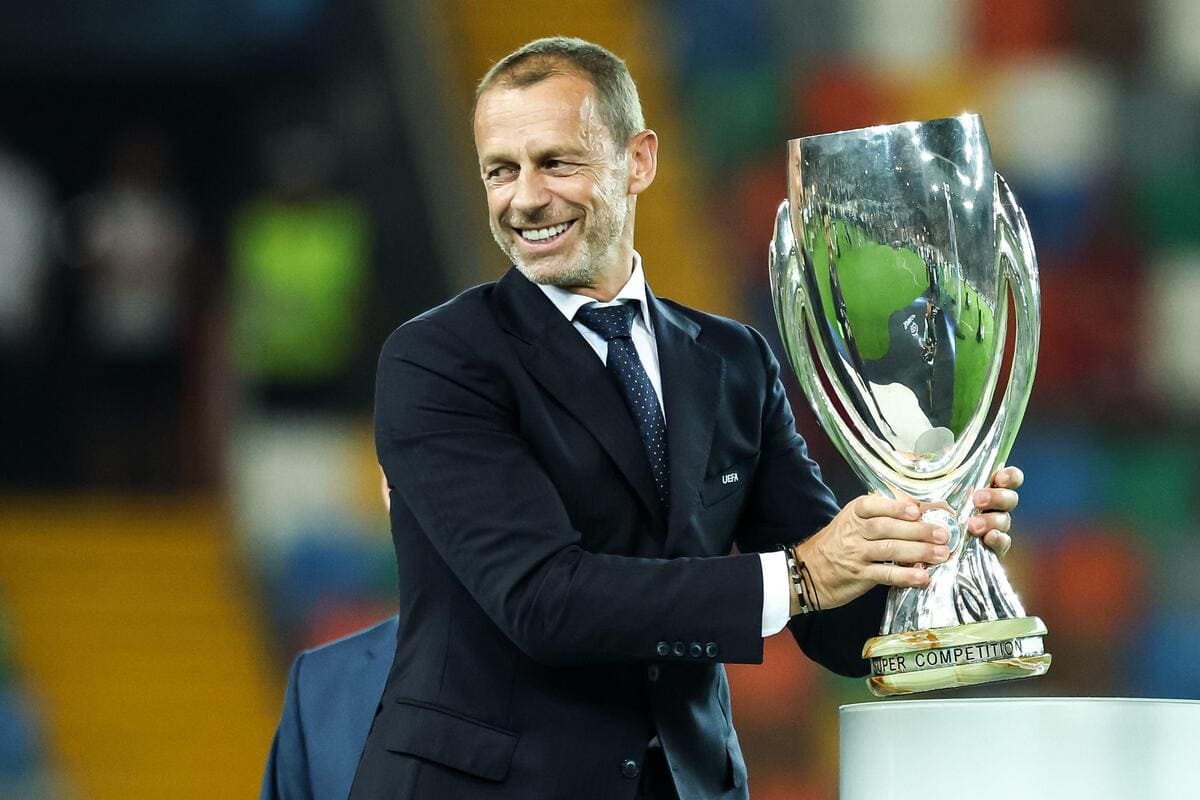
The beautiful game often hides an ugly truth: its highest echelons are a political arena as fierce and unforgiving as any championship final. And right now, the FIFA presidency is the hottest seat in global sports, with current incumbent Gianni Infantino facing a relentless offensive that could see him dethroned. The latest bombshell? UEFA President Aleksander Ceferin, a man whose name frequently echoed as a potential successor, has emphatically ruled himself out of the running, yet simultaneously delivered a damning prophecy: Infantino will either step aside or face a formidable challenger in 2027.
This isn’t just internal politicking; it’s a high-stakes power struggle that threatens to reshape the very governance of world football. Infantino’s tenure has been a tempestuous one, marked most recently by the spectacular collapse of his grand scheme to sell a significant stake in FIFA’s commercial operations to private investors. A move that, in the eyes of many, including the powerful UEFA, Concacaf, and AFC, represented a profound betrayal of trust and an audacious attempt to commercialize the sport’s soul.
Ceferin, a figure of immense credibility and influence within the footballing world, articulated his decision with a blend of passion and pragmatic realism. “I’m not interested because of two reasons,” he declared on the ‘Rest is Politics’ podcast. “One reason is that I love UEFA and I love working here, and I think that at a certain point, it’s time to also enjoy life a bit.” A noble sentiment, perhaps, but it’s his second reason that truly resonates with the strategic play unfolding: “The second point is that my credibility is much, much higher if I’m not interested in the position.” This isn’t merely a personal preference; it’s a tactical masterstroke, allowing Ceferin to critique Infantino’s leadership from a position of detached impartiality, amplifying his voice without being perceived as a self-serving rival.

Ceferin’s analysis of Infantino’s precarious position is chillingly direct. He foresees two pathways before the FIFA Congress in March 2027: either Infantino, recognizing the erosion of his support among the broader football community – from voters to fans, players, and coaches – makes a dignified exit, or he digs in, only to confront a challenger. “In that case, I think he will have a candidate against him. I don’t know yet who,” Ceferin stated, opening the door wide for speculation and signaling to the world that the top job is very much up for grabs.
Game Highlights: The Political Showdown Unfolds
To understand the current tension, we need to break down the key plays in this ongoing political clash, a drama far more captivating than any 90-minute match:
- The Failed Offensive: Infantino’s Commercial Gambit (The 21% Stake):This was Infantino’s boldest, and arguably most damaging, move. The plan was to establish ‘FIFA Forward Enterprise’ to manage commercial and ticketing rights, offering a 21% stake to a private investment group. It was presented as a way to unlock new revenue, but critics saw it as mortgaging the future of the sport, centralizing power, and lacking transparency. The sheer scale of opposition, particularly from the influential European, North American, and Asian confederations, proved insurmountable. The plan was not just blocked; it was utterly abandoned, a significant defeat for Infantino’s executive authority.
- The Tactical Foul & Red Card Warning: Accusations of Deception:Following the commercial proposal’s collapse, the rhetoric escalated dramatically. UEFA, Concacaf, and AFC didn’t just disagree; they openly accused Infantino of “breaking trust through deception.” This was no mere difference of opinion; it was a direct assault on his integrity and leadership style, implying a lack of transparency and an underhanded approach to governance. Subsequently, all four British and Irish associations, historical cornerstones of football, withdrew their support, sending a clear, unambiguous message of dissent.
- Infantino’s Defensive Maneuvers & Strategic Alliances:Faced with a rapidly dwindling support base in key regions, Infantino has been on a frantic global tour, shoring up allegiances. His meetings with Caribbean football officials in the Dominican Republic are a prime example of his efforts to solidify votes in less vocal, but equally crucial, confederations. His visible presence at high-profile events like the E-Sports World Cup in Paris, rubbing shoulders with global power brokers like French President Emmanuel Macron, Saudi Crown Prince Mohammed bin Salman, and football icon Cristiano Ronaldo, wasn’t just a social appearance. It was a calculated display of continued relevance, influence, and a subtle assertion of his global network, despite the internal challenges.
- Ceferin’s Masterstroke: The Credibility Play:By publicly removing himself from the race, Ceferin achieves two critical objectives. Firstly, he avoids being drawn into the direct mudslinging that often accompanies leadership challenges, preserving his own reputation. Secondly, and more importantly, he creates a vacuum and implicitly encourages other, potentially more palatable, challengers to emerge. His prediction of an opposition candidate isn’t just an observation; it’s an invitation, subtly shaping the narrative and future dynamics of the presidential race.
Infantino’s Tightrope Walk: The Road to 2027
Infantino’s position remains undeniably precarious. While he still commands backing from South America’s Conmebol and the African confederation Caf – powerful blocs in their own right – the loss of trust from UEFA, Concacaf, and AFC represents a significant erosion of his mandate. The global landscape of football governance is a delicate balance, and alienating such key confederations makes his path to re-election increasingly difficult, if not outright untenable, without significant shifts in support or a dramatic change in strategy.
The essence of this struggle extends beyond personalities. It’s a battle for the soul of FIFA, a debate over transparency, accountability, and the future direction of the world’s most popular sport. Will it be dictated by commercial interests and backroom deals, or will it return to a more democratic, collaborative model? The next few years will be a defining period, not just for Gianni Infantino, but for the entire structure of international football.
Prediction: A Storm on the Horizon
Given the escalating pressure, the public withdrawal of confidence from major confederations, and Aleksander Ceferin’s potent, strategic declaration, it’s increasingly difficult to envision a smooth path for Gianni Infantino. While his efforts to shore up support are commendable, the perception of his leadership has been irrevocably tarnished for too many key stakeholders. **My prediction is that Gianni Infantino will indeed face a challenger at the FIFA Congress in March 2027, and it will be a formidable opponent backed by the very confederations that have lost faith in his stewardship. The winds of change are blowing fiercely, and a new era of FIFA leadership, one perhaps more aligned with transparency and collective governance, is not just possible, but highly probable.** The question isn’t if a challenge will come, but who will seize the opportunity to lead football into its next chapter.