
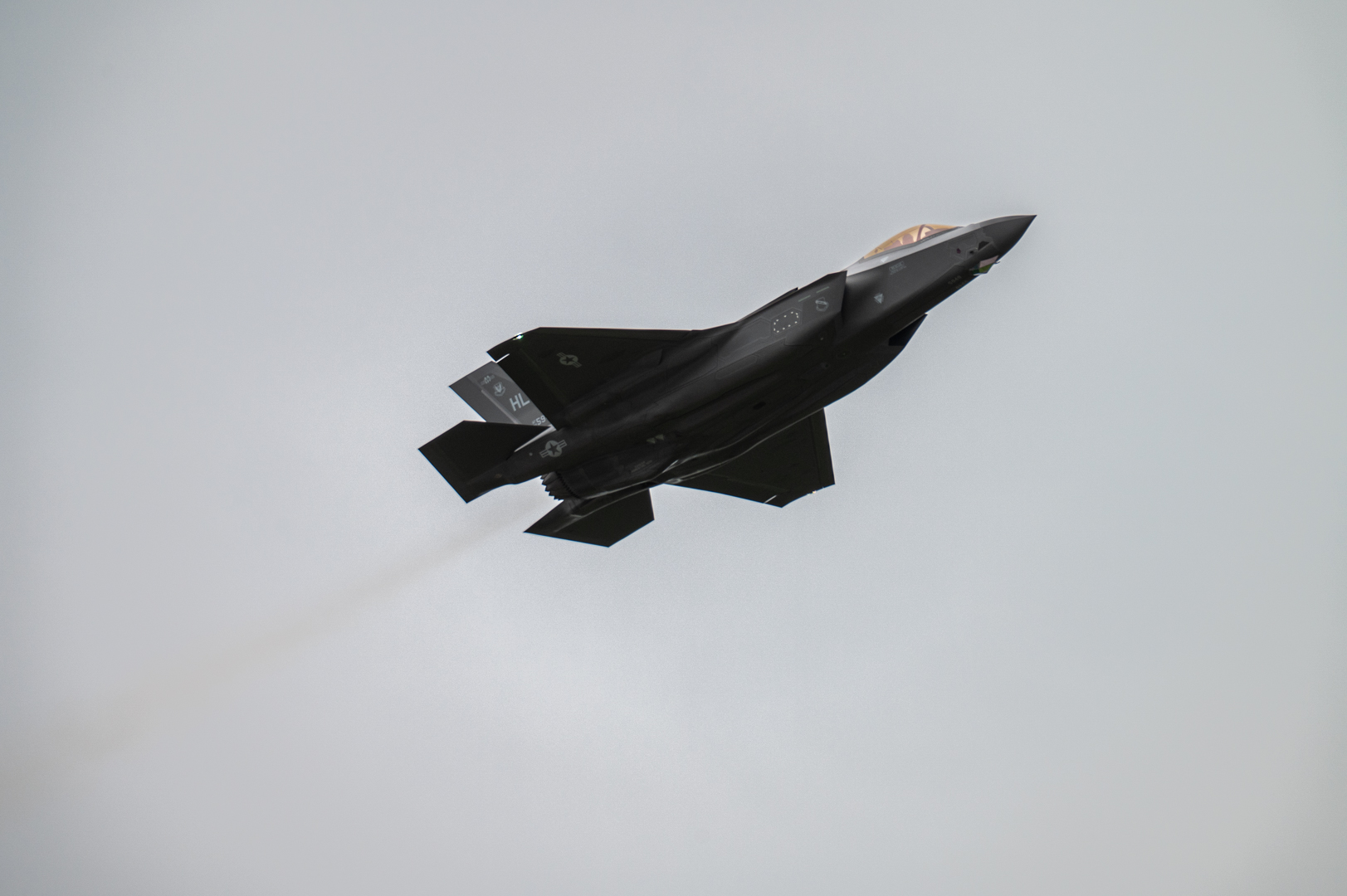
In a significant development for regional defense capabilities, the 13th Fighter Squadron, stationed at Misawa Air Base, Japan, recently deployed its new F-35A Lightning II stealth fighters to Red Flag-Alaska, a major air combat training exercise. This marks the first time these advanced aircraft from Misawa have participated in such a large-scale, realistic combat simulation.
This deployment represents a crucial step in Misawa Air Base’s ongoing transition from its long-serving fleet of F-16CJ aircraft to the F-35A. The F-16CJs were historically tasked with the “Wild Weasel” mission, focused on the suppression of enemy air defenses (SEAD). The 35th Fighter Wing at Misawa is ultimately slated to receive a total of 48 F-35s, significantly enhancing its operational capacity.
These F-35s are notable as the first U.S. Air Force units of their kind to be permanently stationed overseas within the Indo-Pacific region. Their strategic positioning in Japan places them in close proximity to key geopolitical areas, including China, North Korea, and Russia. This location underscores their vital role in integrating with other U.S. military services and allied forces, many of whom also participated in this iteration of Red Flag-Alaska.
Red Flag-Alaska is a biannual, two-week exercise designed to provide realistic combat training in a large-force environment. During this specific exercise, the 13th Fighter Squadron concentrated on its primary mission of suppression of enemy air defenses (SEAD) with the F-35A. Alongside them, the 90th Fighter Squadron, operating out of Joint Base Elmendorf-Richardson, Alaska, employed its F-22 Raptor fighters. Marine Corps participation included Marine Fighter Attack Squadron 225 from Marine Corps Air Station Yuma, Arizona, utilizing F-35B variants for counter-air and strike operations, and Marine Fighter Attack Squadron 251 from MCAS Cherry Point, North Carolina, flying F-35C variants to focus on joint force integration and homeland defense scenarios.
To provide a challenging and realistic adversary, “red air” forces were also deployed. The 65th Aggressor Squadron from Nellis Air Force Base, Nevada, flew its F-35As, while the 18th Aggressor Squadron from Eielson Air Force Base, Alaska, operated F-16s, simulating enemy tactics against the U.S. and allied participants.
This exercise was the third and final Red Flag-Alaska event scheduled for the year. A significant portion of the exercise operations took place within the Joint Pacific Alaska Range Complex (JPARC), which offers an expansive 77,000 square miles of airspace. This vast training area contrasts with the primary Red Flag exercises conducted at Nellis Air Force Base, Nevada, which utilize the Nevada Test and Training Range and its 12,000 square miles of airspace.
The sheer scale of the JPARC is considered vital for training in the Indo-Pacific theater. As Air Force spokesperson Capt. Grace Banas explained in an email, “The tactical execution performed at Red Flag-Alaska complements that at Nellis by allowing forces to project power across massive distances, much like the Pacific theater.” She added that these maneuvers are critical for “refin[ing] rapid power projection over intercontinental distances, ensuring our forces remain resilient and prepared to respond to dynamic regional security challenges.”
The JPARC also offers advanced simulation capabilities, including “movable electronic threat emitters.” According to Banas, these emitters are designed to “mimic the complex digital signatures and tactical mobility of adversarial Integrated Air Defense Systems.” This sophisticated setup provides participants with realistic electromagnetic training, an increasingly essential component for conducting missions against technologically advanced adversaries in contemporary combat scenarios.
The Red Flag exercise series originated in 1975, evolving from the lessons learned during the Vietnam War. An earlier exercise, “Coronet Organ,” conducted from 1969 to 1973, identified that the initial 10 combat flights were often the most perilous for fighter pilots. Red Flag was consequently established to mitigate this risk by immersing pilots in demanding, realistic, simulated combat environments, thereby improving their survivability and effectiveness.
The F-35 first participated in a Red Flag exercise at Nellis Air Force Base in 2017, and its debut in Red Flag-Alaska occurred in 2020. While Nellis typically hosts three main Red Flag exercises annually, only one has been conducted there in 2026, taking place in February.
Why This Matters
The deployment of F-35A fighters from Misawa Air Base to Red Flag-Alaska, coupled with their strategic positioning in Japan, carries significant implications for international security and military readiness in the Indo-Pacific. This region is a focal point of geopolitical competition, characterized by rising military modernization among nations, territorial disputes, and the presence of major powers like China, North Korea, and Russia. The F-35, a fifth-generation stealth fighter, represents a substantial upgrade in capability, offering advanced stealth, sensor fusion, and network-centric warfare advantages over older aircraft.
For the U.S. and its allies, particularly Japan, the F-35’s presence at Misawa enhances regional deterrence and strengthens collective defense posture. The exercise itself, Red Flag-Alaska, is critical for honing the skills required for modern air combat, emphasizing complex, large-force engagements and interoperability among different airframes (F-35, F-22, F-16) and services (Air Force, Marine Corps). The diverse F-35 variants (A, B, and C) participating in the exercise showcase their multi-role capabilities, from air superiority and strike to close air support and homeland defense, which are essential for responding to a wide spectrum of potential threats.
Furthermore, the extensive training range provided by JPARC and the incorporation of advanced “movable electronic threat emitters” underscore a commitment to preparing for high-end conflicts against peer adversaries. This realistic electromagnetic training is vital for countering sophisticated integrated air defense systems, a key challenge in contemporary warfare. The ability to project power across vast distances, as highlighted by Air Force officials, directly addresses the geographical realities of the Pacific theater, ensuring forces can respond rapidly and effectively to dynamic security challenges. This ongoing investment in advanced aircraft and rigorous training demonstrates a continued focus on maintaining a technological and operational edge, reinforcing alliances, and ensuring stability in a strategically vital global region.