

Check out what’s clicking on FoxBusiness.com.
Key Takeaways for Investors:
- Significant Financial Hit:Meta’s commitment of $12.1 billion, potentially rising to $17.1 billion over 10 years, represents one of the largest civil settlements against a tech company. While substantial, this cost is likely manageable for Meta’s robust balance sheet, but it will impact future free cash flow and could lead to a minor adjustment in long-term earnings forecasts.
- Regulatory Precedent & Industry Scrutiny:This settlement sets a critical precedent for how social media companies are held accountable for their platforms’ impact on young users. It signals an intensifying regulatory environment, increasing the risk profile for competitors like TikTok and YouTube, and potentially accelerating global efforts to legislate online safety for children.
- Operational & Competitive Dynamics Shift:The mandated restrictions on teen accounts (time limits, nighttime blocks, parental controls) could alter user engagement metrics and, consequently, advertising revenue streams from younger demographics. Meta’s strategic call for competitors to adopt similar measures suggests an attempt to level the playing field, creating new competitive pressures and potentially forcing an industry-wide re-evaluation of product design and monetization strategies.
In a significant development echoing across the tech sector and drawing scrutiny from investors, Meta Platforms (NASDAQ: META) has reached a landmark settlement, agreeing to pay as much as $17.1 billion and implement stringent restrictions on teen accounts. This groundbreaking deal aims to resolve claims that the tech giant deliberately designed Facebook and Instagram to foster addiction among children and subsequently misled the public about the inherent safety of its platforms.
The agreement, disclosed in court documents on Wednesday, effectively resolves claims brought by a coalition of 29 U.S. states. This move deftly sidesteps what would have been one of the highest-profile legal tests yet of pervasive allegations that social media companies have caused widespread harm to young users. The specter of Meta CEO Mark Zuckerberg potentially being called to testify in open court loomed large, a scenario that would have undoubtedly amplified media attention and investor uncertainty.
The plaintiff states accused Meta of multiple violations, including breaches of consumer-protection laws and the improper collection of children’s personal data without obtaining parental consent. These allegations tap into a deeper narrative surrounding the ethical responsibilities of tech giants, particularly concerning vulnerable demographics. Meta, while denying the specific allegations, has consistently maintained that it has actively worked to implement safeguards and protections for children on its platforms.
STATE SUES SNAPCHAT OVER ALLEGED ADDICTIVE FEATURES AND ADULT CONTENT FOR KIDS
A computer screen displays the Meta logo while a mobile phone in the foreground shows Meta founder Mark Zuckerberg. Meta will lay off around 8,000 workers, the company said in a memo to employees.(Arda Kucukkaya/Anadolu via Getty Images / Getty Images)
Under the terms of the agreement, Meta is committed to paying a minimum of $12.1 billion over a decade, as detailed by the D.C. attorney general’s office. The financial commitment could escalate by an additional $5 billion, pushing the total settlement to $17.1 billion, contingent upon whether other major social media companies – notably TikTok and YouTube – agree to adopt comparable child-safety measures. This conditional payout introduces an intriguing competitive dynamic, where Meta attempts to externalize compliance costs onto its rivals.
Meta issued a statement Wednesday, asserting that the agreement underscores and builds upon its existing efforts to protect teens and enhance parental control over their children’s digital experiences. “Ensuring teens have a safe and productive experience on our platforms is an absolute imperative for Meta,” the company stated. “We want to get this right for parents and teens, and that’s why we partnered with state attorneys general to set a new industry standard.” This framing attempts to position Meta as a proactive leader in online safety, rather than merely a respondent to legal pressure.
META, OTHER COMPANIES MUST FACE THOUSANDS OF LAWSUITS OVER CHILD SOCIAL MEDIA ADDICTION, APPEALS COURT RULES
The operational changes mandated by the settlement are extensive. Meta has agreed to impose strict daily time limits for young users, block access to its apps during specific nighttime hours, mute notifications during school hours, and introduce additional parental controls. These measures could significantly alter user engagement patterns among younger demographics, a segment crucial for long-term user acquisition and future advertising revenue growth.
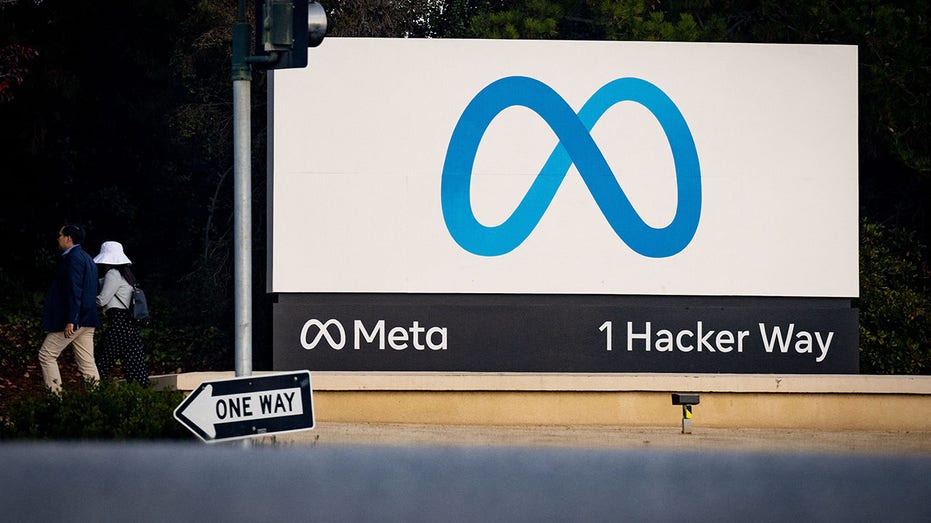
Meta corporate headquarters is seen in Menlo Park, California, on November 9, 2022.(JOSH EDELSON/AFP via Getty Images / Getty Images)
However, not all changes are immediate or unconditional. Meta highlighted that certain modifications, such as the implementation of nighttime access restrictions, remain conditional. These will only be rolled out if direct competitors like Google’s YouTube and ByteDance’s TikTok commit to adopting similar limits on their respective platforms. This strategic stipulation underscores Meta’s concern about a potential competitive disadvantage if it alone bears the burden of these restrictions, potentially losing younger users to less regulated platforms. The company expects a rollout period of approximately six months for any changes that are implemented.

In this photo illustration, Facebook and Instagram logos are seen on a smartphone and Meta logo on a PC screen. (Photo Illustration by Pavlo Gonchar/SOPA Images/LightRocket via Getty Images / Getty Images)
Meta has publicly called upon TikTok and YouTube to join in adopting these heightened restrictions, arguing that protections implemented on individual platforms will have a limited overall impact, given the propensity of teens to migrate fluidly between various apps. “For meaningful progress to happen, we urge TikTok and YouTube to join us and state attorneys general in adopting this new standard, to ensure teens use social media in a healthy and responsible way,” Meta’s statement read. This call to action is not just a plea for industry-wide responsibility but a shrewd strategic move to potentially raise compliance costs for its fiercest competitors in the race for youth engagement.
GET FOX BUSINESS ON THE GO BY CLICKING HERE
Market Impact:
For investors, this settlement presents a complex mosaic of risk and clarity. While the multi-billion-dollar payout is substantial, Meta’s robust balance sheet, boasting tens of billions in cash and equivalents and strong free cash flow generation, should absorb the financial hit without crippling long-term growth. The amortization of the payment over a decade further mitigates immediate liquidity concerns. From a regulatory perspective, clearing this significant legal overhang could be seen as a positive, removing a cloud of uncertainty that has weighed on the stock. However, the operational changes, particularly potential declines in engagement from younger users, could subtly impact future advertising revenue and growth metrics. The strategic challenge now shifts to how Meta navigates a potentially fragmented regulatory landscape; if competitors do not follow suit, Meta might face a disadvantage in attracting and retaining younger demographics. Conversely, if an industry-wide standard emerges, it could foster a more stable, albeit more regulated, environment for all players. Ultimately, this settlement reinforces the increasing scrutiny on Big Tech’s social responsibility, signaling a new era where user well-being will be as critical as user growth in determining long-term valuation.
This is a developing news story; check back for updates.