
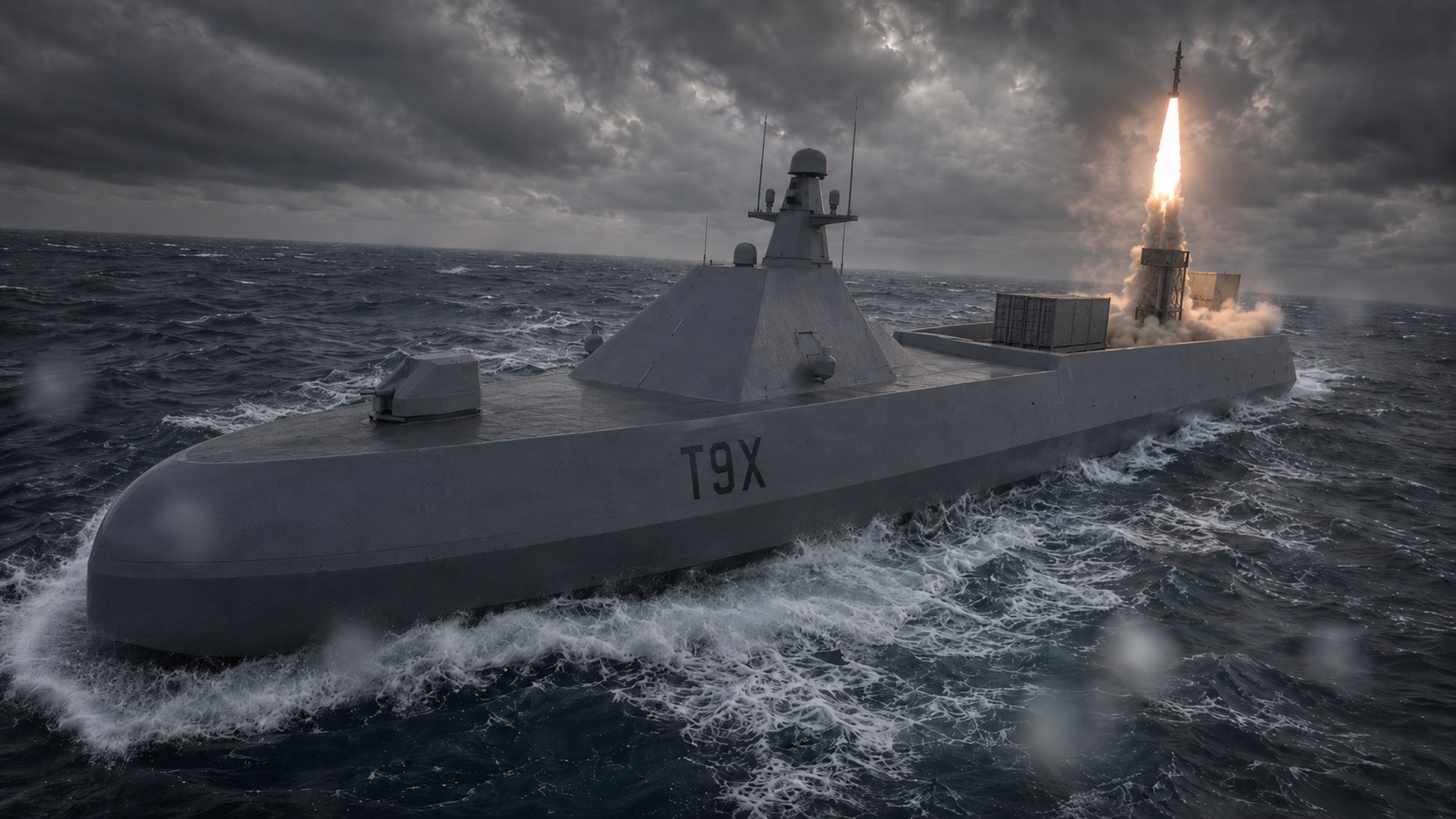
Royal Navy War Games Affirm Enduring Necessity of Crewed Warships in Hybrid Fleet Future
LONDON – The Royal Navy has concluded an extensive series of service-wide war games, rigorously testing its envisioned hybrid fleet model, which integrates traditional crewed warships with advanced uncrewed systems. The consistent outcome of these exercises, according to the First Sea Lord, General Sir Gwyn Jenkins, confirms that conventional warships remain an indispensable component, albeit with evolving roles, alongside their autonomous counterparts.
General Jenkins, the first Royal Marine to ascend to the Navy’s top leadership position, addressed concerns raised by the increasing ease with which surface vessels can be detected and targeted in modern warfare. Speaking in an interview for the Council on Geostrategy’s Defence Talks podcast, he asserted that this evolving threat landscape does not render crewed warships obsolete, but rather fundamentally alters their operational parameters and purpose.
“It just changes the way that you’re going to operate them, and it changes the way you achieve mass,” General Jenkins explained. “It changes what their role is, in particular the command and control and coordination of the uncrewed systems that we’re going to need to field.” This suggests a shift towards crewed vessels acting as central command hubs, orchestrating the movements and actions of a distributed network of autonomous assets, thereby amplifying the fleet’s overall capability and reach.
The First Sea Lord elaborated on the comprehensive nature of the testing: “That’s why we have been running a series of navy-wide war games to test the hybrid fleet and rigorously test it in each environment as to how we’re going to operate and how this would work, where the challenges and the weaknesses are in the model at the moment.” He emphasized that the findings were unequivocal: “Time and again, the tests come back with you still need conventional warships in this mix. They’re just further back and have a slightly different role to the way that we would have fielded them in the past.” This proactive approach of identifying vulnerabilities through structured testing before full commitment represents a strategic advantage, allowing the Navy to refine its model effectively.
General Jenkins also cautioned against a blanket application of lessons learned from recent conflicts, specifically referencing the Black Sea. He noted that the unique geographical and environmental characteristics of areas like the Black Sea or the Straits of Hormuz differ significantly from the vast expanses of the Atlantic Ocean, which constitutes a primary operational theatre for the Royal Navy. “We do have to be careful applying the geography and the specific physical environment of the Black Sea or the Straits of Hormuz to some of our Atlantic space, and the big Atlantic is a very different proposition to some of those quite constrained and even reasonably benign waters.” He was quick to add, however, that this nuanced perspective implies no sense of complacency regarding the evolving threats.
Indeed, he described Ukraine’s naval successes against Russia’s Black Sea Fleet as a profound “wake-up call” for all Western navies. Ukraine, a nation with a comparatively modest naval force, managed to neutralize one of the world’s ostensibly most advanced fleets through innovative tactics and the deployment of asymmetric capabilities, including uncrewed surface vessels and advanced missile systems. This demonstration of a “navy in name but not in being” overcoming a superior force has underscored the urgency for strategic adaptation.
Placing the current transformation within a broader historical context, General Jenkins drew parallels to earlier seismic shifts in naval warfare. He cited transitions such as from sail to steam, wood to iron, and the advent of revolutionary platforms like the dreadnought, the aircraft carrier, and the submarine. Each of these innovations, he observed, faced considerable skepticism and opposition from detractors at the time, only for their efficacy to be decisively proven by subsequent events. His message is clear: the Royal Navy is once again navigating a pivotal moment in its history, requiring bold adaptation rather than adherence to outdated doctrines.
The full interview with General Sir Gwyn Jenkins delved into a considerably wider array of topics pertinent to the Royal Navy’s future. These discussions included ambitious reforms to officer selection and training, strategies for fostering and unleashing innovation at the operational front line, and the intricacies of the “Atlantic programme” encompassing Bastion, Strike, and Shield initiatives. Furthermore, he explored the critical relationship with industry partners upon which the success of the hybrid fleet concept hinges, and offered his personal insights into how the global strategic landscape has fundamentally shifted since he commenced his military career at the close of the Cold War. Such extensive interviews with a serving First Sea Lord are infrequent, offering invaluable insights for anyone monitoring the Royal Navy’s trajectory over the coming decade.
General Sir Gwyn Jenkins was interviewed by Viktorija Starych-Samueliene and Paul Mason. The complete episode is accessible across major podcast platforms including YouTube, Spotify, and Apple Podcasts.
The “Defence Talks” series is a production of the Council on Geostrategy, a London-based think tank established in 2021. The Council focuses its research on British foreign, defence, and trade policy, with particular emphasis on the Indo-Pacific region and the geopolitics of technology. It publishes the journal Britain’s World alongside its research output. The podcast series is delivered in partnership with ADS Group, the prominent trade association representing the British aerospace, defence, security, and space industries, and benefits from sponsorship by BAE Systems.
Why This Matters
The Royal Navy’s findings from its hybrid fleet war games carry significant implications for global naval strategy, defense spending, and the future of maritime security. As nations grapple with rapidly evolving threats and technological advancements, the integration of crewed and uncrewed systems is becoming a defining characteristic of modern warfare. This report from a leading naval power offers critical insights into how this integration is being practically envisioned and tested.
Firstly, the affirmation of the continued necessity of crewed warships directly challenges a growing narrative that autonomous systems might entirely supersede human-operated vessels, particularly in high-threat environments. Instead, the Royal Navy’s strategy suggests a symbiotic relationship, where crewed ships leverage their human decision-making and command capabilities to orchestrate the actions of a distributed network of uncrewed assets. This ‘mothership’ or ‘command node’ concept for traditional warships will likely influence other navies worldwide as they develop their own hybrid strategies, ensuring that the human element remains central to complex naval operations.
Secondly, the emphasis on rigorous, structured testing to identify weaknesses early is a crucial lesson for defense planners globally. It underscores the importance of practical validation over theoretical assertions, particularly in the complex and unforgiving domain of naval warfare. This disciplined approach can save immense resources and potentially lives by preempting costly failures in real-world scenarios.
Thirdly, General Jenkins’ nuanced perspective on applying lessons from conflicts like the Black Sea to different geographical contexts highlights the critical role of environmental factors in defense planning. What works in a constrained, littoral environment may not be effective in the vastness of the open ocean. This differentiation is vital for understanding the strategic choices made by navies operating across diverse global theatres, influencing everything from ship design to tactical doctrine.
Finally, the broader scope of the First Sea Lord’s interview, touching on officer training, innovation, industrial partnerships, and the post-Cold War strategic shift, reveals a comprehensive understanding that naval modernization is not just about technology. It’s about adapting human capital, fostering a culture of innovation, and forging strong alliances with the defense industry to build a resilient and effective fighting force. For the United Kingdom, maintaining a robust and adaptable Royal Navy is essential for projecting influence, safeguarding maritime trade routes, and contributing to international security alliances in an increasingly unpredictable world.