
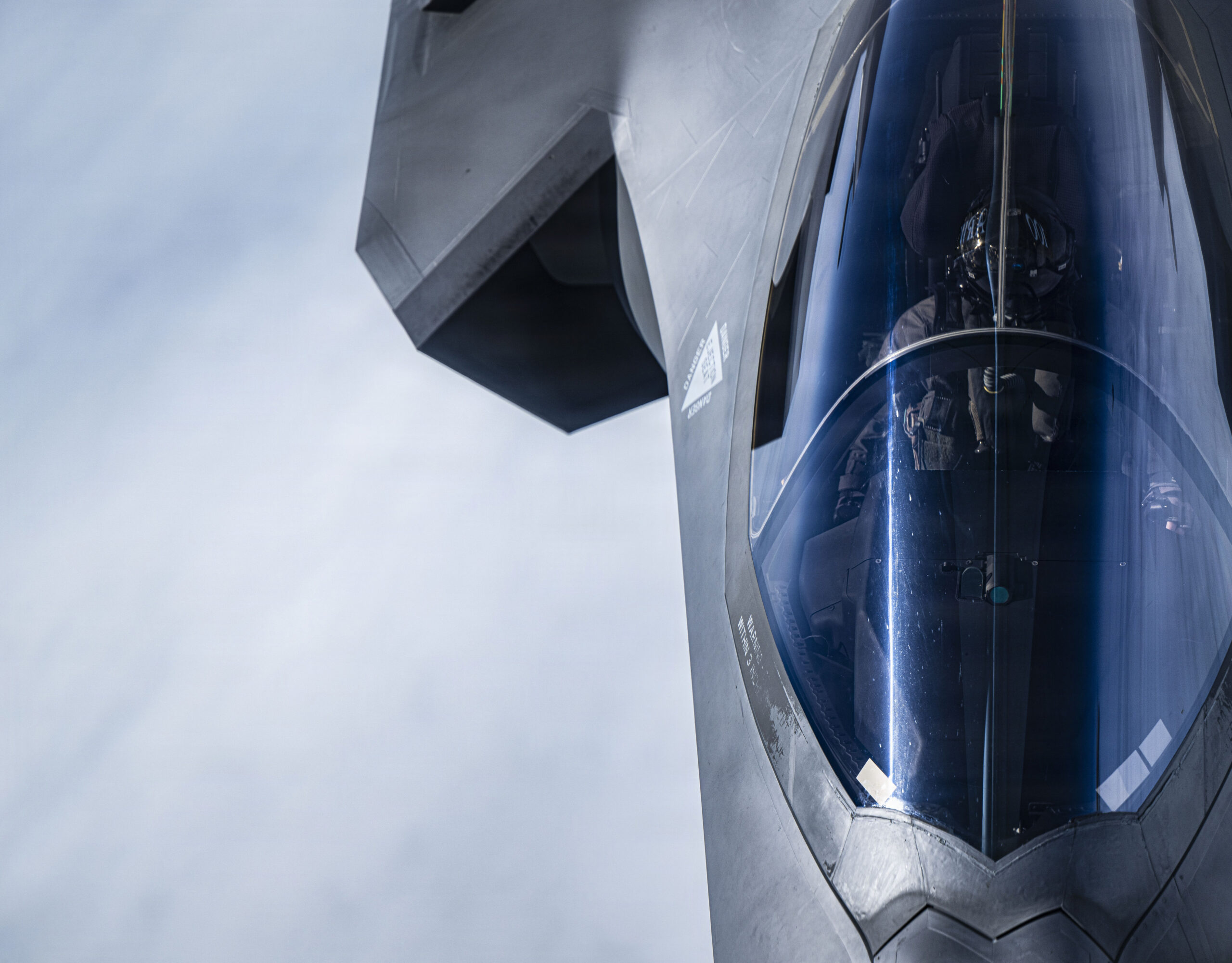
The estimated cost for the United States government’s acquisition of the F-35 Lightning II fighter jet program has seen a significant increase, according to a recently published Pentagon report. The advanced fifth-generation aircraft, a cornerstone of U.S. and allied air power, faces rising expenses driven by inflation, material costs, and critical modernization efforts.
The latest modernized selected acquisition report (MSAR) from the Pentagon reveals a total estimated acquisition cost of $536.2 billion for all F-35 airframes and engines planned for purchase by the U.S. government. This figure marks an increase of $51 billion from the $485.2 billion estimated in the previous 2023 report, representing over a 10 percent growth in just one year.
Further metrics within the acquisition report highlight similar trends in cost escalation, particularly concerning the unit recurring flyaway cost—the expense associated with producing a single F-35 jet and its accompanying engine. These figures are presented in 2012 dollars to maintain a consistent baseline for comparison:
- For the U.S. Air Force’sF-35Aconventional takeoff and landing variant, the updated flyaway cost stands at$78 millionper aircraft, reflecting a 7.3 percent increase from the $72.7 million reported previously.
- TheF-35Ccarrier variant, utilized by both the U.S. Navy and the U.S. Marine Corps, now has a flyaway cost of$93.4 million, up 6.6 percent from $87.65 million in the 2023 report.
- The Marine Corps’F-35Bshort takeoff and vertical landing variant, recognized as the most technologically complex version of the jet, has experienced the largest proportional increase, with its flyaway cost now at $110.3 million. This represents a 10.5 percent jump from its previous $99.78 million estimate.
The F-35 Joint Program Office (JPO), responsible for overseeing the program, acknowledged the rising costs. However, it declined to provide the cost per variant for the most recent production lots in current-year dollars, citing that such information is classified as Controlled Unclassified Information (CUI) and therefore not publicly releasable.
The JPO elaborated on several factors contributing to the increased expenditures. Research, development, test, and evaluation (RDT&E) costs, which form a component of the overall acquisition costs, have risen by approximately $19 billion to a total of $106.6 billion. This growth is primarily attributed to a more refined estimate for the F-35’s Power Thermal Management Upgrade (PTMU) program, incorporating updated requirements and underlying assumptions for this critical system.
Furthermore, adjustments to the program’s schedule for the Block 4 modernization effort have contributed to these RDT&E increases. Block 4 represents a comprehensive suite of upgrades designed to significantly enhance the F-35’s weapons carriage, sensor capabilities, sensor fusion, and other critical systems. The refined timeline for Block 4, alongside engine core upgrade and PTMU modernization efforts, has added both years and costs to the program’s development phase. Of the $19 billion increase in RDT&E costs, approximately $900 million is specifically linked to the refinement of capability estimates for Block 4.
The acquisition report emphasizes the F-35 program’s focus on delivering 55 critical Block 4 capabilities. These include enhancements vital for the F-35’s air superiority and suppression of enemy air defenses missions, as well as the integration of new and advanced weaponry.
Another significant contributor to the overall cost growth is an increase of nearly $32 billion in procurement costs. This surge is attributed to several factors, including the incorporation of production costs for the F-35’s upcoming APG-85 radar, a general rise in production support costs, and the addition of the Power Thermal Management Upgrade production requirement. The JPO also noted the integration of contractors’ actual costs and the negotiated contract prices for F-35 Lots 18 and 19 as contributing elements.
In September 2023, the Pentagon announced that the F-35 JPO and Lockheed Martin had finalized a deal for Lots 18 and 19, encompassing 296 aircraft for a total of $24.29 billion. Complementing this, in April, the JPO and engine manufacturer Pratt & Whitney disclosed deals totaling $6.6 billion for the engines corresponding to Lots 18 and 19. Combined, these agreements suggest an approximate average cost of $104.4 million per aircraft across all variants for these specific production lots.
Beyond program-specific factors, the report also identified broader economic pressures. Rising inflation rates and increased material costs across the defense industrial base were cited as additional forces exerting upward pressure on the F-35’s overall price tags.
Programmatic shifts are also playing a role. The military intends to defer some F-35 purchases into future “out-years” beyond the immediate budget cycle. Concurrently, the U.S. Marine Corps is planning to adjust its procurement strategy, shifting some of its planned F-35B purchases towards the carrier-based F-35C variant. Since these F-35C acquisitions will occur further in the future than the initially planned F-35Bs, they are projected to incur higher costs due to ongoing inflation and anticipated increases in maintenance expenses, further exacerbating the program’s rising trajectory.
Despite the cost increases, the executive summary of the MSAR characterizes the F-35 program as a “mature enterprise.” It highlights the presence of over 1,200 F-35 jets operating in 20 nations worldwide, emphasizing the program’s current focus on long-term strategies aimed at enhancing capabilities and reducing sustainment costs. The report also points to recent milestones, including the program’s entry into full-rate production in March 2024 and the fielding of aircraft equipped with enhanced Technology Refresh 3 (TR3) hardware, which is designed to lay the groundwork for the forthcoming Block 4 upgrades.
The Pentagon’s report concludes with a statement affirming the jet’s global significance: “The growing global demand speaks for itself. The F-35’s value proposition is unmatched.”
Lockheed Martin, the primary contractor for the F-35, responded to the report, stating that the new figures reflect a strategic evolution in the program. Mireya Villarreal, a spokesperson for Lockheed Martin on the F-35 program, noted via email: “The latest MSAR report shows the combat-proven F-35 program moving into full-rate production, resuming high-volume development deliveries and growing globally. It also shows that the hard work has shifted from proving the basic aircraft to executing major modernization, improving fleet readiness, and controlling long-term sustainment and integration costs.”
Why This Matters
The escalating costs of the F-35 Joint Strike Fighter program carry significant implications for global defense, national budgets, and international cooperation. The F-35 is not merely an aircraft; it represents the backbone of future air power for the United States and many of its key allies, including NATO members and Pacific partners. Its cost trajectory, therefore, has far-reaching consequences.
**Financial Strain and Budgetary Impact:** An additional $51 billion for the U.S. acquisition alone, pushing the total past half a trillion dollars, represents a substantial allocation of taxpayer money. These funds could otherwise be directed towards other critical defense initiatives, domestic programs, or deficit reduction. For the Pentagon, such cost growth in its largest acquisition program can strain future defense budgets, potentially forcing trade-offs in other vital areas like readiness, personnel, or investment in emerging technologies. Allied nations that have committed to purchasing the F-35 will also face heightened budgetary pressures, potentially impacting their ability to fund other defense needs or procure the planned number of aircraft.
**Military Readiness and Strategic Planning:** Delays and cost overruns associated with modernization efforts, such as the Block 4 upgrades and the Power Thermal Management Upgrade, could impact the operational capabilities of the F-35 fleet. These upgrades are crucial for maintaining the jet’s technological edge against evolving threats. Any slippage in their delivery or deployment could affect military readiness and alter strategic planning for potential conflicts, especially in contested environments. The shift of purchases into “out-years” and changes in variant procurement by the Marine Corps further illustrate how financial realities can influence force structure and future capabilities.
**International Security and Alliance Cohesion:** With over 20 nations operating or planning to operate the F-35, its affordability and performance are central to allied interoperability and collective security. Rising costs for an aircraft designed to be common across allied forces could strain the defense budgets of partner nations, potentially leading to reduced orders or delays in integrating the jet into their fleets. This could, in turn, affect the collective strength and cohesion of alliances, particularly in regions where the F-35 is seen as a crucial deterrent or combat asset.
**Accountability and Program Oversight:** The consistent upward revision of costs for a program as critical as the F-35 will inevitably draw increased scrutiny from lawmakers, auditors, and the public. It raises questions about long-term cost estimation, contractor accountability, and the effectiveness of oversight mechanisms for major defense acquisitions. Maintaining confidence in the program’s management is essential for securing continued funding and support.
**Industrial Base and Technological Advancement:** While the F-35 program supports a vast industrial base with numerous jobs, persistent cost growth can also reflect challenges in manufacturing efficiency, supply chain stability, and the integration of advanced technologies. The interplay of inflation, material costs, and the complexity of integrating upgrades like the APG-85 radar highlights the ongoing challenges in producing cutting-edge military hardware at predictable prices. How these challenges are managed will set precedents for future complex defense programs and the broader defense industrial sector.
In summary, the F-35’s rising price tag is more than just an accounting issue; it is a critical indicator of the broader challenges in modern defense procurement, with tangible consequences for national security, economic stability, and international defense partnerships.