
UK MP Questions Royal Navy Deployment for EU Defence Meeting in Ireland Amid Neutrality Concerns
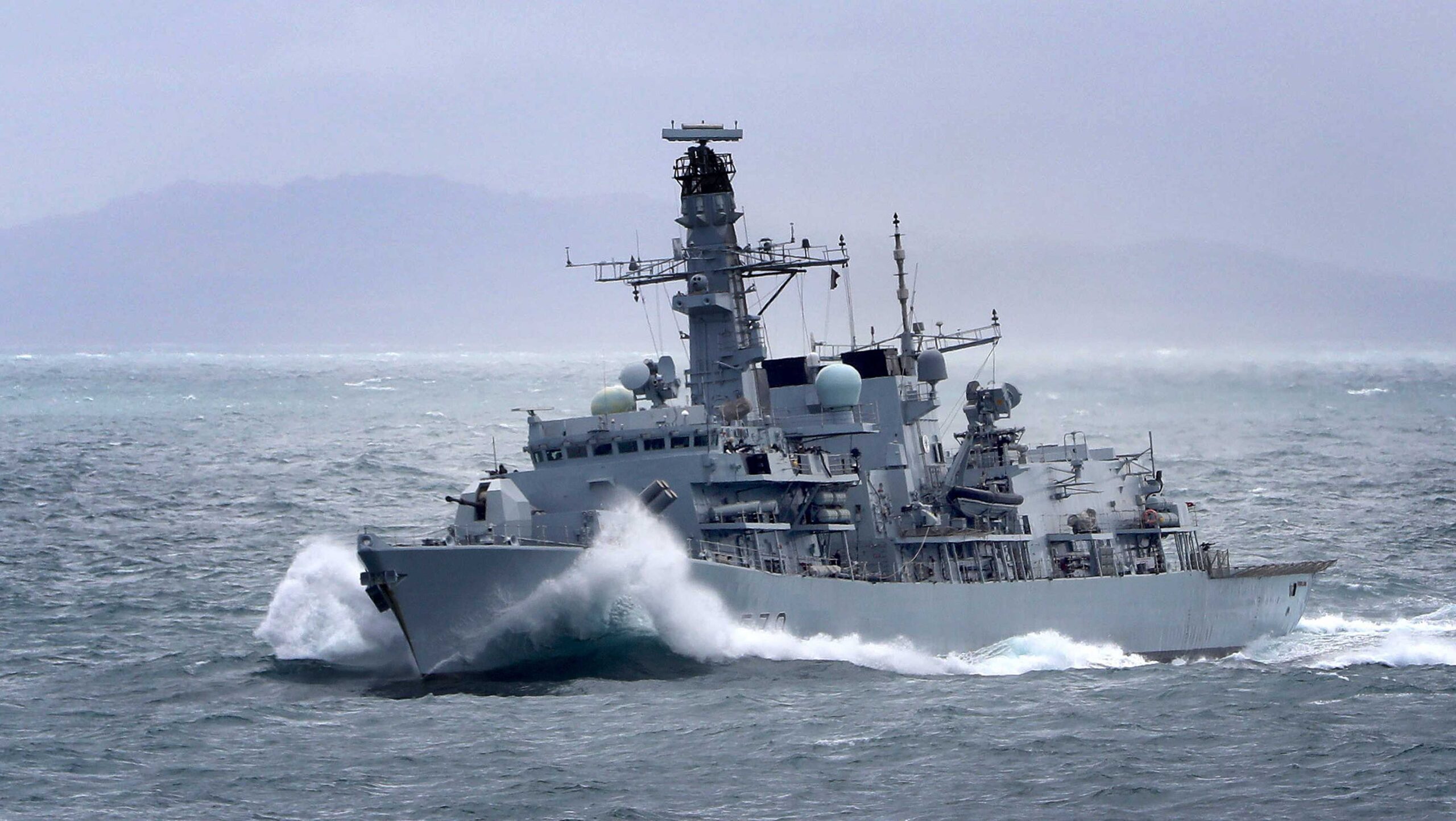
A Conservative Member of Parliament has raised significant questions regarding the proposed deployment of Royal Navy assets to support security arrangements for an informal meeting of European defence ministers in Ireland. The MP argues that restrictions imposed by Irish neutrality, specifically the requirement for British vessels to remain outside Ireland’s territorial waters, could severely limit the effectiveness of any British naval deployment.
John Cooper, MP for Dumfries and Galloway, articulated his concerns in a letter dated August 28, addressed to Defence Secretary Wes Streeting. His intervention followed media reports suggesting that the Irish government had requested support from the Royal Navy for the upcoming meeting, scheduled to take place in Wicklow, Ireland.
In his letter, Mr. Cooper stated, “I am aghast at media reports from Dublin that their Government has requested support from the Royal Navy for security, but that any vessel involved must stay outside their 12-mile territorial-waters limit.”
Accompanying the letter, a social media post from Mr. Cooper further elaborated on his position. He wrote, “Neutral Ireland portrays their gunboat George Bernard Shaw protecting an EU defence event there next week… but they’ve asked for help from the Royal Navy… who must get close enough to be much use! I’ve asked the Defence Secretary why we’re paying for this idiocy.” This statement highlighted what he perceived as a contradiction between Ireland’s neutral stance and its request for foreign military assistance, particularly under conditions he viewed as impractical.
The meeting itself is part of Ireland’s rotating presidency of the European Union. Mr. Cooper’s letter additionally sought clarification on whether the UK Defence Secretary would attend the event and urged a reconsideration of the planned deployment of British forces in support of the gathering.
Royal Navy warship to provide air defence for Ireland
Mr. Cooper linked his current concerns to a reported incident in December near Dublin Airport, where uncrewed aerial vehicles (UAVs) were detected in proximity to the airport during a visit by Ukrainian President Volodymyr Zelenskyy. He contended that while the Irish Defence Forces identified the UAVs, they lacked the necessary capabilities to interdict them, specifically citing an absence of meaningful air-to-air or surface-to-air defence systems.
While acknowledging Ireland’s possession of a limited number of RBS Bolide short-range air-defence missiles, Mr. Cooper argued that these would offer only restricted coverage against faster or higher-altitude aerial threats. This assessment formed part of his broader argument about the perceived deficiencies in Ireland’s own defence capabilities.
The MP also questioned the practical value of positioning foreign warships beyond Ireland’s territorial waters. He stated, “This insistence that foreign warships remain outside Irish limits hampers their effectiveness. The Royal Navy is being asked to do a bad job. To add insult to injury, British taxpayers are footing the bill for this bodge.” This criticism underscores his view that the operational constraints imposed by Irish neutrality render the British contribution inefficient and costly.
Mr. Cooper proceeded to argue that Ireland’s long-standing policy of military neutrality has not been adequately supported by commensurate investment in its own defence capabilities, despite recent discussions and moves to increase defence spending. He drew a comparison, asserting, “The Republic makes great play of its neutrality but has for too long not funded this in the way that, for example, Switzerland does.” This suggests a belief that neutrality, to be credible and effective, requires substantial self-funded defence infrastructure.
The letter also referenced anticipated French involvement in the security arrangements for the Wicklow meeting. Mr. Cooper noted that the French frigate Aquitaine was expected to observe the same 12-mile exclusion zone from the Irish coast. He then questioned the utility of its Aster surface-to-air missile system from such a distance, particularly against small or fast uncrewed aircraft. He wrote, “Her Aster surface-to-air missiles will have the range to cover Carlow, but against low and fast UAVs may be a sledgehammer when a scalpel is required,” implying a mismatch between the weapon system and the potential threat profile.
Mr. Cooper suggested that smaller-calibre naval weapons might be more appropriate for countering certain uncrewed aerial threats, but reiterated that foreign ships would still need to be positioned sufficiently close to be effective against such targets.
Beyond the immediate security arrangements for the EU meeting, the MP raised broader questions concerning military cooperation between Britain and Ireland, asking the Defence Secretary to consider a re-evaluation of the current relationship. He wrote, “Will you look again at the deployment of any British forces for this ‘informal’ chit-chat next week? It is both an affront to Britain and unaffordable expense, especially when our involvement is subject to damaging caveats?”
Furthermore, Mr. Cooper posed a more fundamental question: “More substantially, will you bring to the House details of a reset of our military relations with Ireland?” This call for a “reset” indicates a desire for a comprehensive review of defence ties between the two nations.
The letter concluded with a wider critique of Ireland’s defence posture and the extent to which British forces might be expected to provide assistance during an emergency. Mr. Cooper stated, “We can no longer afford to let the Irish walk on our cane. Will the Marine Nationale bear the cost of protecting those cables and pipelines? Do you agree that rather than RAF Typhoons and F-35 Lightning IIs scrambling – at gulping expense – to intercept anything airborne in the Republic’s airspace, it should be over to the Armée de l’air et de l’espace to cover IDF blushes?” This passage implies that Britain is disproportionately shouldering the burden of Irish security, including critical infrastructure and airspace defence, and suggests that other European partners should contribute more.
He concluded his letter with a pointed summary: “Ireland must accept neutrality without funding is simply freeloading.”
Why This Matters
This controversy highlights several critical issues in international relations, defence policy, and bilateral cooperation. Firstly, it brings into focus the complexities of military neutrality in a rapidly evolving geopolitical landscape. Ireland’s long-standing policy of neutrality, particularly within the context of European defence integration and increasing security threats, is undergoing scrutiny. The debate over whether neutrality requires substantial self-funded defence capabilities, as argued by Mr. Cooper, is a recurring theme in discussions about European burden-sharing and collective security.
Secondly, the incident underscores the delicate nature of UK-Ireland relations, particularly in the post-Brexit era. Defence cooperation, often a quiet but essential aspect of bilateral ties, is now being publicly challenged. An MP’s call for a “reset” of military relations signals potential shifts in how both nations approach shared security concerns, which include maritime security, critical infrastructure protection (like undersea cables and pipelines), and airspace defence.
Thirdly, the discussion about the effectiveness of foreign military assets operating under national sovereignty restrictions has broader implications for international military cooperation. The practical challenges of coordinating security operations when assets are constrained by territorial limits, especially against agile threats like uncrewed aerial vehicles, raise questions about interoperability and shared defence strategies within Europe.
Finally, this debate reflects an ongoing political discussion within the UK about defence spending, national interest, and the allocation of military resources. Mr. Cooper’s arguments about British taxpayers footing the bill and the perceived “freeloading” by other nations resonate with a segment of the electorate and influence government policy decisions regarding defence engagements and international partnerships.