
Five days after a catastrophic flood ravaged the mountain passes of Nepal, families arriving from distant areas are engaged in a grim search for any recognizable remains of their loved ones amidst hundreds of unidentified bodies. The deluge, which occurred on a Wednesday, caused widespread destruction and displacement, leaving a trail of death and devastation across the region, impacting both local communities and international visitors.
In Bharatpur, a city located over 100 miles downstream from the initial impact zone, a makeshift identification center has been established in a government hall. Here, distraught relatives gather in somber silence, watching a continuous slideshow of photographs depicting the recovered human remains. The images, often indistinct due to the advanced state of decomposition, represent the only hope for many seeking closure and the opportunity to perform final rites.
Adjacent to this viewing area, another government facility has been repurposed as a temporary morgue, housing approximately 270 sets of remains. The vast majority of these bodies remain unidentified, highlighting the overwhelming challenge faced by local authorities. Given Bharatpur’s lack of specialized forensic and preservation infrastructure, coupled with the urgency posed by the tropical climate, the local administration has been compelled to proceed with mass burials. These unidentified remains were being transported to a designated forest site for burial before nightfall on Sunday, a stark testament to the scale of the tragedy and the limited resources available.
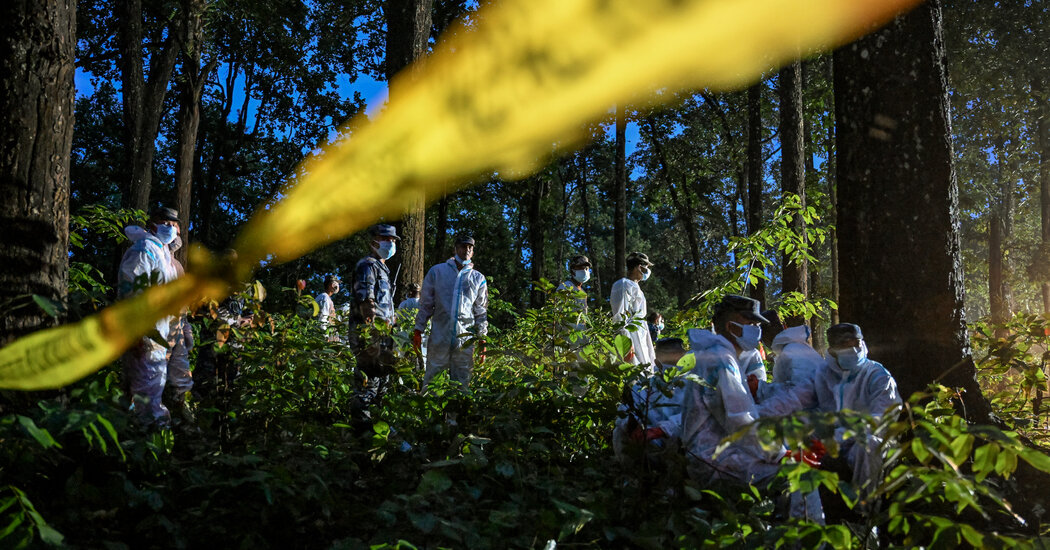
At the burial location, security forces, equipped with protective gear, meticulously offload each body onto stretchers. Every step of this solemn process is documented by cameras, ensuring a record is kept for potential future identification should new information or DNA technology allow. Nearby, rows of metal signs, each bearing a number and affixed to concrete-filled pots, stand ready as markers for individual graves. This detailed, albeit somber, documentation process is critical given the low rate of identification and the sheer number of bodies requiring immediate interment.
The discrepancy between the number of recovered bodies and the vastly higher number of missing persons underscores a grim reality: the official death toll is anticipated to continue rising significantly. As of Sunday night local time, nearly 800 bodies had been recovered across the affected areas. However, more than 2,500 individuals were still officially reported missing, with hopes of finding them alive rapidly diminishing. Rescue experts typically consider the initial 72 hours following a disaster as the most critical window for locating survivors, a period that has long since passed in this incident.
The devastating flood, characterized by an immense wall of water and mud, swept through northern Nepal and Tibet on Wednesday. The catastrophe was triggered by the detachment of a substantial portion of a glacier from a mountain face. The sheer force of its fall generated seismic activity so intense that initial reports led officials to believe an earthquake had occurred. This colossal event engulfed entire villages, swept away hydropower workers, and impacted hundreds of tourists and religious pilgrims from nearly three dozen countries who were present in the area. Tens of thousands of people are now in urgent need of relief, with numerous towns completely obliterated and vital infrastructure, including roads, bridges, and communication networks, rendered inoperable across vast stretches of the mountainous region.
The primary focus of ongoing rescue operations has been concentrated on the extensive tunnel systems of several major hydropower projects situated in Rasuwa and Nuwakot districts. These areas, particularly Rasuwa, bore the brunt of the earliest and most severe damage in Nepal, with large numbers of workers believed to have been trapped underground. The complexity of the terrain and the scale of the debris have presented significant challenges to rescue teams attempting to reach potential survivors.
Through a night of incessant rain, the Nepali Army tirelessly attempted to drill access points into tunnels that remained buried under tons of mud and debris. By Sunday afternoon, with crucial support from Indian rescue teams, they successfully created an opening to one of these tunnels. Unfortunately, it was found to be completely filled with water, as reported by Brig. Gen. Raja Ram Basnet, the army spokesman. Efforts to locate and access a second critical tunnel have proven to be even more arduous, presenting a formidable obstacle to rescuers operating in hazardous conditions.
“The Nepali Army has been utilizing thermal drones in an exhaustive search for any signs of life within the affected areas,” Brig. Gen. Basnet stated, describing the advanced methods deployed in the desperate search. “Regrettably, there have been no indications of survivors detected through these advanced methods so far,” he added, conveying the deepening despair among rescue personnel as the critical window for finding survivors closes. The immense power of the deluge was such that approximately a dozen bodies were carried hundreds of miles downstream, eventually being discovered in neighboring India, illustrating the vast geographical spread of the disaster’s impact.
When the initial wave of human remains began washing up on the riverbanks within the Chitwan district, dozens of miles downstream from the disaster’s epicenter, local officials found themselves immediately overwhelmed. The sheer volume of bodies arriving, combined with the rapid decomposition in the warm, humid conditions prevalent during monsoon season, quickly surpassed the capabilities of existing emergency response protocols and infrastructure. This downstream impact underscores the widespread nature of the flood’s devastation, extending far beyond the immediate mountain regions where the glacier collapsed.
Nepal, a country with significant economic challenges and limited infrastructure, has struggled immensely with the aftermath of this unprecedented event. Police Chief Rameshwor Poudel confirmed that the morgue facilities in Chitwan, for instance, possess a capacity to store merely over three dozen bodies. This severe limitation quickly became apparent as hundreds of bodies began to arrive, necessitating improvised solutions to manage the crisis.
Lacking adequate alternatives, district officials converted the aforementioned government hall in Bharatpur into a temporary morgue and identification center. To mitigate the rapid decomposition, they attempted to procure dry ice, as the facility possessed only a single air-conditioning unit, proving insufficient for the scale of the problem. A help desk and a visitor hall were established to assist the increasing number of distressed families. Crucially, photographs of all recovered remains were taken, forming a digital catalog for loved ones beginning to arrive from across the country in search of their missing family members, hoping for a match.
However, the bodies had been submerged in turbulent water for an extended period, and the persistent monsoon heat severely accelerated decomposition, greatly complicating identification efforts. Despite an urgent appeal from the foreign minister to international counterparts for assistance in providing crucial freezer units, this vital aid had not materialized immediately, further exacerbating the logistical challenges faced by local authorities in managing the deceased.
Only approximately a dozen bodies out of hundreds have so far been positively identified and subsequently released to their respective families for traditional burial rites. This low identification rate reflects the severe state of the remains and the lack of advanced forensic capabilities. Meanwhile, the relentless current of the rivers continues to deliver more remains, adding to the already staggering count and the immense pressure on the overwhelmed local services. The continuous influx of bodies means the crisis is far from over, and the grim task of recovery and identification is expected to persist.
“We are still recovering between 15 to 20 new bodies every single day,” stated Anil Thapa, a senior traffic officer who has been assisting at the makeshift morgue, reflecting on the grim daily reality faced by responders. He projected a somber outlook, adding, “This tragic process is likely to persist for months to come,” indicating the long-term nature of the recovery and identification efforts that will stretch the already strained resources of the region.
Faced with the insurmountable task of preserving hundreds of unidentified bodies and the urgent need to prevent public health risks, the district authorities announced on Saturday their decision to commence mass burials. This protocol, however, follows a stringent documentation process: photographs are taken, distinguishing marks and clothing articles found on the corpses are meticulously recorded, and DNA samples are collected from each individual. This comprehensive approach aims to ensure that even without immediate identification, a permanent record exists for potential future confirmation, providing a measure of solace and dignity to the deceased and their families, even if posthumously.
In a secluded, lush forest glade located a mere 10-minute drive from the makeshift morgue, the first mass burials commenced. On Saturday evening, 93 bodies were interred, followed by another 100 on Sunday. These ceremonies, though performed out of necessity and a desire to provide a respectful end for the unknown victims, represent a heartbreaking reality for families who cannot provide traditional farewells to their loved ones due to the circumstances of the disaster.
As the Sunday evening mass burial concluded, Biresh Kumar Sah, a 17-year-old, arrived at the town’s makeshift morgue following an arduous eight-hour bus journey. Biresh, who had been studying in the Nepali capital, Kathmandu, first learned of the devastating flood hitting his hometown of Siraha days earlier. His father, a math teacher, and his younger brother, a student at the same school, were both reported missing in the chaos.
“The first day, I tried to dismiss the news. I withheld the information from everyone around me,” Biresh recounted, his voice tinged with the pain of delayed grief. “I desperately wanted to cling to hope that they were safe and somehow survived.” His initial denial highlights the profound psychological impact of such sudden and overwhelming loss on individuals and families.
On the second day following the disaster, as the grim reality began to set in and information became more consistent, Biresh took to social media, posting an appeal online stating that his father was missing. This public plea marked a turning point in his desperate search for any news.
“His colleague eventually reached out to me and confirmed that he had witnessed both my father and my brother being swept away by the raging floodwaters,” Biresh shared, the raw emotion evident in his words. Despite this devastating confirmation, he expressed the enduring human need for belief: “I know they’re gone, but I still have hope,” a sentiment that encapsulates the profound agony of those left behind in such a catastrophe.
His aunt, standing nearby, softly interjected, suggesting that the family would eventually need to accept the unfolding facts and prepare to perform final rites in accordance with their traditions. Biresh, however, responded with the blunt honesty of grief, rolling his eyes as he stated, “I don’t know these rites. I feel wretched.” His outburst reflects the overwhelming nature of his loss and the emotional distance from traditional mourning protocols in the face of such an unprecedented disaster.
Ramesh Dahal, 31, was another individual meticulously examining the grim photos displayed on the screen at the makeshift morgue. He had undertaken a long journey to Bharatpur, having first exhaustively checked all hospitals in Kathmandu where the wounded had been transported. He was searching for his 21-year-old nephew, Suman Dahal, who worked as a guide and was leading a group of trekkers in the Rasuwa district when the flood struck.
Mr. Dahal shared that he had initially clung to hope, buoyed by earlier reports that some individuals in the path of the floods had managed to flee to higher ground within the surrounding jungles. He speculated, “Maybe they felt the earthquake-like force of the falling glacier that triggered the flood and sought refuge somewhere safe. Perhaps they even heard a siren from China, warning them of the impending danger,” illustrating the desperate theories families form in the absence of concrete information and the yearning for a positive outcome.
However, with each passing day and the diminishing prospects of finding his nephew alive, he admitted to gradually coming to terms with the grim reality. “Now, I feel there’s perhaps only a 0.1 percent chance of even finding his body,” Mr. Dahal concluded, his voice heavy with resignation. His statement reflects the profound shift from desperate hope to a bleak acceptance of an almost certain loss, a common emotional trajectory for those affected by such large-scale natural disasters that leave little trace of victims.
Binod Ghimire contributed additional reporting from Kathmandu, Nepal, providing on-the-ground insights into the ongoing humanitarian crisis and rescue efforts. The situation remains fluid, with recovery and identification operations expected to continue for an extended period, underscoring the long-term impact of this disaster on the region.
Why This Matters
The devastating flood in Nepal and Tibet underscores several critical global concerns beyond the immediate humanitarian crisis. Firstly, it highlights the acute vulnerability of mountainous regions, particularly in developing nations like Nepal, to the intensifying impacts of climate change. The detachment of a glacier, the precise trigger for this catastrophe, is a phenomenon increasingly linked to rising global temperatures and changes in cryospheric dynamics. Such events threaten communities reliant on glacial ecosystems and expose them to extreme, unpredictable natural disasters, potentially leading to more frequent and intense glacial lake outburst floods (GLOFs) or similar events.
Secondly, the crisis exposes the profound humanitarian and logistical challenges that emerge in the wake of such large-scale events in resource-constrained environments. The struggle to identify victims, manage mass casualties with limited infrastructure (such as morgue capacity and refrigeration), and provide immediate relief to tens of thousands of displaced individuals demonstrates the urgent need for robust disaster preparedness mechanisms, enhanced international aid, and long-term recovery strategies. The widespread loss of critical infrastructure—including roads, bridges, and communication lines—further isolates affected communities, significantly hindering both immediate rescue efforts and the subsequent rebuilding process vital for economic and social recovery.
Moreover, the presence of hundreds of international tourists and pilgrims among the missing or deceased highlights the global interconnectedness of such tragedies. It necessitates international cooperation in rescue efforts, victim identification, and consular support, broadening the scope of the disaster beyond national borders. This also raises questions about tourism safety in increasingly volatile natural environments. The profound psychological toll on survivors and families, evident in the desperate search for loved ones and the struggle to accept profound loss, represents a significant long-term societal challenge that will require sustained mental health and community support.
Finally, this event serves as a stark reminder of the fragile balance between human development, particularly large-scale infrastructure projects like hydropower, and the natural environment. While such projects are crucial for economic growth and energy security, their location in geologically active and climatically sensitive areas presents inherent and escalating risks. As the world grapples with a changing climate, understanding and mitigating these risks through comprehensive environmental impact assessments, sustainable development practices, and enhanced early warning systems become paramount to preventing future catastrophes of this magnitude and protecting both human lives and critical infrastructure.