
Royal Fleet Auxiliary Names New Fleet Solid Support Ships, Keel Laid for First Vessel
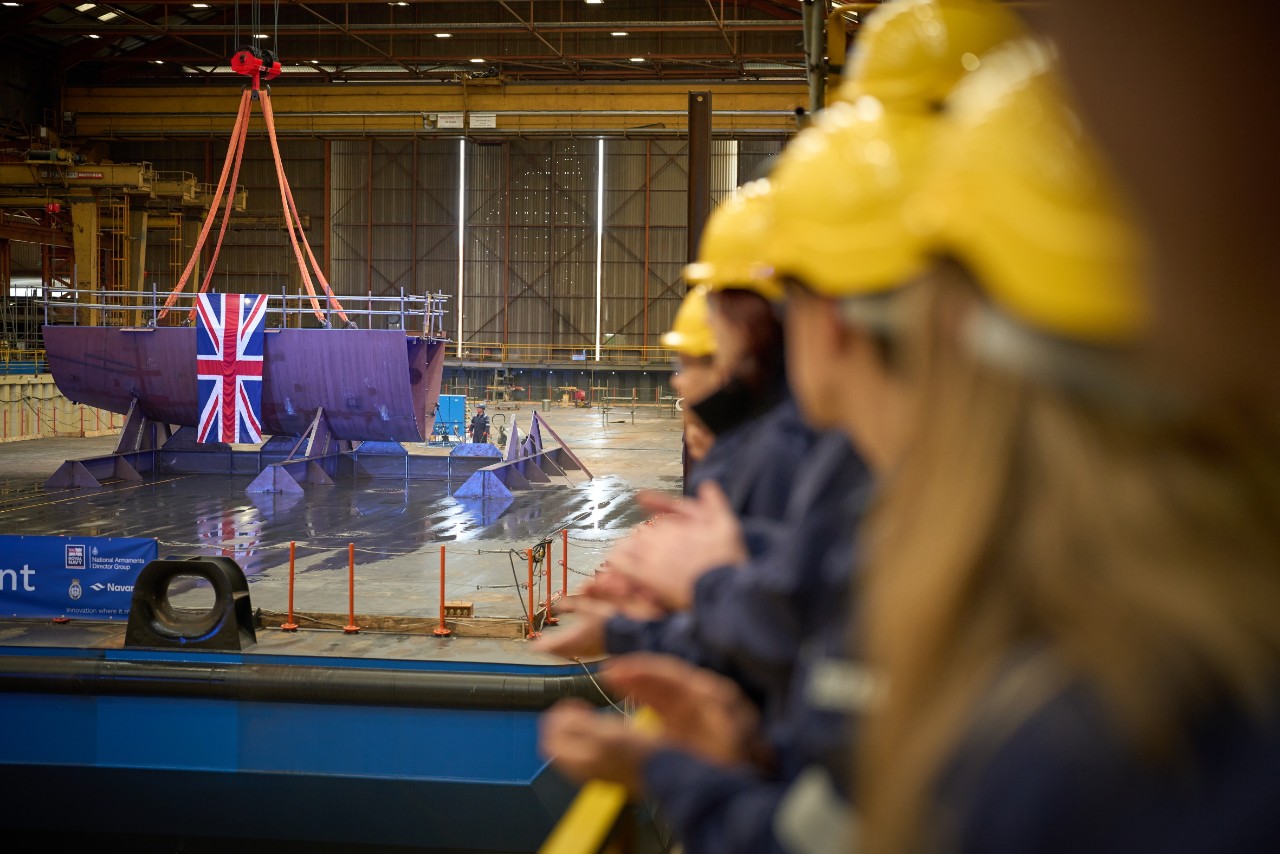
The Royal Fleet Auxiliary (RFA) has officially announced the names for the second and third ships in its new Fleet Solid Support (FSS) programme: RFA Reliant and RFA Resourceful. This announcement coincided with the formal keel-laying ceremony for the first vessel in the class, RFA Resurgent, an event that took place at the Appledore shipyard in North Devon. These developments mark a significant advancement in the United Kingdom’s naval shipbuilding strategy, which aims to bolster the Royal Navy’s logistical capabilities on a global scale.
The three new ships are being constructed with the primary objective of delivering essential logistical support to Royal Navy vessels operating across the world’s oceans. Their critical role involves the at-sea replenishment of vital provisions, including ammunition, general stores, spare parts, fresh water, food, and other necessary supplies. This capability is paramount for enabling frontline warships, particularly the UK’s Queen Elizabeth-class aircraft carriers and their escort groups, to sustain extended operational periods far from home ports. The ability to resupply at sea is fundamental to the Royal Navy’s capacity to project power, maintain a continuous presence, and respond effectively to international commitments.
The construction methodology for these vessels involves an international collaborative model, integrating both UK and Spanish shipbuilding expertise. Fabricated sections of the ships are being produced at various facilities, including Navantia shipyards in Appledore, UK, and Cadiz, Spain, as well as additional sites in Belfast, Northern Ireland. Following their individual construction, these sections will be transported to Harland & Wolff’s shipyard in Belfast for final integration and assembly. This distributed manufacturing approach is designed to leverage specialized capabilities and technological advancements across multiple shipyards, fostering international cooperation while simultaneously contributing to the development of domestic shipbuilding skills and industrial capacity.
The names of RFA Reliant and RFA Resourceful were formally unveiled by Commodore Sam Shattock, who heads the Royal Fleet Auxiliary, during the keel-laying ceremony for RFA Resurgent. The ceremony, held on Merchant Navy Day, represents a long-standing shipbuilding tradition that signifies the official commencement of a ship’s physical construction. As part of this tradition, a coin was ceremoniously welded to the keel of RFA Resurgent by a Navantia UK apprentice. This act is a symbolic gesture, historically believed to bring good fortune to the vessel and its future crew throughout its operational service, marking the transition of the project from its design phase into tangible construction.
During his address regarding the first vessel, RFA Resurgent, Commodore Shattock commented that the chosen name was intended to evoke themes of “renewal, resilience, and the ability to recover stronger from challenge.” He further indicated that these qualities are expected to be reflected not only in the ship’s inherent design and robust operational capabilities but also in the dedication and expertise of the personnel involved across all stages, from design and construction to ongoing support and eventual operation at sea. Such naming conventions often serve to imbue new naval assets with symbolic meaning pertinent to national values and strategic naval objectives.
Each Fleet Solid Support ship is designed to operate with a dedicated core crew from the Royal Fleet Auxiliary, comprising 101 personnel. In addition to this core complement, the vessels are equipped with accommodation facilities for an extra 80 individuals, to be utilized when specific operational requirements necessitate. This supplementary capacity allows for the embarkation of specialized teams, which could include helicopter crews for vertical replenishment operations, boat crews for transferring supplies in varying sea states, or other dedicated personnel required for particular missions. This design feature significantly enhances the ships’ versatility and multi-role capabilities, allowing them to adapt to diverse operational scenarios.
Beyond their primary logistical function, the FSS vessels are intended to support a wider array of operational activities. The Royal Navy has indicated that these ships will possess the capability to participate in critical counter-piracy and counter-terrorism missions, providing essential at-sea support for forces engaged in these efforts. Furthermore, their design facilitates seamless operations alongside allied naval forces, promoting interoperability and contributing to multinational maritime security initiatives across various global theaters. This inherent adaptability underscores their strategic importance as assets capable of supporting a broad spectrum of maritime operations beyond routine supply duties.
A central tenet of the FSS programme’s design philosophy is its commitment to environmental sustainability and energy efficiency. The ships are being built to incorporate advanced energy-efficient technologies aimed at minimizing power consumption and reducing their overall environmental footprint. These features include optimized hull forms, efficient propulsion systems, and advanced waste heat recovery mechanisms. Crucially, the vessels are also designed with the inherent capability to utilize low-carbon, non-fossil fuels and to integrate future sustainable energy sources as these technologies mature and become viable. This forward-looking design objective aims to allow the ships to achieve a Carbon Zero status by the conclusion of their projected 30-year operational lives, aligning with broader international efforts to decarbonize maritime operations.
The name RFA Resurgent carries historical resonance within the Royal Fleet Auxiliary, reviving a name previously assigned to a merchant vessel that was converted into a fleet replenishment ship in 1957. This earlier RFA Resurgent provided vital service to the Royal Navy until 1979. Notably, it played a support role in a Joint Services scientific expedition to the Indian Ocean in 1975, illustrating the historical precedent for such versatile support vessels in diverse capacities.
Similarly, the name RFA Reliant has a significant history within the Royal Fleet Auxiliary, having been previously used by three distinct vessels. These earlier ships included stores and air stores support ships, as well as a helicopter support vessel. The most recent ship to bear the name was a merchant vessel that was commissioned into naval service in 1983. This RFA Reliant subsequently participated in the multinational deployment to Lebanon in 1984, where it was involved in critical evacuation operations. It was eventually sold in 1986, having been succeeded in its helicopter support role by RFA Argus.
RFA Resourceful introduces a new name to the Royal Fleet Auxiliary, consistent with the adjective-based naming convention adopted for this class of support ships. While the specific name is new, the RFA previously operated an armament stores ship named RFA Resource. That vessel served between 1966 and 1997, distinguishing itself by earning battle honours for its contributions during the Falklands War and subsequent operations in Kuwait, thereby establishing a legacy of robust logistical support under a similar thematic naming.
Beyond its immediate operational goals, the Fleet Solid Support programme is strategically formulated to foster economic growth and investment within the United Kingdom. It is designed to provide substantial support to domestic shipyards, encourage the creation of apprenticeships, generate skilled employment opportunities, and strengthen local supply chains. This national economic benefit is pursued through a collaborative model that integrates significant work packages and specialized expertise from British industries with the advanced construction capabilities provided by Navantia’s Spanish facilities, thereby creating an integrated European shipbuilding endeavor that yields both strategic and economic advantages.
Why This Matters
The naming and ongoing construction of the Fleet Solid Support (FSS) ships — RFA Resurgent, RFA Reliant, and RFA Resourceful — represent a critical advancement for the United Kingdom’s maritime defense capabilities and its broader industrial strategy. These vessels are more than mere supply ships; they are a fundamental component of the Royal Navy’s global reach and its ability to sustain effective operations worldwide.
Firstly, their primary role in providing essential ammunition, stores, and provisions at sea directly addresses a core requirement for modern naval power projection. Without a robust replenishment-at-sea capability, major combatants, particularly the UK’s aircraft carriers and their escort vessels, would face severe limitations in their capacity to operate far from home ports for extended periods. The FSS ships will enable carrier strike groups and other task forces to maintain a persistent presence in strategic regions, project influence, and respond rapidly to crises without the constant need to return to port for resupply. This directly translates into enhanced operational readiness, strategic flexibility, and a stronger global posture for the UK.
Secondly, the programme underscores the UK’s commitment to strategic international collaboration and domestic industrial investment. The distributed construction model, involving shipyards in both the UK and Spain, exemplifies a modern approach to defense procurement that leverages specialized expertise and fosters technological exchange across allied nations. Domestically, the FSS programme is a significant contributor to the National Shipbuilding Strategy, supporting thousands of highly skilled jobs in shipbuilding, engineering, and related industries. It drives crucial investment in apprenticeships and skills development, ensuring a robust pipeline of talent for future generations and bolstering the UK’s industrial base in a critical strategic sector.
Thirdly, the strong focus on environmental sustainability integrated into the FSS design reflects a forward-thinking approach to naval operations and procurement. The explicit aim to achieve Carbon Zero status by the end of their operational lives positions the Royal Fleet Auxiliary at the forefront of efforts to decarbonize maritime defense. This not only aligns with broader national and international environmental goals but also ensures that the RFA’s fleet remains relevant and adaptable to future energy landscapes and evolving regulatory environments, thereby future-proofing these significant national assets for decades to come.
Finally, the names chosen for these vessels carry significant symbolic weight, connecting them to a rich history of Royal Fleet Auxiliary service while also looking ahead to future challenges. Names like Resurgent, Reliant, and Resourceful evoke qualities of strength, continuity, and ingenuity, reflecting the enduring spirit of the Royal Navy and its critical support arm. This programme is not merely about building new ships; it is about reinforcing the UK’s naval power, securing its industrial future, and projecting its values and capabilities globally as a responsible and capable maritime nation.