
Challenger 3 Main Battle Tank Programme Undergoes Performance Review Amid Undisclosed Delays and Service Life Uncertainty
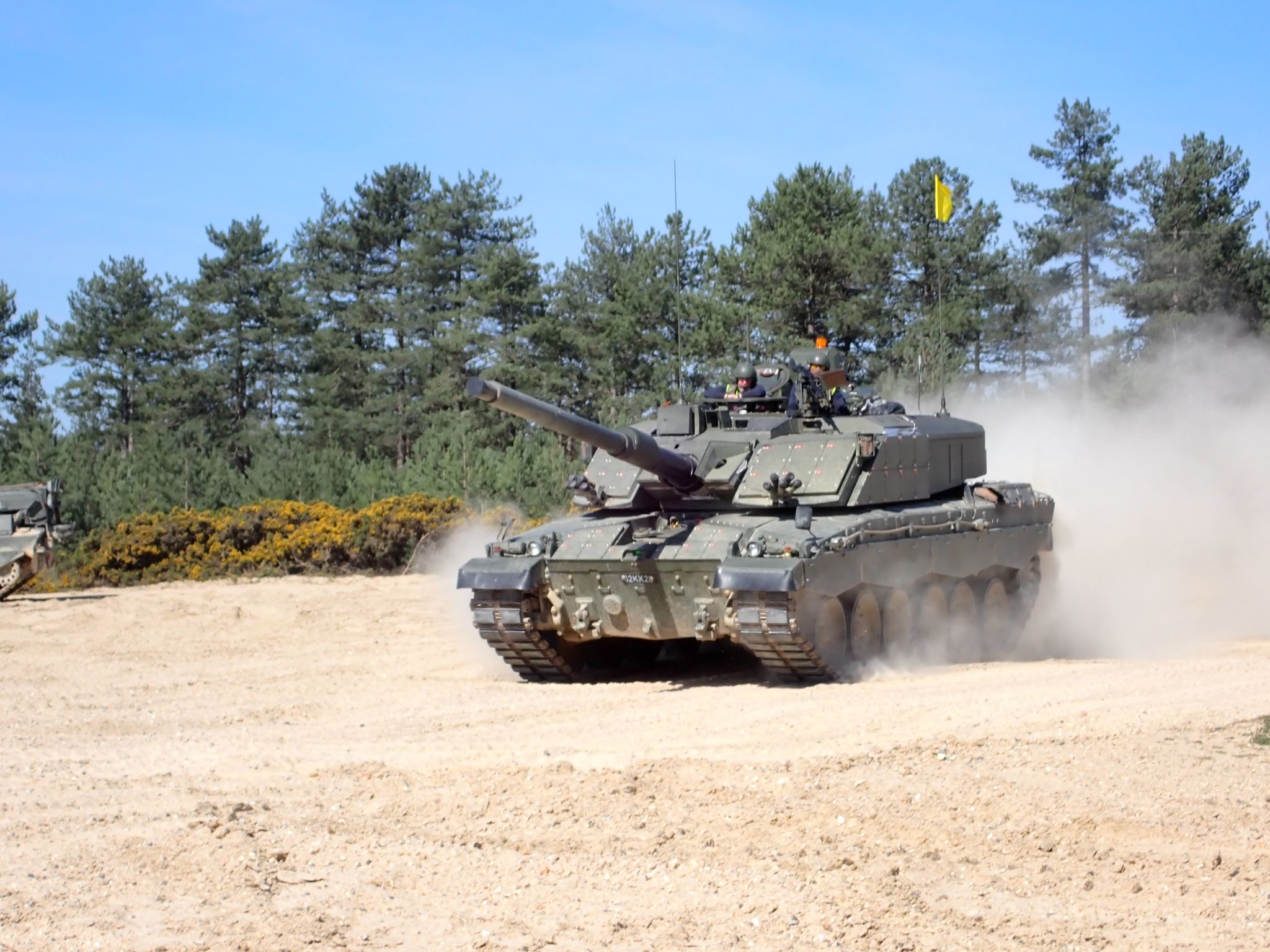
The Challenger 3 main battle tank programme, a cornerstone of the British Army’s armoured capabilities, is currently undergoing a comprehensive performance review and reapproval process. This development comes as the Ministry of Defence (MOD) has not yet provided specific details regarding potential delays to the programme’s Initial Operating Capability (IOC) and Full Operating Capability (FOC) milestones. Furthermore, a decision on whether the Challenger 3 will remain in service beyond its currently planned out-of-service date of 2040 remains pending.
The information emerged from responses provided by Defence Minister Luke Pollard to two written parliamentary questions submitted by Conservative MP Ben Obese-Jecty. These questions sought clarification and further details following the publication of the National Infrastructure and Service Transformation Authority’s (NISTA) Major Projects Annual Report 2025 to 2026, which had identified schedule risks within the Armour Main Battle Tank Programme.
One of Mr. Obese-Jecty’s enquiries specifically asked for the anticipated length of any forecast delay and the associated risks to both the Challenger 3’s Initial Operating Capability and Full Operating Capability, particularly those stemming from delivery challenges by the prime contractor. The second question pertained to when the Ministry of Defence expected to reach a decision on whether the tank’s planned out-of-service date should be extended beyond 2040.
In his official response, Minister Pollard stated: “The Armour Main Battle Tank Programme is currently subject to an ongoing review of programme performance and a related reapproval process. Under current plans, reapproval is expected during Financial Year 2026-27.” The Financial Year 2026-27 spans from April 1, 2026, to March 31, 2027, highlighting the timeframe for this critical internal assessment.
Significantly, the Minister’s response did not include revised dates for either the Initial Operating Capability or the Full Operating Capability. This means that the precise extent of any projected schedule adjustments for the programme remains undisclosed to Parliament and the public while the performance review is underway. Initial Operating Capability (IOC) typically refers to the point at which a system can be deployed and operated with a limited, but militarily useful, capability. Full Operating Capability (FOC) signifies that the system is fully operational and integrated, meeting all specified performance requirements and ready for widespread deployment.
The Ministry of Defence has indicated that it is examining the broader implications of the programme’s performance as part of this reapproval work. This includes assessing the potential impact of any revised timetable on essential preparatory activities, such as the training and familiarisation of British Army personnel who will operate the new tanks. The effective integration of new equipment into service relies heavily on thorough and timely personnel preparation, without which operational readiness can be compromised.
Minister Pollard further elaborated on this point, stating: “As part of this work, the Department is considering a range of factors, including programme timelines and impacts on associated activities such as training and familiarisation.” This underscores the interconnected nature of defence procurement, where equipment delivery directly affects personnel readiness, logistical chains, and overall operational effectiveness.
The Challenger 3 programme involves a substantial upgrade of 148 existing Challenger 2 main battle tanks. This modernization effort is being carried out by Rheinmetall BAE Systems Land, a joint venture specifically established for land-based defence programmes. The upgrade package is designed to provide the British Army with a significantly enhanced main battle tank capability, featuring a new turret, a more powerful 120mm smoothbore gun capable of firing advanced ammunition types, improved protection systems, and state-of-the-art digital architecture. These enhancements aim to address the evolving threats of modern warfare and ensure the UK’s heavy armour remains competitive and effective on the battlefield against peer adversaries.
Mr. Obese-Jecty’s parliamentary questions were prompted by the identification of schedule risks within the Armour Main Battle Tank Programme, as detailed in the most recent major projects report from NISTA. NISTA’s reports provide independent assurance on the delivery of government’s largest and most complex projects. His intent was to ascertain how these identified risks specifically might influence the two primary milestones – Initial Operating Capability and Full Operating Capability – that measure the introduction and readiness of the new capability into active service within the British Army.
Beyond the immediate programme performance, the long-term service life of the Challenger 3 also remains a subject of review. While the current planning assumption cited in the parliamentary question places the tank’s out-of-service date in 2040, the Ministry of Defence is considering this issue within the context of broader strategic decisions regarding future capability requirements and long-term investment planning. This suggests that the decision on the Challenger 3’s longevity will not be made solely through the lens of the current programme review but rather as part of a more comprehensive defence strategy that assesses future threats and technological advancements.
Minister Pollard affirmed this approach, stating: “Decisions relating to the future Out of Service Date for Challenger 3 will be considered through wider capability and investment planning. It would be premature to comment further until these processes have concluded.” This indicates that extending the Challenger 3’s service beyond 2040 is not directly tied to the programme reapproval process anticipated in the 2026-27 financial year, but rather to a separate, overarching strategic assessment of the UK’s armoured vehicle needs.
Consequently, for the near-term progress of the Challenger 3 programme, the reapproval process scheduled for Financial Year 2026-27 stands as the critical immediate milestone. Until this process is finalized and its outcomes are communicated, the Ministry of Defence has refrained from publicly disclosing the potential impact of identified delivery risks on the Initial Operating Capability and Full Operating Capability timelines, maintaining that such information would be premature pending the completion of the review.
Why This Matters
The status of the Challenger 3 main battle tank programme carries significant implications for the United Kingdom’s national security, defence posture, and public expenditure. As the British Army’s primary heavy armour capability, the Challenger 3 is designed to provide critical protection and firepower in land-based operations, serving as a deterrent and a war-fighting asset in an increasingly volatile global security environment.
Firstly, the undisclosed nature of potential delays to Initial and Full Operating Capability raises concerns about military readiness. Modern main battle tanks are complex systems requiring extensive training, logistical support, and integration into existing force structures. Any postponement in their introduction can create capability gaps, affect the timing of troop deployments, and impact the Army’s ability to operate effectively alongside allies in formations such as NATO. The delay in quantifying these impacts hinders strategic planning for both domestic defence and international commitments, potentially leaving personnel without the necessary modern equipment for a period.
Secondly, the programme represents a substantial investment of taxpayer funds. Large-scale defence procurement projects are inherently complex and costly, and delays often lead to increased expenses due to extended contractor involvement, storage, maintenance of older equipment (Challenger 2), and the potential for revised contractual terms. Transparency regarding schedule and financial performance is crucial for public accountability and ensuring that defence spending delivers value for money. Uncertainty surrounding the programme’s timeline can erode public confidence in defence procurement processes and raise questions about project management efficiency.
Thirdly, the debate over the Challenger 3’s out-of-service date beyond 2040 speaks to the long-term strategic planning of the UK’s armed forces. Decisions made today about the lifespan of major defence assets will shape future defence budgets, procurement cycles, and the overall trajectory of the British Army’s capabilities for decades to come. Extending the life of the Challenger 3 could mean deferring the development or acquisition of a successor platform, with potential consequences for future technological superiority and adaptability to emerging threats. Conversely, a shorter lifespan would necessitate earlier investment in a new generation of tanks, requiring significant forward planning and funding.
Finally, the programme has a significant industrial dimension. Rheinmetall BAE Systems Land and its wider supply chain support numerous high-skilled jobs within the UK’s defence sector. Stability and clarity in defence programmes are vital for maintaining industrial capabilities, fostering innovation, and ensuring the long-term health of the domestic defence manufacturing base. Performance reviews and reapproval processes, while necessary for rigorous oversight, can introduce uncertainty that affects planning and investment within the industry, impacting job security and future innovation cycles.
In a geopolitical landscape marked by renewed great power competition, regional conflicts, and evolving threats, a modern and capable main battle tank fleet remains a cornerstone of conventional deterrence. The effective and timely delivery of the Challenger 3 programme is therefore not just an administrative matter but a critical component of the UK’s capacity to protect its interests, meet its international obligations, and maintain a credible defence posture on the world stage.