
End of an Era: The Unceremonious Departure of a Portuguese Icon
The footballing world held its breath, then collectively gasped, as the seismic news broke: Cristiano Ronaldo, the relentless titan who etched his name into the very fabric of international football, has hung up his Portugal boots. With an unprecedented 146 international goals, a career bathed in unparalleled glory, CR7’s departure wasn’t a triumphant swan song, but rather a sudden, somewhat acrimonious exit that leaves an undeniable void and a lingering question mark over the circumstances.
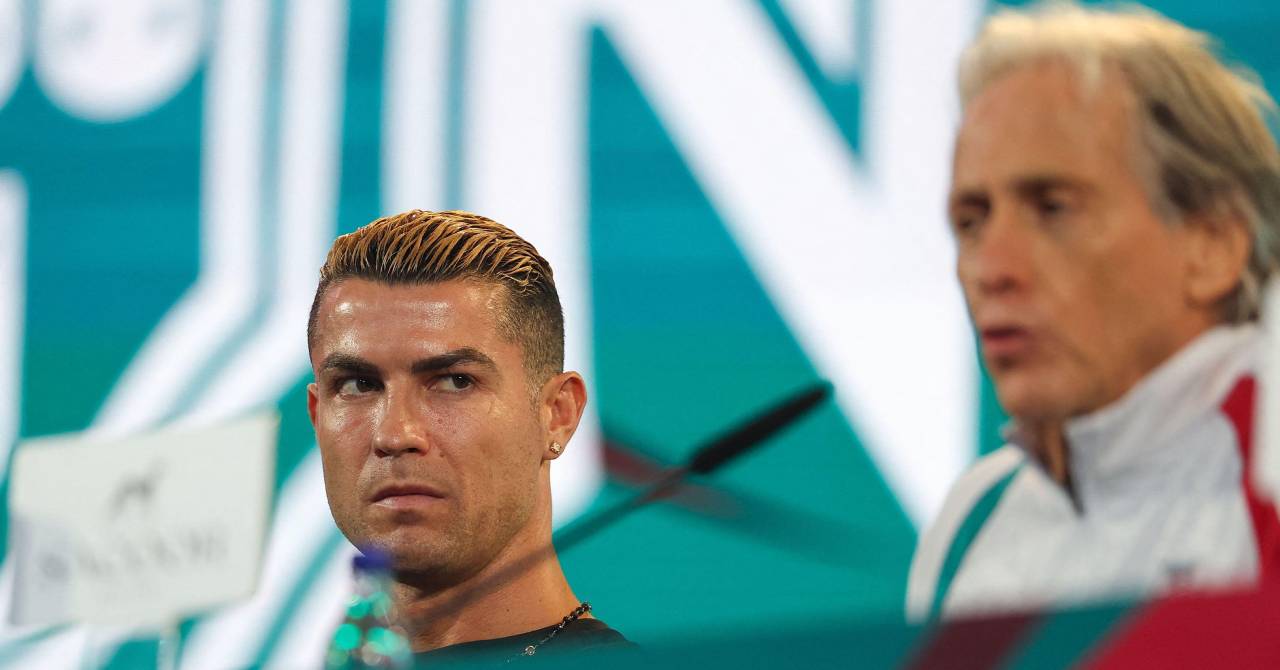
At the heart of this dramatic saga sits Portugal boss Jorge Jesus, whose recent tactical decisions lit the fuse of what would become Ronaldo’s international farewell. Jesus, ever the pragmatist, has publicly declared himself free of guilt, even as the shadow of a legend’s abrupt exit looms large over his tenure. “Maybe I rushed things, but [his retirement was] not because of me. It was in his head, more call-ups, fewer call-ups,” Jesus stated, deflecting direct responsibility while acknowledging a history of discussion. Yet, for a player of Ronaldo’s colossal stature, whose presence alone could intimidate opponents and galvanize teammates, being relegated to the bench was less a tactical tweak and more a profound personal affront.
The Spark That Ignited the Flame: A Deeper Dive into the Drama
The catalyst was clear: September’s Nations League clash against Norway. Following Portugal’s hard-fought 1-0 victory over Wales, where Ronaldo played a pivotal role, the subsequent decision by Jesus to leave the 41-year-old Al-Nassr star as an unused substitute against Norway was a strategic gamble that backfired spectacularly. For a player whose entire career has been built on an insatiable hunger to compete and contribute, sitting idly on the sidelines was an indignity too far. Ronaldo, fuming, famously stormed down the tunnel, bypassing the team and sparking a media frenzy that painted a stark picture of a rift irreparable.
The repercussions were swift and severe. Ronaldo’s subsequent departure from the Portugal camp in Copenhagen on the eve of their clash with Denmark, coupled with accusations that Jesus had “broken his word,” plunged the national team into crisis. The Portuguese Football Federation, caught between a rock and a hard place, levied a €255 (£215; $286) fine and a 30-day ban, a punishment that felt both symbolic and futile against the backdrop of a superstar’s simmering rage. Conciliatory talks were anticipated, a diplomatic attempt to mend fences for the Nations League group games against Denmark and Wales. Instead, Ronaldo delivered the ultimate ultimatum, choosing retirement over reconciliation, drawing a definitive line under an astonishing international career.
Jesus’s Justification: Managerial Pragmatism or Tactical Myopia?
Jorge Jesus’s insistence on his innocence is understandable from a manager’s perspective. “All my decisions were made with the team in mind. As a manager, I have always defended what was best for the team. I am at peace with my decision,” he affirmed. This is the mantra of any coach: the collective above the individual. But when the individual is Cristiano Ronaldo, a player who transcends mere team dynamics to embody an entire nation’s footballing spirit, the calculus becomes infinitely more complex. Was Jesus truly seeing a tactical opportunity, a pathway to a more fluid, less Ronaldo-dependent Portugal? Or was this a power play, an attempt to assert authority over a player whose influence often rivaled that of the manager?
Jesus confirmed he had planned to select Ronaldo for the upcoming games, claiming no advance warning of his retirement. This suggests a disconnect, a lack of open communication that ultimately proved fatal to Ronaldo’s continued involvement. While Jesus may be “at peace,” the question remains whether this peace comes at the cost of alienating the greatest player in Portugal’s history, and what long-term ripple effects this decision will have on team morale, fan perception, and the dressing room dynamic.
Game Highlights: A Tale of Presence and Absence
Portugal 1-0 Wales (Nations League – Ronaldo played)
In what would be his penultimate international outing, Cristiano Ronaldo’s presence was, as ever, a gravitational force. While not on the score sheet himself, the veteran forward’s intelligent movement and unyielding pressure were instrumental in creating space and drawing defenders away from his teammates. The decisive goal, a clinical finish from a cross, was a testament to Portugal’s ability to leverage Ronaldo’s mere threat. His tireless work rate, particularly in the latter stages, underlined his enduring commitment, proving he could still influence games even when not directly scoring. It was a performance that spoke volumes of his undiminished desire to contribute, making his subsequent benching all the more jarring.
Portugal vs. Norway (Nations League – Ronaldo unused substitute)
The game against Norway will forever be etched in history not for what happened on the pitch, but for what didn’t happen off it. With Ronaldo surprisingly left on the bench for the entire 90 minutes, the tactical approach shifted. Portugal displayed moments of fluidity, moving the ball quickly and showcasing a more collective attacking effort without the singular focal point of CR7. However, they arguably lacked a certain decisive edge, the explosive individual brilliance that Ronaldo so often provides in tight matches. The result itself felt secondary to the unfolding drama, as the sight of Ronaldo remaining a spectator, growing increasingly frustrated, signaled the beginning of the end. His swift exit down the tunnel post-match was the final, indelible highlight of a game that became a historical footnote in a legendary career.
The Legacy and the Road Ahead for Portugal
Cristiano Ronaldo’s story with Portugal is one of triumph, resilience, and an unwavering pursuit of greatness. From his debut as a prodigious winger to his evolution into a global goal-scoring phenomenon, he has carried the hopes of a nation on his broad shoulders for two decades, delivering a historic European Championship in 2016 and a Nations League title in 2019. His departure isn’t just the loss of a player; it’s the loss of an icon, a leader, and a psychological advantage. The “CR7 effect” – the sheer intimidation he instilled in opponents and the belief he instilled in his teammates – is now gone.
Portugal now faces the monumental task of transitioning from an era defined by one man to a collective future. Talents like Rafael Leão, João Félix, Bernardo Silva, and Bruno Fernandes will undoubtedly step into larger, more definitive roles. This could usher in a new era of fluid, less predictable football, where the attacking burden is shared more equitably. However, the immediate challenge will be to find a consistent source of goals and, more importantly, a leader who can inspire in the crucial moments, a role Ronaldo perfected over so many years.
Prediction
The immediate aftermath of Ronaldo’s retirement will see Portugal experience a period of adjustment, perhaps even a dip in form as they navigate a new identity. While there’s an abundance of talent, replacing the sheer output and psychological impact of a player like Ronaldo is an impossible task in the short term. Expect Portugal to initially struggle for a consistent cutting edge, relying heavily on moments of individual brilliance from their younger stars. However, under Jorge Jesus’s pragmatic approach, and with the immense quality within the squad, they will eventually adapt. The future of Portuguese football, while undoubtedly bright, will require a complete recalibration of expectations and tactics, ultimately forging a new, collective identity that, for the first time in two decades, stands proudly without its greatest-ever individual.