
Sept. 9, 2026
Universal Armament Test Set Aims to Enhance Global Military Readiness and Efficiency
Military aviation and defense systems globally are facing increasing pressure to maintain operational readiness amidst evolving threats and logistical complexities. A significant challenge lies in the maintenance of armament systems, where existing “O-Level” (organizational level, or flightline) maintenance often relies on an assortment of legacy test sets. These older systems are frequently limited in their capability to quickly and efficiently verify armament system readiness, diagnose failures, and return aircraft to full mission-capable (FMC) status.
These legacy test sets typically serve a single aircraft type or perform a singular function across multiple aircraft, creating a complex ecosystem of specialized equipment. This approach results in elevated training requirements for maintenance personnel, compounded logistics challenges, and extended test and repair times. The cumulative effect not only impedes the effectiveness of armament maintainers but also limits the broader strategic goals of modern defense forces, such as achieving Agile Combat Employment (ACE) capabilities and developing fully Mission-Ready Airmen.
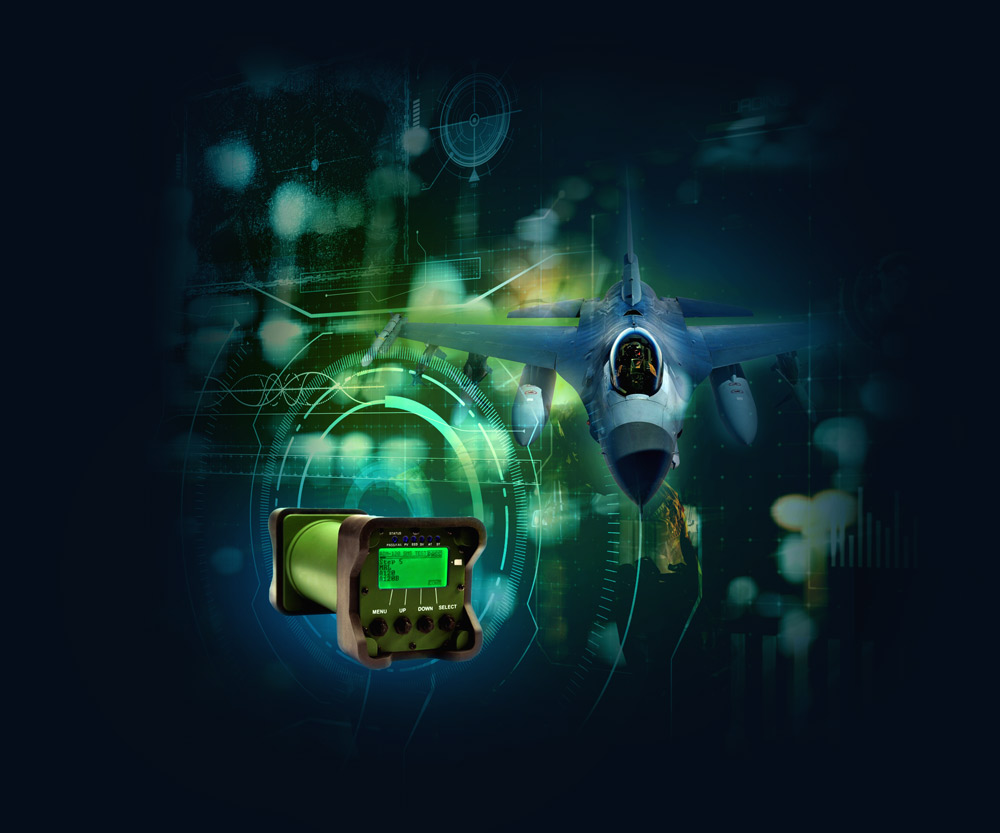
In response to these challenges, the MTS-3060A SmartCan™ Universal Armament Test Set has been introduced, aiming to streamline flightline maintenance processes. This device is designed to consolidate the functions of numerous aircraft-specific flightline test sets into a single, comprehensive unit. A standard SmartCan™ kit, containing all necessary cables and adaptors within one portable carry case, is reported to replace the flightline test capabilities of over a dozen distinct test sets currently used across various U.S. Air Force fighters and Unmanned Aerial Systems (UASs). Its potential application extends further to include other platforms, such as surface-to-air defensive systems, signaling a move towards greater standardization in military maintenance equipment.
A key differentiation of the SmartCan™ lies in its testing methodology. Unlike many legacy handheld test sets, which primarily conduct basic stray voltage and continuity tests, the SmartCan™ implements functional and active MIL-STD-1760 protocols for the test and evaluation of “Smart weapons.” This standard enables comprehensive communication with advanced munitions. Coupled with munitions communication channels that support all existing weapons protocols, the SmartCan™ is designed to provide a full system test for both legacy and Smart weapons. Its capabilities include pre-load and functional checkouts, testing of multiple squib signals, and an integrated cross-fire algorithm which the manufacturer states offers enhanced diagnostic precision compared to other O-Level armament test sets currently in service.
The versatility of the SmartCan™ extends beyond aircraft armament systems. It is also designed to support other defense platforms, including surface-to-air missile defense systems. Notably, it integrates with the Norwegian Advanced Surface-to-Air Missile System (NASAMS), a widely deployed defense solution. For NASAMS, the SmartCan™ supports comprehensive rail testing and fault isolation across all rail configurations, including the LAU-129N, Common Ground Rail (CGR), and Legacy Rails. A unique testing approach facilitates “I-Level” (intermediate level, or backshop) testing in the field, even when fully disconnected from the launcher. This allows for the activation and verification of all critical electro-mechanical assemblies, aiming to ensure full rail operation and prevent critical faults, thereby enabling a more complete and comprehensive rail checkout.
Designed for operational deployment in diverse and challenging environments, the SmartCan™ has been qualified for extreme environmental conditions. Its rugged construction, ergonomic layout, and compact footprint are intended to enable field operation across the globe. Further enhancing its field usability is its battery operation, utilizing readily available AA batteries combined with an innovative power management system, providing over 40 hours of reported test time without the need for battery replacement.
Efficiency gains in maintenance procedures are a core benefit highlighted by the manufacturer. Reported data indicates significant reductions in test setup and execution times. For instance, F-16 setup times are stated to be reduced by 91%. Similarly, test execution times for a pylon utilizing MIL-STD-1760 and a LAU-129, tested for both AIM-120 and AIM-9X, displayed substantial reductions of 85% and 89% respectively. Test results and measurement variances are displayed in real-time, incorporating all parametric data. This data can then be transferred via a removable SD card for printing or for use in predictive maintenance analysis, aiding in the proactive management of equipment health.

The SmartCan™ is reportedly deployed across 15 platforms in 22 countries, indicating significant international adoption. It has received endorsements from entities such as Lockheed Martin and the USAF F-16 System Program Office, marked by SERD #75A77, and has been granted cybersecurity authority to operate (ATO). The development of Test Program Sets (TPS) is facilitated by an integrated development environment called SmartCanEasy™, which is made available to military users.
In an era of increasing cyber threats, the SmartCan™ incorporates advanced cybersecurity features. These include data encryption, a custom operating system, NIST Certified software for Test Program Set (TPS) development, and the use of a removable secure data (SD) card. These measures are designed to enhance the cybersecurity performance of the test set. A key security feature is that when the SD card is removed, no sensitive data reportedly remains on the unit, a capability designed to meet stringent U.S. Department of Defense (DOD) information assurance standards.
The SmartCan™ is presented as a sophisticated O-Level armament test set, capable of testing a wide array of Alternate Mission Equipment (AME) and Aircraft Armament Equipment (AAE), including pylons, launchers, bomb racks, guns, and pods. Its developers emphasize its potential to deliver quicker setup and execution times, reduce training requirements, minimize logistical footprints, enhance cybersecurity, and provide advanced active armament test capabilities, all contributing to maximizing military readiness and combat effectiveness.
Why This Matters
The modernization of military maintenance equipment, as exemplified by universal test sets like the SmartCan™, carries significant implications across strategic, economic, operational, and personnel dimensions for global defense forces.
- Strategic Readiness and Global Power Projection:In an increasingly volatile geopolitical landscape, the ability to rapidly deploy, maintain, and redeploy air and missile defense assets is paramount. By streamlining flightline maintenance, such technology directly enhances military readiness. Faster diagnostics and repairs mean fewer aircraft grounded and more platforms available for missions, enabling quicker response times to crises, projecting power more effectively, and sustaining operations in remote or contested environments crucial for Agile Combat Employment (ACE) doctrines. This directly impacts a nation’s ability to deter aggression and protect its interests globally.
- Economic Efficiency and Resource Optimization:The consolidation of multiple, aircraft-specific test sets into a single universal unit offers substantial economic benefits. It reduces the need to procure and maintain a vast inventory of specialized tools, leading to lower acquisition costs and simplified supply chains. Reduced training requirements for maintenance personnel also translate into cost savings. Furthermore, by minimizing aircraft downtime, these systems maximize the return on investment for expensive military assets, allowing defense budgets to be utilized more efficiently.
- Operational Adaptability and Interoperability:The ability of a single test set to service a wide range of aircraft and even surface-to-air systems, across different nations, is a critical step towards greater interoperability among allied forces. As demonstrated by its deployment in 22 countries, a standardized maintenance tool can facilitate joint operations, shared logistical support, and common training programs, strengthening alliances and enhancing collective defense capabilities. Its rugged design and extended battery life also underscore a focus on operational adaptability, allowing for deployment in austere or forward operating bases where traditional infrastructure is scarce.
- Personnel Effectiveness and Morale:For military personnel, especially armament maintainers, this technology can significantly improve their daily work environment. By simplifying complex diagnostic processes, reducing physical burden (fewer tools to carry), and decreasing the time required for maintenance tasks, it enhances their effectiveness. Faster problem resolution and reduced frustration with legacy systems can boost morale, improve job satisfaction, and allow airmen to focus on developing broader skill sets, aligning with the goal of creating “Mission-Ready Airmen.”
- Technological Advancement and Cybersecurity:The integration of advanced testing protocols (MIL-STD-1760) for Smart weapons ensures that maintenance capabilities keep pace with the increasing sophistication of modern armaments. Moreover, the emphasis on robust cybersecurity features, including data encryption and secure data handling, is vital in protecting sensitive military information and preventing adversaries from exploiting vulnerabilities in maintenance equipment. This focus on secure, advanced technology is essential for maintaining a technological edge in contemporary warfare.