
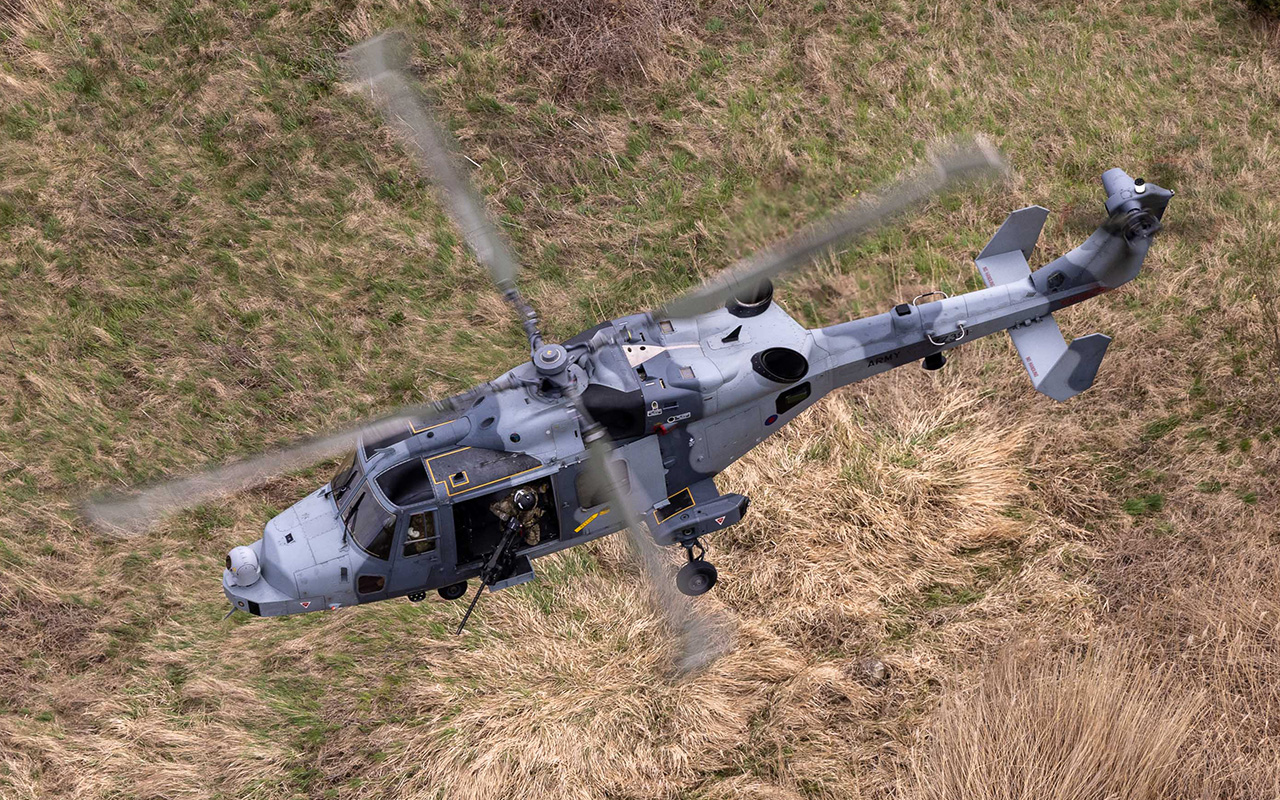
London, UK– The planned withdrawal of the British Army’s Wildcat AH1 helicopter fleet from service, scheduled to begin in 2027, has prompted a detailed parliamentary inquiry into the future of these valuable assets. Defence Minister Luke Pollard, responding to questions from Liberal Democrat MP Gideon Amos, confirmed that while the decision to retire the aircraft stands, the Ministry of Defence (MOD) is still actively examining various options for their potential repurposing or disposal.
The decision to commence the phased withdrawal of the Army’s Wildcat AH1 fleet was first announced as part of the Defence Investment Plan on June 30, 2026. This comprehensive strategic document outlines the UK’s long-term defence spending priorities, aimed at modernizing the armed forces and adapting to evolving global threats, often necessitating difficult choices regarding existing equipment in favour of new technologies or cost efficiencies.
MP Gideon Amos, representing Taunton Deane, raised a series of detailed questions in the House of Commons, seeking to understand the MOD’s intentions beyond simply removing the aircraft from active Army duty. His inquiries highlighted several potential alternative uses for the Wildcat AH1s, underscoring their inherent capabilities and the substantial public investment they represent. Among his proposals was the employment of these helicopters as airborne command-and-control platforms for uncrewed systems – a role that leverages the rapidly growing importance of drone technology in contemporary warfare and the need for sophisticated platforms to manage their operations.
Amos further suggested the potential transfer of these airframes to support Royal Marines littoral operations. Littoral operations refer to military actions conducted in coastal regions and shallow-water environments, often requiring highly specialized and flexible air support for reconnaissance, transport, and force protection. This proposal aims to bolster the capabilities of the Royal Marines in their amphibious and expeditionary roles.
Additionally, the MP inquired about continuing and expanding existing work involving crewed-uncrewed teaming (CUT) and counter-drone capabilities using the Wildcat platform. He pointed to collaborative research and development efforts already undertaken by Leonardo (the helicopter’s manufacturer), the Defence Science and Technology Laboratory (Dstl), and the Royal Navy, which have explored these advanced applications. These suggestions reflect a broader strategic interest in maximizing the utility of military assets and integrating them into cutting-edge defence strategies, rather than simply discarding them.
In his official written parliamentary answers, Defence Minister Pollard delivered a consistent and somewhat non-committal response to Amos’s varied questions. He stated: “Further to the Defence Investment Plan announcement of 30 June 2026, Defence continues to examine options associated with the planned withdrawal of the Wildcat AH1 fleet from service from 2027. Work is being undertaken to understand potential opportunities, and it would be inappropriate to comment further while this work remains ongoing.” This identical response was provided to questions concerning both the exploration of alternative operational roles and the ultimate fate of the airframes after withdrawal, including whether any could be retained as a source of certified spare parts for the Royal Navy’s Wildcat HMA2 fleet.
The minister’s reply confirms that disposal arrangements have not yet been publicly finalized and that the MOD is indeed looking at “potential opportunities” connected with the aircraft. However, it refrained from confirming whether any of the specific options proposed by MP Amos, such as repurposing for command-and-control of drones or supporting Royal Marines, are themselves being actively pursued. This cautious approach suggests that a comprehensive internal review process is still underway, likely considering a multitude of factors including technical feasibility, operational requirements, budgetary implications, and strategic alignment with future defence priorities. It could also indicate commercial sensitivities or ongoing internal deliberations that the MOD is not yet ready to disclose.
The Wildcat AH1, a twin-engine multi-role helicopter built by Leonardo Helicopters (formerly AgustaWestland), has been a critical component of the British Army’s capabilities since its introduction in 2014. It serves primarily in battlefield reconnaissance, utility transport, and close air support roles, renowned for its advanced avionics, adaptability, and performance in diverse operational theatres. Its impending withdrawal prompts questions about how the Army intends to address the capabilities gap it will leave, or if its roles will be absorbed by other platforms or entirely new operational doctrines, particularly in the vital areas of intelligence, surveillance, and reconnaissance (ISR).
A significant aspect of Amos’s inquiry also focused on the potential implications for the Royal Navy’s Wildcat HMA2 fleet. The AH1 (Army variant) and HMA2 (Royal Navy variant) are both members of the same Wildcat family, sharing many commonalities in design and components, despite being configured for different mission profiles. The AH1 is optimized for land-based operations, while the HMA2 is specialized for maritime roles, including anti-surface and anti-submarine warfare. Given this shared lineage, Amos questioned whether withdrawn Army AH1 aircraft could be retained to provide a readily available source of certified spare parts for the naval fleet. Such a strategy could offer substantial cost savings in maintenance and logistics, potentially extending the operational life and readiness of the HMA2s. However, Minister Pollard’s reply offered no specific confirmation on whether this logical synergy is among the options actively under consideration by the MOD.
The ongoing assessment of the Wildcat AH1’s future reflects a broader global trend within modern military forces: adapting to new operational realities, evolving threats, and persistent budgetary pressures. The increasing emphasis on uncrewed systems, for example, signals a fundamental shift in military doctrine towards leveraging autonomous platforms for tasks traditionally performed by crewed aircraft. Repurposing existing, capable assets to serve these emerging needs could represent a more economical and sustainable approach than procuring entirely new systems, particularly in an era of constrained defence budgets. Similarly, the Royal Marines’ focus on littoral operations underscores a contemporary emphasis on agile, expeditionary forces capable of operating across diverse coastal and marine environments, which necessitates flexible and capable air support.
Disposal arrangements for military aircraft can encompass a wide range of outcomes, from sale to allied nations, dismantling for parts, conversion for civilian use, or even preservation for museums. The MOD’s current reluctance to comment on specific arrangements indicates that all avenues remain open, or that sensitive discussions, possibly commercial in nature, may be underway. The eventual outcome will be a reflection of the UK’s strategic defence priorities, its industrial defence policy, and its commitment to the sustainable and efficient management of its military assets.
Why This Matters
The ongoing deliberations regarding the future of the British Army’s Wildcat AH1 helicopter fleet, following its planned withdrawal from 2027, carry significant implications across several critical areas:
Operational Capability and Strategic Evolution:The Wildcat AH1 has been a cornerstone asset for the British Army, providing essential capabilities for battlefield reconnaissance, command and control, and utility transport. Its removal necessitates a clear strategy for either replacing these capabilities directly, or fundamentally altering how the Army conducts these operations. This situation highlights the UK’s evolving defence posture, potentially signaling a strategic shift towards a more technologically advanced, data-driven force with an increased emphasis on autonomous systems and multi-domain operations. How the Army addresses any capability gaps left by the AH1 will directly influence its effectiveness and agility in future conflicts and international security operations.
Resource Management and Economic Efficiency:Military assets like the Wildcat AH1 represent a substantial investment of taxpayer funds. The decision to withdraw relatively modern and capable platforms raises questions about the optimal utilization of public resources. MP Amos’s proposals to repurpose the aircraft for roles such as airborne command-and-control for uncrewed systems or to support Royal Marines littoral operations underscore a potential for extending the operational life and value of these assets. Failure to thoroughly explore and implement such alternatives could be perceived as an inefficient disposal of valuable equipment, potentially leading to the unnecessary acquisition of new, expensive systems for roles that could be capably filled by existing platforms. Furthermore, retaining AH1 airframes as a source of certified spare parts for the Royal Navy’s HMA2 fleet could yield significant long-term cost savings in maintenance and logistics for the naval variant, thereby enhancing the overall efficiency of defence spending.
Innovation and Adaptation to Modern Warfare:The proposals to integrate the AH1s into crewed-uncrewed teaming operations and counter-drone capabilities are highly pertinent to the future of warfare. They address the increasing prevalence of autonomous systems and the critical need for seamless integration between human and machine elements on the battlefield. The UK’s approach to the Wildcat AH1 withdrawal could set an important precedent for how it adapts its existing military fleets to meet these emerging threats and leverage new technological opportunities. Embracing innovative repurposing could accelerate the adoption of cutting-edge defence strategies and help maintain the UK’s competitive advantage in military technology. Conversely, a straightforward disposal without fully exploring these advanced roles could be viewed as a missed opportunity to utilize proven platforms for future challenges.
Defence Industrial Base and International Partnerships:Leonardo, as the manufacturer of the Wildcat, is a key player in the UK’s defence industrial landscape. Decisions regarding the fleet can have tangible implications for future maintenance contracts, support services, and employment within the defence sector. Moreover, as a prominent NATO member and a significant international partner, the UK’s defence procurement and asset disposal strategies are closely observed by allies. How the UK manages this withdrawal could influence perceptions of its long-term defence planning, its commitment to specific military capabilities, and potentially affect future collaborative projects or joint military exercises with its global partners.
Environmental and Ethical Considerations:Beyond the immediate operational and economic aspects, the disposal of military aircraft carries environmental implications. Decisions regarding recycling, dismantling, or potential sale to other nations must be made with consideration for environmental impact and adherence to international regulations. Additionally, the transfer of military assets to other countries, particularly those in volatile regions or with questionable human rights records, involves ethical considerations that are typically handled at the highest levels of government and foreign policy.
In essence, the situation surrounding the Wildcat AH1 is more than just the retirement of a helicopter; it encapsulates the broader, complex challenges confronting modern defence ministries worldwide: the delicate balance between budgetary constraints and operational needs, the imperative to adapt to rapidly evolving threats, the strategic leverage of technological innovation, and the responsible stewardship of substantial public investments in an increasingly intricate and unpredictable geopolitical landscape.