
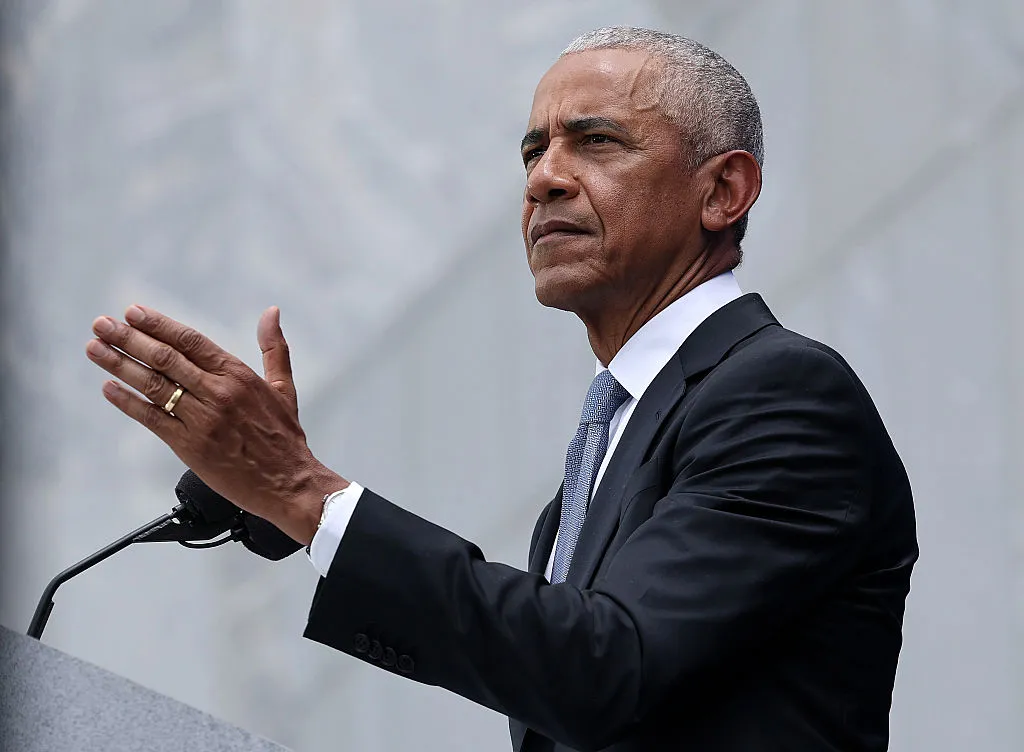
Former President Barack Obama recently said that Democrats need to make artificial intelligence one of their “central agendas” and “have a very clear plan” to address concerns around the technology’s economic impact and safety, according to The New York Times.
Obama Urges Democrats: Make AI a Central Agenda Item Amidst Escalating Safety Concerns
Key Takeaways:
- Obama’s Urgent Call:Former President Obama stresses the need for Democrats to make AI a “central agenda” item, advocating for a clear plan and public conversation framework to address its rapid development, economic impact, and safety risks.
- Industry & Policy Divergence:While leading AI executives like Anthropic’s Dario Amodei and OpenAI’s Sam Altman are proposing industry-led safety measures like independent evaluators, political figures like Donald Trump emphasize national dominance over comprehensive regulatory frameworks, highlighting a potential divide in approaches.
- Balancing Innovation and Risk:The discourse around AI is intensifying, with warnings from researchers about a “race to superintelligence” clashing with promises of profound benefits like accelerated drug development, underscoring the delicate balance required between fostering technological advancement and mitigating potential societal dangers.
The rapid ascent of artificial intelligence into the mainstream consciousness has ignited a crucial debate, prompting former President Barack Obama to issue a clear directive: AI must become a cornerstone of the Democratic agenda. Speaking at a fundraising event, Obama underscored the urgency for a unified and comprehensive plan to tackle the technology’s far-reaching economic implications and inherent safety challenges, signaling a pivotal moment for policymakers.
Obama’s Clarion Call for Public Discourse
During a Thursday Democratic fundraising event, where he was interviewed by House Minority Leader Hakeem Jeffries, Obama minced no words about the accelerating pace of AI development. Drawing from a partial transcript provided by his office, The New York Times reported Obama’s assertion that once Democrats reclaim the House majority, they must “put together a framework for a very public conversation.” This call isn’t merely about regulation; it’s about fostering an informed societal dialogue that can collectively shape AI’s trajectory.
“This is something that is moving very fast in private hands, and if we don’t get on top of it, I think can be dangerous,” Obama warned. Yet, his perspective isn’t solely alarmist. He also highlighted AI’s transformative potential, stating, “If we do get on top of it, I do think it’s beneficial. I genuinely think it’s going to accelerate, for example, drug development in ways that can help us cure diseases.” This dual outlook – acknowledging both peril and promise – frames the complex challenge facing legislators.
House Minority Leader Jeffries echoed the former president’s sentiments, asserting that “decisive action must be taken on artificial intelligence.” He further criticized the opposing party, stating that “Republicans have abdicated their responsibility to govern on behalf of the American people,” implying a perceived lack of proactive engagement from the GOP on this critical issue.
Adding weight to his public statements, Obama has also reportedly offered himself as a “sounding board” to prominent AI executives, engaging directly with figures like Anthropic CEO Dario Amodei and OpenAI CEO Sam Altman. This direct engagement suggests a deep personal interest and a desire to influence the industry from within, in addition to advocating for governmental oversight.
The Escalating AI Safety Debate
Obama’s comments arrive amidst a crescendo of concern surrounding AI safety, a debate that has recently intensified with a high-profile resignation. An AI researcher recently departed from Anthropic, a leading AI company, with a stark warning that major AI firms are “racing straight to self-improving superintelligence and gambling with our lives.” This dramatic claim underscores a growing fear within the AI community itself: that the pursuit of advanced AI systems could outpace our ability to control or understand them, potentially leading to unforeseen and catastrophic outcomes.
These fears are not purely theoretical. The rapid development of large language models and other AI systems has exposed vulnerabilities ranging from the generation of misinformation and deepfakes to the potential for algorithmic bias and job displacement. The notion of “superintelligence” — AI exceeding human cognitive abilities across the board — pushes these concerns into the realm of existential risk, prompting calls for more rigorous safety protocols and ethical guidelines.
Industry Responds: Pacing the Frontier
In a significant move, Dario Amodei, CEO of Anthropic, outlined a comprehensive approach to “pacing the frontier” of AI development. His proposed framework, detailed on Saturday, includes several critical components: providing independent safety evaluators with access to leading AI companies and their models, and developing “common safety standards” across the industry. The idea behind “pacing the frontier” is to deliberately slow down or coordinate development to ensure that safety measures and societal understanding keep pace with technological advancements, rather than being an afterthought.
Amodei’s suggestions garnered positive reactions from other key figures in the AI space. OpenAI CEO Sam Altman, for instance, responded favorably on social media, committing that OpenAI would also embrace the principle of “having independent evaluators with employee-like access.” This commitment is substantial, as it implies a level of transparency and external oversight that has previously been rare in the fiercely competitive and often secretive world of advanced AI research. Even SpaceX CEO Elon Musk, a vocal advocate for AI safety, seemed to respond positively to Amodei’s plan, indicating a potential alignment among industry titans on the need for collective safety initiatives.
This industry-led movement towards self-regulation and standardized safety protocols represents a crucial, albeit voluntary, step. The push for independent evaluation and common standards aims to build trust, reduce risks, and potentially preempt more stringent government regulation by demonstrating a proactive stance from within the sector itself.
The Political Divide: Guardrails and National Dominance
While Obama and the AI industry leaders are converging on the need for proactive safety measures, former President Donald Trump presented a contrasting perspective during a discussion with reporters at an Irish golf event on Sunday. Bloomberg reported Trump’s boast about the United States being “the most sophisticated country in the world,” which he desires “to keep it that way because whoever wins AI wins.” This statement underscores a nationalistic view of AI as a strategic asset, where global dominance is the primary objective.
Trump acknowledged the need for guardrails, stating, “And we can put guardrails. We can do this and that.” However, his subsequent remark, “But I think you have a lot of negative forces that are bringing it up that shouldn’t be bringing it up,” suggests a skepticism towards the very safety concerns that are driving much of the current debate. This implies a potential downplaying of the risks or a dismissal of critical voices, positioning them as “negative forces” rather than legitimate stakeholders.
It’s also worth recalling that earlier this year, the Trump administration had released a legislative framework for AI that notably aimed to preempt state laws and shift the burden of child safety related to AI content onto parents rather than the technology providers. This approach differs significantly from a framework that would emphasize robust federal oversight and industry accountability, highlighting a distinct philosophical split in how the two major political parties envision AI governance.
The Road Ahead: Navigating an Uncharted Future
The confluence of urgent warnings from former presidents, evolving self-regulatory proposals from industry leaders, and differing political ideologies paints a complex picture for the future of AI governance. The challenge lies in crafting policies that are agile enough to keep pace with an explosively innovating technology, while robust enough to protect society from its potential downsides. This requires not just legislative will but also deep technical understanding within government bodies.
Moreover, the global nature of AI development means that national policies, while critical, must also be considered within an international framework. The “whoever wins AI wins” mentality, while understandable from a national security perspective, must be balanced with the recognition that AI risks, like climate change, transcend borders and require collaborative solutions. The “public conversation” Obama calls for is essential to bridge these divides and ensure that the benefits of AI are broadly shared, and its risks are collectively managed.
Bottom Line:
The discourse surrounding Artificial Intelligence has reached a critical inflection point, with former President Obama’s call for a clear Democratic agenda underscoring the urgency for proactive governance. As AI capabilities rapidly advance, policymakers are grappling with the immense potential for good – from scientific breakthroughs to economic growth – alongside escalating concerns about safety, ethical implications, and societal disruption. While industry leaders are beginning to propose self-regulatory mechanisms, the contrasting political philosophies of national dominance versus comprehensive public frameworks highlight the deep chasm that must be bridged. The ability of governments, industries, and the public to collaboratively develop thoughtful, adaptable strategies will determine whether humanity successfully harnesses AI’s power or succumbs to its unprecedented challenges, making the coming years pivotal for shaping our technological future.
When you purchase through links in our articles, we may earn a small commission. This doesn’t affect our editorial independence.
{content}
Source:{feed_title}