
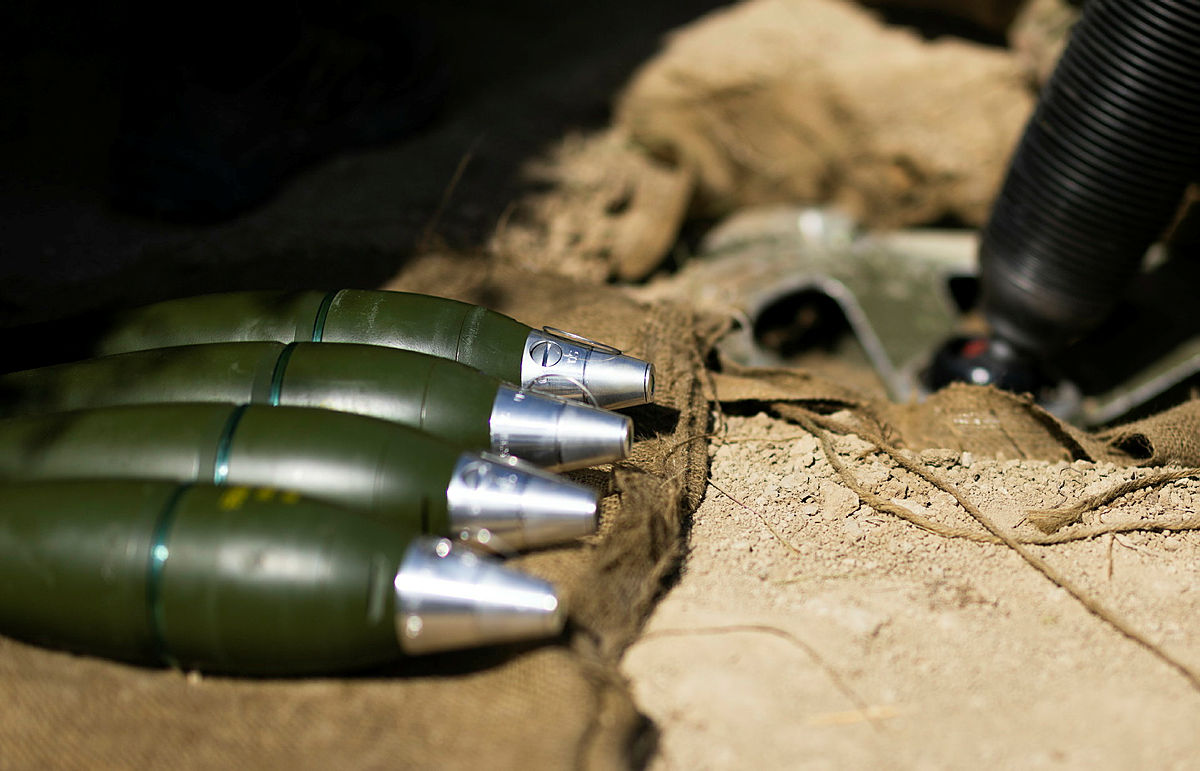
British Army Grapples with Armoured Mortar Gap Amid Funding Reprioritisation
The British Army continues to face an unresolved challenge in acquiring a dedicated armoured mortar capability, an essential asset for modern ground warfare. While the requirement for such a system remains steadfast, its procurement pathway is currently undefined, with potential solutions now being explored through the nascent Heavy Protected Mobility (HPM) programme. This situation reflects broader strategic and budgetary reprioritisations within the UK’s defence spending, raising questions about the timeline for delivering crucial capabilities to its front-line forces.
The Indispensable Role of Armoured Mortars in Modern Conflict
An armoured mortar system integrates a heavy mortar weapon into a protected vehicle, enabling it to be fired from within the safety of the platform. This capability offers a critical advantage in contemporary warfare: the ability to deliver rapid, high-explosive fire onto enemy targets within minutes of a request, followed almost immediately by repositioning. This “shoot-and-scoot” tactic is paramount for crew survival and operational effectiveness on the modern battlefield.
In contrast to dismounted mortar teams, which can also deliver rapid fire, armoured variants provide vital ballistic protection against direct and indirect enemy fire, including shrapnel and small arms. More importantly, their inherent mobility allows them to quickly evade counter-battery fire – retaliation from enemy artillery, rockets, or mortars that seek to pinpoint and target the origin of incoming rounds. With the proliferation of advanced surveillance technologies, such as unmanned aerial vehicles (drones) and sophisticated counter-battery radars, firing positions can be identified with alarming speed, often within moments of firing. Consequently, the capacity to deliver fire and swiftly relocate is no longer merely an advantage but a fundamental necessity for survivability, particularly when facing a technologically advanced adversary. The ability to “shoot and drive away” directly impacts the sustainability of operations and the protection of personnel.
Parliamentary Scrutiny and Official Stance
The ongoing uncertainty surrounding this critical capability recently came under parliamentary scrutiny in the United Kingdom. Ben Obese-Jecty, the Conservative Member of Parliament for Huntingdon, formally questioned the Ministry of Defence (MOD) regarding the progress made in procuring an armoured mortar capability. This inquiry followed earlier disclosures concerning the allocation of funding within the broader armoured fighting vehicle portfolio.
In response to the parliamentary question, the Ministry of Defence affirmed the Army’s continued operational requirement for an armoured mortar capability. The official answer indicated that “alternative delivery routes, including through the Heavy Protected Mobility (PM) programme are being considered.” However, the statement also underscored the preliminary nature of this exploration, clarifying that “The Heavy PM programme remains in its concept phase, and no final procurement decision has been taken.” This highlights that while the operational need is acknowledged, a concrete and funded plan for acquisition is still distant, pushing a definitive solution further into the future.
Shifting Priorities and Funding Reprioritisation
The current lack of a defined procurement route for an armoured mortar marks a significant departure from previous expectations. An armoured mortar variant had been widely anticipated as a component of the broader Boxer mechanised infantry vehicle programme, which is in the process of delivering a new generation of armoured platforms to the British Army. However, information previously provided in Parliament confirmed that funding earmarked for specific capabilities within the armoured fighting vehicle portfolio had been reallocated.
Luke Pollard, the Shadow Minister for the Armed Forces, commenting on this broader context of defence spending, explained that such decisions reflect “a broader reprioritisation of capability investment to maximise operational effect and affordability.” This statement suggests a strategic reassessment of the UK’s defence budget, aimed at optimizing the impact of available funds across various military programmes. While the Army’s requirement for armoured mortars remains undiminished, this reprioritisation has evidently led to a delay or redirection in its acquisition pathway, indicating a shift in immediate investment focus towards other perceived priorities.
The Heavy Protected Mobility Programme: A Distant Horizon?
The Heavy Protected Mobility (HPM) programme, now cited as a potential avenue for eventually delivering an armoured mortar capability, is itself in its nascent stages. The HPM initiative is fundamentally designed to replace the British Army’s aging fleet of protected vehicles, many of which have seen extensive service in various theatres and are approaching or have exceeded their operational lifespans. As a programme explicitly stated to be in its “concept phase,” it represents the earliest formal stage of the typically lengthy defence procurement cycle.
During the concept phase, the Ministry of Defence typically undertakes extensive research and analysis. This involves exploring various technological and strategic options, refining detailed operational requirements, assessing technical feasibility, conducting risk analyses, and evaluating potential costs across different solutions. This stage precedes any formal competitive tendering processes, contract awards, or the establishment of firm timelines for delivery of physical assets. Therefore, the inclusion of an armoured mortar capability within the HPM framework, while indicating a potential future path, also implies a significant waiting period before any concrete decisions can be made or procurements can materialise. The Army’s continued need for this vital capability, therefore, remains unfulfilled for the foreseeable future, dependent entirely on the progression, funding, and ultimate scope of the HPM programme.
Why This Matters
The British Army’s ongoing struggle to acquire an armoured mortar capability, despite its recognised operational necessity, has significant implications across several dimensions:
- National Security and Defence Posture:The absence of this key capability weakens the UK’s overall defence posture, particularly for its ground forces operating in high-threat environments. An armoured mortar provides crucial indirect fire support and integrated protection, making units more resilient and lethal. Delays in its acquisition mean a continued gap in a critical area of military capability, potentially affecting the Army’s ability to effectively contribute to NATO operations, deter aggression, or deploy independently in complex, modern conflicts.
- Military Effectiveness and Soldier Safety:Modern warfare, as vividly demonstrated by recent conflicts in Ukraine, increasingly relies on rapid, protected, and precise fire support. Without a dedicated armoured mortar system, ground units may be forced to rely on less protected options, increasing their vulnerability to enemy counter-fire, or call for longer-range artillery, which may not be as responsive or precise for immediate tactical engagements. This not only impacts operational effectiveness by slowing reaction times but also potentially exposes soldiers to significantly greater risks, undermining force protection.
- Defence Spending and Strategic Priorities:The “reprioritisation of capability investment” highlights the perennial challenge faced by defence ministries globally: balancing extensive operational needs with finite budgets. This decision by the UK signals a strategic choice to allocate funds to other areas deemed more critical or immediately achievable. While such decisions are often necessary in a constrained fiscal environment, they inevitably lead to trade-offs, and in this case, a delay in a capability widely considered essential. It underscores the complexity of modern defence planning, where evolving threats and technological advancements constantly demand adaptation and difficult financial choices, impacting long-term force development.
- Industrial Impact and Future Innovation:Delays in major defence procurement programmes have ripple effects on the national defence industrial base. While the HPM programme offers a potential future opportunity for manufacturers, the uncertainty and prolonged concept phase mean a lack of immediate contracts and potentially stalled innovation in specific areas of armoured vehicle and indirect fire technology. A clear, consistent, and predictable procurement pipeline is vital for sustaining the highly specialized industrial capabilities that support national defence and for retaining skilled jobs.
- International Alliances and Interoperability:As a key member of NATO and other international alliances, the UK’s military capabilities contribute directly to the collective defence and security of its partners. Gaps in specific areas, such as protected mobile fire support, could impact interoperability with allies who may already possess such advanced systems, or reduce the UK’s ability to seamlessly integrate into multinational operations requiring robust, mobile indirect fire capabilities from its battlegroups.
Ultimately, the challenge of securing an armoured mortar capability underscores the dynamic nature of defence procurement in the 21st century, where strategic vision and urgent operational requirements must constantly contend with budgetary realities and the ever-evolving demands of the global security landscape. The progression and ultimate scope of the Heavy Protected Mobility programme will be closely watched as the British Army seeks to fill this critical gap in its force structure.