
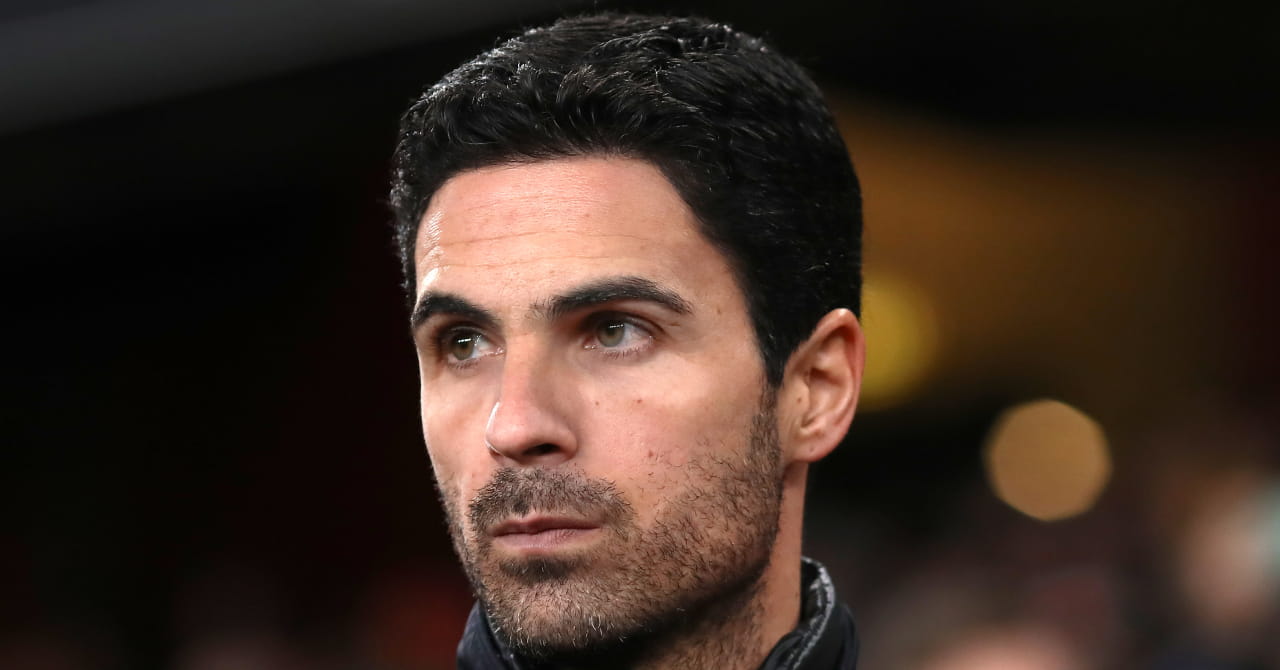
The familiar script unfolds, but with a new, incandescent intensity. Mikel Arteta, Arsenal’s fiery general, stands before the cameras, his jaw clenched, eyes blazing, a volcanic fury barely contained beneath the surface. This isn’t just frustration; it’s a calculated, theatrical rage, a performance designed to send tremors through the footballing establishment. And it was on full display following a hard-fought 2-0 victory against Sunderland at the Stadium of Light, a win that solidified Arsenal’s perfect start but, for Arteta, was overshadowed by what he perceived as a grave injustice.
Arsenal, the reigning champions, had weathered a storm. A draining week, featuring pivotal wins against Chelsea and Napoli, culminated in a physical clash against a Sunderland side that threw everything they had – blood, thunder, and a fervent partisan crowd – at the Gunners. Yet, Arsenal, not always at their free-flowing best, found a way. They ground out a result, extending their flawless record and reaffirming their status as the team to beat. Most managers would be basking in the glow of such resilience. Not Arteta. For him, the narrative had to be about the perceived existential threat posed by a penalty decision that, in his eyes, “unprotected the game.”
The flashpoint? A collision between Ezri Konsa and former Gunner Dan Ballard inside the box. Referee John Brooks pointed to the spot, a decision upheld by VAR Stuart Attwell. Arteta, however, saw a different reality, accusing Ballard of a “judo roll” on Konsa, effectively turning assailant into victim. Enzo Le Fee’s subsequent spot-kick was magnificently parried by David Raya, a moment of individual brilliance that ultimately salvaged the lead, before Bruno Guimaraes and Bukayo Saka sealed the Wearsiders’ fate. But the victory felt secondary to Arteta’s post-match tirade. “Today the game was unprotected and it could have cost us the game and the momentum which is a really, really serious thing,” he fumed, his words echoing through the media landscape like a thunderclap.
“It’s not a penalty in any case, in any game, in any context, in any league” 😳
Mikel Arteta reflects on Arsenal’s 2-0 win over Sunderland 👀@jules_breach | 📺 Stream with TNT Sports on HBO Maxpic.twitter.com/2BUZILexk3
— Football on TNT Sports (@footballontnt) September 12, 2026
Game Highlights: Grit, Glory, and a Glimmer of Controversy
The Stadium of Light was pulsating, a cauldron of noise from the first whistle. Sunderland, buoyed by their home support, started with an aggressive, high-pressing intensity, clearly aiming to unsettle the champions. The opening exchanges were a midfield battleground, with Arsenal’s engine room, anchored by Declan Rice and Bruno Guimaraes, gradually asserting control against the Black Cats’ spirited challenge. Despite the host’s early bite, Arsenal carved out the first clear-cut opportunity when Bukayo Saka’s electrifying run down the right flank culminated in a dangerous cross that just eluded Gabriel Jesus.
The deadlock was finally broken in the 34th minute. A moment of individual brilliance from Guimaraes saw him unleash a thunderous strike from the edge of the box, a low drive that swerved past the outstretched dive of the Sunderland keeper, sending the travelling faithful into raptures. Arsenal went into the break with a slender but deserved lead, having absorbed Sunderland’s early pressure and showcasing their clinical edge.
The second half began with Sunderland pushing for an equaliser, their manager clearly having injected a renewed sense of urgency. The pivotal moment arrived around the hour mark. A set-piece delivery saw a scramble in the Arsenal box. Dan Ballard, wrestling for position, went down under pressure from Ezri Konsa. The referee, John Brooks, immediately pointed to the spot. Replays, shown on the big screen, incensed the Arsenal players and bench, though VAR Stuart Attwell upheld the decision. The tension was palpable as Enzo Le Fee stepped up, but David Raya, Arsenal’s shot-stopper, proved to be the hero, diving full-stretch to his left to brilliantly parry the powerful strike away. It was a save that felt as significant as a goal, preserving Arsenal’s fragile lead and deflating Sunderland’s resurgence.
With the threat averted, Arsenal reasserted their dominance. Saka, a constant menace, tormented the Sunderland defence before, in the 78th minute, he delivered the killer blow. Collecting a precise pass from Martin Ødegaard, he danced past a defender and calmly slotted home into the bottom corner, securing a vital 2-0 victory and putting the champions’ relentless pursuit of perfection back on track.
Arteta’s Calculated Outrage: A Manager’s Duty or a Manipulative Masterclass?
Cry me a river, Mikel. For a manager whose side, according to the Premier League’s own Key Match Incidents (KMI) panel last season, was among the biggest beneficiaries of refereeing and VAR errors, and whose team remarkably navigated an entire title-winning campaign without conceding a penalty or receiving a red card, this sudden concern for the “protection of the game” rings hollow. It’s a grand theatrical display, a carefully orchestrated manipulation of the narrative. Does Arteta truly care about the integrity of officiating when decisions go his way? The evidence suggests a selective outrage, a hypocrisy so transparent it almost becomes a cynical art form.
This isn’t a spontaneous outburst; it’s a pre-planned offensive. Arteta, keenly aware of the clampdown on grappling and wrestling in the box – a tactic Arsenal perfected in their previous title triumph – understands that the pendulum of decisions will inevitably swing. His post-match press conferences have become a battleground, not just for opinions, but for control over perception. By framing every perceived error against his side as an existential threat, he seeks to apply immense pressure on officials, hoping to subtly influence future calls. And, regrettably, it often works. Turn on any sports debate show, and the talking heads are dissecting Arteta’s every word, inadvertently amplifying his message.
Was the penalty decision truly egregious? On reflection, perhaps there was an element of doubt, a grey area that VAR often struggles to clarify definitively. But that’s the crux of the matter: subjectivity. Refereeing, even with technological assistance, is not an exact science. To demand absolute perfection, to castigate every human error, is not only unrealistic but deeply damaging to the sport. It fosters an environment of suspicion, undermines authority, and diminishes the focus on the actual football.
The Burden of Leadership: Protecting the Game, Not Just the Club
Arteta frequently speaks of “protecting the game.” As a figure in his elevated position, he possesses an unparalleled platform to do precisely that. Saturday presented a golden opportunity. His team had battled, they had won, and a crucial penalty had been saved. Imagine the impact if he had emerged, acknowledged his personal disagreement with the decision, but then pivoted to express empathy for the difficulty of officiating, to praise the resilience of his players, and to champion the overall spectacle. Such an approach would have resonated with integrity, enhanced his reputation, and perhaps even shifted popular sentiment in Arsenal’s favour.
Instead, he chose confrontation. He chose to amplify division. He chose to escalate the perpetual war against officials. And in doing so, he contributes to a cycle of negativity that ultimately bruises the Premier League and its referees. Arteta got one thing right: the game *does* need protecting. But perhaps, ironically, it is from the very figures who weaponize every decision, every moment of perceived injustice, for their own strategic gain.
Prediction: A Fiery Path to Glory, or a Self-Inflicted Wound?
Arsenal’s start to the season has been nothing short of phenomenal. Their resilience, tactical flexibility, and sheer winning mentality suggest a team absolutely hell-bent on retaining their crown. They have the squad depth, the star power, and crucially, the experience of having won the league. However, Arteta’s relentless, almost combative, approach to officiating and external pressures could prove to be a double-edged sword. While it undoubtedly galvanizes his squad and creates an “us against the world” mentality, it also risks alienating neutrals and drawing unwanted scrutiny. This season, I predict Arsenal will continue their formidable march, their hunger for victory undimmed. Their squad is too strong, their tactical foundation too robust, to be derailed by anything other than an unprecedented run of injuries or a catastrophic loss of form. Expect them to be firmly in the title race until the very last whistle, and I predict they will narrowly edge out their closest rivals to secure back-to-back Premier League titles. The question, however, isn’t *if* they’ll win, but what the cost will be to the spirit of the game, and to their manager’s legacy, along the way.