
Space Force Advances Satellite-Based Target Tracking, Establishes Operational Units
NATIONAL HARBOR, Md.—The U.S. Space Force is actively preparing for the deployment of advanced satellite constellations designed to track moving targets in both air and on the ground. This strategic initiative involves not only the development and launch of these sophisticated spacecraft but also the establishment of the necessary organizational structures to onboard and operate these new capabilities effectively.
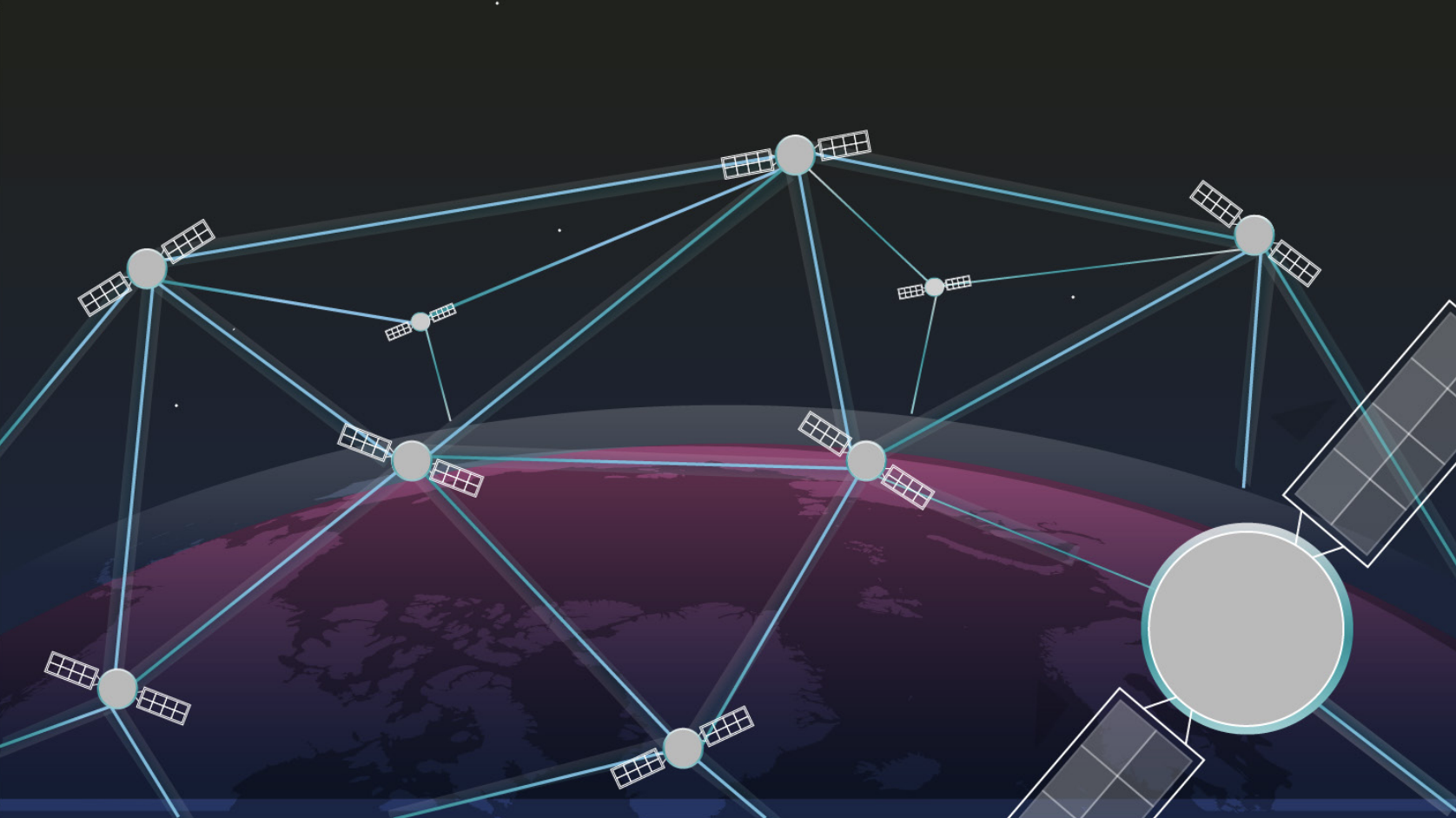
Historically, the U.S. military has relied on large, specialized aircraft, such as the E-3 Sentry Airborne Warning and Control System (AWACS), for tracking airborne targets. However, military leaders have increasingly expressed concerns regarding the vulnerability of these large, high-value platforms to modern long-range weapons and sophisticated anti-access/area-denial (A2/AD) systems employed by potential adversaries. In response to this evolving threat landscape, the Space Force, in collaboration with the National Reconnaissance Office (NRO), has been working to transition these critical surveillance missions to space-based assets. This approach is expected to significantly enhance the resilience and survivability of the U.S. military’s tracking capabilities by distributing the mission across a proliferated constellation of satellites, making it far more challenging for an adversary to neutralize.
While the development of a fully operational satellite constellation capable of providing timely and clear tracks of various moving targets—including drones, missiles, and aircraft—remains an evolving effort with aspects still requiring demonstration, the Pentagon has reported making notable progress in proving the viability of this space-based approach.
Regarding ground moving target indicator (GMTI) capabilities, the NRO has already launched several GMTI satellites as part of its multi-mission proliferated low-Earth orbit (LEO) constellation. Building on this, Lt. Gen. Gregory Gagnon, head of Combat Forces Command, informed reporters on September 16 that the Space Force anticipates launching a new, dedicated GMTI capability, designated as the Resilient Radar System-Ground (RRS-G), within the next one to two years. These specific spacecraft are currently under construction by Northrop Grumman, as detailed by Gagnon during a briefing at the Air & Space Forces Association’s Air, Space & Cyber conference.
Simultaneously, the Space Force is on the cusp of deploying its inaugural space-based air moving target indicator (AMTI) satellites. Air Force Secretary Troy Meink announced on September 14 that these spacecraft were scheduled for launch later that month. Acquisition officials have, however, refrained from disclosing specific details regarding the number of satellites involved or the precise launch date, maintaining a level of classification around the mission. According to public launch listings from Spaceflight Now, the only Space Force launch confirmed for September was USSF-259, a classified payload slated for liftoff on September 16 from Vandenberg Space Force Base, Calif., aboard a SpaceX Falcon 9 rocket, suggesting a potential correlation.
In a significant step towards building out the AMTI constellation, the service awarded SpaceX a contract in May, valued at up to $4.2 billion. SpaceX is one of 12 vendors selected to compete for contracts related to the development and deployment of space-based AMTI systems.
Col. Ryan Frazier, the Space Force’s portfolio acquisition executive for space-based sensing and targeting, provided an update to Air & Space Forces Magazine in July, stating that the service aims to achieve a “usable” space-based AMTI capability by 2028. Frazier emphasized that while these initial satellites would represent a crucial first step towards an on-orbit targeting capability, they would not constitute a complete or “full solution” for the joint force’s extensive requirements. “Is it everything the joint force requires? I think that will probably extend beyond ‘28,” Frazier noted. “But we are going to have capabilities they don’t have today. … We’ll be able to do things that are high-value or value-added. We won’t be able to do them everywhere all the time.”
Further elaborating on the phased approach, Frazier explained to reporters on September 15 that the initial deliveries of space-based AMTI capabilities would serve as a foundational baseline for the broader architecture. This initial phase will allow the Space Force to meticulously fine-tune and calibrate its satellites and refine the associated processing algorithms. He highlighted the complexity of the overarching system: “There’s a broader architecture that we need to build out for the joint force to be able to close on its long-range kill chain missions. There’s how you battle manage with that data, how you apply the processing algorithms, get that data to the weapons and the shooters that you need, and the time latencies that requires.”
Concurrently with the acquisition community’s efforts to develop and demonstrate these new systems, the Space Force is actively establishing the necessary operational units to manage them. On July 31, Combat Forces Command (CFC) formally activated the 77th Surveillance Squadron, which falls under Space Delta 7. The primary mission of the 77th Squadron is to process the intelligence gathered by these new AMTI and GMTI satellites, fuse it with other available sources of information and intelligence, and then deliver actionable insights to decision-makers who will determine whether to engage a particular target. Lt. Gen. Gagnon clarified the squadron’s role: “They will use information provided from the space layer, fuse that with other sources of information and intelligence, and make decisions about weapons engagement.”
In parallel, U.S. Space Command (SPACECOM) is collaborating with other combatant commands and the broader intelligence community to develop a comprehensive Concept of Operations (CONOPS) for this new mission area. This crucial document will outline in detail how military operators will utilize and integrate these advanced space-based tracking systems into existing and future operational frameworks. SPACECOM Commander Gen. Stephen Whiting stated on September 16 that his team is working closely with the Space Force and the NRO to finalize a robust plan for transitioning these satellites to the command once they are deemed fully ready for operational deployment. While acknowledging the innovative nature of this shift, General Whiting emphasized that the military can draw upon extensive experience: “This will be new and different as we elevate AMTI and GMTI to space. But we do have decades of lessons learned from AMTI and GMTI in other domains.”
Why This Matters
The Space Force’s accelerated development and deployment of satellite-based air and ground moving target indicator (AMTI/GMTI) capabilities represent a profound strategic shift in how the U.S. military approaches global surveillance and targeting. This initiative moves critical intelligence-gathering functions from vulnerable, high-value airborne platforms to a more resilient, distributed network of satellites in low-Earth orbit. This shift is crucial for maintaining a military advantage against adversaries who possess increasingly sophisticated anti-access/area-denial (A2/AD) systems designed to deny U.S. forces freedom of maneuver and operation. By leveraging space, the U.S. aims to ensure uninterrupted situational awareness and the ability to track threats, even in highly contested environments.
Furthermore, this development signifies a major technological leap, pushing the boundaries of what is possible with space-based sensing and radar technologies. The significant investment, exemplified by contracts like the $4.2 billion awarded to SpaceX, underscores the national commitment to harnessing commercial innovation for defense applications. This not only fuels competition and advancement within the aerospace industry but also ensures the U.S. remains at the forefront of military technology.
Operationally, the establishment of units like the 77th Surveillance Squadron and the collaborative development of a Concept of Operations (CONOPS) by U.S. Space Command and other combatant commands highlight the intricate process of integrating cutting-edge space capabilities into the broader military “kill chain.” This integration is essential for translating raw satellite data into actionable intelligence that can inform real-time targeting decisions, thereby enhancing the effectiveness of long-range precision strikes and overall joint force responsiveness. The ability to track mobile targets globally, consistently, and without relying on traditional vulnerable assets will significantly bolster national security, providing decision-makers with enhanced tools to deter aggression and respond to emerging threats across all domains of warfare.