
**Davis-Monthan Air Force Base Undergoes Major Strategic Transformation with Dual Aircraft Retirements**
Davis-Monthan Air Force Base in Arizona marked a significant strategic shift on September 18 with the official retirement of two distinct aircraft: the EC-130H Compass Call, operated by the 55th Wing, and the A-10 Warthog, flown by the 355th Wing. These parallel events signify a comprehensive modernization effort and a realignment of missions at the base, reflecting the U.S. Air Force’s evolving operational priorities and technological advancements.
Transitioning Electronic Warfare Capabilities: From EC-130H to EA-37B
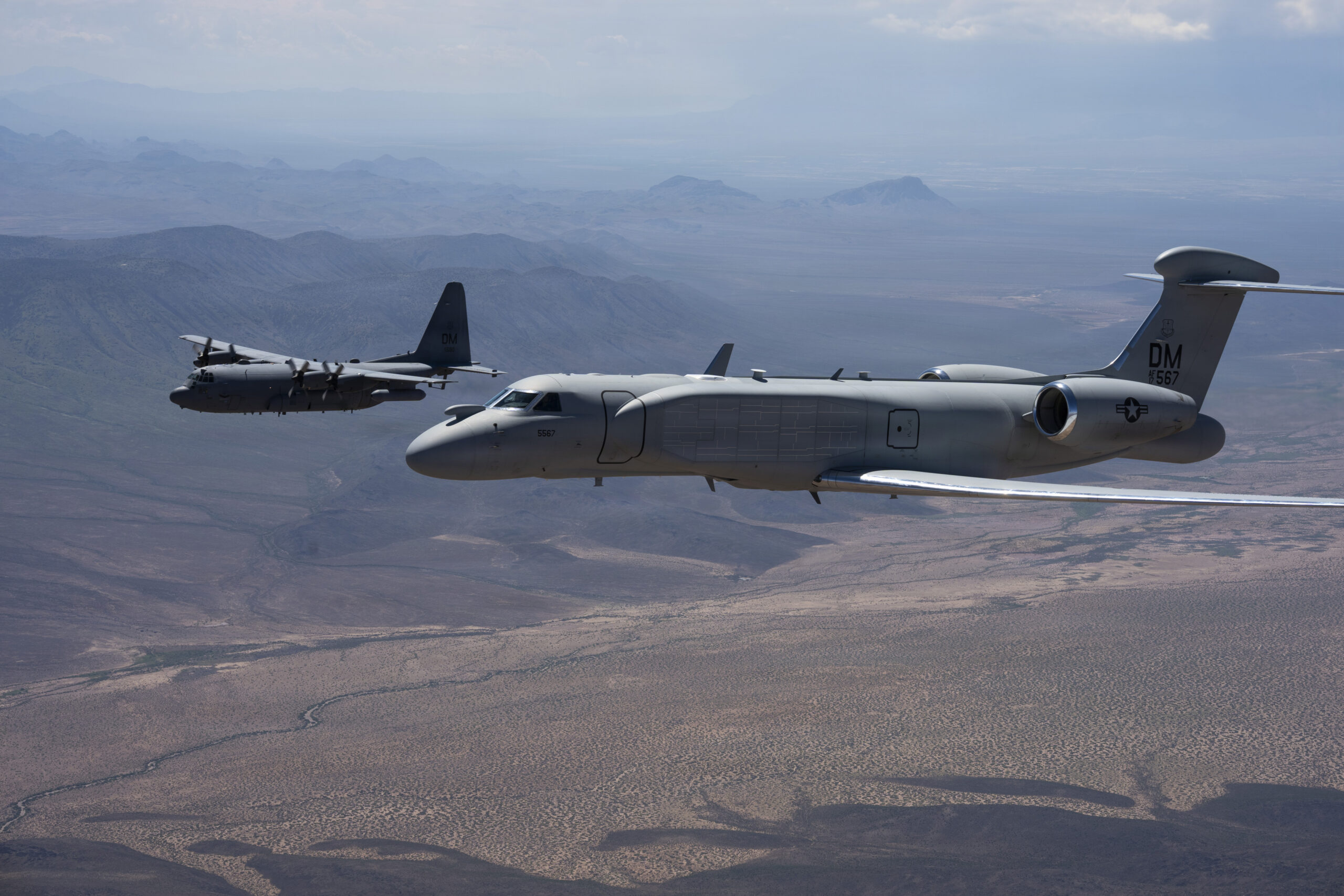
The EC-130H Compass Call, a propeller-driven aircraft renowned for its electronic warfare capabilities, has been formally retired after decades of service. Its mission is now being transferred to the new EA-37B, a more agile and technologically advanced platform. The EA-37B integrates the complex electronic warfare mission systems into a modified Gulfstream 550 business jet airframe, representing a substantial leap in capability and efficiency.
The 55th Electronic Combat Group at Davis-Monthan currently possesses five of these new EA-37B jets, with plans to expand the fleet to 12 by 2028 and a total of 22 by 2031. This transition promises enhanced performance across critical operational metrics. While approximately 70 percent of the electronic warfare equipment remains consistent with the legacy system, the EA-37B requires a reduced crew of nine Airmen, down from 13 in the EC-130H, to perform the same array of functions, including targeting and jamming enemy systems.
A key advantage of the new jet is its “plug-and-play” architecture. This design allows for rapid software updates and the seamless integration of new capabilities, enabling the aircraft to counter emerging threats and technologies without requiring extensive and costly hardware redesigns. According to Maj. Claire Fitle, a spokesperson for the 355th Wing, the EA-37B offers “significantly increased speed, altitude, and range compared with the legacy EC-130H.” This enhanced mobility allows the equipment to detect and jam a wider spectrum of enemy systems from greater distances. The system’s software-driven nature also facilitates swift responses to evolving electromagnetic threats, dramatically reducing the time needed to adapt to new adversarial tactics.
A Decade-Long Modernization Path
The Air Force initiated the search for a successor to the EC-130H in 2014. In 2017, L3 Technologies was awarded a contract to engineer the advanced electronic warfare capabilities into a smaller, more modern airframe. Congressional intervention in 2019 accelerated the procurement program, initially aiming for completion by 2026. The initial five EA-37B aircraft delivered lack some low-band capability, a feature anticipated to be included in subsequent deliveries.
Developmental testing commenced with the delivery of the first EA-37B by BAE Systems and L3Harris in 2023. Air Combat Command received the first two operational airframes in 2024, followed by the initiation of initial training sorties and the conclusion of operational testing within the same year. Contractors will assume primary responsibility for the maintenance of the EA-37Bs at Davis-Monthan, streamlining support operations. The EA-37B even gained its initial combat exposure during Operation Epic Fury, preceding the official declaration of its full operational capability.
The EC-130H Compass Call has a distinguished combat record, participating in significant operations such as Just Cause in Panama (1989), Desert Storm (1991), Allied Force in Kosovo (1999), and extensively throughout the Global War on Terror in Afghanistan, Iraq, and Syria over the past two and a half decades. The aircraft remained operational until its final mission during the early stages of Operation Epic Fury. The first EC-130H was retired in 2021, with the last aircraft completing its final flight on September 2, 2023.
The 355th Wing and the A-10 Thunderbolt II: A New Mission Focus
In a parallel development on September 18, the 355th Wing retired its final A-10 Thunderbolt II, popularly known as the “Warthog.” While the broader Air Force intends to retain the A-10, a highly regarded close air support (CAS) platform, until the 2030s, the 355th Wing is specifically transitioning to a “rescue hub” mission, as confirmed by Fitle.
The Air Force maintains that close air support remains an enduring mission, not tied to a single aircraft platform. Future CAS requirements will be met through a flexible combination of fifth- and fourth-generation multirole aircraft. Experienced A-10 aircrew and maintainers are being transitioned to these platforms, ensuring the continuity of their close support expertise. The 355th Wing will continue its Combat Search and Rescue (CSAR) and personnel recovery missions through the 563rd Rescue Group, utilizing the HH-60W Jolly Green II helicopter and the HC-130J Combat King II aircraft.
Strategic Realignment: 492nd Special Operations Wing Relocation
Further enhancing the strategic transformation of Davis-Monthan Air Force Base, the 492nd Special Operations Wing is relocating to the installation, with full operational capability projected between 2028 and 2029. This move is part of a broader Air Force restructuring that has transformed the 492nd from a training wing into a power projection wing. The special operations wing will partially backfill the 355th’s former A-10 capabilities by basing its OA-1K Skyraider II and CV-22 Osprey aircraft at Davis-Monthan. This expansion introduces specialized strike and operational capabilities to the base, aligning with the Air Force’s strategy to absorb former “high-end” strike missions with its advanced fifth-generation aircraft across the force.
Why This Matters
The simultaneous retirement of the EC-130H and the A-10 from Davis-Monthan Air Force Base, coupled with the introduction of new platforms and a mission realignment, represents a crucial juncture in the modernization of the U.S. Air Force. This transformation is not merely an equipment upgrade but a strategic recalibration designed to meet the complexities of a rapidly evolving global security landscape.
**Modernization for Future Conflict:** The transition from the EC-130H to the EA-37B highlights the imperative for superior electronic warfare capabilities. In an era where adversaries possess increasingly sophisticated air defense systems and electronic countermeasures, the EA-37B’s enhanced speed, range, and especially its software-defined architecture, offer a critical advantage. The ability to rapidly update and adapt its systems against emerging threats makes it a more resilient and effective asset in contested electromagnetic environments, crucial for ensuring air superiority and protecting friendly forces.
**Evolving Close Air Support Doctrine:** The A-10’s retirement at Davis-Monthan underscores the Air Force’s shift in its approach to Close Air Support (CAS). While the A-10 was exceptionally effective in permissive environments, its vulnerability to modern air defenses has prompted a move towards integrating CAS roles into more survivable, multi-role fourth and fifth-generation aircraft. This ensures that CAS can be provided in more contested airspace, offering greater flexibility and survivability for both aircraft and pilots. The transfer of experienced A-10 personnel to these newer platforms aims to preserve invaluable expertise.
**Strategic Base Realignment and Special Operations Focus:** The transformation of Davis-Monthan into a “rescue hub” and a base for the 492nd Special Operations Wing signifies a strategic optimization of resources. By consolidating specialized rescue capabilities and integrating a robust special operations presence, the base becomes a critical node for rapid response and specialized mission execution. The introduction of the OA-1K and CV-22 Ospreys enhances the ability to conduct diverse missions, from specialized strike to personnel recovery, supporting global special operations forces and enhancing overall joint force interoperability.
**Efficiency and Adaptability:** The new EA-37B, with its reduced crew requirements and contractor-led maintenance, illustrates a move towards greater operational efficiency. This approach can free up personnel for other critical roles and potentially reduce long-term operational costs. More broadly, these changes reflect the Air Force’s commitment to investing in adaptable, future-proof technologies and reconfiguring its force structure to maintain a decisive edge against contemporary and future threats, ensuring the continued effectiveness and relevance of U.S. airpower on the world stage.