

NATIONAL HARBOR, Md.—The U.S. Air Force has rapidly adapted a cost-effective weapon system to counter the increasing threat posed by Iranian-made drones. In a significant operational shift, F-15E Strike Eagles deployed to the Middle East were equipped with laser-guided rockets, a capability developed and fielded with remarkable speed.
During the Air & Space Forces Association’s Air, Space & Cyber Conference on September 16, 2024, the head of the Air Force Test Center, Brig. Gen. Mark A. Massaro, disclosed that this new capability, leveraging the Advanced Precision Kill Weapon System (APKWS), was deployed to operational units in approximately one week following initial testing.
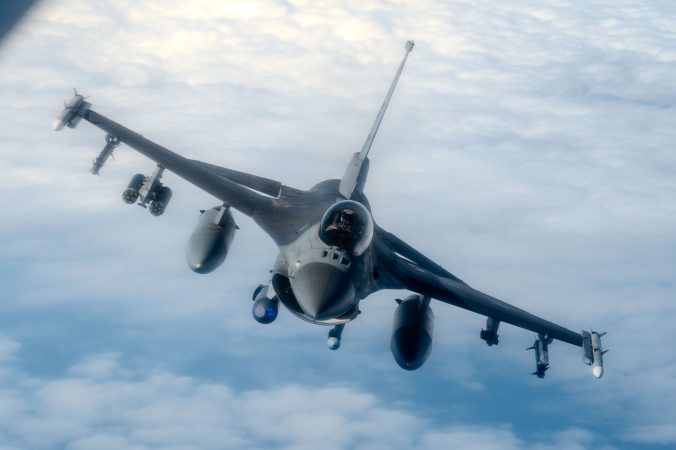
APKWS was originally designed as an air-to-ground precision-guided munition, transforming standard Hydra-70 unguided rockets into laser-guided projectiles via an add-on kit. While the Air Force had previously explored an air-to-air role for the rockets, conducting tests on an F-16 Fighting Falcon in 2019, this concept was initially regarded as a proof of concept rather than a deployable capability.
However, the proliferation and expanded use of inexpensive Iranian one-way attack drones in various conflict zones injected new urgency into the program. Consequently, the system was prioritized for air-to-air integration. It was first rushed to F-16s in 2024, with subsequent plans for F-15Es in 2025. Brig. Gen. Massaro detailed the expedited timeline for the F-15E deployment, stating that within nine days of testing commencing in May 2023, the system was being equipped on Strike Eagles operating overseas.
“At the end of the first week, we had demonstrated, both in a developmental and an operational sense, that it was a usable capability, and we deployed that capability at the end of the first week,” Massaro explained. He added that maintainers and testers were also deployed to the theater to support the initial operational phase. This rapid deployment exemplifies the Air Force Test Center’s capacity to swiftly translate conceptual ideas into operational combat power, according to Massaro, who was involved in the APKWS tests in his previous role as commander of the 96th Test Wing, which conducts developmental weapons testing, in collaboration with the 53rd Wing, responsible for operational testing.
The strategic need for a cost-effective countermeasure against drones became increasingly apparent. Historically, the Air Force relied on expensive radar-guided AIM-120 AMRAAM missiles, costing approximately $1 million each, and infrared-guided AIM-9 Sidewinders, which can range up to $500,000 for the AIM-9X variant, to intercept relatively inexpensive Shahed one-way attack drones. This significant cost disparity presented an unsustainable economic burden in combat scenarios.
This issue was sharply highlighted during a large-scale Iranian drone and ballistic missile attack targeting Israel on April 13, 2024. Iran launched an estimated 300 projectiles, including drones, ballistic missiles, and cruise missiles, in an attempt to overwhelm Israeli air defenses. U.S. forces, anticipating the engagement, deployed F-15Es from the 335th and 494th Fighter Squadrons, alongside F-16s from the 121st Fighter Squadron, over Iraq to intercept the incoming drones. The sheer volume of the Iranian barrage quickly led many U.S. fighters to exhaust their complement of up to eight air-to-air missiles. Reports indicated that three F-15E crews subsequently attempted, unsuccessfully, to use laser-guided JDAM bombs against drones due to the depletion of their primary air-to-air munitions.
Although U.S. fighters contributed to defeating the barrage, the engagement underscored the high financial cost of using advanced air-to-air missiles against cheap, disposable drones. This experience directly accelerated efforts to adapt APKWS rockets, which Air Force officials estimate cost around $35,000 each, for air-to-air combat.
Designated the AGR-20F FALCO, the air-to-air configuration of APKWS rockets first saw operational use on F-16s in 2024. Following this, efforts commenced at Eglin Air Force Base, Florida, to integrate the system onto F-15Es. This integration, led by the 96th Wing’s Air Force Seek Eagle Office (AFSEO), which had previously integrated the system into F-16s, was projected to be completed in mid-2025.
Massaro described the integration as a highly collaborative “integrated test approach between operational and developmental” teams. He noted that missions were often flown concurrently on the same day. During the second week of deployment, operational testers refined tactics, which were then transmitted digitally to personnel in the theater. This rapid feedback loop ensured that updated tactics and equipment were quickly available for operational use.
Initial challenges in early 2023 involved finding a method to mount the rockets on the F-15E and integrate them with the aircraft’s firing systems. By May 2023, a solution was identified, making the integration of air-to-air APKWS on F-15Es a top priority for the 96th Test Wing and 53rd Wing. Aircrew from the 40th Flight Test Squadron and the 85th and 422nd Test and Evaluation Squadrons conducted extensive test missions, including live-fire exercises over both land and water targets.
Following these initial demonstrations, personnel from the 53rd Wing and 96th Test Wing were deployed to deliver equipment and provide training to Airmen. While the Air Force has not publicly specified the exact location of the first operational fielding, U.S. officials confirmed to Air & Space Forces Magazine that air-to-air APKWS was initially employed in the U.S. Central Command area of responsibility in the Middle East.
In 2024, U.S. Air Forces Central began equipping its F-16s with APKWS rockets to counter drone threats, particularly those originating from Houthi forces in Yemen. This operational deployment culminated in a U.S. F-16 achieving its first documented drone kill using an APKWS rocket that same year. In October 2024, the 480th Expeditionary Fighter Squadron from Spangdahlem Air Base, Germany, deployed to the Middle East with prior, albeit limited, notification that they would be equipped with APKWS for air-to-air engagements against drones and cruise missiles.
Why This Matters
The rapid adaptation and deployment of the Advanced Precision Kill Weapon System (APKWS) for air-to-air combat represents a significant strategic adjustment by the U.S. Air Force, with profound implications for modern aerial warfare. This initiative underscores a critical shift in military strategy to effectively counter the growing global proliferation of inexpensive, yet potent, unmanned aerial vehicles (UAVs) and cruise missiles, often employed by state and non-state actors as asymmetric threats.
Firstly, the primary driver for this adaptation is economic. The vast disparity in cost-exchange ratios, where a $1 million AIM-120 AMRAAM or a $500,000 AIM-9X Sidewinder is used to destroy a drone costing tens of thousands of dollars, is unsustainable in prolonged conflicts. Such a scenario quickly depletes high-value munitions stockpiles and strains defense budgets. By fielding the $35,000 APKWS rocket, the Air Force significantly reduces the cost of interception, making defensive operations against mass drone attacks economically viable and sustainable. This enables U.S. and allied forces to maintain air superiority without incurring exorbitant financial liabilities.
Secondly, this development highlights the critical importance of agility and rapid innovation in military procurement and deployment. The Air Force Test Center’s ability to transition a proof-of-concept into an operational capability and deploy it to a theater of operations in a matter of days or weeks demonstrates a newfound responsiveness to evolving threats. This capability to rapidly “bridge between raw concept and decisive combat-credible power” is vital in an era characterized by accelerated technological change and unpredictable adversaries. It signals a move away from traditionally lengthy acquisition cycles towards more adaptive and iterative development processes.
Thirdly, the operational success of APKWS against drones, particularly in the Middle East against Houthi threats and in the context of the Iranian attack on Israel, enhances the defensive posture of U.S. and allied forces. It provides an effective countermeasure against tactics designed to overwhelm air defenses through sheer numbers. By offering a precision, low-cost intercept option, APKWS allows high-end air-to-air missiles to be reserved for higher-value, more sophisticated aerial threats, optimizing the use of a diversified missile inventory. This directly impacts the deterrence capabilities against adversaries who might otherwise rely on swarm attacks to exploit the economic vulnerability of conventional air defenses.
Finally, this adaptation could influence future weapon development and tactical doctrine. It emphasizes the need for flexible, multi-role weapon systems and modular integration capabilities across various aircraft platforms. The success of repurposing an air-to-ground munition for air-to-air defense may inspire further innovation in adapting existing technologies to new threats, fostering a more agile and adaptable military ecosystem. This also underscores a broader shift in focus towards countering the rise of smaller, cheaper, and more numerous unmanned systems that are redefining the battlespace. Ultimately, the integration of air-to-air APKWS is not just about a new weapon; it’s about a strategic evolution in how modern air forces plan to fight and win against the challenges of 21st-century aerial threats.
In a significant adaptation to evolving aerial threats, the U.S. Air Force has rapidly integrated and operationalized a previously ground-attack weapon system, the Advanced Precision Kill Weapon System (APKWS) rocket, for air-to-air defense against drones and cruise missiles. This strategic pivot, driven by a surge in low-cost aerial attacks, particularly in the Middle East, marks a notable shift in how the Air Force addresses contemporary challenges.

The initial success of this innovative approach became evident during a deployment by the 480th Fighter Squadron, where pilots demonstrated the efficacy of APKWS rockets in air-to-air engagements. Speaking in December 2025, Lt. Col. William “Skate” Parks, the unit’s commander, described the pioneering phase: “The first rocket kill was announced just prior to getting there. This was all new and innovative. We have these rockets come online. It’s a brand new thing, and we’re the ones doing it.” Parks highlighted the dedication of his personnel, who “spending every minute of their day when they’re not flying actual combat missions, preparing and improving on this. It showed because that success rate just started really becoming amazing with these rockets as we’re defending partners and our own forces.”
During that deployment, the 480th Fighter Squadron recorded dozens of kills using these rockets. In total, the unit claimed 108 aerial kills of drones and cruise missiles, which also included engagements using older AIM-9M Sidewinder missiles, notably achieving the first air-to-air kill by an AIM-9M in over three decades. News of these successes rapidly disseminated throughout the Air Force.
By April 2025, U.S. Air Forces in Europe (USAFE) had already begun incorporating APKWS into air-to-air training for its F-16 fighter jets. This move was prompted by the dual threat faced by U.S. fighters based in Europe: not only do they routinely deploy to the Middle East, but they also increasingly monitor Russian drone incursions into NATO airspace. According to Maj. Gen. David R. Massaro, director of Air Combat Command’s Plans, Programs, and Requirements directorate, the experience gained with F-16s significantly accelerated the integration of APKWS as an anti-drone capability on the F-15E Strike Eagle.
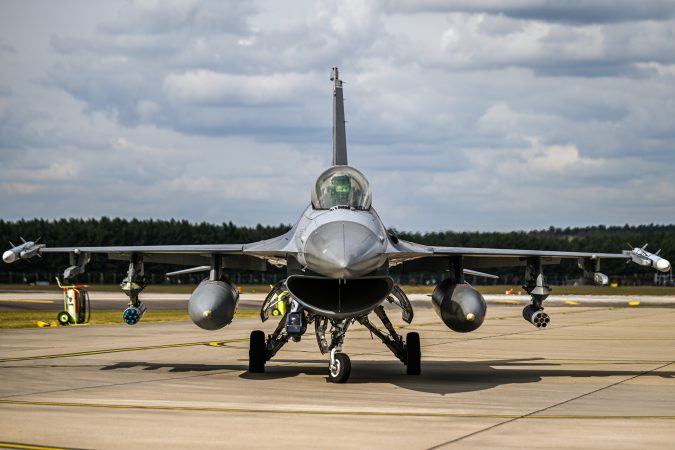
Massaro explained, “A lot of things had already occurred. The F-16 had already integrated APKWS and was flying with that for about a year, so we knew how the system itself worked. We had that knowledge. The F-15E is a known quantity.” APKWS rockets are typically carried in pods, with each pod containing seven rockets. F-15Es, known for their substantial payload capacity, can carry up to 42 APKWS rockets. Unlike more expensive “fire-and-forget” missiles, APKWS rockets require the target to be “lased,” or laser-designated, throughout their flight. This characteristic makes them particularly well-suited for intercepting slower-moving targets such as one-way attack drones.
The effort to equip both F-16s and F-15Es with APKWS has yielded significant benefits beyond mere cost savings for the Air Force. The operational imperative became starkly clear following the commencement of “Operation Epic Fury” on February 28, during which Iran launched over 6,000 drones and 1,500 ballistic missiles, according to U.S. officials, with these numbers continuing to rise. What was once considered an isolated or extreme threat two years prior has now become a routine operational concern.
Consequently, F-16s operating in critical areas such as the Strait of Hormuz, Persian Gulf, and Gulf of Oman—regions where Iran has repeatedly employed drones and missiles against maritime traffic, including U.S. Navy vessels—are now routinely flying with APKWS rocket pods specifically for drone interdiction. This capability has also extended to the U.S. Army, with Apache helicopters recently fielding APKWS rockets in an air-to-air capacity. The broader context includes the essential need to safeguard U.S. military bases throughout the Middle East from persistent aerial threats.
Lt. Gen. Derek C. France, who recently concluded his tenure as head of Air Forces Central, underscored the significance of APKWS integration during his leadership. In a recent interview, France stated, “From a technical aspect, it’s ‘Hey, I need more weapons on my jet,’ and that’s what the APKWS gives you: a pod of seven of those things versus a single AIM-9. You can shoot down a lot more drones when they’re coming in swarms.” He further elaborated on the operational implications: “From an operational perspective, there’s not just the magazine depth of an individual airplane, which I care about, but I care about the magazine depth of the theater and making sure that, across the theater, I’ve got wings with the right weapons in the right place and get them in the air where they can defend their bases. … There’s the cost curve, which is significant as well.”
Military officials and defense experts unanimously agree that the proliferation of drone threats is accelerating, necessitating continuous advancements in defensive capabilities. France emphasized that while “APKWS is a step in the right direction, it can’t be the final step.” He identified two critical areas for future focus: “air domain awareness at range: where are the drones coming from? How many are there? What’s their target? What do I know about them? And then magazine depth, both individual airplanes and theater-wise, to have enough to shoot them down in a layered defense kind of way. So both of those are important.” France concluded by stressing the urgency of the situation: “This drone problem is not going away. It’s accelerating in tactics, speed, advancements, and the numbers. That’s the direction that we’re going.”
Why This Matters
The U.S. Air Force’s rapid adoption of APKWS rockets for air-to-air engagements against drones and cruise missiles signifies a critical paradigm shift in modern warfare. This development is significant for several reasons:
- Adaptation to Asymmetric Threats:It demonstrates the military’s agility in responding to rapidly evolving, low-cost, yet highly potent threats. Historically, air combat doctrine focused on engaging sophisticated manned aircraft or high-value missiles. The proliferation of inexpensive drones and cruise missiles, often employed in swarms, demands new, cost-effective countermeasures to avoid “shooting down a $10,000 drone with a $1 million missile.”
- Strategic Cost-Effectiveness:The APKWS, a laser-guided rocket adapted from existing inventories, offers a significantly cheaper alternative to traditional air-to-air missiles like the AIM-9 Sidewinder. This “cost curve” advantage is crucial for maintaining “magazine depth” – ensuring that fighter aircraft and entire operational theaters have sufficient munitions to counter sustained, numerous attacks without depleting expensive advanced missile stocks.
- Regional Stability and Force Protection:The primary operational driver for this change is the escalating threat landscape in regions like the Middle East. The ability to effectively neutralize thousands of drones and missiles, particularly from actors like Iran, directly contributes to the protection of U.S. forces, allied nations, and vital international shipping lanes in strategic chokepoints like the Strait of Hormuz. It reduces the risk of casualties and maintains deterrence.
- Interoperability and Multi-Domain Defense:The integration of APKWS across various platforms, including F-16s, F-15Es, and even U.S. Army Apache helicopters, highlights a unified, multi-service approach to air defense. This interoperability ensures a more comprehensive and layered defensive posture against diverse aerial threats.
- Future of Air Warfare:While APKWS is a vital immediate solution, military leaders acknowledge it is not the ultimate answer. This initiative underscores the urgent need for continued investment in advanced “air domain awareness at range” technologies to detect and track threats earlier, as well as the development of even more sophisticated and cost-efficient “layered defense” systems. The ongoing “drone problem” is accelerating in sophistication and scale, pushing militaries globally to innovate constantly.
In essence, this move reflects a pragmatic and innovative response to the changing character of conflict, ensuring that the U.S. military can effectively protect its personnel and interests against a persistent and growing threat, while also setting a precedent for how modern air forces might adapt to future challenges.