
Britain’s Deepening Nuclear Alliances Highlighted in Parliamentary Update
A recent annual update to the United Kingdom Parliament has revealed a significant intensification of Britain’s nuclear relationships with its key international partners: the United States, France, and Australia. The report, published this week, underscores the UK’s commitment to reinforcing its defense capabilities and contributing to global security through strengthened alliances and its independent nuclear deterrent.
Among the key developments highlighted is the Northwood Declaration, an agreement reached between the UK and France in July 2025. This declaration formally recognizes that “there is no extreme threat to Europe which would not prompt a response by both Britain and France.” This statement reaffirms and deepens what the parliamentary update describes as longstanding nuclear cooperation between the two European powers. The Northwood Declaration signifies a profound alignment of strategic interests and a mutual commitment to collective security at the highest level of strategic deterrence, indicating a shared understanding of existential threats and a coordinated approach to their potential mitigation.
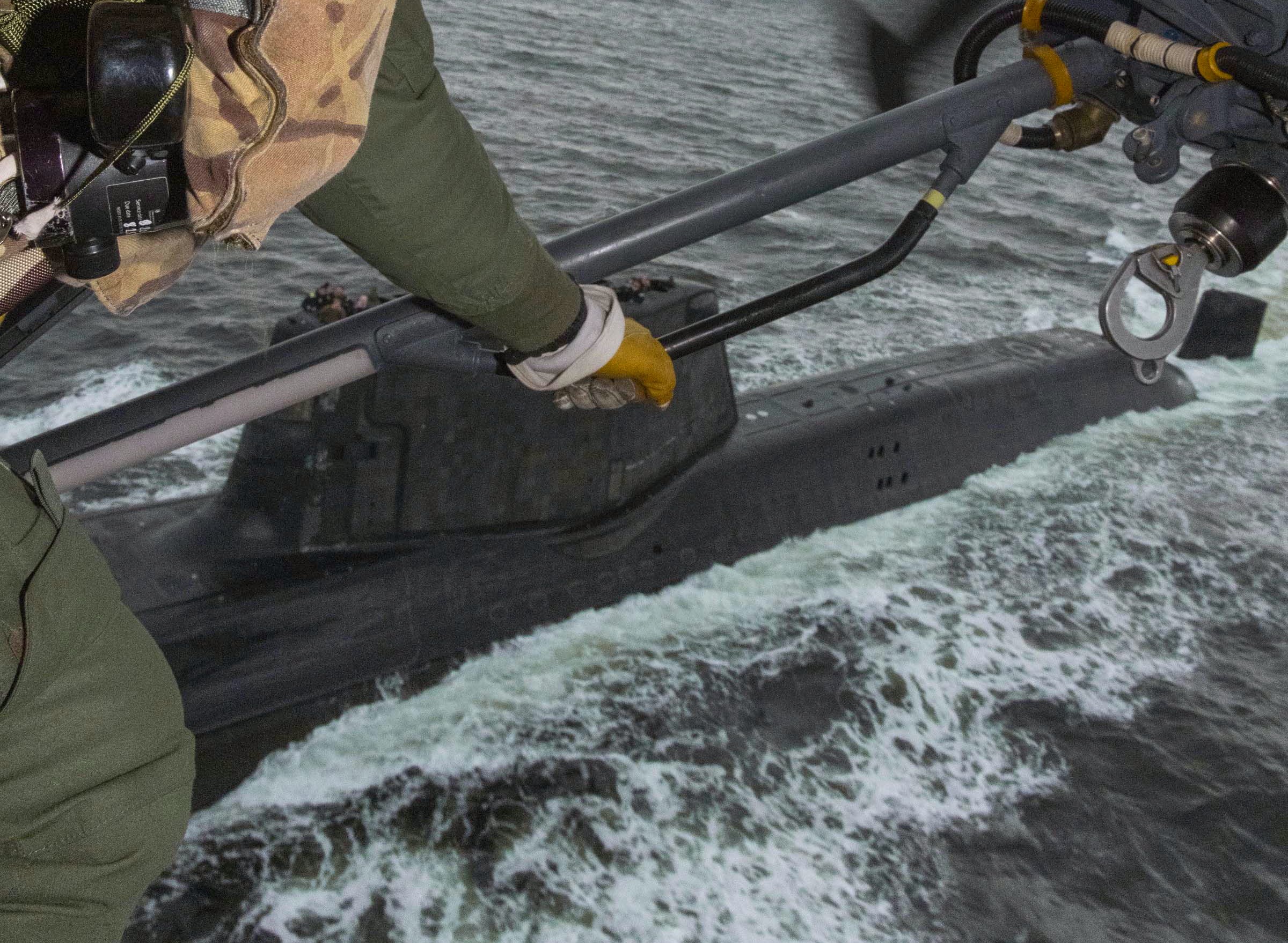
The report also detailed an important milestone in the AUKUS security partnership, a trilateral agreement between Australia, the United Kingdom, and the United States. In February of this year, HMS Anson, a Royal Navy Astute-class nuclear-powered submarine, docked at HMAS Stirling, a major naval base near Perth, Australia. This event represents a tangible step in the implementation of the AUKUS pact, which was announced in September 2021 with a primary objective of providing Australia with nuclear-powered submarine technology. The visit of HMS Anson demonstrates the growing interoperability between the navies of the AUKUS partners and facilitates practical logistics, knowledge transfer, and operational familiarization essential for Australia’s future fleet of nuclear-powered submarines. It underscores the commitment to establishing a robust and integrated security framework in the Indo-Pacific region.
The United States is consistently described in the parliamentary update as Britain’s closest defense ally. This foundational relationship is supported by extensive and longstanding cooperation on all nuclear matters, encompassing policy formulation, operational procedures, and technological advancements. The practical manifestation of this deep alliance is particularly evident in the UK’s Trident missile system. The Trident missiles themselves, along with their supporting systems fitted to Britain’s Vanguard-class submarines, are manufactured in the United States.
Under the terms of the 1963 Polaris Sales Agreement, which was subsequently amended in 1982 to include Trident, Britain acquired title to a number of missiles drawn from a shared pool of assets. This unique arrangement allows the UK to maintain a strategic nuclear deterrent without the immense logistical and financial burden of manufacturing the entire missile system independently. Crucially, while the missile hardware is sourced from the US, the system is operated independently by both the Royal Navy and the United States Navy. This operational independence is vital for Britain’s assertion of having an autonomous nuclear deterrent.
Complementing this, the warhead fitted to these missiles remains entirely sovereign to Britain. The design, known as the Mk4A, is maintained by the Atomic Weapons Establishment (AWE) at Aldermaston, the UK’s dedicated facility for the design, manufacture, and maintenance of its nuclear warheads. AWE Aldermaston is also spearheading the development of the replacement warhead, code-named Astraea. The parliamentary update highlights an increase in investment across the nuclear enterprise, described as sending “a clear signal of our commitment to global security, and to our Allies.” This increased investment is aimed at ensuring the long-term viability and credibility of Britain’s nuclear deterrent.
The update further emphasizes that nuclear deterrence is considered the cornerstone of NATO security. The United Kingdom’s independent strategic nuclear forces are stated to contribute significantly to the overall security of the alliance, a declaration that Britain has maintained consistently since 1962. While the UK’s deterrent is independent, meaning Britain retains sovereign control over its deployment and use, it is simultaneously declared to the defense of NATO. This dual commitment reinforces NATO’s collective defense posture by providing an additional layer of strategic capability and political flexibility, enhancing the alliance’s overall ability to deter aggression.
Why This Matters
The parliamentary update detailing Britain’s deepening nuclear relationships is significant for several reasons, reflecting crucial shifts in global geopolitics, defense strategy, and alliance dynamics:
- Strengthening Global Security Architecture:These developments are not isolated but represent a strategic response to an increasingly complex and volatile global security environment. The intensification of nuclear cooperation with the United States, France, and Australia underscores a renewed emphasis on deterrence and collective security among democratic allies. In an era marked by heightened geopolitical competition, particularly from state actors posing conventional and unconventional threats, these alliances aim to project stability and deter potential adversaries.
- Credibility of Deterrence in an Unstable World:For the United Kingdom, maintaining and modernizing its independent nuclear deterrent is a foundational element of its national security strategy. The parliamentary update highlights the perceived imperative for a credible deterrent in a world facing evolving threats. By investing in warhead development (Astraea) and strengthening partnerships that underpin its deterrent capabilities (like the Polaris Sales Agreement), the UK signals its unwavering commitment to protecting its interests and those of its allies.
- Alliance Cohesion and Interoperability:The Northwood Declaration deepens Anglo-French strategic alignment, formalizing a shared understanding of extreme threats to Europe and a joint commitment to respond. Similarly, the AUKUS partnership, exemplified by HMS Anson’s visit to HMAS Stirling, signifies a profound commitment to interoperability and shared capabilities, particularly in the Indo-Pacific region. These collaborative efforts enhance the cohesion and effectiveness of these alliances, enabling a more coordinated response to security challenges and facilitating seamless operations among partner nations.
- Technological Advancement and Industrial Base:The substantial investment across the UK’s nuclear enterprise, including AWE Aldermaston and the Astraea warhead development program, is critical for sustaining a high-tech industrial base and scientific expertise within the country. This commitment not only ensures the long-term viability and modernization of the UK’s deterrent but also fosters innovation, creates skilled jobs, and bolsters the nation’s strategic autonomy in critical defense technologies.
- Role within NATO:The UK’s independent nuclear deterrent serves as a vital pillar of NATO’s overall deterrence strategy. By consistently declaring its forces to the defense of the alliance since 1962, Britain reinforces its commitment to collective security. The UK’s independent capability adds strategic depth and flexibility to NATO’s deterrent posture, making a significant contribution to the overall security architecture of the transatlantic alliance and its ability to dissuade aggression.
- Geopolitical and Economic Implications:These partnerships carry significant long-term geopolitical and economic consequences. For Australia, AUKUS represents a transformative shift in its defense posture, aligning it more closely with the UK and US in confronting regional challenges. For the UK, these alliances reinforce its “Global Britain” ambition by projecting influence and advanced capabilities in crucial regions beyond Europe. The substantial financial commitments involved in maintaining and modernizing these capabilities also have implications for national budgets and strategic resource allocation, reflecting a sustained investment in long-term security.