
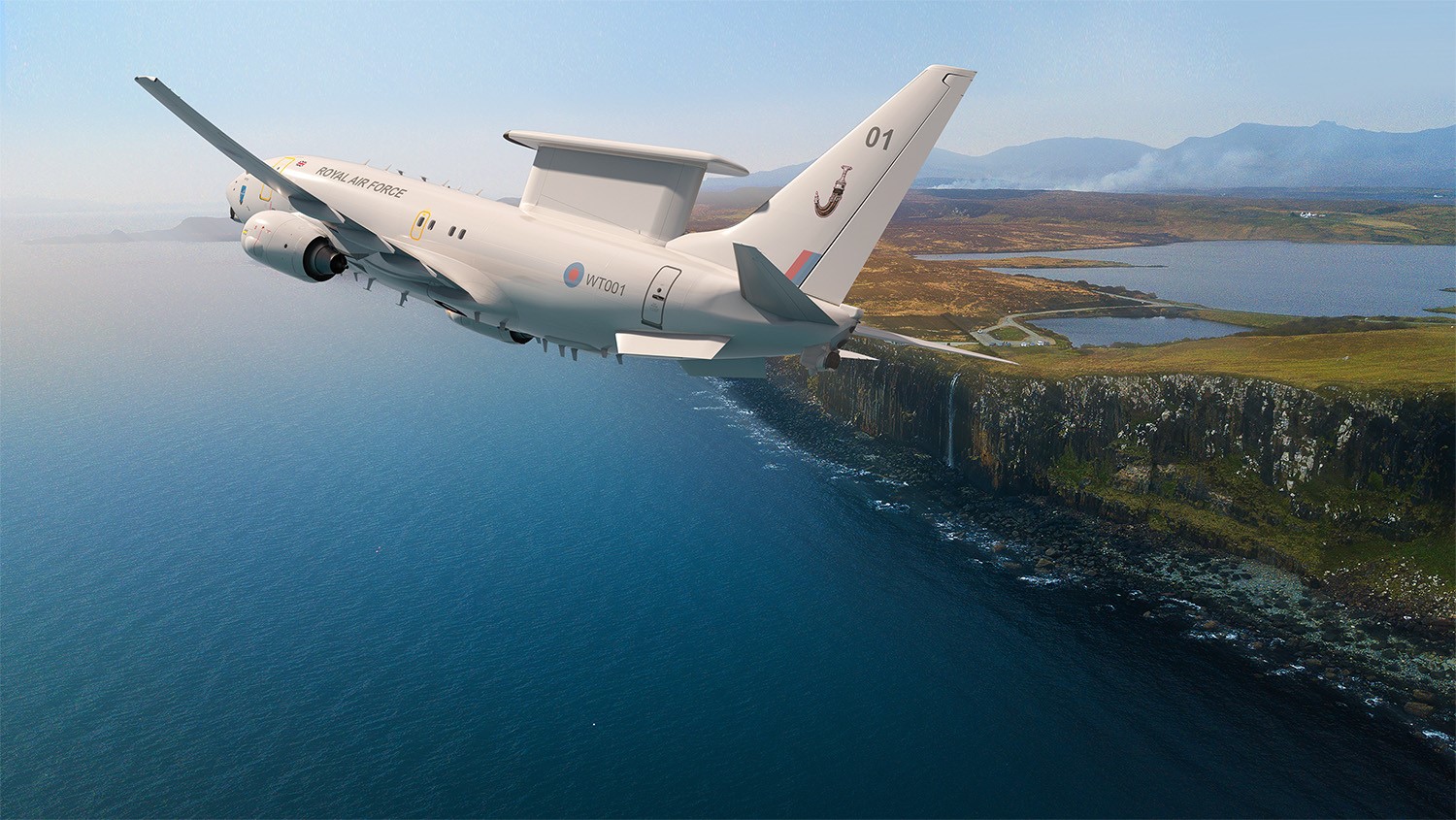
UK Secures Essential Navigation Services for Royal Air Force’s E-7 Wedgetail Fleet
The United Kingdom’s Defence Equipment and Support (DE&S) agency has announced a contract worth £269,557.69 with Jeppesen UK for the provision of critical navigation and flight planning services. This agreement is specifically designed to support the Royal Air Force’s (RAF) new E-7 Wedgetail Airborne Early Warning Mk 1 aircraft, a vital asset in the nation’s defence strategy.
The contract, which commenced on September 14, 2023, is set to run for a period of four years, concluding on September 14, 2027. According to the contract details notice, the requirement is for “the procurement of Jeppesen and ForeFlight Services to support the E-7 Wedgetail AEW Mk 1.” The procurement was conducted below the relevant financial threshold and awarded without competitive tender, utilizing provisions under the defence and security regime – a common practice for highly specialized military contracts where supplier options are limited.
Jeppesen, a leading global provider of aviation information, will supply the essential aeronautical charts, navigation databases, and terminal procedures that are indispensable for modern aircraft flight management systems and aircrews. These resources are updated on a regular cycle to reflect changes in global airspace regulations, airfield information, and flight procedures, ensuring that the Wedgetail fleet operates with the most current and accurate data. Complementing these services, ForeFlight, a sophisticated flight planning and electronic flight bag (EFB) software, will be utilized by aircrews. This technology allows pilots to plan complex routes, access digital charts, and brief sorties efficiently on a tablet device, significantly reducing reliance on traditional paper documentation and enhancing operational readiness and information accessibility.
The work is formally classified under the common procurement vocabulary code for air traffic control software packages. Jeppesen UK Limited, based in Crawley, West Sussex, has been identified as the supplier. The management of this contract falls under the purview of the dedicated E-7 team within the Air ISTAR (Intelligence, Surveillance, Target Acquisition, and Reconnaissance) area of Defence Equipment and Support, located at Abbey Wood.
The E-7 Wedgetail AEW Mk 1 represents a pivotal upgrade for the Royal Air Force, filling the void left by the retirement of the E-3D Sentry aircraft in 2021. This advanced platform restores and significantly enhances the RAF’s airborne early warning and control (AEW&C) capabilities. Constructed on a robust Boeing 737 airframe, the Wedgetail is equipped with the cutting-edge Northrop Grumman Multi-role Electronically Scanned Array (MESA) radar. A distinctive feature of the E-7 is its fixed dorsal fin housing the radar, in contrast to the rotating dome found on its predecessor. This innovative design allows the radar to concentrate its search efforts on specific sectors of interest, while simultaneously providing comprehensive all-round surveillance, offering unparalleled flexibility in diverse operational environments.
The Wedgetail acquisition program has undergone revisions since its inception. Initially, Britain placed an order for five aircraft in 2019. However, this figure was subsequently reduced to three as part of the 2021 Integrated Review, a comprehensive assessment of the UK’s defence and security priorities. The operational base for this advanced fleet will be RAF Lossiemouth in Moray, Scotland, where the aircraft will be operated by the esteemed 8 Squadron, a unit with a long and distinguished history in airborne early warning operations. The intricate conversion of the commercial Boeing 737 airframes into their specialized E-7 configuration is being carried out in Birmingham, United Kingdom, contributing to domestic aerospace expertise and employment.
Beyond the scope of this navigation contract, the E-7 Wedgetail recently featured in parliamentary discussions concerning its aerial refuelling capabilities. During a session this month, Ben Obese-Jecty, the Conservative Member of Parliament for Huntingdon, raised a pertinent question regarding the E-7. He identified it as one of four critical aircraft types in British service—alongside the P-8A Poseidon maritime patrol aircraft, the RC-135W Rivet Joint signals intelligence aircraft, and the future F-35A Lightning II fighter jet—that are exclusively configured for boom-style air-to-air refuelling. He inquired about the Ministry of Defence’s assessment of the demand for this specific refuelling method, hinting at potential operational limitations or dependencies.
In response to the MP’s query, Luke Pollard, the Minister of State for Defence Readiness and Industry, provided clarification on the Royal Air Force’s strategic approach to aerial refuelling. He confirmed that while the RAF currently operates a predominantly probe and drogue refuelling system, it plans to complement this with the development of a boom system. Minister Pollard emphasized that this strategic evolution is designed to ensure a sovereign air-to-air refuelling capability for the future fleet. Crucially, he added that this dual capability would also significantly enhance interoperability with NATO allies, many of whom primarily utilize boom refuelling systems, thereby strengthening joint operational effectiveness and strategic alignment within the alliance.
Why This Matters
The contract with Jeppesen UK for navigation and flight planning services, while modest in monetary value compared to the cost of the aircraft itself, is profoundly significant for the operational effectiveness and strategic importance of the Royal Air Force’s E-7 Wedgetail fleet. This agreement underpins several critical aspects of national defence and international cooperation.
Firstly, the E-7 Wedgetail is a cornerstone of the UK’s airborne early warning and control (AEW&C) capabilities. These aircraft serve as critical “eyes in the sky,” providing real-time intelligence on airborne and surface threats across vast geographical areas. They are essential for command and control, enabling the coordination of defensive and offensive military operations, and safeguarding UK airspace and interests abroad. The provision of reliable, up-to-date navigation databases, aeronautical charts, and advanced flight planning software is not merely a convenience; it is fundamental to the safe and effective execution of these highly complex and strategic missions. Without precise navigational data and robust flight planning tools, the operational utility and mission success rates of the Wedgetail fleet would be severely compromised, potentially impacting national security.
Secondly, this contract directly addresses the operational readiness and efficiency of the Wedgetail fleet. Modern military aviation is heavily reliant on digital navigation systems and electronic flight bags (EFBs). Constantly updated data, reflecting changes in airspace, airfield information, and flight procedures, is paramount for flight safety and mission success in a dynamic operational environment. The transition from traditional paper charts to advanced electronic systems, facilitated by services like ForeFlight, streamlines pre-flight preparations, reduces cockpit workload for aircrews, and improves the accessibility and accuracy of critical information. This enhancement in efficiency and responsiveness is vital for a rapid-response asset like the Wedgetail.
Thirdly, the method of procurement – awarded without competition under the defence and security regime – highlights the specialized and often niche nature of certain defence technologies and services. While such non-competitive awards can expedite the acquisition of critical capabilities, they also underscore the limited pool of qualified suppliers in highly specialized sectors. The cost of this contract, while a fraction of the overall Wedgetail program, represents a necessary ongoing investment to sustain a high-value strategic asset.
Finally, the recent parliamentary debate concerning the E-7 Wedgetail’s boom-only refuelling capability reveals a broader strategic imperative for the Royal Air Force. Air-to-air refuelling is an indispensable capability for extending the range, endurance, and operational flexibility of military aircraft, allowing them to maintain extended patrols and reach distant operational theatres. The RAF has historically relied on the probe and drogue system. The commitment to develop a sovereign boom refuelling capability signifies a strategic move towards greater self-reliance and, crucially, enhanced interoperability with key NATO allies, particularly the United States, whose air forces predominantly utilize boom refuelling systems. This adoption of a dual-capability approach ensures that the RAF can support its diverse and modernizing fleet, including vital assets like the Wedgetail, F-35A, P-8A, and RC-135W, across a wider spectrum of joint and coalition operations. This strategic evolution enhances the UK’s capacity to project power and fulfill its global defence and alliance commitments.