
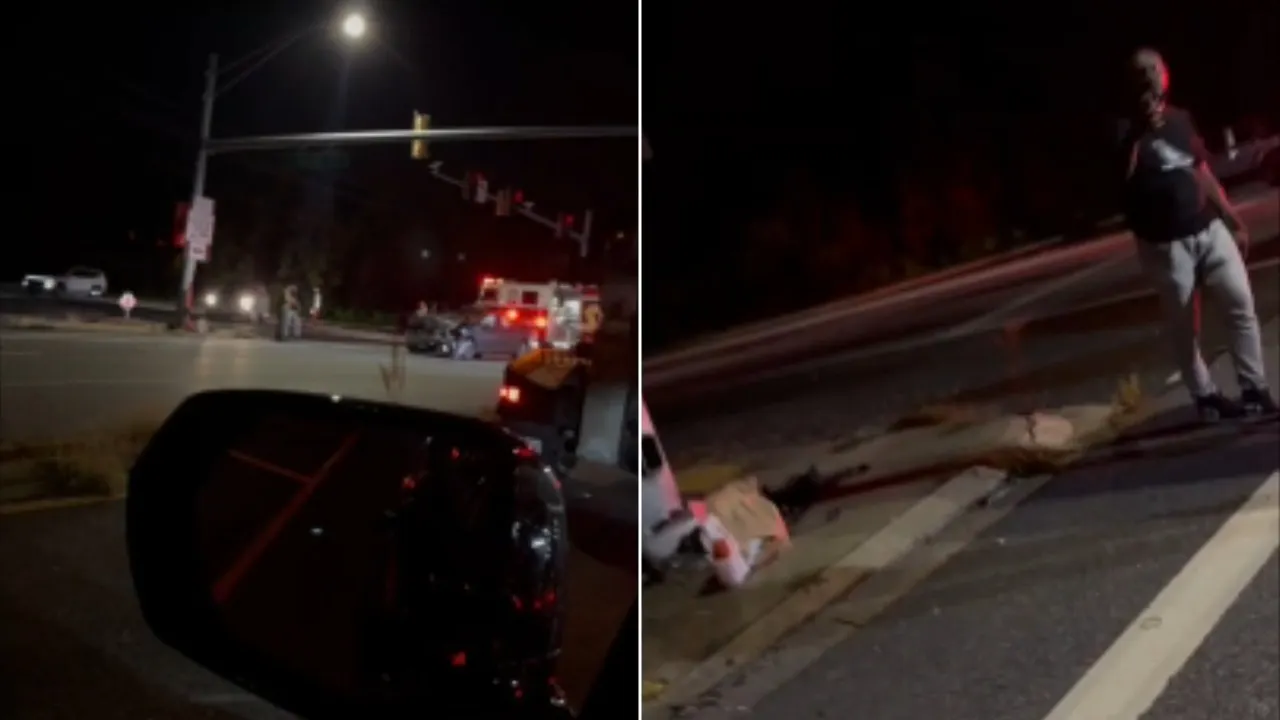
A Maryland man went viral after filming himself retrieving his DoorDash order from the scene of a crash that totaled the delivery driver’s car. (Credit: @thegaragegrind via Storyful)
**Key Takeaways:**
1. **Gig Economy’s Precarious Foundation:** The viral incident starkly highlights the financial vulnerability of independent contractors in the gig economy, who typically bear the full costs of operational risks like vehicle damage, medical bills, and lost income, without the safety nets of traditional employment benefits.
2. **DoorDash’s Operational & Reputational Risks:** While advancing technological solutions like drone delivery, DoorDash (DASH) continues to navigate significant challenges in ensuring the safety and welfare of its human driver network, impacting driver retention, brand perception, and potential regulatory oversight.
3. **ESG Scrutiny on Worker Welfare Intensifies:** Incidents like this amplify investor focus on Environmental, Social, and Governance (ESG) factors, pressuring gig economy platforms to develop more robust policies regarding worker classification, insurance, and safety to mitigate long-term reputational and financial risks.
A recent viral social media moment, depicting a customer retrieving his DoorDash order from the scene of a crash that totaled his delivery driver’s car, offers a stark, unfiltered glimpse into the precarious realities of the gig economy. While the footage spurred immediate public reaction and a wave of online support for the driver, its underlying narrative resonates far beyond a mere human interest story, touching upon critical market dynamics for companies like DoorDash (DASH), the welfare of independent contractors, and evolving regulatory landscapes.
The incident unfolded on Church Road in Bowie, Maryland, where Glenn Ndibnu arrived to find his DoorDash driver, William Koroma, involved in a significant accident with multiple ambulances present. “I DoorDashed some food, and my DoorDasher told me he got in a car accident, and he was like, ‘I can come meet him and get the food from him,'” Ndibnu explained in his viral video. His internal debate – “Is it f—ed up for me to walk across and pick it up? I look so f—ed up right now about to go get this food” – while seemingly trivial, underscores a deeper tension between consumer expectation and the often-unseen human cost of convenience in the on-demand economy.
Glenn Ndibnu records himself driving to where his DoorDasher got into an accident.(@thegaragegrind via Storyful / Storyful)
Ndibnu ultimately retrieved his meal, apologizing to Koroma, and later leveraged his viral platform to link to a GoFundMe campaign for the driver. This act of community support, while commendable, inadvertently spotlights a systemic vulnerability: the reliance on public generosity to cover essential costs that, in a traditional employment model, might be addressed by employer-provided benefits or comprehensive insurance.
The Gig Economy’s Fragile Foundations
William Koroma’s subsequent GoFundMe plea paints a clear picture of the financial fallout. “My vehicle experienced brake failure, and I was involved in a major accident,” he wrote, detailing how his car was totaled and expressing gratitude for his survival and the lack of serious injury to others. More critically from a market perspective, he added: “Losing my vehicle has left me without reliable transportation, and I have also lost my job.” This swift transition from gainful employment to joblessness due to a single incident is a hallmark risk for independent contractors.
Unlike traditional employees, gig workers like DoorDash drivers often operate without employer-sponsored health insurance, paid time off, or workers’ compensation. Their primary tool – their personal vehicle – is also their greatest liability and a significant operating expense. A totaled car means not only the cost of replacement but also the immediate cessation of income-generating activity. This scenario can have severe implications for DoorDash’s driver retention rates, particularly if perceived risks outweigh the financial rewards, especially in a competitive labor market.
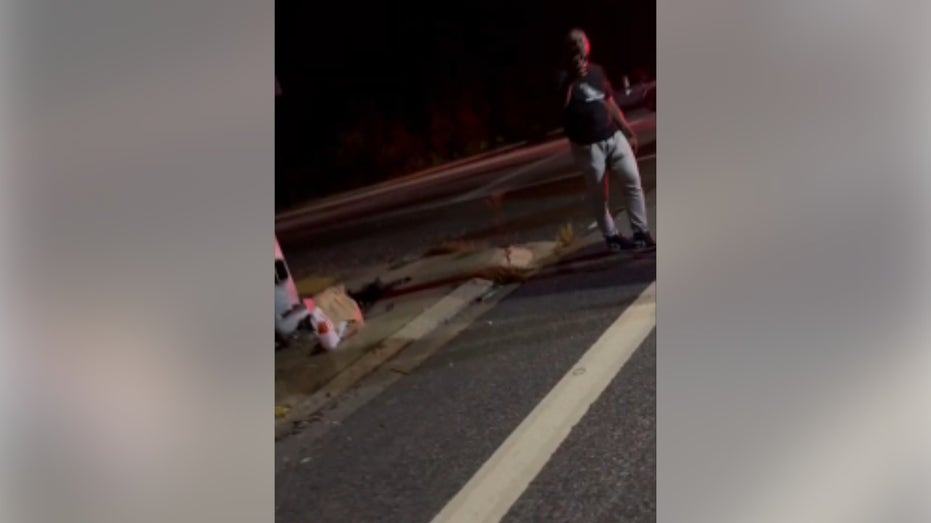
Glenn Ndibnu walks up to William Koroma, the DoorDash driver who crashed. Koroma tells Ndibnu he can pick up his food from the sidewalk.(@thegaragegrind via Storyful / Storyful)
DoorDash (DASH): Balancing Innovation with Operational Realities
For DoorDash (DASH), a company actively pursuing future-forward initiatives likeFAA approval for its own delivery drones, incidents involving human drivers present a complex challenge. While drone delivery promises increased efficiency and potentially lower per-delivery costs, the vast majority of DoorDash’s current operations rely on human drivers. The contrast is stark: cutting-edge automation on one hand, and the very human vulnerabilities of its existing workforce on the other.
The company’s success is intrinsically linked to a robust and available driver network. When drivers face significant personal financial setbacks due to accidents, it can deter others from joining or continuing to deliver, directly impacting DoorDash’s ability to meet consumer demand efficiently, especially during peak hours or in less densely populated areas. This “driver supply risk” is a critical consideration for investors evaluating DASH’s long-term growth prospects and operational stability.
Moreover, these incidents feed into a broader public discourse around the gig economy’s social responsibility. As Koroma faces mounting medical bills on top of vehicle replacement, the spotlight invariably turns to DoorDash’s policies regarding driver support and insurance. While DoorDash does offer some occupational accident insurance for drivers, the extent of its coverage and the independent contractor classification often mean drivers are still left with substantial out-of-pocket expenses and lost earnings. This puts pressure on DoorDash and other platforms to evolve their contractor models, potentially increasing operational costs but also enhancing brand loyalty and driver retention.
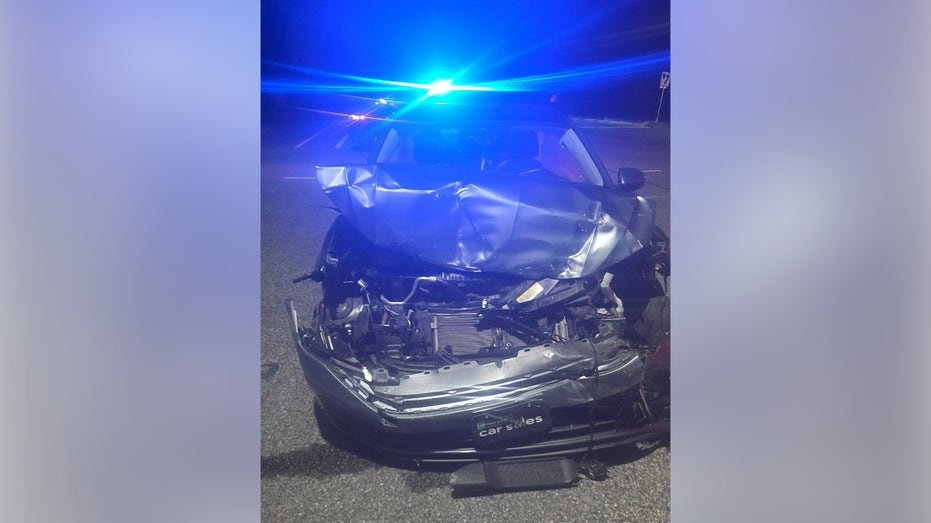
A picture of the totaled car from William Koroma’s GoFundMe page.(GoFundMe / Unknown)
Regulatory and ESG Implications
The GoFundMe’s success, raising nearly $14,000 as of Tuesday morning, is a testament to community spirit but also a symptom of a regulatory gap. Governments worldwide are increasingly scrutinizing the classification of gig workers, with legislative efforts in places like California (AB5) aiming to reclassify independent contractors as employees, which would mandate benefits like health insurance and workers’ compensation. While such measures could significantly increase operational costs for DoorDash, they also have the potential to stabilize the driver pool and mitigate the kind of financial disaster Koroma is experiencing.
For investors, the “S” in ESG (Social) is becoming more prominent. How companies treat their workforce, especially independent contractors, is increasingly viewed as a material risk factor. Incidents that highlight worker precarity can negatively impact investor sentiment, lead to higher shareholder activism, and potentially affect a company’s valuation if perceived as having poor social governance. The juxtaposition of Koroma’s struggle with the broader context of aCalifornia woman fatally shot by an illegal immigrant DoorDash driver who stalked her(a different, darker operational risk altogether) further complicates the narrative around driver safety and platform accountability.
Ultimately, William Koroma’s story is a vivid illustration of the delicate balance DoorDash and its peers must strike: rapid innovation and consumer convenience versus the fundamental human and financial risks borne by their essential workforce. As the gig economy matures, how these inherent vulnerabilities are addressed – through technological solutions, improved contractor support, or regulatory mandates – will significantly shape its future trajectory and the financial health of its leading players.
Market Impact:
While an isolated incident like William Koroma’s car crash may not directly move DoorDash’s (DASH) stock price in the short term, its viral nature and the underlying issues it exposes contribute to a broader market narrative that analysts and investors cannot ignore. The incident amplifies existing concerns about the sustainability of the independent contractor model, particularly regarding driver retention, welfare, and the associated regulatory risks. Increased public and regulatory scrutiny on gig worker benefits and insurance could lead to legislative changes, potentially escalating DoorDash’s operational costs and compressing profit margins. Conversely, proactive measures by DoorDash to enhance driver support and safety could improve brand perception and driver loyalty, offering a competitive advantage. Investor sentiment, particularly within ESG frameworks, is likely to place greater emphasis on how DoorDash manages these social risks. The continued reliance on human drivers, even as the company explores advanced options like drones, means that managing the human element of its operations effectively will remain a critical factor influencing DoorDash’s long-term valuation and market position.