
Crusoe, a Denver-based AI data center startup that recently raised $3.9 billion, has ended plans to use a new line of stationary power plants developed by fellow Denver company Boom Supersonic.
Founded in 2018 as a bitcoin miner that ran on excess natural gas from oil fields, Crusoe has since become one of the biggest builders of AI data centers, including a massive campus in Abilene, Texas, that supplies computing power to OpenAI.
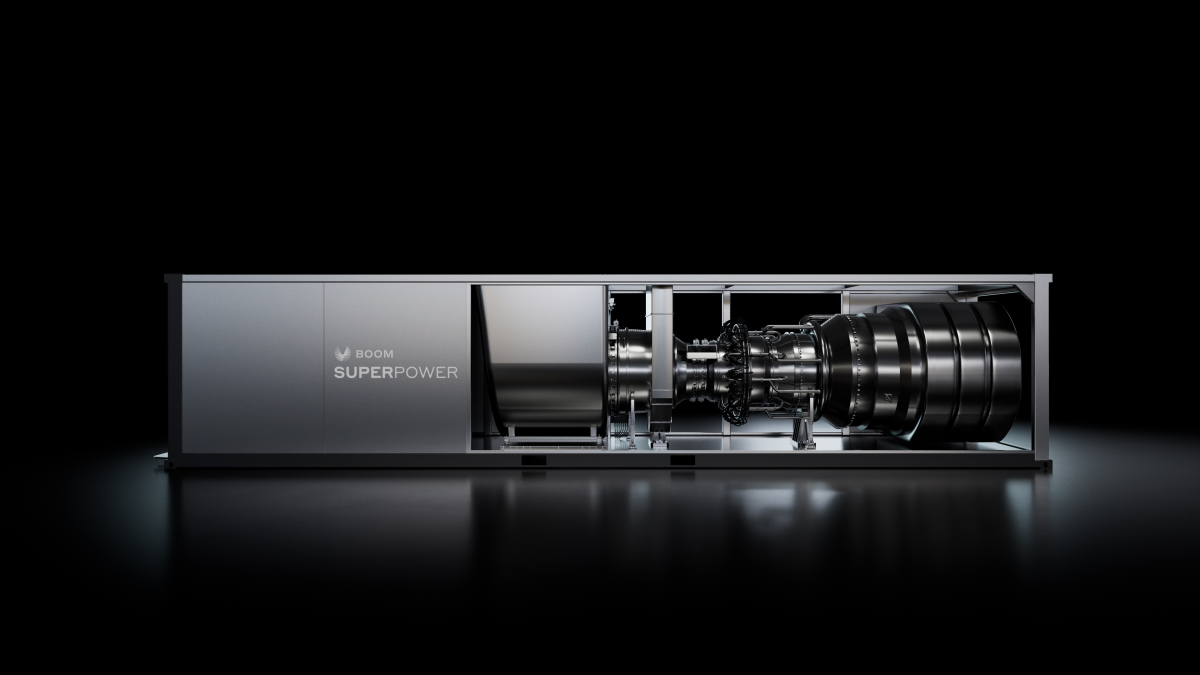
Boom Supersonic, which is developing a supersonic passenger jet called Overture, launched a new business last year to sell a version of the engine it’s developing for that jet as natural gas-fired stationary power plants. Its Superpower turbine shares about 80% of the same parts with that airborne engine, called Symphony.
Crusoe had signed on to be the first customer for this business, agreeing to spend $1.25 billion on 29 of Boom’s 42-megawatt Superpower turbines. The first deliveries were supposed to begin in 2027. But that deal has since fallen apart, according to Boom Supersonic CEO Blake Scholl.
Friday, in a post on X, after congratulating Crusoe founders Cully Cavness and Chase Lochmiller on the company’s recent raise, Scholl said the companies are no longer moving forward with the turbine launch partnership. Although he did note that other customers were in its pipeline.
“The TL/DR is that turbines are no longer part of Crusoe’s near term primary power mix at Abilene/etc., so a launch partnership just didn’t make sense,” he wrote in the post. “Boom will be delivering about 250MW of Superpowers next year to other sites, and we’re targeting 1GW in 2028. We’re grateful for the help Crusoe gave us in shaping Superpower and continue cheering for their successes. The future is long, and we look forward to potentially teaming up if/when turbines become part of their primary power mix.”
Crusoe confirmed to TechCrunch that it is no longer doing business with Boom.
“We build AI factories from the power up, and we’re bringing new campuses online across the country, powered by innovative energy sources,” spokesperson Andrew Schmitt said in an email. “As our portfolio grows, we stay flexible, choosing the energy solutions that are right for each site as its needs evolve – including turbines, along with wind, solar, batteries and the grid. While Boom has been a great partner, the partnership isn’t the right fit today. We wish them well.”
Crusoe’s initial 1.2 gigawatt data center in Abilene that was built for Oracle and OpenAI is powered by the grid, according to the company. There is also a gas-turbine power plant that is used for backup power only. Crusoe is also building a 900 megawatt data center in Abilene for Microsoft, which will be powered on-site gas turbines.
Losing its launch customer is seemingly a setback for Boom, which raised $300 million last year, largely to commercialize the new business. The idea, Scholl told TechCrunch at the time, was to use profits from the stationary power plant business to fund the development of Overture.
Scholl could not be reached for comment before publication; TechCrunch will update this article if he responds.
When you purchase through links in our articles, we may earn a small commission. This doesn’t affect our editorial independence.
{content}
Source:{feed_title}
AI’s Power Pivot: Crusoe Scraps $1.25B Turbine Deal with Supersonic Hopeful Boom
Key Takeaways:
- Mega-Deal Dissolves:AI data center builder Crusoe has terminated a $1.25 billion agreement with Boom Supersonic to purchase 29 “Superpower” stationary gas turbines, originally intended to fuel Crusoe’s massive AI infrastructure.
- Crusoe’s Evolving Strategy:Fresh off a $3.9 billion funding round, Crusoe states the partnership “isn’t the right fit today,” emphasizing flexibility in energy sourcing amidst its rapid expansion and diverse power needs for AI factories.
- Boom’s Diversification Challenge:The cancellation is a significant blow to Boom Supersonic’s strategy of using profits from its Superpower turbine business to fund the development of its Overture supersonic jet, although Boom claims other customers are in its pipeline.
In a surprising turn for two prominent Denver-based tech ventures, Crusoe, the rapidly expanding AI data center developer, has pulled the plug on a colossal $1.25 billion deal with Boom Supersonic. This agreement would have seen Crusoe become the inaugural customer for Boom’s “Superpower” stationary gas turbines, a crucial diversification play for the ambitious supersonic jet manufacturer. The uncoupling, confirmed by both companies, highlights the dynamic and often unpredictable nature of infrastructure development in the AI era, where power sourcing strategies are as critical as the computing power itself.
Crusoe’s Meteoric Rise and the Insatiable Demand for AI Power
Founded in 2018 with a novel approach to energy utilization – converting wasted natural gas from oil fields into power for Bitcoin mining – Crusoe has since pivoted and scaled dramatically. Today, it stands as a pivotal player in the AI infrastructure landscape, constructing massive data centers essential for powering the burgeoning demands of artificial intelligence. Its campus in Abilene, Texas, for instance, is a critical supplier of computing power to OpenAI, the company behind ChatGPT, underscoring its importance in the global AI ecosystem.
The company’s recent infusion of $3.9 billion in funding speaks volumes about investor confidence in its vision and its ability to meet the unprecedented energy demands of AI. Building “AI factories from the power up,” as Crusoe articulates, involves navigating a complex web of energy sources, from traditional grid connections to cutting-edge on-site generation, renewables, and battery storage. This strategic flexibility, Crusoe spokesperson Andrew Schmitt indicated, is paramount as the company’s portfolio grows and the specific energy needs for each site evolve.
The sheer scale of AI operations necessitates reliable, massive, and increasingly sustainable power. Generative AI models, in particular, consume prodigious amounts of electricity during both their training and inference phases. This intense energy appetite makes power infrastructure not just a cost component, but a strategic differentiator and a core challenge for any company venturing into hyperscale AI deployment.
Boom Supersonic: Supersonic Dreams and Terrestrial Diversion
Across town, Boom Supersonic has been charting an equally ambitious, albeit different, course: reviving commercial supersonic air travel with its Overture jet. To help fund the monumental development costs associated with Overture, Boom last year unveiled a clever diversification strategy. It launched a new business line, capitalizing on its core engineering prowess, to sell a modified version of Overture’s “Symphony” engine as natural gas-fired stationary power plants, branded “Superpower.” With approximately 80% shared parts between the airborne and terrestrial engines, the Superpower turbines were envisioned as a lucrative revenue stream, funneling profits directly into Overture’s R&D.
The initial partnership with Crusoe was a landmark deal, giving Boom a high-profile launch customer and a substantial $1.25 billion commitment for 29 of its 42-megawatt Superpower turbines, with deliveries slated to commence in 2027. This agreement was touted as a significant validation of Boom’s diversification strategy and a clear path to generating the capital needed to bring supersonic flight back to the skies.
The Unraveling: “Not the Right Fit Today”
The news of the deal’s dissolution came via Boom Supersonic CEO Blake Scholl, who posted on X (formerly Twitter) following Crusoe’s impressive funding announcement. Scholl clarified that “turbines are no longer part of Crusoe’s near term primary power mix at Abilene/etc., so a launch partnership just didn’t make sense.” He expressed gratitude for Crusoe’s early input on Superpower, hinting at a potential future collaboration if Crusoe’s energy strategy shifts again. Crusoe confirmed the termination, with spokesperson Andrew Schmitt noting, “While Boom has been a great partner, the partnership isn’t the right fit today. We wish them well.”
For Boom, losing its launch customer and a $1.25 billion order represents a considerable setback. The company raised $300 million last year specifically to commercialize this new power plant business, banking on its success to underwrite the Overture project. While Scholl asserted that Boom expects to deliver 250MW of Superpowers to “other sites” next year and aims for 1GW in 2028, the immediate impact of losing such a significant foundational customer cannot be understated. It will undoubtedly intensify the pressure on Boom to secure new marquee clients and demonstrate the viability of its diversification strategy.
Broader Implications for Powering the AI Future
This development is a microcosm of the larger challenges facing the AI industry. The explosive growth of AI demands unprecedented amounts of computational power, which in turn requires colossal energy inputs. Companies are exploring every conceivable option – from building new renewable energy farms, tapping into the existing grid, developing modular nuclear reactors, to leveraging advanced gas turbines – to meet this demand sustainably and reliably.
Crusoe’s pivot, even if subtle, signals the constant re-evaluation of strategies in this high-stakes environment. For Boom, it’s a reminder that even the most innovative diversification plans face intense market scrutiny and competition. The race to power AI is not just about computing chips; it’s fundamentally about who can supply the most efficient, scalable, and environmentally responsible energy solutions.
The dissolution of the Crusoe-Boom Superpower deal marks a notable shift for both companies. For Crusoe, it signifies a potentially evolving energy strategy following a massive financial boost, allowing them greater flexibility in sourcing the immense power required for their AI factories. For Boom, it represents a significant hurdle in their ambitious plan to fund supersonic flight through terrestrial power generation, pushing them to redouble efforts in securing new customers for their Superpower turbines.
Bottom Line:
The abrupt end to the $1.25 billion Crusoe-Boom Supersonic partnership underscores the intense, rapidly shifting landscape of AI infrastructure and power generation. While Crusoe, flush with new capital, re-optimizes its energy strategy for the burgeoning demands of AI, Boom faces renewed pressure to validate its Superpower turbines and find alternative revenue streams to keep its supersonic dreams aloft, highlighting the volatile interdependencies within the tech industry’s most ambitious frontiers.