
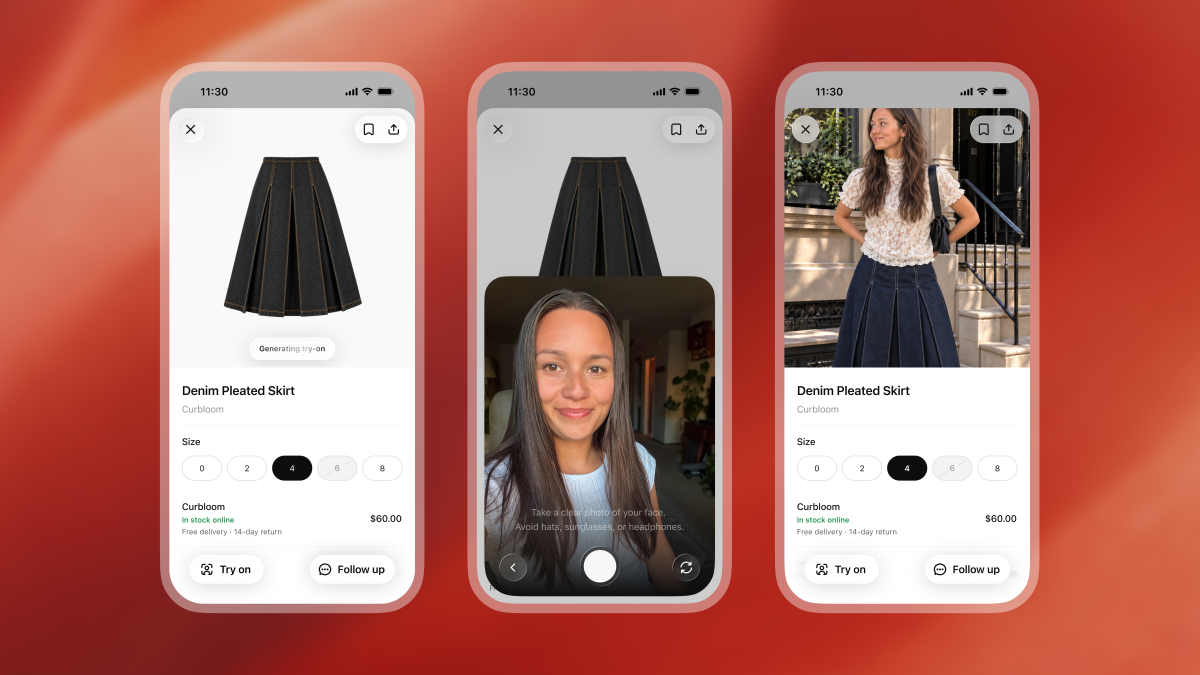
OpenAI is again experimenting with how its conversational AI assistant, ChatGPT, can help users as they shop online. On Thursday, the company announced the global launch of two new shopping features, including a way to virtually try on clothing and accessories and a new favoriting function that can help users save products they like for later reference.
The updates arrive at a time when AI assistants are exploring consumer use cases around shopping. OpenAI already had to pivot from one of its earlier ideas in this space, an instant checkout feature that ended up not performing well. More recently, agentic AI startup Instinct began pushing product recommendations to users, but some felt that the proactive recommendations were an overreach, more akin to ads than helpful suggestions.
OpenAI said its new shopping features leverage the newly launched ChatGPT Images 2.5 model, which the company claims produces more natural lighting and richer textures, follows editing instructions more reliably, and reduces image generation latency.
To start, virtual try-on allows ChatGPT users to upload a selfie or a full-body photo in order to visualize how an article of clothing or an accessory might look on them. This option will appear as a new Try On button in ChatGPT’s shopping results. You can also upload an image of an item, like a web screenshot, and ask ChatGPT to try it on for you.
The other new option, Favorites, lets you save products you discover to a Library in the app so you can come back to them later. (These items will be saved alongside your try-on images, the company notes.)
OpenAI said that ChatGPT can help users shop in other ways, too.
For instance, you could describe a style that you’d like to try, then ask it to shop for the pieces needed to complete the look. Or, you could upload photos of celebrities’ outfits and ask it to find the items they’re wearing that are available for purchase.
The latter sees the assistant moving into areas that Pinterest and Google have dominated in recent years as sources for fashion inspiration and discovery that can convert to sales for online retailers.
Whether ChatGPT will become people’s first choice for this type of activity, however, remains to be seen — especially given that Google launched virtual try-on last year.
When you purchase through links in our articles, we may earn a small commission. This doesn’t affect our editorial independence.
Key Takeaways
- **Enhanced Shopping Experience:** OpenAI has globally launched new ChatGPT features, including virtual clothing try-on and a product favoriting function, aiming to integrate AI more deeply into the online shopping journey.
- **Leveraging Advanced AI:** These new capabilities are powered by the ChatGPT Images 2.5 model, promising more realistic visualizations with improved lighting, textures, and more reliable editing instructions.
- **Entering a Competitive Arena:** While offering novel AI-driven shopping tools, ChatGPT enters a space already contested by tech giants like Google and Pinterest, who have established visual search and virtual try-on functionalities.
OpenAI is once again expanding the utility of its flagship conversational AI, ChatGPT, venturing deeper into the e-commerce landscape with the global rollout of two significant shopping features. This move underscores a broader industry trend where AI assistants are aggressively exploring consumer-facing applications, particularly within the lucrative online retail sector. As of Thursday, users worldwide can now leverage ChatGPT for virtual clothing try-ons and to save desired products for future reference, marking a deliberate pivot towards a more interactive and personalized shopping experience.
This isn’t OpenAI’s first foray into digital commerce, nor is the path without its precedents and pitfalls. The company previously experimented with an “instant checkout” feature that, by its own admission, failed to gain traction. More recently, agentic AI startups like Instinct have attempted to proactively push product recommendations, a strategy that occasionally drew criticism for feeling more like intrusive advertising than genuinely helpful assistance. These prior experiences highlight the delicate balance AI developers must strike between innovation and user acceptance when integrating AI into personal consumer activities.
The Core Innovation: Virtual Try-On, Powered by ChatGPT Images 2.5
At the heart of OpenAI’s new offering is the virtual try-on feature, a compelling application of generative AI designed to bridge the gap between online browsing and real-world visualization. Users can now upload a selfie or a full-body photograph to ChatGPT and, with a simple prompt, see how an article of clothing or an accessory might appear on them. A dedicated “Try On” button will seamlessly integrate into ChatGPT’s shopping results, streamlining the process. Furthermore, users can upload an image of an item—perhaps a screenshot from a fashion blog or a retailer’s website—and instruct ChatGPT to visualize it on their uploaded photo.
The success of such a feature hinges entirely on the realism and accuracy of the generated images. OpenAI addresses this critical requirement by leveraging its newly launched ChatGPT Images 2.5 model. The company touts significant advancements with this iteration, claiming it produces “more natural lighting and richer textures,” adheres “more reliably to editing instructions,” and crucially, reduces “image generation latency.” These technical improvements are vital for creating a convincing virtual try-on experience that could genuinely influence purchasing decisions by offering a more tangible sense of how products look and fit.
Streamlining Discovery: The Favorites Feature
Complementing the visual try-on is the new Favorites option. In the often overwhelming landscape of online shopping, where users might browse countless products across various platforms, a robust saving mechanism is invaluable. ChatGPT’s Favorites feature allows users to save products they discover directly within the app, consolidating their interests into a personal “Library.” These saved items are stored alongside any try-on images, creating a centralized hub for potential purchases and style inspirations. This functionality aims to simplify the discovery process, reduce friction in the shopping journey, and enable users to revisit items without the hassle of re-searching or bookmarking external links.
Beyond Specific Products: AI for Style Discovery and Inspiration
OpenAI envisions ChatGPT’s role in shopping extending far beyond individual product visualization. The AI assistant can also function as a sophisticated style consultant and personal shopper. Users can articulate a desired aesthetic or style concept – for example, “a bohemian summer outfit” or “business casual for a startup environment” – and ask ChatGPT to curate and shop for the necessary pieces to complete that look. Even more ambitiously, the tool allows users to upload photos of celebrity outfits, tasking the AI with identifying and locating purchasable items that match or emulate the coveted styles.
This broader application of AI places ChatGPT in direct competition with established giants in the fashion and visual discovery space. Platforms like Pinterest and Google Lens have long dominated as primary sources for fashion inspiration, visual search, and direct conversion to sales for online retailers. Their vast image databases and sophisticated algorithms have made them go-to tools for users seeking to identify clothing, find similar styles, or discover where to buy specific items seen in photos. ChatGPT’s entry into this arena signifies a bold challenge, attempting to integrate these capabilities within a conversational AI framework.
Navigating a Crowded Aisle: The Competitive Landscape
The competitive landscape for AI-driven shopping solutions is intensifying. Google, for instance, launched its own virtual try-on feature for apparel last year, integrating it into its core shopping experience. Google’s advantage lies in its immense database of product imagery and its seamless integration with search and existing e-commerce platforms. Pinterest, with its visually-driven platform, has cultivated a massive user base actively seeking and sharing fashion inspiration, and its visual search tools are highly refined. The question then becomes: will ChatGPT become users’ primary choice for these activities, or will it serve as a complementary tool?
OpenAI’s past experience with the failed instant checkout feature serves as a cautionary tale, emphasizing that technical capability alone does not guarantee user adoption. The user experience, integration into existing habits, and perceived value must be compelling. The proactive, ad-like recommendations from startups like Instinct also highlight a potential pitfall: users expect helpful assistance, not intrusive sales pitches. OpenAI’s approach with virtual try-on and favorites appears to be more user-initiated and utility-driven, which might resonate better with consumers seeking genuine assistance rather than passive consumption.
The Bottom Line
OpenAI’s latest venture into e-commerce with virtual try-on and product favorites marks a significant stride in integrating sophisticated AI into daily consumer activities. By leveraging the advanced capabilities of ChatGPT Images 2.5, OpenAI aims to offer a uniquely interactive and personalized shopping experience, moving beyond mere product recommendations to active visual assistance. While the features hold considerable promise for streamlining discovery and enhancing engagement, ChatGPT enters a highly competitive market populated by established players like Google and Pinterest. The ultimate success will depend on user adoption, the seamlessness of the experience, and OpenAI’s ability to demonstrate clear, tangible value over existing solutions, all while navigating the delicate balance between helpfulness and perceived intrusiveness in the AI-powered retail future.
Source:{feed_title}