
As the annual Thanksgiving holiday approaches, culinary planners and home cooks across various regions grapple with the persistent logistical challenge of preparing a diverse array of dishes within the constraints of conventional kitchen equipment, particularly oven space. In response to this recurring dilemma, a growing trend of innovative, oven-free recipes is emerging, offering practical solutions for streamlined holiday meal preparation. This development highlights a shift towards more adaptable and less labor-intensive cooking methods, catering to modern lifestyles while preserving the festive spirit of traditional gatherings. A collection of such recipes, leveraging stovetop, slow-cooker, instant pot, air fryer, and even no-heat techniques, exemplifies this evolving culinary landscape.
Credit…Bryan Gardner for The New York Times. Food Stylist: Brett Regot.
For instance, Chef Dan Pelosi’sPotato Chip Mashed Potatoes, traditionally an oven-baked side, are re-envisioned for stovetop preparation. This method involves a creamy, cheesy mashed potato base spread into a 9-by-13 pan, then topped with potato chips that have been sautéed in melted butter, toasted garlic, and herbs. Despite its presentation in a casserole dish, this preparation utilizes stovetop methods entirely, bypassing oven requirements while delivering a familiar, comforting texture.

Credit…David Malosh for The New York Times. Food Stylist: Simon Andrews.
Another example of a minimal-cook side dish is Sheelah Prakash’sBrussels Sprout Salad With Pomegranate and Pistachios. This tabbouleh-inspired salad replaces traditional parsley and tomatoes with shaved Brussels sprouts, scallions, mint, pomegranate seeds, and roasted pistachios. The recipe’s only required cooking step is the preparation of bulgur, making it suitable for advance assembly and serving at room temperature, which further reduces last-minute kitchen demands.

Credit…David Malosh for The New York Times. Food Stylist: Barrett Washburne.
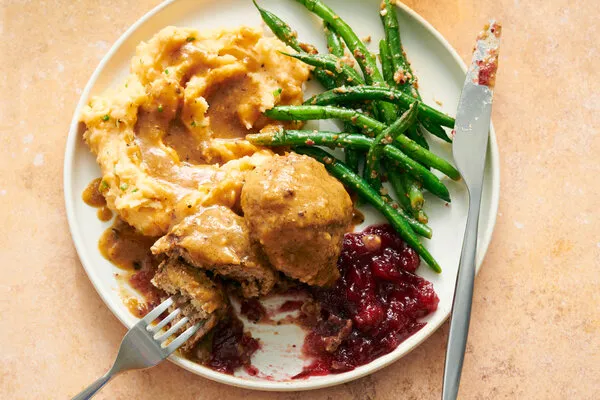
For main protein elements, slow-cooker techniques are being employed to manage kitchen workflow. Sarah DiGregorio’sSlow-Cooker Turkey Meatballs and Gravypresent a cost-effective alternative for individuals or smaller gatherings that may not require a whole roasted bird. The meatballs are seared in a skillet before being transferred to a slow cooker, where they can maintain warmth for several hours. This method effectively frees up oven space and reduces the intensity of last-minute preparation.

Credit…David Malosh for The New York Times. Food Stylist: Barrett Washburne.
Kay Chun’sGreen Beans in Walnut Vinaigretteoffers a lighter, quicker adaptation of the classic green bean casserole. This recipe involves blanching green beans and then tossing them in a vinaigrette composed of white miso, lemon juice, minced shallot, and finely chopped walnuts. Fresh dill is incorporated just before serving, providing a fresh and vibrant side that avoids oven use entirely.

Credit…Armando Rafael for The New York Times. Food Stylist: Brett Regot.
Addressing diverse dietary needs, Hetty Lui McKinnon’sCoconut Creamed Cornprovides a vegan and lactose-intolerant friendly option. This stovetop dish utilizes coconut milk instead of dairy, which serves to enhance the corn’s natural sweetness and cooks down to create a creamy, porridge-like side. This preparation method ensures inclusivity without compromising on texture or flavor.

Credit…Linda Xiao for The New York Times. Food Stylist: Monica Pierini.
For accompaniments, Chef Daniel Humm of Eleven Madison Park provides aNo-Cook Cranberry Chutney. This bright, tart sauce is prepared by macerating cranberries, sugar, and orange zest in a stand mixer. The process yields a rich, ruby-red chutney without requiring any heat, thereby minimizing energy consumption and preparation time.

Credit…Armando Rafael for The New York Times. Food Stylist: Simon Andrews.
Further demonstrating stovetop versatility, Genevieve Ko’sStovetop Mac and Cheeseoffers a creamy and silky preparation ready in approximately 35 minutes. This recipe employs a standard white sauce (butter, flour, and milk) combined with grated sharp yellow Cheddar, though it is adaptable to various cheese blends. This adaptation caters to both time efficiency and equipment independence, providing a classic comfort dish without oven use.

Credit…Christopher Testani for The New York Times. Food Stylist: Simon Andrews.
Chef Kay Chun also contributes aGinger Scallion Broccoli Salad. In this 20-minute recipe, blanched broccoli is tossed while still warm with a vibrant dressing composed of scallions, oil, lemon juice, ginger, and miso, allowing the vegetable to absorb the flavors effectively. This quick preparation further illustrates how vegetable sides can be efficiently managed without demanding oven space.

Credit…Armando Rafael for The New York Times. Food Stylist: Cyd Raftus McDowell.
For dessert, Yossy Arefi’sNo-Bake Pumpkin Cheesecakepresents an autumnal dessert option that foregoes oven use entirely. This recipe features a buttery Biscoff cookie crust, a fluffy and lightly spiced pumpkin filling, and a cinnamon whipped cream topping. It can be prepared up to four days in advance and set in a refrigerator, highlighting its convenience and ability to be integrated into make-ahead meal planning.

Credit…Linda
Beyond the immediate benefit of freeing up oven space, these culinary innovations reflect a broader adaptation to diverse dietary requirements and modern lifestyles. Many of the featured recipes offer vegan and lactose-free alternatives, ensuring inclusivity at the holiday table. The emphasis on make-ahead dishes caters to planners and individuals seeking to distribute their cooking efforts over several days, reducing the intensity of holiday morning preparations. Moreover, options like theSlow-Cooker Turkey Meatballs and Gravyprovide cost-saving alternatives, making traditional holiday meals more economically viable for a wider range of households. This collection of recipes demonstrates a culinary evolution, prioritizing efficiency, flexibility, and broader appeal in the context of traditional celebrations.
The emerging trend of oven-free Thanksgiving recipes signifies a pragmatic evolution in holiday meal preparation. By embracing alternative cooking methods and no-heat options, home cooks can effectively navigate the logistical complexities of multi-dish feasts, reduce stress, and broaden the accessibility of traditional holiday fare. This shift underscores an ongoing adaptation within culinary practices, reflecting a demand for both innovation and efficiency in celebratory dining.
Why This Matters
This trend toward oven-free and alternative cooking methods for holiday meals, particularly Thanksgiving, holds significant implications across several dimensions:
- Culinary Innovation and Accessibility:It represents a notable innovation in traditional meal preparation, demonstrating how established dishes can be adapted to modern kitchen constraints and diverse dietary needs. This expands access to celebratory meals for individuals with specific dietary restrictions (e.g., vegan, lactose intolerant) or those with limited kitchen equipment.
- Reduced Stress and Time Management:The traditional Thanksgiving meal is often cited as a source of significant stress due to its complexity and the sheer volume of dishes requiring simultaneous preparation. Oven-free solutions alleviate this pressure, allowing hosts to manage their time more effectively, prepare components in advance, and reduce the likelihood of kitchen bottlenecks on the day of the event. This contributes to a more enjoyable and less demanding holiday experience.
- Economic and Resource Efficiency:Options like slow-cooker turkey meatballs provide more cost-effective alternatives to a whole roasted bird, making holiday feasts more economically viable for a wider range of households. Furthermore, by distributing cooking across various appliances or eliminating heat altogether, there’s potential for reduced energy consumption compared to continuously running a large oven for multiple hours.
- Evolution of Culinary Traditions:Holidays like Thanksgiving are deeply rooted in tradition, but these innovations show that traditions are not static. They can evolve to incorporate modern practicalities, new ingredients, and diverse cultural influences, ensuring their continued relevance and appeal to contemporary society without losing their core celebratory essence. This adaptation ensures that the spirit of gathering and feasting remains central, even as the methods of preparation become more flexible.
- Democratization of Cooking:By offering simpler, less equipment-dependent methods, these recipes can empower less experienced cooks or those with smaller kitchens to successfully contribute to or host a holiday meal, fostering greater participation and enjoyment in the culinary process.
**New York, NY –** As the American holiday of Thanksgiving approaches, culinary traditions take center stage, prompting a widespread focus on celebratory meals. In anticipation of this annual event, The New York Times, a prominent global news and culture publication, has curated a selection of side dish recipes that reflect both enduring customs and evolving contemporary tastes. This collection, far from being a mere list, offers insight into current culinary trends, dietary considerations, and the fusion of global flavors within a distinctly American festive context. Examining these recipes reveals a broader narrative about innovation in the home kitchen, the influence of diverse food cultures, and the media’s role in shaping modern gastronomic practices.
The compilation highlights a blend of classic dishes reimagined for convenience and modern palates, alongside entirely new creations that draw inspiration from international cuisines. This approach underscores a growing trend in home cooking: the desire for efficiency without sacrificing flavor, and an openness to integrating global culinary techniques into traditional holiday fare.
Credit…Linda Xiao for The New York Times. Food Stylist: Samantha Seneviratne.
Among the featured recipes is Genevieve Ko’s “Crispy Ginger Sticky Rice,” an adaptation inspired by a Cantonese “flavorful rice” dish. This selection is notable for its deliberate departure from conventional Thanksgiving stuffing, offering a gluten-free and dairy-free alternative that resonates with increasing dietary awareness. The inclusion of chewy sticky rice, studded with ingredients like bacon, mushrooms, and crispy ginger, exemplifies a culinary bridge between a traditional American feast and East Asian flavors, showcasing how global influences are being seamlessly integrated into holiday menus.
Recipe:Crispy Ginger Sticky Rice

Credit…Christopher Testani for The New York Times
Melissa Clark’s “Instant Pot Mashed Potatoes With Sour Cream and Chives” addresses a common holiday challenge: time efficiency. The recipe’s promise of extra creamy potatoes prepared in just 20 minutes, leveraging the popular Instant Pot appliance, speaks to the modern home cook’s demand for speed and convenience. The addition of Parmesan and fresh chives elevates a traditional side, demonstrating how simple enhancements can refresh classic dishes. This highlights the ongoing trend of utilizing kitchen technology to streamline complex holiday meal preparations.
Recipe:Instant Pot Mashed Potatoes With Sour Cream and Chives

Credit…Linda Xiao for The New York Times. Food Stylist: Monica Pierini.
Further illustrating cultural fusion, Yewande Komolafe’s “Spicy Peanut and Pumpkin Soup” is an adaptation of a West African stew. This warming, 35-minute recipe introduces a vibrant, globally-inspired flavor profile to the Thanksgiving table, balancing the heat of habanero or bird’s eye chile with peanut butter, coconut milk, and canned pumpkin. Its presence in a holiday collection underscores the increasing diversity of culinary influences in American households and the media’s role in popularizing such cross-cultural dishes.
Recipe:Spicy Peanut and Pumpkin Soup

Credit…David Malosh for The New York Times. Food Stylist: Simon Andrews.
Melissa Clark’s “Air-Fryer Brussels Sprouts With Garlic, Balsamic and Soy” offers another example of modern appliance integration. The air-fryer’s capacity to deliver a crispy exterior and tender interior for Brussels sprouts highlights its growing popularity in contemporary kitchens. The savory and tangy dressing of lime juice, soy sauce, and balsamic vinegar further demonstrates how simple, yet impactful, flavor combinations are being utilized to enhance vegetable dishes, appealing to a broader palate than traditional preparations.
Recipe:Air-Fryer Brussels Sprouts With Garlic, Balsamic and Soy

Credit…Julia Gartland for The New York Times. Food Stylist: Yossy Arefi.
For appetizers, Yossy Arefi’s “Cranberry Walnut Cheese Ball” serves as a practical, make-ahead solution for managing guest expectations before the main meal. This recipe, combining sharp Cheddar, dried cranberries, and toasted nuts with savory seasonings, reflects the enduring appeal of communal, easy-to-prepare snacks that alleviate host stress. Its inclusion speaks to the importance of hospitality and strategic meal planning during festive gatherings.
Recipe:Cranberry Walnut Cheese Ball

Credit…David Malosh for The New York Times. Food Stylist: Barrett Washburne.
Sarah DiGregorio’s “Slow-Cooker Cheddar Mashed Potatoes” further emphasizes the theme of strategic preparation. The ability to prepare and hold mashed potatoes on a warm setting for several hours before serving offers significant flexibility for hosts. This method prioritizes convenience and temperature control, ensuring that a critical side dish is ready without last-minute scrambling, a common concern for large holiday meals.
Recipe:Slow-Cooker Cheddar Mashed Potatoes

Credit…Christopher Testani for The New York Times. Food Stylist: Simon Andrews.
A nod to classic French culinary simplicity is seen in Pierre Franey’s “Glazed Parsley Carrots.” This 15-minute recipe, which involves gently cooking carrots with sugar, water, lemon juice, and butter, highlights the enduring appeal of elegantly prepared, fundamental vegetable dishes. Its straightforward approach demonstrates that sometimes the most impactful dishes are those that master simple ingredients and techniques.
Recipe:Glazed Parsley Carrots

Credit…Craig Lee for The New York Times
Finally, Mark Bittman’s “Simple Braised Potatoes” offers a minimalist approach to a staple side. By forgoing peeling, boiling, and mashing in favor of braising potatoes with onions, garlic, and herbs, the recipe emphasizes flavor development through slow cooking and minimal intervention. This particular recipe resonates with those who appreciate rustic preparation and the inherent qualities of quality produce, advocating for simplicity and depth of flavor over elaborate techniques.
Recipe:Simple Braised Potatoes
In aggregate, this curated collection from The New York Times reflects a dynamic landscape in contemporary home cooking. It showcases a clear movement towards greater efficiency and convenience, driven by modern kitchen appliances. Simultaneously, there’s a strong emphasis on dietary inclusivity, offering alternatives for various dietary needs, and a vibrant embrace of global culinary influences. The publication’s role in disseminating these trends underscores its influence not just in news reporting, but also in shaping cultural practices around food and celebration.
Why This Matters
The seemingly simple act of publishing holiday recipes by a major news organization carries broader significance across several dimensions. **Culturally**, these recipes serve as a barometer of societal change, reflecting evolving tastes, dietary preferences, and the increasing multiculturalism within households. The integration of Cantonese-inspired sticky rice or West African soup into a traditional American holiday menu illustrates the ongoing globalization of food and the blurring of culinary boundaries, influencing how celebrations are observed and what foods are considered “traditional.”
**Economically**, the promotion of specific ingredients and cooking methods impacts consumer behavior, influencing purchasing patterns in grocery stores and demand for kitchen appliances like Instant Pots and air-fryers. This, in turn, can affect supply chains, agricultural production, and the retail food sector. Media endorsements from platforms like The New York Times hold considerable sway, guiding consumer choices and contributing to market trends in the culinary industry.
**Socially**, the emphasis on efficiency, make-ahead options, and dietary adaptations addresses the practical realities of modern life, where individuals often balance work, family, and other commitments. These recipes offer solutions that reduce stress during communal events, fostering greater participation and enjoyment in shared meals. Furthermore, highlighting gluten-free or dairy-free options promotes inclusivity, ensuring that individuals with specific dietary needs can fully participate in festive occasions, reflecting a more empathetic and accommodating society. The curation of such content by a respected news outlet reinforces its role not just as a purveyor of information, but also as a guide in navigating the complexities of modern social and domestic life.