
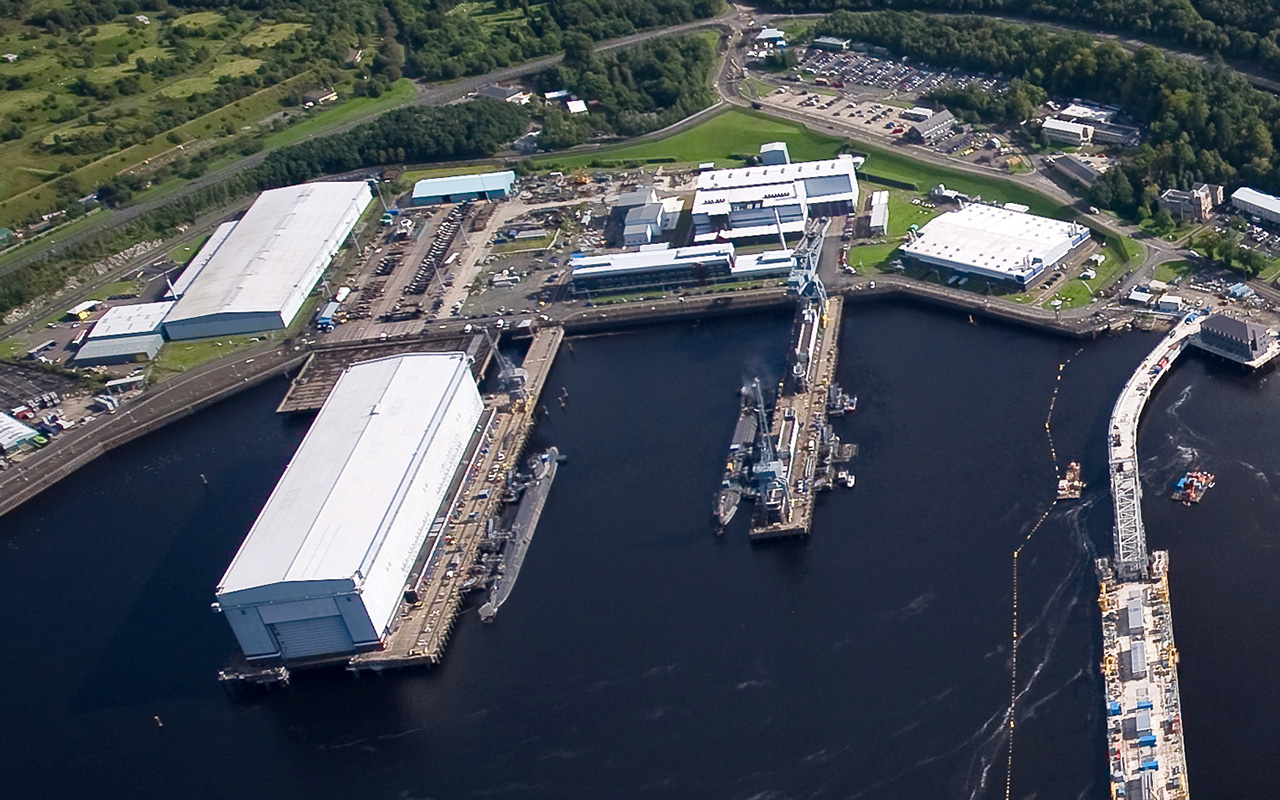
Northern Ireland Firm Secures £2.55 Million in Infrastructure Contracts at HMNB Clyde
FASLANE, SCOTLAND – [Date of Publication]– Henry Brothers, a construction firm based in Northern Ireland, has been awarded three contracts totaling £2.55 million for infrastructure work at His Majesty’s Naval Base (HMNB) Clyde in Scotland. The contracts, granted by Babcock International Group, aim to enhance security and operational capabilities at the strategically important naval facility, according to reports from the News Letter.
The scope of work encompasses several critical infrastructure upgrades. One project involves the enhancement of security fencing surrounding a key support building located at Faslane, a principal component of HMNB Clyde. A second contract focuses on the supply and installation of specialist ballistic security shelters across the naval base, designed to provide protection for personnel from blast and fragmentation. The third project involves the comprehensive refurbishment of an existing Pressure Test Building, which is essential for various operational checks and maintenance procedures crucial to the base’s engineering and support functions.
Work on these projects is scheduled to commence immediately, signaling Babcock’s ongoing commitment to the modernization and resilience of the base’s facilities. Babcock International Group serves as the primary industrial partner for the Royal Navy at HMNB Clyde, responsible for managing and maintaining the extensive infrastructure that supports the UK’s submarine fleet. This partnership involves delivering critical engineering services, infrastructure management, and logistical support to ensure the continuous operation of the naval base.
Commenting on the new appointments, Nick McKeown, regional director for Scotland at Henry Brothers, highlighted the significance of these contracts. “Being appointed to deliver these new projects at HMNB Clyde reflects the trust Babcock places in Henry Brothers and our capability in delivering complex, secure and highly specialised infrastructure,” McKeown stated, as reported by the News Letter. He further emphasized the firm’s specialized experience within the defence sector, adding, “Our workforce has extensive experience across the defence sector, and we remain committed to ensuring the Royal Navy’s operational facilities are robust, resilient and fit for purpose. These new appointments strengthen our partnership with Babcock and underline our shared focus on delivering high-quality, dependable facilities for the submarine fleet.” These statements underscore Henry Brothers’ established expertise and its strategic relationship with key defence contractors.
These three projects are integral to Babcock’s broader investment strategy aimed at upgrading and maintaining the infrastructure at HMNB Clyde. The base holds immense strategic importance as the homeport for the Royal Navy’s entire submarine fleet. This includes the Vanguard-class ballistic missile submarines, which are central to the United Kingdom’s continuous at-sea nuclear deterrent (CASD), and the Astute-class nuclear-powered attack submarines, which are crucial for a range of defence operations globally, including intelligence gathering, surveillance, and anti-submarine warfare. The installation of ballistic shelters, specifically, underscores the need to safeguard personnel from potential blast and fragmentation threats, thereby enhancing safety and operational continuity within the high-security environment of the naval base, which operates under strict security protocols due to the nature of its assets.
The Ministry of Defence (MoD) has characterized the ongoing work at HMNB Clyde as part of a multi-decade programme of investment and transformation. This long-term strategic vision aims to ensure that the base remains at the forefront of naval capability and operational readiness for decades to come, adapting to evolving threats and technological advancements. Further demonstrating this commitment, the MoD recently informed Parliament about the acquisition of the former Finnart Oil Terminal on Loch Long. This acquisition is a strategic move designed to support the longer-term transformation of the Clyde estate, with plans to relocate mine hunting equipment and autonomous systems to the Finnart site from 2028. This expansion reflects an evolving defence landscape that increasingly integrates advanced technologies and specialized maritime capabilities to address a wider spectrum of naval challenges.
HMNB Clyde, often referred to as Faslane, is not only a vital operational base but also a significant employer in the region, directly employing thousands and supporting many more through its extensive supply chain across Scotland and the wider UK. The continuous investment, exemplified by contracts awarded to companies like Henry Brothers, contributes substantially to local and national economies, providing job security and fostering skilled trades. Simultaneously, these investments bolster the UK’s defence capabilities and its strategic posture on the global stage, ensuring the nation can meet its security commitments and protect its interests.
Why This Matters
The awarding of these contracts to Henry Brothers for work at HMNB Clyde is significant for several key reasons, touching upon national security, economic impact, and the future of defence infrastructure.
Reinforcing National Security:HMNB Clyde is the bedrock of the United Kingdom’s maritime defence strategy, specifically as the home of the Continuous At-Sea Deterrent (CASD) provided by the Vanguard-class submarines. This deterrent is a critical component of the UK’s national security, ensuring a credible response to threats and maintaining global stability. The infrastructure upgrades, particularly enhanced security fencing and the installation of ballistic shelters, directly contribute to the resilience, safety, and operational readiness of this vital base. By modernizing and securing these facilities, the UK government is ensuring the continued effectiveness and protection of its strategic assets and the personnel who operate them, thereby underpinning the nation’s defence posture.
Modernizing Defence Infrastructure:The projects form part of a multi-decade, multi-billion-pound investment program by the Ministry of Defence and Babcock International Group into HMNB Clyde. As naval technology advances and geopolitical landscapes shift, maintaining state-of-the-art and resilient infrastructure is paramount. Refurbishing facilities like the Pressure Test Building and installing advanced security measures are not merely maintenance tasks; they are essential investments that enable the Royal Navy to operate its sophisticated submarine fleet efficiently, safely, and effectively for decades to come. This commitment to infrastructure ensures the base can support future generations of submarines, integrate new technologies, and remain a leading naval facility globally.
Economic Contribution and Industry Partnership:These contracts represent a tangible economic injection, not only through the direct value of £2.55 million but also through the employment of skilled labour, the generation of local supply chain opportunities, and broader contributions to the regional and national economies. For Henry Brothers, a Northern Ireland-based firm, securing these contracts highlights its specialized expertise in the defence sector and fosters growth within the UK’s construction industry. The ongoing partnership between Babcock International Group, a leading defence contractor, and specialized firms like Henry Brothers, exemplifies how the private sector plays a crucial role in delivering critical national defence projects, driving innovation, efficiency, and maintaining a robust industrial base.
Strategic Expansion and Future Capabilities:The broader context of the MoD’s long-term vision for HMNB Clyde, including the acquisition of the Finnart Oil Terminal and the planned relocation of mine hunting equipment and autonomous systems, signals a strategic expansion and diversification of capabilities at the Clyde estate. This move reflects an adaptation to emerging threats and technological advancements in naval warfare. Investing in infrastructure that supports autonomous systems and mine hunting operations positions the Royal Navy to address a wider spectrum of maritime challenges, enhancing its operational flexibility, surveillance capabilities, and its relevance in future conflicts. It underscores a forward-thinking approach to defence planning that integrates new technologies and expands strategic footprints to maintain a competitive edge.
In essence, these contracts are more than just construction projects; they are a vital component of the UK’s enduring commitment to national security, advanced naval capabilities, and economic resilience, with long-lasting implications for both defence strategy and industrial growth.