
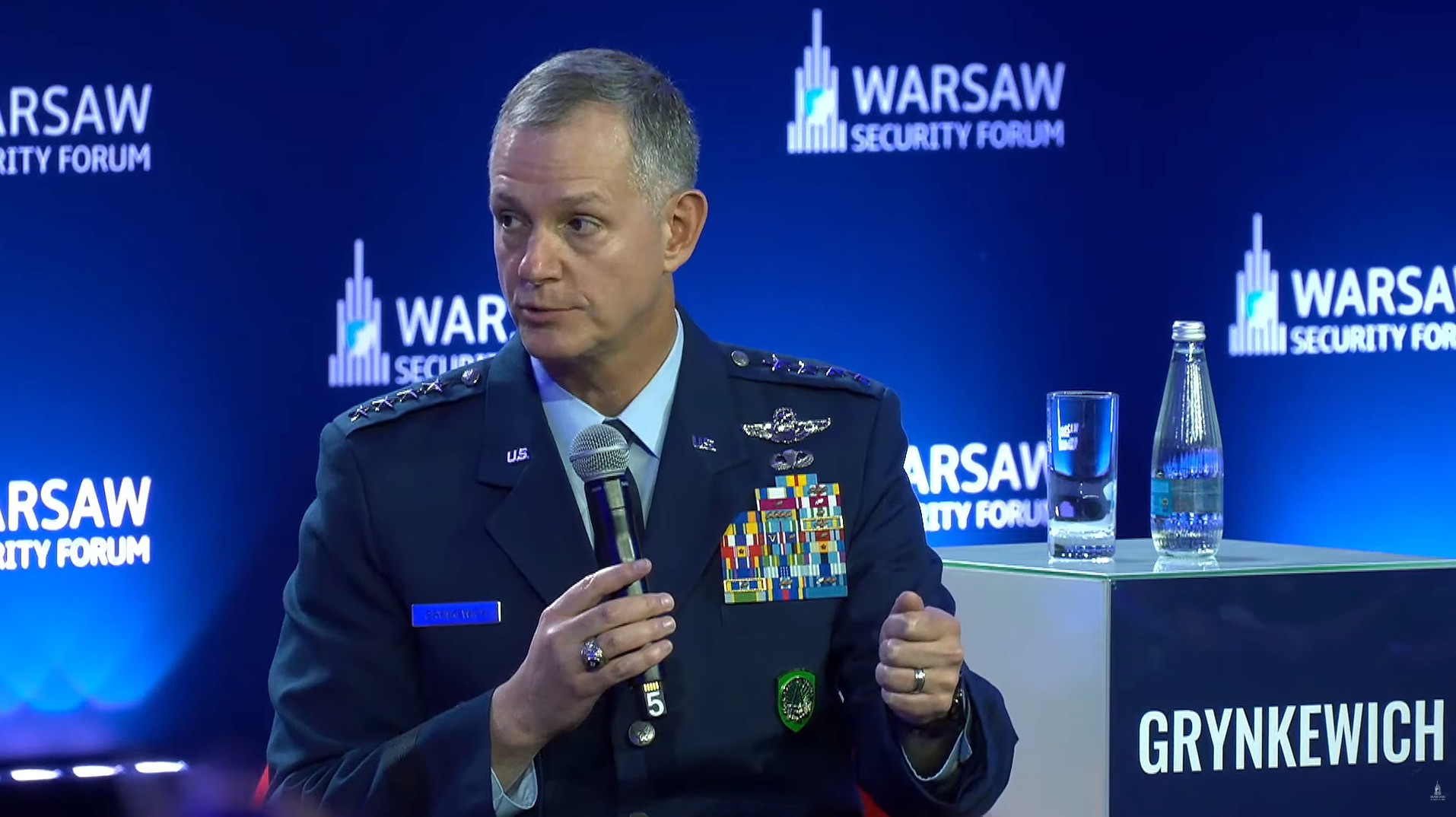
NATO Commander Emphasizes Deterrence Through Readiness, Not Imminent Conflict
Warsaw, Poland – General Alexus Grynkewich, NATO’s Supreme Allied Commander Europe (SACEUR), addressed attendees at the Warsaw Security Forum, stating his assessment that conflict is neither imminent nor inevitable. However, he underscored the necessity for the alliance to rigorously prepare for all possibilities, not just probabilities, to effectively deter potential aggression and uphold peace across its territory.
General Grynkewich introduced his strategic framework, which he terms a “Theory of Victory,” emphasizing its role as a common vision for the alliance. “I do not assess that conflict is imminent or inevitable. It isn’t,” he affirmed. He elaborated on NATO’s approach to conflict avoidance, highlighting two critical pillars: “We help avoid conflict by clearly articulating our defensive intentions, and by maintaining open lines of communication to resolve misunderstandings and encourage transparency.” This dual approach aims to prevent miscalculation while fostering an environment of predictability in a complex security landscape.
Despite the absence of an immediate threat assessment, the General stressed that effective deterrence extends beyond diplomatic efforts. “But deterring conflict also requires warfighting readiness, and readiness requires to plan against what is possible, not just what is probable,” he stated. He drew a parallel to historical American statesmanship, quoting George Washington’s maxim that “the most effective way to preserve peace is to prepare for war.” Echoing contemporary policy, he linked this principle to “peace through strength,” attributing the phrase to America’s current president and underscoring the formidable collective strength derived from NATO’s 32 member nations.
General Grynkewich expressed confidence in the alliance’s ability to avoid being surprised by an attack. He pointed to NATO’s robust intelligence capabilities, describing them as “a sophisticated layering of intelligence provided by multi-source collection assets that deliver tremendous amounts of data.” These assets, which can include satellite imagery, signals intelligence, human intelligence, and cyber monitoring, are augmented by “advanced algorithms used to make sense of it.” This technological edge, he explained, allows NATO to process vast quantities of information to gain a clear operational picture.
“This means the Alliance is unlikely to be caught by surprise. We will see if an attack is coming, giving us time to assess intent and rapidly position our forces,” General Grynkewich asserted. He clarified that such preparatory movements serve a dual purpose: “In doing so we aim to deter, but these movements also prepare us to deny any potential attack, including those aimed at seizing and holding NATO territory as a fait accompli.” The strategy is designed to prevent an adversary from achieving a quick victory or presenting the alliance with an irreversible situation.
Reflecting on Poland’s accession to NATO in 1999, the SACEUR reiterated the alliance’s foundational principles. “It reminds us NATO is a defensive Alliance, constructed to preserve peace,” he said. He firmly articulated NATO’s strategic scope: “And as such, we have no plans, no intentions, and no ambitions beyond the protection of our people and the defence of our territory.” This statement underscores the alliance’s commitment to its collective defense mandate, enshrined in Article 5 of the North Atlantic Treaty.
However, he cautioned against misinterpreting NATO’s defensive posture as a sign of weakness. “Still, no one should mistake our defensive nature for weakness or lack of resolve. Through our collective strength we aim to deter and keep the peace. But if someone is foolish enough to attack us, we will fight,” he declared, sending a clear message regarding the alliance’s determination and capability.
General Grynkewich’s “Theory of Victory,” which he defined as a common vision and his commander’s intent rather than a specific military plan, outlines three distinct stages for responding to aggression. The first stage involves “blocking an initial attack,” aiming to contain and prevent an adversary from achieving their immediate objectives. Should the attack persist, the second stage focuses on “blunting it,” meaning degrading the enemy’s capabilities and momentum through sustained defensive actions. Finally, if required, the third stage mandates “breaking the enemy forces and the warfighting system supporting them,” signifying a decisive defeat of the aggressor’s military and logistical infrastructure.
Implementing this strategic framework, General Grynkewich acknowledged, would necessitate issuing orders he hopes will never be required. He reiterated that demonstrating the readiness and capability to execute these stages is precisely what serves to prevent the need for actual conflict. “If attacked, we are ready to fight tonight, but we are not complacent,” he affirmed. He concluded with a stark warning to any potential adversary considering aggression against NATO: they should unequivocally conclude that “today is not the day.”
Why This Matters
General Grynkewich’s remarks at the Warsaw Security Forum carry significant weight for several reasons, impacting global security, alliance cohesion, and strategic messaging. Firstly, the explicit statement that conflict is neither “imminent nor inevitable” serves as a crucial de-escalatory signal amidst heightened geopolitical tensions, particularly in Europe following Russia’s full-scale invasion of Ukraine. This provides reassurance to NATO member states, especially those on the alliance’s eastern flank, and helps to manage public anxiety.
Secondly, the simultaneous emphasis on robust “warfighting readiness” and planning for “what is possible” rather than just “probable” underscores NATO’s dual strategy of deterrence and defense. This sends a powerful message to potential adversaries: while NATO seeks to avoid conflict through clear intentions and open communication, it is fully prepared to defend its territory and people. This clarity aims to prevent miscalculation and deter any actor contemplating aggression against the alliance, reinforcing the concept of “peace through strength.”
Thirdly, the articulation of a “Theory of Victory” – comprising the stages of blocking, blunting, and breaking an attack – provides strategic transparency regarding NATO’s operational philosophy. This framework, though not a detailed military plan, outlines the alliance’s intent and capacity to respond decisively to aggression, from initial containment to ultimate defeat of an aggressor. It informs defense planning, resource allocation, and joint training exercises across member states, ensuring a coherent and unified response capability.
Finally, the commander’s detailed explanation of NATO’s sophisticated intelligence capabilities highlights the alliance’s technological advantage in early warning and threat assessment. The ability to “see if an attack is coming” and “rapidly position our forces” is fundamental to denying an adversary any hope of achieving a quick victory or a fait accompli. This reinforces the credibility of NATO’s defensive posture and its commitment to collective security, ensuring the alliance remains a formidable force for stability in the Euro-Atlantic area.