
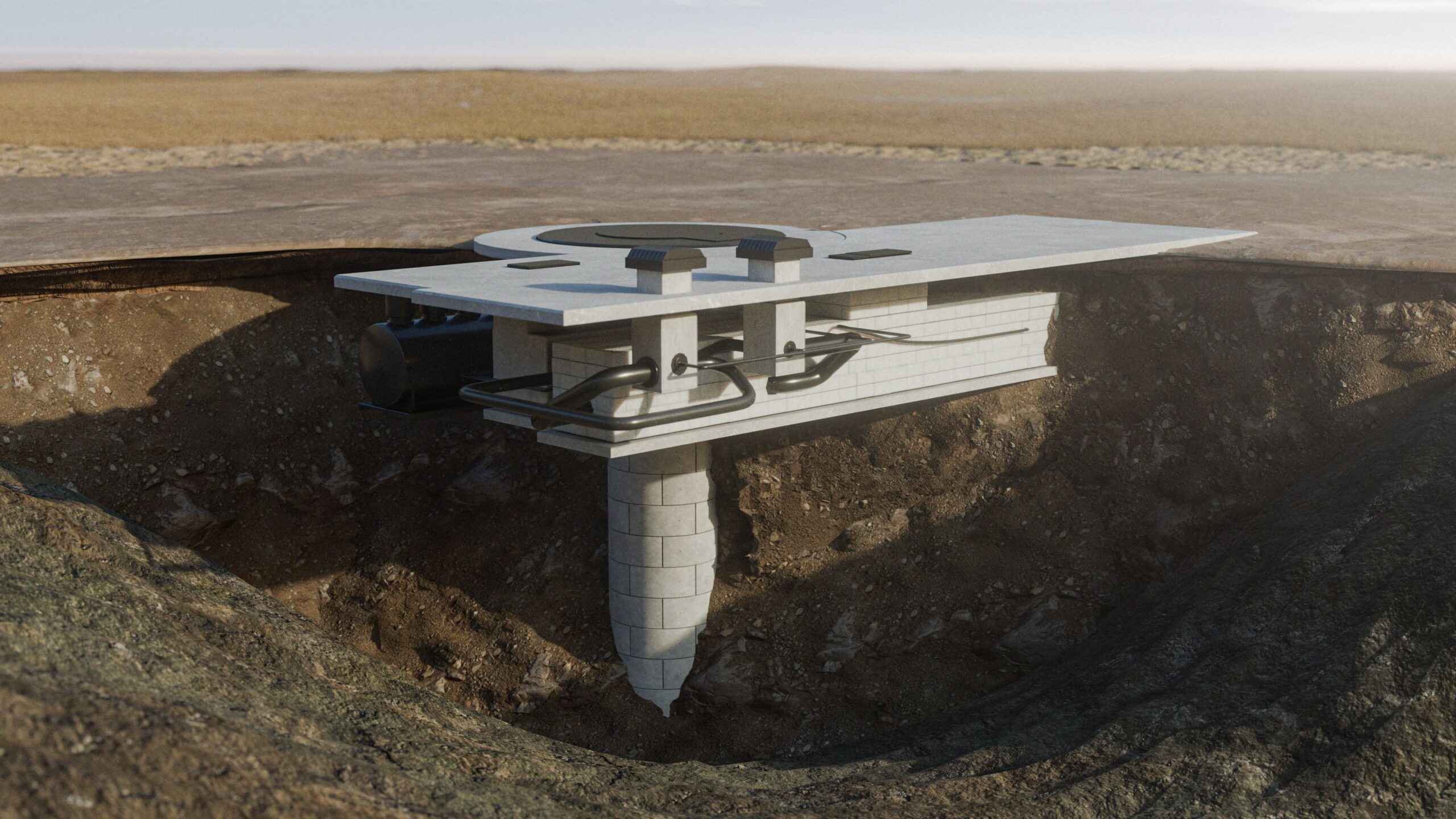
The United States Air Force is contemplating the acquisition of private land to construct up to 120 new intercontinental ballistic missile (ICBM) silos, a significant development in its revamped infrastructure strategy for the next-generation Sentinel ICBM program. This potential move marks a departure from earlier plans and underscores the extensive civil engineering challenges associated with modernizing a critical component of the nation’s nuclear deterrent.
The details of this updated approach emerged with the announcement of a supplemental environmental impact analysis (SEIS), which aims to build upon the program’s initial environmental review completed in March 2023. This new analysis is designed to address changes in the program’s scope and infrastructure requirements that have evolved since the initial assessment.
The Sentinel program is tasked with replacing the aging Minuteman III ICBMs, which have been operational for over five decades. The new missile system is slated for deployment across three strategic bases in the western U.S.: F.E. Warren Air Force Base in Wyoming, Malmstrom Air Force Base in Montana, and Minot Air Force Base in North Dakota. The original environmental impact statement (EIS) from 2023 was a crucial procedural step, clearing the way for the extensive modernization effort.
However, the Sentinel program encountered significant hurdles in early 2024. Critical cost overruns and schedule delays, primarily attributed to the vast infrastructure and civil engineering work rather than the missile’s development itself, triggered a mandatory review under the Nunn-McCurdy Act. This act requires the Pentagon to assess major defense acquisition programs that exceed certain cost thresholds. Following a comprehensive review, Pentagon leadership certified the program to continue, acknowledging its vital role in national security.
In an effort to better manage costs and address the challenges posed by the dilapidated state of existing facilities, Air Force officials made a pivotal decision in spring 2025. Analysis revealed that upgrading the 55-year-old Minuteman infrastructure would be more expensive and less effective than constructing entirely new facilities. Consequently, the Air Force opted for a strategy of building new silos and support structures from the ground up, moving away from its initial hope of extensively reusing the existing Minuteman infrastructure. The plan is to replace the current 450 active Minuteman silos on a one-for-one basis with the new Sentinel system.
This strategic shift has implications for land use. Previously, a spokesperson for the Air Force had indicated that new silos would be located on “predominantly Air Force-owned real estate,” implying the reuse of existing missile sites, albeit with new construction replacing the old silos. However, new information released on October 9 through a website associated with the supplemental environmental impact analysis suggests a broader scope for potential land acquisition.
The SEIS website indicates that more than a quarter of the new launch sites could be situated on land not currently under Air Force ownership. Specifically, the service is considering:
- The acquisition of land and subsequent construction of up to 30 new launch silo sites in the vicinity of F.E. Warren Air Force Base.
- The acquisition of land and subsequent construction of up to 30 new launch silo sites in the vicinity of Malmstrom Air Force Base.
- The acquisition of land and subsequent construction of up to 60 new launch silo sites in the vicinity of Minot Air Force Base.
Furthermore, the Air Force is evaluating the potential reuse of historical sites at Malmstrom, specifically those formerly operated by the now-inactive 564th Missile Squadron, for the construction of up to 60 additional new launch silo sites. For each new silo, the Air Force is planning to acquire parcels of land up to 12 acres in size, according to the supplemental EIS website, highlighting the significant land footprint required for the new installations.
Updated Plans for Launch Centers and Support Facilities
The infrastructure overhaul extends beyond just missile silos. The Air Force is also revising its plans for the command and control facilities critical to the Sentinel system. Currently, the three bases operate 45 Missile Alert Facilities (MAFs), where Airmen maintain a continuous, 24/7 vigil over the ICBMs.
The original plan for Sentinel envisioned replacing these MAFs with new “launch centers” at 24 of the existing sites, with the remaining facilities to be razed. The new SEIS website, however, indicates a more flexible approach, stating that the Air Force will “reutilize Missile Alert Facility sites for Launch Centers where feasible.” This suggests a careful evaluation of each site’s suitability and condition. Notably, at Minot Air Force Base, officials are specifically considering the “construction of new launch center sites in previously undeveloped areas,” indicating a need for new construction outside current operational footprints. Each new Launch Center facility is expected to occupy an area of up to 16 acres.
Another new element in the evolving infrastructure plan is the consideration for a “purpose-built Operations Group Facility” at Malmstrom Air Force Base. This facility would likely centralize command, control, and support functions for the missile wing, further enhancing the operational capabilities of the Sentinel program.
Supplemental Environmental Impact Analysis Timeline
The formal process for the supplemental EIS is now underway. Following the Air Force’s announcement, a 30-day public “scoping” period commenced, allowing federal, state, and local agencies, various organizations, and interested members of the public to submit comments on the proposed actions. This initial phase is crucial for identifying key environmental concerns and potential impacts that the Air Force must address in its analysis.
Upon completion of the scoping period and internal review, the Air Force plans to release a draft of its supplemental EIS by fall 2027. This draft will then be subject to another public comment window, providing a second opportunity for stakeholders to review the findings and offer feedback. The culmination of this extensive environmental review process is scheduled for spring 2028, with the release of the final supplemental EIS.
Once the final SEIS is published, the Secretary of the Air Force can issue a Record of Decision, formally authorizing the program to proceed with the acquisition of land and subsequent construction activities. Despite this detailed planning, the actual deployment of the Sentinel missile system will take several more years. The current Air Force estimate projects the new missile to achieve initial operational capability (IOC) by the early 2030s.
In the interim, development continues on other fronts. Contractor Northrop Grumman is actively engaged in building a prototype silo for the Sentinel missile at its facilities in Promontory, Utah, demonstrating tangible progress on the technical aspects of the program even as the infrastructure plans are refined.
Why This Matters
The United States Air Force’s decision to potentially acquire private land for new Sentinel ICBM silos, coupled with a complete overhaul of its ground infrastructure strategy, carries significant implications across national security, economics, and local communities. This modernization program is not merely a technical upgrade; it represents a critical investment in maintaining the credibility of the U.S. nuclear deterrent, a cornerstone of global security.
Firstly, from a **national security perspective**, replacing the Minuteman III ICBMs with Sentinel ensures the continued viability of one leg of the nuclear triad (land-based missiles, submarine-launched missiles, and strategic bombers). A modern, reliable ICBM force sends a clear message of deterrence to potential adversaries and reassures allies of the United States’ commitment to strategic stability. The challenges encountered in the program, and the subsequent adjustments, highlight the complexity of maintaining such a critical capability in a dynamic geopolitical environment.
Secondly, the **economic impact** of this undertaking is substantial. The Sentinel program represents one of the largest defense acquisition efforts in decades, involving billions of dollars in federal investment. The extensive construction and engineering work will generate thousands of jobs, both directly through contractors like Northrop Grumman and indirectly through support services. For the communities surrounding F.E. Warren, Malmstrom, and Minot Air Force Bases, this translates into significant economic activity, job creation, and potential demand for housing and services, although it also brings challenges related to rapid growth and infrastructure strain.
Thirdly, the **environmental and local community implications** are profound. The potential acquisition of private land for silo construction, coupled with the development of new launch centers and support facilities, will directly impact land use, local ecosystems, and residents in rural areas of Wyoming, Montana, and North Dakota. The supplemental environmental impact analysis process is designed to evaluate these effects, including potential impacts on agriculture, wildlife, water resources, and community infrastructure. The public scoping and comment periods are vital for ensuring transparency and incorporating local concerns into the decision-making process, allowing affected citizens and organizations to voice their perspectives on the program’s footprint.
Finally, the program’s journey, marked by initial cost overruns and subsequent strategic adjustments, provides a crucial lesson in **defense acquisition management**. The Air Force’s pivot from upgrading old infrastructure to building new, driven by cost-effectiveness and feasibility, demonstrates adaptive planning in the face of complex engineering challenges. It underscores the importance of thorough initial assessments and the need for flexibility in large-scale, long-term defense projects to ensure taxpayer money is spent efficiently while delivering essential capabilities for national defense.