
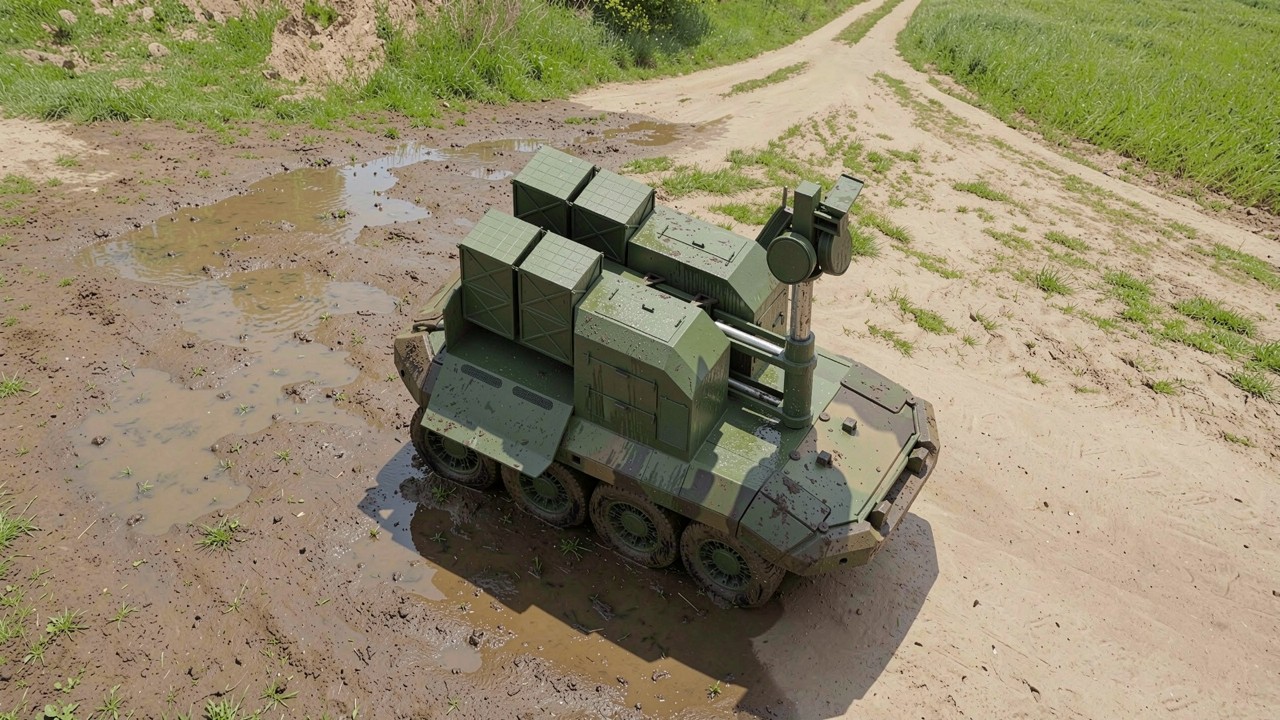
Skapion Unveils New Counter-Swarm Defence System for Mass Drone Engagements
Skapion, a defence technology company with operations in Washington and Israel, has announced the development of what it describes as the world’s first native counter-swarm defence system. This new system is specifically engineered to engage large numbers of unmanned aerial vehicles (UAVs) simultaneously, departing from traditional air defence approaches that typically focus on intercepting one target at a time.
The system’s design is attributed to its founding architect, General (retired) Pini Yungman, a prominent figure in Israeli defence technology renowned for his role in the development of the Iron Dome system and formerly serving as general manager of Rafael’s air and missile defence division. Skapion states that its new solution is built around a “native many-to-many architecture,” enabling multiple interceptors to engage multiple airborne threats concurrently.
According to the company, the mobile, fully kinetic system is designed to intercept over one hundred targets simultaneously, boasting a claimed interception rate exceeding 97 per cent. A key aspect highlighted by Skapion is the significantly lower cost per interception compared to conventional air defence systems. The system’s vertical launch capability provides 360-degree coverage, and the company indicates it is engineered for flexible deployment across various platforms, including ground vehicles, airborne assets, and maritime vessels.
Ido Bar-On, Skapion’s co-founder and chief executive, articulated the company’s foundational philosophy:“The next generation of threats cannot be defeated by simply stacking yesterday’s air-defense solutions. A swarm is not just a larger number of discrete drones. It changes the dynamics of the engagement, the number of simultaneous decisions, the speed at which they must be made and the economies of every interception. Native Counter-Swarm means designing the entire system from day one for simultaneous mass engagement.”This statement underscores the strategic shift required to counter the evolving nature of drone threats.
Historically, most air defence systems were conceived and developed to counter single aircraft or small groups of targets. This design philosophy inherently creates significant capacity and cost limitations when confronted with a simultaneous mass attack by numerous drones. Skapion referenced contemporary conflicts, such as the ongoing wars in Ukraine and the Middle East, particularly the conflict between Iran and Israel, where legacy air defence systems have reportedly been challenged by drone swarms. These swarms are often deployed with the strategic aim of overwhelming the defender’s magazine capacity and exhausting their financial resources, highlighting a critical vulnerability in current defence strategies.
The economic asymmetry of modern aerial threats presents a substantial challenge. For instance, a basic one-way attack drone, similar to the Shahed type, can cost tens of thousands of dollars to produce. In stark contrast, the interceptors required to neutralize such drones can cost hundreds of thousands of dollars, or even more. Furthermore, the number of interceptors carried by any single launcher is finite. This imbalance means that an adversary capable of deploying a sufficient quantity of inexpensive drones can achieve strategic objectives by outspending and overwhelming a defender, even if every incoming target is successfully intercepted. This pressing issue—reducing the cost per interception while simultaneously increasing the number of targets that can be engaged—is a critical area of focus for numerous defence technology companies across the globe.
Central to the Skapion system’s operation is an advanced artificial intelligence (AI) command and control (C2) architecture. This AI system is designed to integrate and fuse data from Skapion’s proprietary sensors or from third-party detection systems. It then evaluates and prioritizes identified threats, allocates the most suitable interceptors, and manages engagements in real time. The company asserts that the system can function with full end-to-end autonomy or with a single human operator in the loop, depending on specific customer policies and operational requirements. Skapion also emphasizes the system’s open, sensor-agnostic design, which facilitates seamless integration with existing command and control networks and other counter-drone defence systems, ensuring adaptability within diverse military infrastructures.
Why This Matters
The unveiling of Skapion’s native counter-swarm defence system represents a significant development in the ongoing evolution of military technology and global security. The rise of sophisticated and economically viable drone swarms has fundamentally altered the landscape of modern warfare, posing a severe challenge to conventional air defence capabilities. Nations worldwide are grappling with the strategic and financial implications of these asymmetric threats, where inexpensive, mass-produced drones can overwhelm vastly more expensive and complex defence systems.
This new system addresses a critical vulnerability by focusing on mass engagement and cost-efficiency. If Skapion’s claims regarding a high interception rate at a significantly lower cost per intercept hold true, it could fundamentally shift the economic calculus of drone warfare. This would make it far more challenging for adversaries to achieve tactical or strategic objectives through sheer volume, thereby preserving the defender’s valuable resources and preventing the saturation of their air defence assets. The integration of advanced AI for command and control also highlights a growing trend towards greater autonomy and rapid decision-making in complex combat scenarios, potentially reducing human reaction times and improving overall system effectiveness.
Furthermore, the system’s versatile deployment options across ground, air, and maritime platforms suggest its potential for widespread integration into diverse national defence strategies, offering comprehensive protection against a pervasive threat. For countries facing persistent drone incursions or preparing for future conflicts, a solution like Skapion’s could offer a vital protective layer, enhancing national security and potentially reducing casualties and infrastructure damage. It underscores the urgent global pursuit of effective and affordable countermeasures against the ever-evolving threat of unmanned aerial systems.