
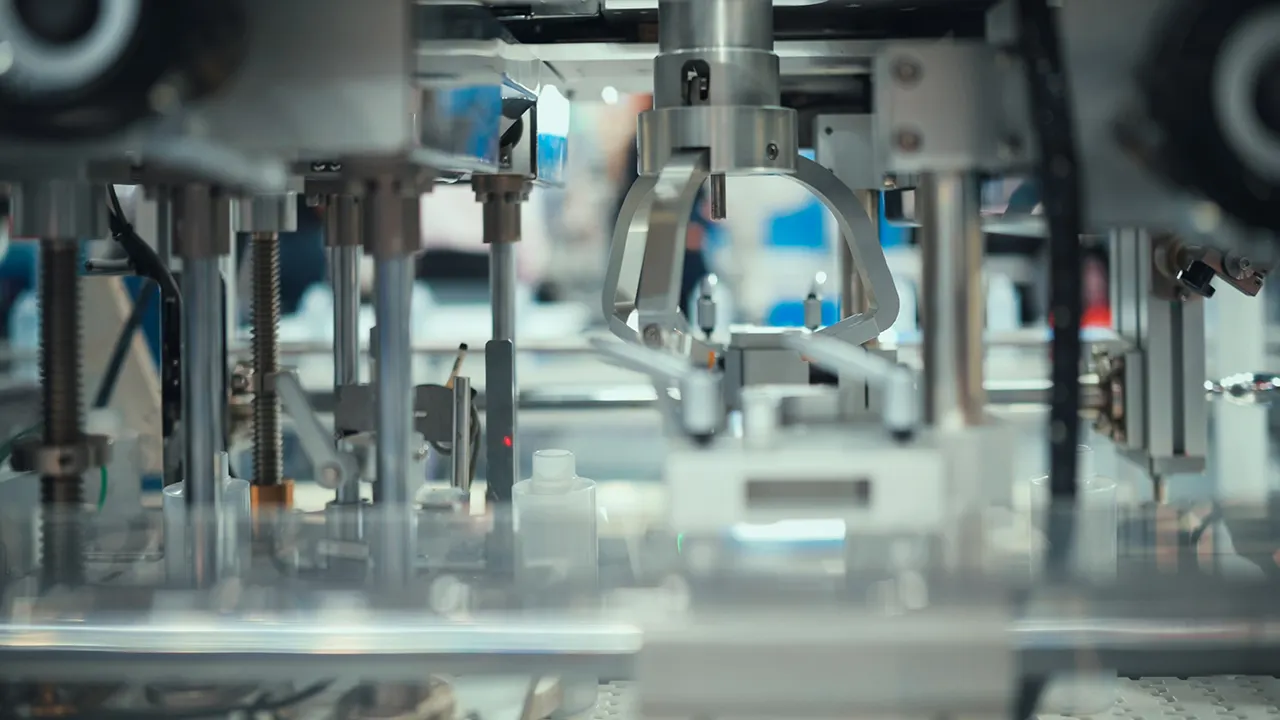
Path Robotics executive Heather Carroll says robotics could help bring manufacturing jobs back to America, pointing to a Texas shipyard planning 10,000 jobs as the US works to regain ground against China.
Key Takeaways:
- Automation as a Growth Catalyst:The U.S. manufacturing sector’s ability to scale and meet surging demand is increasingly dependent on robotics and automation, driven by persistent skilled labor shortages and the imperative for enhanced productivity. This creates significant investment opportunities in industrial automation firms.
- Geopolitical Tech Race:A widening gap in robotics adoption between the U.S. and China poses a strategic competitive disadvantage for American manufacturers, impacting global market share, supply chain resilience, and technological leadership.
- AI’s Transformative Role:Advances in Artificial Intelligence are lowering barriers to robotics adoption by simplifying deployment and enhancing operational efficiency. This shift is accelerating capital expenditure towards automation and reshaping workforce development strategies across industrial sectors.
U.S. Manufacturing’s Imperative: Robotics as the New Productivity Frontier
The resurgence of U.S. manufacturing, a cornerstone of economic policy and national security, faces a critical bottleneck: the availability of skilled labor. As companies navigate complex global supply chains and geopolitical shifts, the ambition to expand domestic production at scale is increasingly reliant on advanced automation. Heather Carroll, Chief Revenue Officer at Path Robotics, articulated this necessity to FOX Business, emphasizing that robotics will be “critical to expanding U.S. manufacturing at scale as companies struggle to find enough skilled workers.”
“We do not have the workforce needed to do that,” Carroll stated, underscoring the stark reality that without significant technological integration, the U.S. risks stifling its manufacturing growth ambitions. This labor shortage isn’t merely an operational hurdle; it’s a profound economic challenge driving wage inflation, hindering capacity expansion, and ultimately impacting corporate profitability and global competitiveness.
Carroll cited Saronic Technologies’ $3.2 billion Port Alpha shipyard in Brownsville, Texas, as a beacon for this integrated future. This massive capital investment, aimed at creating 10,000 jobs, exemplifies how automation can be synergistically deployed with human labor. The project, lauded by Vice President JD Vance at its groundbreaking, signals a strategic pivot in industrial development, where high-tech infrastructure is designed from inception to leverage both advanced machinery and a skilled workforce. “This is a great example of how using automation, advanced technology, can be joined and combined with hiring lots of really good American jobs right here at home,” Carroll noted, highlighting the potential for robotics to augment, rather than solely replace, human capital.
The Geopolitical Race: U.S. vs. China in Robotics Adoption
The urgency for U.S. adoption of industrial robotics is magnified by a burgeoning technological rivalry with China. Carroll warned that the U.S. is losing ground, stating, “I definitely think that that is a big risk that we run right now,” concerning the failure to adopt the technology swiftly. China has aggressively pursued a national strategy around robotics and AI, a concerted effort involving government backing, industrial policy, and significant financing. This integrated approach has propelled China to the forefront of global robotics adoption, creating a significant competitive asymmetry.
“We really lack something similar here in the United States, and it is a competitive disadvantage,” Carroll observed. The widening gap in robotics adoption isn’t just about factory floor efficiency; it’s about technological sovereignty, supply chain resilience, and future economic leadership. For investors, this dynamic signals a potentially massive growth runway for U.S. robotics and automation firms, as American industries awaken to the strategic imperative of catching up.
INSIDE SILICON VALLEY’S BET ON A NEW PATH TO LANDING A JOB IN THE AI ERA
Robotics will be critical to expanding U.S. manufacturing at scale as companies struggle to find enough skilled workers, a manufacturing executive told FOX Business.(Brooke Curto/Fox News Digital)
Overcoming Market Hurdles: Capital, Demand, and Skills
American manufacturers face several significant market hurdles to broader automation adoption. These include access to capital, which often requires substantial upfront investment in robotics hardware and software; uncertainty over demand, making long-term capital expenditure decisions riskier in volatile economic climates; and a persistent shortage of workers with the specialized technical skills needed to deploy, operate, and maintain these advanced systems. These factors create market friction that slows the integration of critical technologies.
However, Carroll highlighted that advances in Artificial Intelligence (AI) are poised to dramatically lower some of these barriers. By making robots more intuitive and easier to program, AI reduces the reliance on highly specialized technical expertise, thereby democratizing access to automation. This innovation promises to accelerate the return on investment (ROI) for manufacturers by reducing deployment costs and time, making automation a more viable option for a wider range of businesses, particularly small and medium-sized enterprises (SMEs) that traditionally struggle with the capital and expertise requirements.
ZOOX CEO SAYS AUTONOMOUS VEHICLES NEED REGULATION MONTHS AFTER ROBOTAXI DROVE INTO LAS VEGAS FIRE SCENE
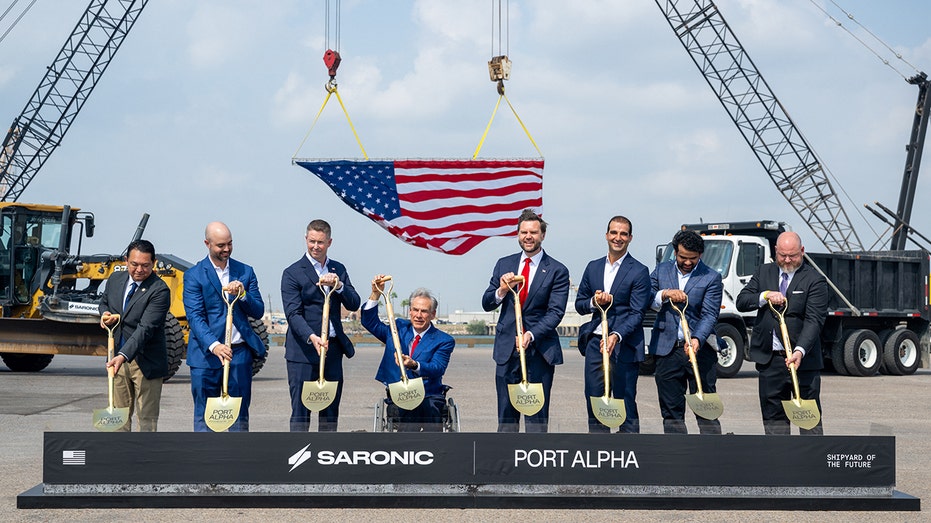
Carroll pointed to Saronic Technologies’ $3.2 billion Port Alpha shipyard in Brownsville, Texas, as an example of how automation can be used alongside American workers.(Brandon Bell/Getty Images)
Augmenting the Workforce: Addressing the Skills Gap with Robotics
The strategic deployment of automation is seen as a direct antidote to critical skilled labor shortages. Carroll specifically highlighted the welding trade, where an aging workforce grapples with escalating demand from vital sectors like shipbuilding, national defense, renewable energy, and the burgeoning AI infrastructure build-out. This confluence of factors creates a severe bottleneck for industrial output.
“We see it with everyday manufacturers that tell us, ‘We have huge order volumes, but we can’t take this work on here, because we can’t hire a second shift,'” she explained. This inability to scale production directly translates to lost revenue opportunities and ceding market share. Robotics offers a clear solution: for instance, one skilled welder could be trained to oversee and operate ten welding robots, simultaneously handling complex, high-value manual tasks. This model not only addresses the capacity issue but also enhances productivity per worker, a key metric for economic growth.
ERIC TRUMP-BACKED ROBOT STARTUP LANDS $24M PENTAGON DEAL TO COMPETE WITH CHINA
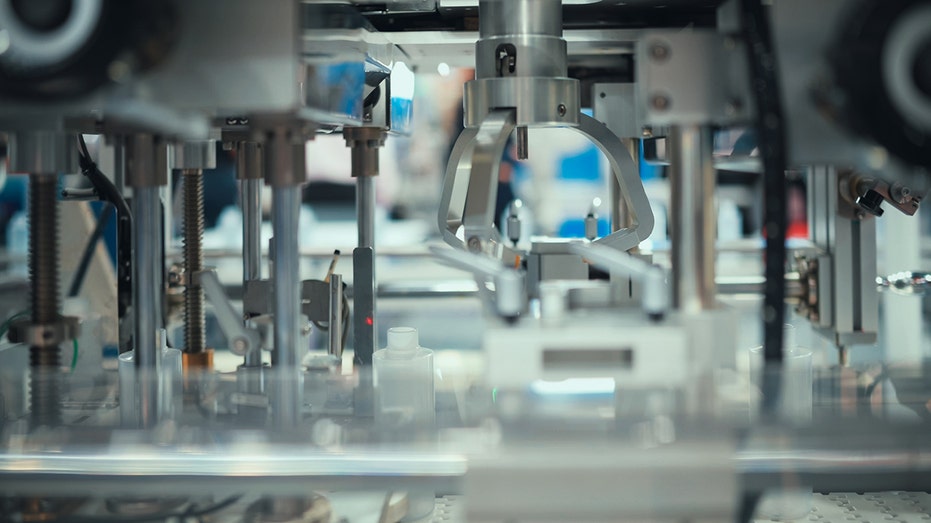
Carroll said automation could help manufacturers offset shortages of skilled workers.(iStock)
While concerns about AI and robotics replacing jobs are valid and often amplified in public discourse, Carroll emphasized a more constructive approach. The focus, she argued, must shift towards “upskilling” the existing workforce, equipping them with the competencies needed to interact with and manage these advanced technologies. “We need to look at ways that we can augment the workers that we have, and ways that we can upskill them and provide them opportunities to be part of the workforce that is being developed around these new types of jobs and skills,” Carroll stated. This strategy not only mitigates job displacement fears but also cultivates a more adaptable, productive, and technologically proficient labor force, crucial for sustaining long-term economic growth and global competitiveness.
GET FOX BUSINESS ON THE GO BY CLICKING HERE
Market Impact:
The accelerating integration of robotics and AI into U.S. manufacturing signals a transformative period for the broader market. Investors can anticipate significant growth opportunities in industrial automation companies, specialized AI software providers for manufacturing, and firms offering workforce training and upskilling solutions. The increasing capital expenditure by manufacturers on automation will drive demand for components, systems integrators, and maintenance services, presenting a robust investment thesis. Furthermore, companies that successfully leverage robotics to overcome labor shortages and enhance productivity are likely to see improved profit margins and increased market share, making them more attractive to institutional investors. The geopolitical contest with China will likely spur further government incentives and strategic investments in domestic robotics R&D and deployment, bolstering the sector. Ultimately, this shift towards an automated, AI-driven manufacturing base is poised to enhance U.S. economic resilience, drive productivity gains that could help moderate inflationary pressures, and secure a stronger competitive position in the global industrial landscape.