
Unlock the White House Watch newsletter for free
Your guide to what Trump’s second term means for Washington, business and the world
Key Takeaways
- Policy Pivot Driven by Inflation:The US administration is exploring controversial measures to ease sanctions on Russian and Iranian-linked “shadow fleet” tankers, a dramatic policy shift aimed at mitigating stubbornly high domestic diesel prices ahead of critical midterm elections.
- Marginal Market Impact, Significant Geopolitical Risk:While proponents hope to increase shipping capacity and lower freight rates, analysts largely concur that the immediate market impact on fuel prices would be minimal, given the age and condition of these vessels and the underlying drivers of elevated energy costs. The move, however, risks significant geopolitical fallout, alienating allies and undermining the credibility of international sanctions regimes against Russia and Iran.
- Dilemma of Energy Security vs. Sanctions Efficacy:This decision highlights the persistent tension between short-term domestic economic pressures and long-term strategic foreign policy goals. Prioritizing consumer relief on fuel prices, even marginally, could inadvertently embolden adversaries and complicate future diplomatic efforts to enforce sanctions.
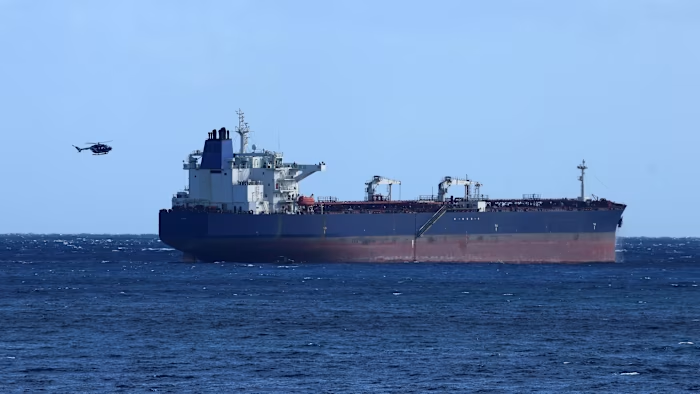
In a striking pivot reflecting the acute political sensitivity of energy prices, the US is reportedly weighing options to relax restrictions on the vast “shadow fleet” of tankers linked to Russia and Iran. This unconventional manoeuvre is directly aimed at taming soaring domestic diesel prices, which have become a potent inflationary force and a significant electoral liability for Donald Trump’s administration just weeks before November’s pivotal midterm elections.
Sources familiar with the discussions indicate that potential measures include authorizing the sale of blacklisted vessels to legitimate operators and subsequently lifting sanctions, enabling these ships to re-enter mainstream global commerce without impediment. The proposed strategy, controversial for its implicit softening towards sanctioned entities, seeks to inject much-needed capacity into the global shipping market for crude oil and refined fuels, thereby easing record-high freight rates that are currently exacerbating fuel cost inflation.
The concept of de-sanctioning these vessels to boost shipping capacity and alleviate escalating fuel costs was notably broached by US Energy Secretary Chris Wright earlier this week at the World Petroleum Conference in Riyadh, Saudi Arabia. A Treasury department official later elaborated, confirming that the Office of Foreign Assets Control (OFAC) might consider authorizing the sale of shadow fleet vessels to “legitimate buyers” on a “case-by-case basis,” provided they are restored for legitimate use within the global commercial shipping industry. This distinction, they argued, would “not benefit the shadow fleet, but would remove those vessels from the shadow fleet for use in legitimate global commerce,” following a thorough review process.
This initiative represents the latest in a series of urgent actions by the Trump administration to suppress fuel prices ahead of the midterm vote, where control of Congress hangs in the balance. Elevated inflation, particularly spurred by broader geopolitical tensions impacting energy markets, has demonstrably eroded voter confidence in the Republican Party’s economic stewardship.
The proposed easing of tanker sanctions marks a significant policy shift, coming on the heels of other moves perceived as more favourable to Moscow. This includes reported efforts to unfreeze Russian sovereign assets and, controversially, the apparent throttling of Ukraine’s access to Starlink satellites, crucial for its defence in the ongoing conflict with Russia. Last week, Trump’s suggestion of temporarily lifting sanctions on Russian diesel fuel drew sharp criticism from European allies and a bipartisan group of US senators, who condemned it as a “gift to our adversary and a betrayal of our allies.”
Speaking via video link to the Riyadh forum, Secretary Wright underscored the tanker shortage as a critical choke point, pushing up freight prices across global markets. Removing sanctions from vessels, he posited, could offer some respite. Bob McNally, a former energy adviser to George W Bush and president of Rapidan Energy, observed that “the administration is looking under every rock it can to try to force down fuel prices ahead of the elections, even if these policies would only have a marginal effect.”
Jeremy Paner, a partner at Washington-based law firm Hughes Hubbard, noted that facilitating the purchase of sanctioned tankers could allow the administration to circumvent the “bad look” of issuing new direct authorisations linked to Russia, by reframing it as a measure to enhance global shipping capacity.
The White House and Energy Department have yet to provide official comment on these detailed proposals. This discussion unfolds as recent data revealed US consumer inflation jumped to 3.7 per cent in September, largely driven by a rebound in fuel prices washing through the economy. The administration has aggressively sought to counteract this surge, leaning on allies for increased diesel supply and even threatening export bans. An executive order was also signed, permitting tax-free red diesel for use on public roads.
However, diesel prices remain stubbornly elevated, averaging $6.31 a gallon at the pump, just shy of recent record highs. The International Energy Agency (IEA) recently issued a stark warning, projecting a global shortage of the fuel until at least mid-2027. Daniel Yergin, vice-chair of S&P Global, highlighted a critical shift in policy focus, noting that policymakers are now prioritizing the tanker shortage as a major constraint on supply, rather than solely crude oil production.
Despite the administration’s eagerness, most market analysts remain skeptical about the potential for a substantial impact on fuel prices. Energy Aspects, a leading consultancy, estimates that 13 to 19 per cent of the global tanker fleet is currently under US sanctions. However, it cautioned that the advanced age and often poor maintenance of these vessels would significantly limit the benefits of easing restrictions. “Lifting sanctions on predominantly old and likely under-maintained vessels is therefore unlikely to add meaningful mainstream fleet capacity overnight,” the firm stated, adding that most tankers sanctioned over Russian or Venezuelan links have continued trading regardless over the past three months, albeit in a constrained and higher-risk environment.
Research group Kpler echoed this sentiment, suggesting the measure would have virtually no impact on the current tanker crisis. They argue that elevated fuel prices are primarily driven by heightened war risk premiums in the Middle East and the ongoing conflict in Ukraine, rather than a mere shortage of available vessels.
The administration’s apparent willingness to relax sanctions, both on Russian fuel and the shadow tanker fleet, has triggered alarm among US politicians and European allies. Italian Prime Minister Giorgia Meloni criticized earlier proposals to buy diesel from Russia as a “very risky choice,” arguing it would undermine international efforts to pressure Vladimir Putin to end the war in Ukraine. The broader concern is that such moves could embolden sanctioned regimes, compromise the integrity of the international sanctions architecture, and create dangerous precedents for future geopolitical conflicts.
Market Impact
The proposed easing of sanctions on the “shadow fleet” introduces a complex dynamic into global energy and shipping markets. In the short term, any tangible impact on retail diesel prices is likely to be minimal, given the structural nature of current supply-demand imbalances, refinery constraints, and the ongoing geopolitical risk premiums. While theoretically increasing tanker availability, the practical challenges of integrating aged, potentially unmaintained vessels into compliant global shipping — securing insurance, financing, and legitimate port access — mean any additional capacity would come online slowly and likely target specific, less stringent markets. Freight rates might see some marginal, localized pressure downwards if a significant number of viable vessels successfully re-enter the legitimate fleet, but the overriding factors of high bunker fuel costs and regional demand surges will likely dominate. In the medium term, the primary market impact lies in heightened policy uncertainty. The perceived erosion of US sanctions credibility could subtly shift risk assessments for investors in the energy and shipping sectors, potentially making future compliance more complex and undermining the deterrent effect of future sanction regimes. For energy producers and traders, it signals a White House prioritizing immediate domestic consumer relief over consistent foreign policy, which could lead to greater volatility as market participants anticipate political interventions. Long-term, this move could inadvertently disincentivize investment in new, legitimate shipping capacity if the threat of “shadow” capacity being brought back into the fold creates an unpredictable supply overhang, thus paradoxically exacerbating future shipping shortages. More broadly, it casts a shadow over the commitment to energy transition goals if short-term fossil fuel availability at lower prices becomes the overriding political imperative.