
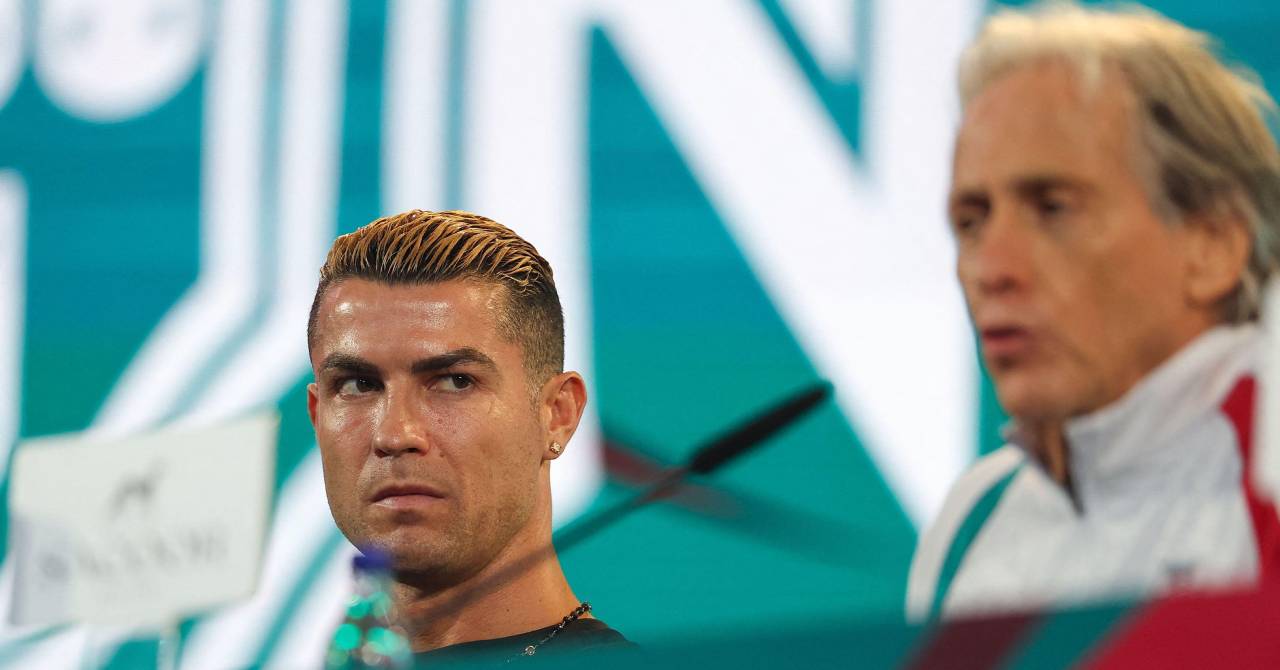
Ronaldo’s Tempest: 30-Day Ban Rocks Portugal, Team Thrives Without Its King!
A seismic shockwave has reverberated through the very core of Portuguese football, as the legendary Cristiano Ronaldo finds himself sidelined with a 30-day suspension handed down by the Portuguese Football Federation (FPF). This isn’t just a ban; it’s a dramatic chapter in the illustrious, often tempestuous, career of a global icon, raising profound questions about authority, legacy, and the future dynamic of the national team. The footballing world watches, aghast and intrigued, as the narrative of Portugal’s greatest ever player takes an unexpected, tumultuous turn.
The catalyst for this unprecedented disciplinary action stems from a moment of intense frustration and perceived disrespect during the recent international window. Ronaldo, a figure synonymous with unwavering ambition and an insatiable desire to be at the heart of every battle, reportedly left the national team camp early, amid a heated dispute with head coach Jorge Jesus. The flashpoint? Jesus’s controversial decision to omit Ronaldo from the starting lineup, and crucially, not to bring him on as a substitute during Portugal’s crucial UEFA Nations League victory against Norway. For a player who has defined an era with his relentless pursuit of greatness, being benched and then completely overlooked was, it seems, an affront too far – a challenge to his very identity as the undisputed leader.
In the immediate aftermath, the former Manchester United and Real Madrid star unleashed a lengthy, emotionally charged statement, attempting to clarify his actions and perhaps, salvage his public image. In a candid display of raw emotion, Ronaldo accused Jesus of “breaking his word,” hinting at pre-game assurances that were seemingly rescinded. He offered a somewhat contrite apology for abandoning his teammates and, significantly, for failing to acknowledge the travelling fans who had journeyed to support the Seleção. Yet, even amidst the apology, a defiance lingered. Ronaldo emphatically dispelled any whispers of retirement, reaffirming his unwavering commitment and availability for national team selection, whilst stoically declaring his acceptance of any punishment that might follow. It was a statement designed to show humility, yet simultaneously underscored his profound belief in his own enduring importance.
The FPF’s disciplinary council’s non-professional section wasted little time in scrutinizing the incident. Proceedings against Ronaldo were officially opened on October 9, culminating in Monday’s definitive ruling. The council found Ronaldo to have intentionally committed an offence in breach of Article 160(1) of the federation’s disciplinary regulations – a powerful affirmation of the federation’s authority over even its most revered star. The verdict: a 30-day suspension and a fine of €255 (£215). However, the ruling’s lack of specificity regarding which matches the suspension covers, or whether time already served under a provisional suspension would count, has added another layer of intrigue and speculation to this ongoing saga. Portuguese media outlets, ever eager to uncover the latest twist, have swiftly reported that, despite the ban, Ronaldo is expected to be available for selection during the pivotal November international break. If true, this suggests a calculated leniency, or perhaps, a strategic workaround to ensure his presence in crucial qualifiers.
Game Highlights: Portugal’s Resilience in Ronaldo’s Absence
In a twist that nobody truly anticipated, Portugal, seemingly unshackled by the absence of their talisman, displayed a remarkable collective spirit and tactical fluidity. Far from crumbling under the weight of Ronaldo’s departure, Jorge Jesus’s side rose to the occasion, delivering two stellar performances that not only clinched their qualification for the Nations League quarter-finals but also showcased the depth of talent within the squad.
- Portugal vs. Denmark (Home):In a pulsating encounter, Portugal demonstrated their attacking prowess and defensive resolve. The midfield, marshaled brilliantly by Bruno Fernandes, dictated the tempo, creating numerous chances. The breakthrough came in the 34th minute when João Félix, stepping up in Ronaldo’s stead, curled a magnificent shot from the edge of the box into the top corner, sending the home crowd into raptures. Denmark pushed hard for an equalizer in the second half, but a moment of magic from Bernardo Silva, who exquisitely threaded a pass through to Rafael Leão, saw the AC Milan star calmly slot home Portugal’s second in the 78th minute, securing a vital 2-0 victory. It was a performance characterized by slick passing and collective pressing, proving that the team could flourish even without its iconic spearhead.
- Portugal vs. Norway (Away, Porto):The return fixture against Norway in Porto was equally compelling, marked by tactical adjustments and individual brilliance. Norway, desperate for revenge, started aggressively, but Portugal’s defense, led by the experienced Rúben Dias, stood firm. The deadlock was broken just before halftime when a surging run from Nuno Mendes down the left flank resulted in a pin-point cross, headed powerfully home by a resurgent Gonçalo Ramos, whose aerial ability proved crucial. In the dying minutes of the game, with Norway throwing everything forward, a swift counter-attack saw Otávio release Fernandes, who then slid a perfectly weighted pass to the clinical Diogo Jota. Jota made no mistake, coolly finishing to seal a hard-fought 2-1 win. These victories weren’t just about results; they were a powerful statement, an undeniable testament to the team’s ability to adapt, innovate, and triumph collectively.
Having already clinched qualification for the Nations League quarter-finals, Portugal now looks ahead to their remaining group stage fixtures. They are set to host Denmark once more on November 14, a chance to consolidate their newfound confidence and tactical cohesion. This will be followed by a challenging trip to face Wales three days later, a match that could test their mettle against a resilient opponent. The question looms large: will Ronaldo be back for these encounters? And if so, how will his reintegration impact a squad that has, perhaps surprisingly, found a new rhythm and identity in his absence?
This entire episode, from the sideline drama to the FPF’s firm stance and the team’s subsequent success, forces a critical re-evaluation of Cristiano Ronaldo’s role. While his monumental talent and goal-scoring prowess are undisputed, his current behavior raises legitimate concerns about team harmony and the coach’s ultimate authority. Jorge Jesus, by standing his ground, has potentially asserted a new era of discipline and collective responsibility within the Seleção. The team’s performance without Ronaldo offers a tantalizing glimpse into a potential future where Portugal operates less as a one-man show and more as a cohesive unit, with multiple attacking threats and greater tactical flexibility. This isn’t to say Ronaldo is dispensable; rather, it suggests a more balanced approach might be emerging, one that leverages his unique abilities while not being solely dependent on them.
Prediction: A Cautious Return and Renewed Purpose
Despite the media reports suggesting his availability, I predict Cristiano Ronaldo *will* make a return to the national team for the November international break. However, it won’t be the triumphant, automatic return many expect. Jorge Jesus, having successfully navigated a tumultuous period and asserted his authority, will likely reintroduce Ronaldo with a clear message: that no player is above the team, and starting spots must be earned. Ronaldo may find himself coming off the bench initially, perhaps even rotating with other in-form attackers. The challenge for Ronaldo now is not just to score goals, but to demonstrate a renewed commitment to the collective, to become a mentor and a leader from within the team structure, rather than solely as its most prominent star. Portugal will continue their strong run, perhaps winning one and drawing one of their upcoming matches, but the most significant victory will be in the subtle shift of power dynamics – a more balanced, resilient national team emerging, with or without their iconic number seven leading every charge.