
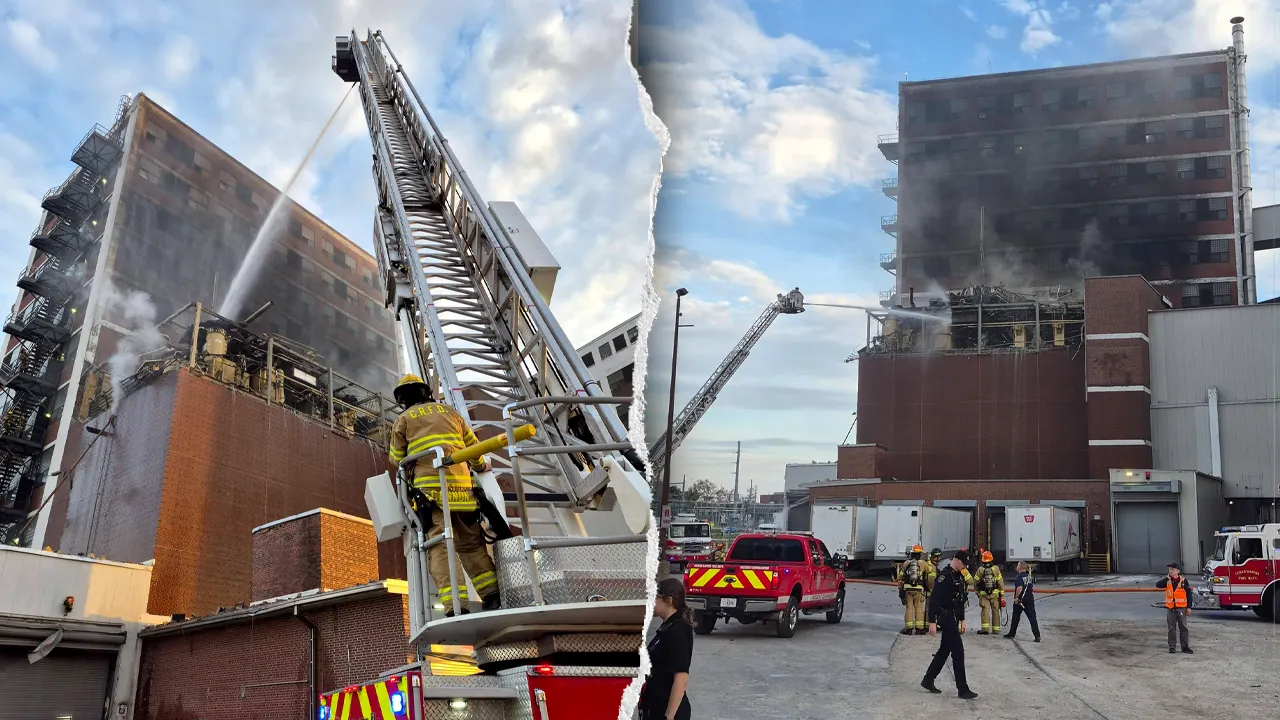
It was unclear what caused the explosion or how much damage the fire caused.(Facebook/Cedar Rapids Fire Department)
Key Takeaways:
- Disruption to the world’s largest oat milling facility could significantly impact global oat supply chains and commodity prices, potentially leading to inflationary pressures for consumers of oat-based products.
- PepsiCo (NASDAQ: PEP), the parent company of Quaker Oats, faces operational challenges, potential revenue setbacks for its Quaker Foods North America division, and substantial rebuilding costs, though its diversified portfolio offers some insulation.
- The incident underscores vulnerabilities in critical food processing infrastructure, prompting investor scrutiny on supply chain resilience and business continuity plans across the agricultural and food sectors.
An apparent explosion and subsequent fire at the massive Quaker Oats plant in Cedar Rapids, Iowa, on Saturday sent thick black smoke billowing over the downtown area, immediately raising concerns among financial analysts and commodity traders about potential disruptions to the global oat supply. While local officials reported no injuries and all workers were safely accounted for, the incident at what is billed as the world’s largest oat mill carries significant implications for commodity markets, PepsiCo’s diversified portfolio, and consumer prices for a staple breakfast item.
The Cedar Rapids facility is an industrial behemoth, processing an astounding 2 million pounds of oats each day, according to Quaker Oats’ own corporate statements. This capacity makes it a critical node in the global supply chain for oats, impacting everything from breakfast cereals and oatmeal to granola bars and other oat-based food products consumed worldwide. The immediate cessation of operations, even if temporary, represents a substantial shock to the market’s equilibrium for this specific agricultural commodity.
Firefighters were dispatched to the plant around 4:44 p.m. local time following reports of an explosion and fire, encountering heavy smoke and flames concentrated on the north side of the sprawling building. The rapid response, involving additional crews from Marion, Hiawatha, and Linn County, managed to bring most of the blaze under control by 6:25 p.m. Cedar Rapids Mayor Tiffany O’Donnell noted in a Facebook video that the affected area was not heavily populated with employees at the time, which she described as “a blessing” given the potential for severe casualties.
For PepsiCo Foods US, the division under which Quaker Oats operates, the incident presents a complex challenge. While PepsiCo (NASDAQ: PEP) is a multinational food and beverage conglomerate with a highly diversified portfolio, the Quaker Foods North America division is a significant contributor to its overall revenue. Any prolonged outage at such a pivotal manufacturing site could impact earnings guidance, particularly for the upcoming quarters, and necessitate increased logistics costs to divert production or source processed oats from alternative, potentially more expensive, suppliers. Investors will be closely watching for formal statements from PepsiCo regarding the extent of the damage, the estimated timeline for resuming operations, and the financial impact.
The financial ramifications extend beyond PepsiCo’s immediate bottom line. The global oat market is relatively concentrated, and the removal of the world’s largest mill from active production, even for a short period, can trigger price volatility. Oat futures, traded on exchanges like the Chicago Board of Trade, could see upward pressure as traders price in supply uncertainty. This, in turn, could translate into higher input costs for other food manufacturers that rely on oats, potentially leading to increased consumer prices for a wide array of products, exacerbating existing inflationary concerns in the food sector.
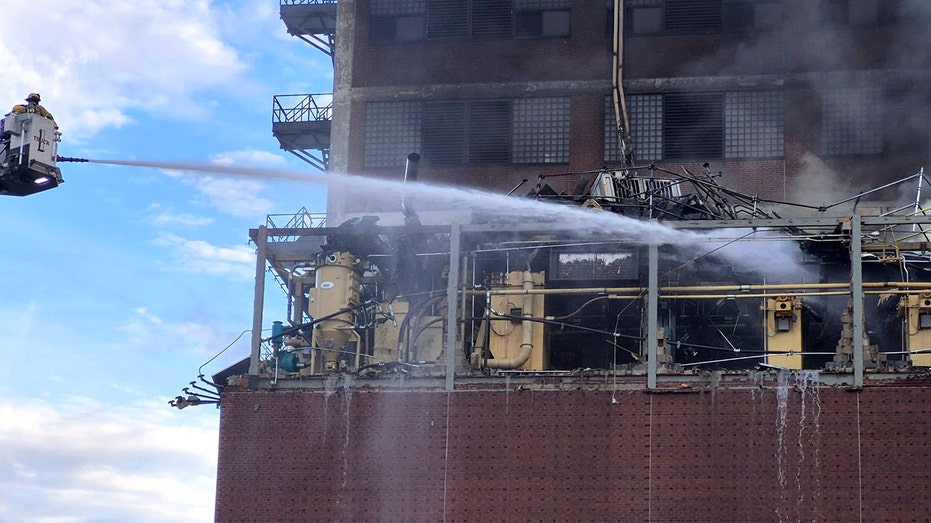
Most of the fire had been put out by 6:25 p.m., according to the Cedar Rapids Fire Department.(Facebook/Cedar Rapids Fire Department / Unknown)
The full extent of the damage, and more critically, the cause of the explosion, remains under investigation. Authorities have not yet quantified the financial damage, which will be a key factor in assessing the recovery timeline. Major industrial fires often involve extensive structural damage, damage to specialized machinery, and loss of stored raw materials or finished goods. Insurance claims will undoubtedly be substantial, covering both property damage and business interruption, but the speed of processing these claims and the subsequent rebuilding efforts will dictate how quickly the plant can return to full capacity.
This event also serves as a stark reminder of the inherent vulnerabilities within critical food processing infrastructure. In an increasingly interconnected global economy, the disruption of a single, large-scale facility can send ripples across entire industries and consumer markets. Companies are under increasing pressure from investors to demonstrate robust business continuity plans and diversified supply chain strategies to mitigate such risks.
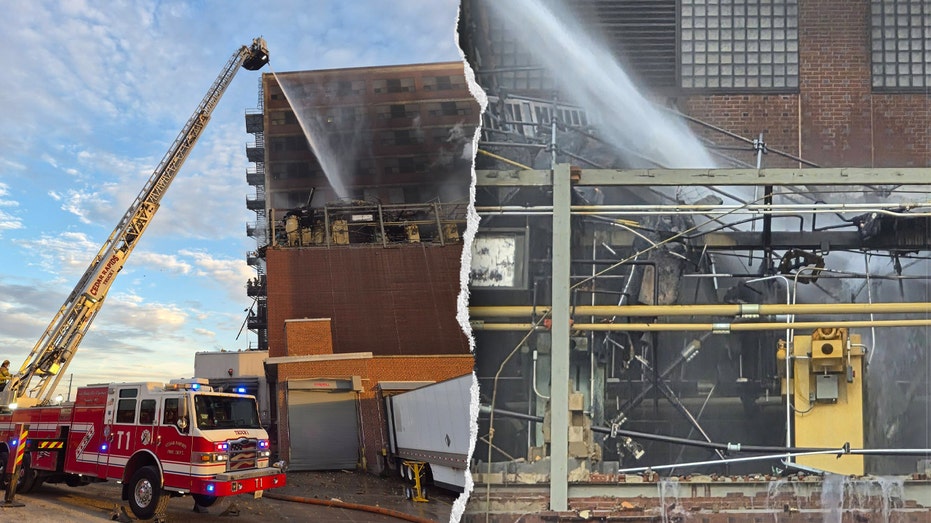
Firefighters were called to the plant around 4:44 p.m. after reports of an explosion and fire.(Facebook/Cedar Rapids Fire Department / Unknown)
PepsiCo’s statement indicated that the cause of the fire would be investigated, a standard procedure. However, the findings of this investigation could have implications for industrial safety standards across the food processing sector, especially concerning dust explosions, which are a known hazard in facilities handling fine grain materials like oat flour. The long-term financial health of Quaker Oats, a brand with a rich history and strong market presence, hinges on an efficient and transparent recovery process.
Market Impact:
The incident at the Quaker Oats plant is expected to introduce immediate volatility into oat commodity futures, with prices likely to react sharply upward on supply concerns. For PepsiCo (PEP), while its broad diversification may cushion the overall blow, the Quaker Foods North America division faces material operational challenges, potential sales losses, and significant capital expenditures for rebuilding. Investors will closely monitor PepsiCo’s QFS earnings calls for updates on financial impact and recovery timelines, potentially exerting short-term pressure on its stock price until clarity emerges. The broader food sector may also see renewed focus on supply chain resilience and insurance coverage for critical processing assets.
GET FOX BUSINESS ON THE GO BY CLICKING HERE