
Billy Rose, co-founder and vice chairman of The Agency, explains how rising prices have reshaped the definition of luxury in major housing markets.
Key Takeaways
- Pioneering Social Enterprise Model:The Original Pantry Cafe’s reopening as a social enterprise, directing 100% of its profits to homelessness programs, exemplifies an emerging trend in impact investing and mission-driven business, providing a sustainable, market-based revenue stream for a critical social cause.
- Strategic Labor Reconciliation:The resolution of a prior labor dispute and the agreement with UNITE HERE Local 11 to rehire long-term union employees highlights the growing importance of strong labor relations and talent retention in the competitive hospitality sector, contributing to brand stability and operational expertise.
- Urban Revitalization & Adaptive Reuse:Spearheaded by a real estate developer and leveraging significant fundraising, this initiative showcases the economic and social value of preserving historic commercial assets through adaptive reuse, contributing to downtown Los Angeles’s cultural fabric and economic vitality.
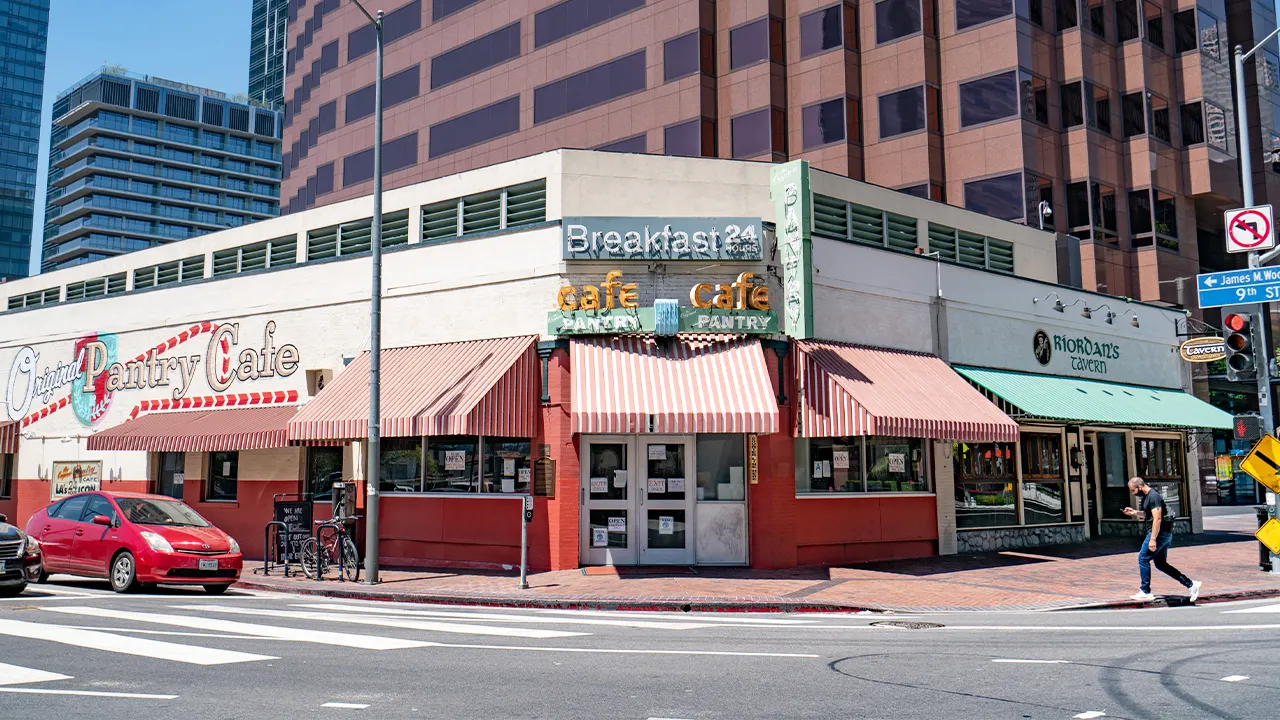
In a dynamic urban landscape increasingly defined by shifting consumer values and innovative business models, a historic Los Angeles institution is poised for a remarkable resurrection. The Original Pantry Cafe, a downtown L.A. diner that has graced the city for over a century, is preparing to reopen its doors on November 19, not merely as a restaurant, but as a pioneering social enterprise. This transformation marks a significant pivot, channeling all of its operational profits directly into programs combating homelessness, offering a compelling case study for market-driven philanthropy and sustainable community development.
Originally established in 1924, The Original Pantry Cafe had been a continuous fixture in Los Angeles’s culinary and cultural scene until its closure in March 2024. Its return, under the stewardship of Hope the Mission, a prominent Los Angeles-based nonprofit, signifies a potent intersection of commercial viability and social impact. This new operating model positions the diner not just as a dining establishment, but as a robust engine for social good, projecting to generate nearly $50,000 per month to fund essential services ranging from meals and shelter to housing for those experiencing homelessness.
The strategic decision to convert a legacy business into a social enterprise resonates deeply within current market trends. Consumers are increasingly demonstrating a preference for brands with clear social missions, fostering a demand for “conscious consumerism.” This model offers Hope the Mission a diversified and potentially more stable revenue stream, moving beyond traditional fundraising cycles to a self-sustaining business operation. For investors and philanthropists, it represents a tangible impact investment opportunity, where capital deployed yields both social returns and operational efficiency, showcasing a viable path for nonprofits to secure long-term financial independence.
POPULAR SALAD CHAIN MAKES BIG CHANGES IN BID TO WIN BACK DINERS
The Original Pantry Cafe on Aug. 4, 2020, in Los Angeles, California.(AaronP/Bauer-Griffin/GC Images)
The financial commitment required to bring this vision to fruition is substantial. Hope the Mission has launched an ambitious $800,000 fundraising campaign. This capital infusion is earmarked for critical renovations, acquisition of modern kitchen equipment, initial staffing costs, and securing food inventory. Such an investment underscores the market’s confidence in the hybrid business model and the tangible value attributed to preserving a cultural landmark while addressing a pressing societal issue. It also highlights the startup costs associated with transitioning even an established business into a new operational framework, requiring careful financial planning and investor outreach.
Crucially, the reopening is also a testament to successful labor relations and the value of institutional memory within the hospitality sector. The previous closure was precipitated by a labor dispute involving the former ownership, a trust associated with the late Los Angeles Mayor Richard Riordan. However, a recent agreement between the new owner, real estate developer Leo Pustilnikov, and UNITE HERE Local 11, the union representing hospitality workers, ensures the return of many long-serving employees. Some of these individuals have dedicated over four decades to The Original Pantry Cafe, embodying a wealth of experience and a deep understanding of the restaurant’s unique operational rhythm and customer base. In a tight labor market where employee retention is a significant challenge and cost driver for businesses, this agreement is a strategic coup, promising continuity in service quality and reinforcing the diner’s authentic character.
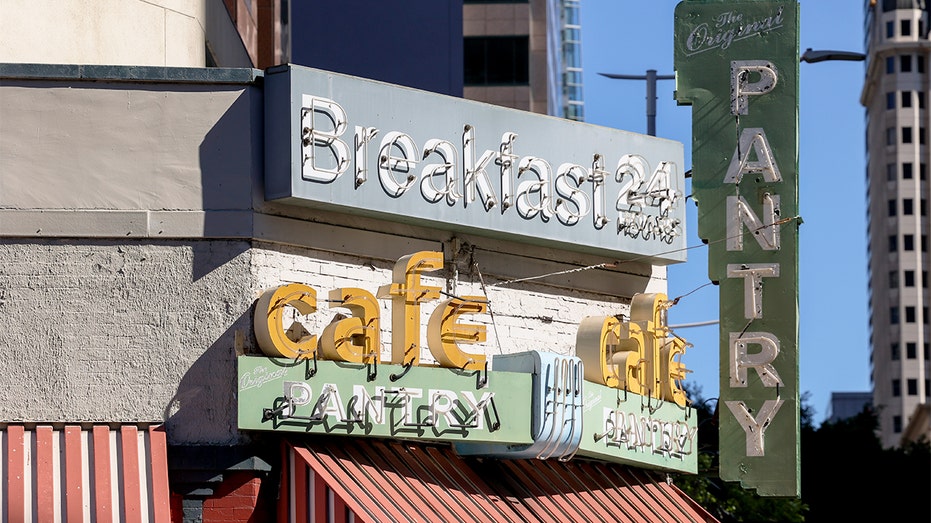
The Original Pantry Cafe is seen the day after its closure on March 3, 2025, in Los Angeles. The historic diner closed after 101 years of service due to labor disagreements between unionizing workers and the owner, the Richard J. Riordan family trust(Juliana Yamada/Los Angeles Times via Getty Images)
The involvement of real estate developer Leo Pustilnikov in the acquisition and revival of the property at 877 South Figueroa Street also speaks to broader trends in urban development and asset repurposing. In a bustling downtown Los Angeles, where commercial real estate values are continually evolving, preserving historic structures and integrating them into contemporary urban fabric requires strategic vision and capital. Pustilnikov’s role suggests a recognition of both the intrinsic cultural value of The Pantry and its potential as an anchor for community engagement and revitalization, transcending purely profit-driven real estate development.
Despite the profound shift in its underlying mission and ownership, the restaurant endeavors to maintain the beloved dining experience that has endeared it to generations of Angelenos. This commitment includes preserving its original recipes and, critically, bringing back its familiar faces — the long-term employees. This strategy is key to leveraging brand equity and ensuring customer loyalty during the transition. The message is clear: “Come in for the food. Leave having done something good,” a powerful marketing proposition that aligns consumer desires for quality food with their growing inclination towards ethical consumption.
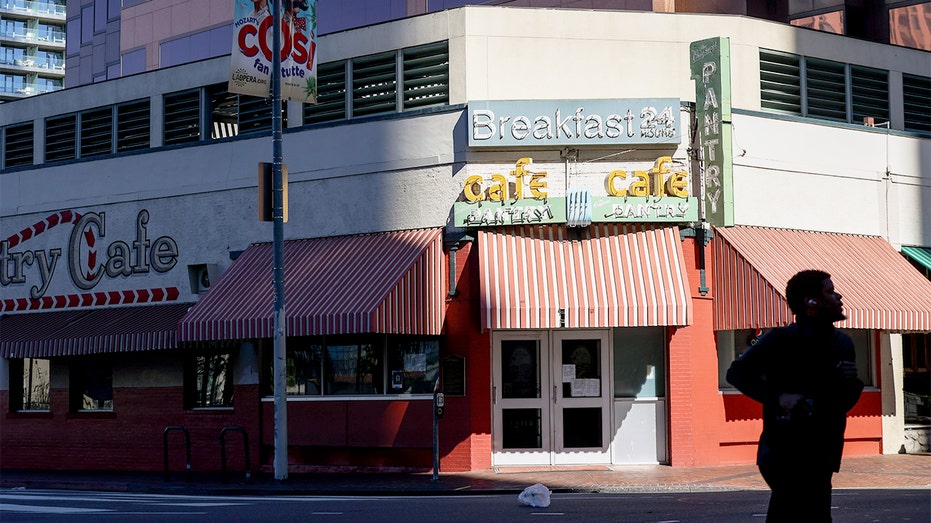
The Original Pantry Cafe plans to maintain its familiar dining experience, including original recipes and the return of longtime employees.(Juliana Yamada/Los Angeles Times via Getty Images)
The synergy between The Original Pantry Cafe’s new operations and Hope the Mission’s existing infrastructure is compelling. The nonprofit already boasts a formidable operational capacity, preparing and serving nearly 9,000 meals daily and managing 35 shelters and interim housing sites. Integrating the diner’s projected $50,000 monthly profit provides a consistent and substantial boost to these efforts, offering a scalable model for other non-profits seeking to diversify their funding streams through commercially viable ventures. This move could set a precedent for how historic commercial assets can be leveraged for significant social impact, contributing to both the local economy and broader humanitarian efforts.
CLICK HERE TO GET FOX BUSINESS ON THE GO
Market Impact
The reopening of The Original Pantry Cafe as a social enterprise could have ripple effects across several market sectors. In the **hospitality industry**, it highlights a viable model for sustainability, demonstrating how businesses can integrate social responsibility without sacrificing operational integrity or brand identity. For the **non-profit sector**, it offers a blueprint for innovative fundraising and revenue diversification, potentially inspiring other organizations to explore similar commercially-driven ventures to achieve financial resilience and scale their impact. The successful resolution of the labor dispute sets a positive precedent for **labor relations**, emphasizing the mutual benefits of collaboration between ownership and unions, especially in retaining invaluable talent. Furthermore, from a **real estate and urban development** perspective, this project underscores the economic and cultural value of adaptive reuse for historic properties, showcasing how developers can contribute to community welfare while engaging in strategic investments in urban revitalization. Finally, it reinforces the growing power of **conscious consumerism**, where brands with strong social missions can cultivate deeper customer loyalty and drive demand, influencing marketing strategies across industries.