
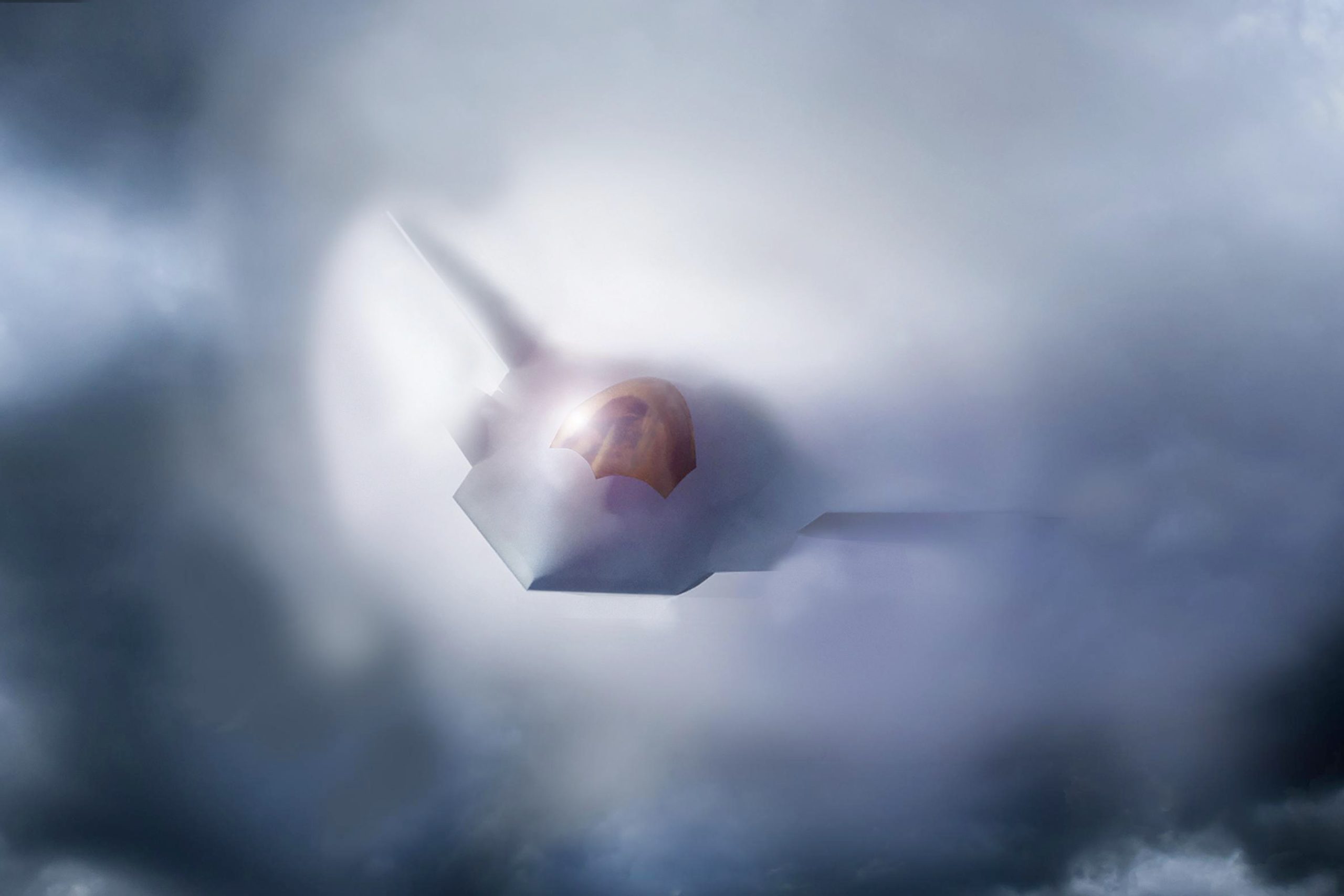
The U.S. Air Force has initiated the preliminary stages for developing a significant infrastructure project at Nellis Air Force Base (AFB), Nevada. This project involves the construction of a comprehensive campus, estimated to cost over $1 billion, dedicated to the testing, maintenance, and training operations for the upcoming F-47, a next-generation fighter aircraft. The service aims to complete this extensive facility by 2031, reflecting an expedited timeline for fielding its sixth-generation fighter capability.
A presolicitation notice, issued on October 22, formally signaled the Air Force’s intent to engage qualified firms for the design and construction of the F-47 campus. The notice seeks up to four firms capable of undertaking this complex project, which encompasses design, construction, security measures, and other associated expenditures, culminating in an estimated total cost of $1.057 billion.
The proposed campus is designed to be highly specialized, primarily situated on the east side of Nellis AFB. Key components of the initial phase include a nearly 117,000-square-foot facility integrating flightline operations and maintenance functions. This foundational structure will be complemented by a dedicated laboratory specifically engineered for reprogramming the F-47’s advanced systems, an aircraft apron equipped with sunshades for operational readiness, and a substantial 41,000-square-foot simulator facility crucial for pilot training and mission rehearsal without requiring actual flight hours.
The presolicitation notice also outlines potential subsequent phases of work, indicating a phased development approach. These future additions could include specialized hangars for critical maintenance activities such as fuel system upkeep, meticulous corrosion control to preserve the aircraft’s stealth coating, advanced weapons load training facilities, and additional comprehensive maintenance training areas to ensure personnel are fully proficient with the F-47’s complex systems.
The Air Force anticipates issuing the initial award for the F-47 campus project in February 2027. Following this award, a nine-month period will be dedicated to design and preconstruction activities. The intensive construction phase is then projected to span approximately 40 months, targeting completion by early March 2031. This timeline underscores the Air Force’s commitment to rapidly integrate the F-47 into its operational fleet.
This infrastructure development provides the latest insight into the Air Force’s preparations for the integration of the Boeing-produced F-47. It aligns with the Air Force’s 2027 budget proposal, which allocated $730 million specifically for the hangars and support infrastructure necessary for the F-47, while simultaneously confirming Nellis AFB as the primary site for its operational testing. Nellis AFB’s extensive ranges and specialized testing environment make it a strategic location for the development and assessment of advanced aviation platforms.
The F-47 program represents a critical component of the Air Force’s Next Generation Air Dominance (NGAD) initiative. The Air Force previously announced in March 2025 its selection of Boeing to develop and build the F-47. This sixth-generation fighter is slated to replace the F-22 Raptor sometime in the 2030s and is projected to constitute approximately 20 percent of the Air Force’s total fighter fleet. The F-47 is designed to incorporate advanced stealth capabilities, sophisticated data sharing networks, and enhanced electronic warfare systems. A key operational feature will be its ability to autonomously direct semi-autonomous drone fighters, known as Collaborative Combat Aircraft (CCAs), thereby expanding its operational reach and effectiveness in contested environments.
Regarding the aircraft’s development timeline, former Air Force Chief of Staff Gen. David Allvin stated in September 2025 that the initial F-47 fighter was projected to be under construction, with its inaugural flight scheduled for 2028. Air Force officials have consistently maintained this schedule, affirming that the first flight is anticipated within that timeframe. Gen. Allvin also provided performance specifications in a May 2025 statement, indicating that the F-47 will be capable of flying faster than Mach 2, exceeding 1,500 miles per hour, and will possess a combat radius of more than 1,000 nautical miles. This projected range significantly surpasses that of current platforms such as the F-22 and F-35A Joint Strike Fighter, offering a distinct strategic advantage in potential conflicts requiring long-distance operations, particularly across vast expanses like the Pacific Ocean in a prospective scenario involving China.
Why This Matters
The Air Force’s decision to invest over $1 billion in dedicated F-47 infrastructure at Nellis AFB signifies a pivotal moment in the modernization of U.S. air power. This extensive project is not merely about constructing buildings; it is a foundational step in integrating a new generation of air superiority into the national defense architecture, with profound implications across several domains.
Firstly, the rapid development and fielding of the F-47 are critical for maintaining the United States’ qualitative military edge. As global adversaries, particularly China, continue to advance their own military technologies, a next-generation fighter like the F-47, with its projected stealth, data fusion, and electronic warfare capabilities, is essential to ensure air dominance in future conflicts. Its extended combat range is particularly strategic, addressing the operational challenges of vast geographical theaters such as the Indo-Pacific, where current platforms may face limitations. The F-47’s ability to direct Collaborative Combat Aircraft (CCAs) also signals a significant shift towards networked, autonomous combat operations, amplifying its effectiveness and survivability.
Secondly, this project underscores a substantial commitment to technological innovation and industrial investment. The development of such advanced aircraft drives breakthroughs in aerospace engineering, materials science, artificial intelligence, and cybersecurity. The $1.057 billion infrastructure investment at Nellis AFB directly translates into economic activity, supporting numerous high-skill jobs in design, construction, and specialized technical fields. It reinforces the U.S. defense industrial base, fostering innovation that often has broader applications beyond military uses.
Finally, the establishment of this campus and the integration of the F-47 into the fleet serve as a powerful deterrent. By visibly investing in cutting-edge capabilities and committing to an ambitious development timeline, the U.S. Air Force sends a clear message to potential adversaries about its resolve and capacity to protect national interests and project power globally. This sustained investment in advanced air superiority contributes to regional stability in critical areas and reinforces alliances by demonstrating a continued commitment to collective security.