
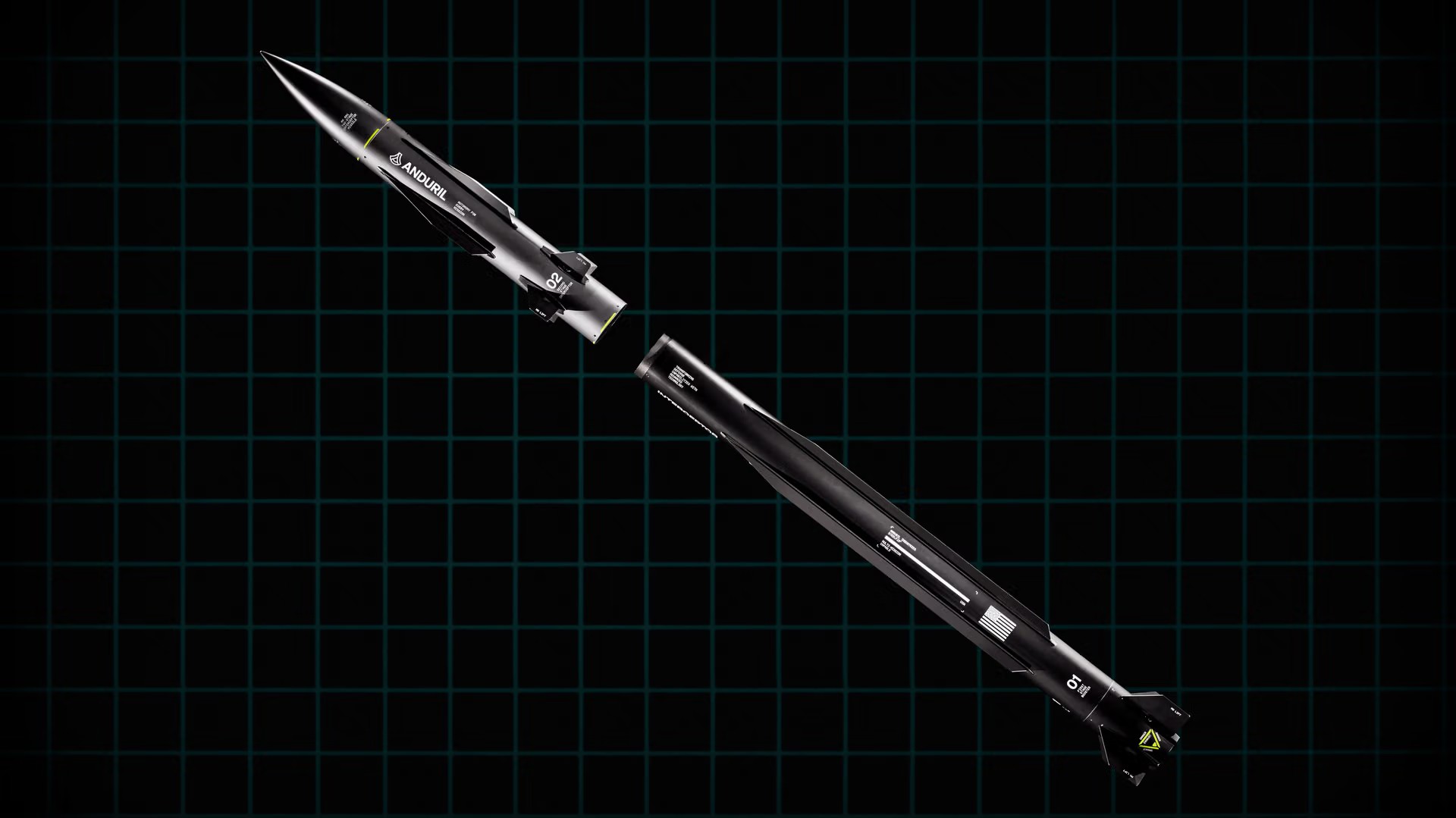
Anduril Unveils Steelfin Interceptor Missile Family, Aiming to Revolutionize Air Defense Costs
Anduril Industries, a defense technology company, has announced the development of Steelfin, a new family of surface-to-air interceptor missiles. The company states that Steelfin is built on a common two-stage architecture, allowing a single production line to manufacture variants suited for a wide range of defensive applications, from point defense against short-range threats to upper-tier ballistic missile defense. This standardized approach is designed to enhance manufacturing efficiency and reduce costs across the entire missile family.
According to Anduril, a primary challenge in modern air defense is the prevailing “cost exchange” imbalance. Adversaries have increasingly invested in the development and mass production of low-cost offensive weapons, such as unmanned aerial vehicles (UAVs), cruise missiles, and various rocket artillery. Current air defense systems are frequently compelled to expend highly sophisticated and expensive interceptors against these comparatively inexpensive threats. This scenario places significant strain on critical defensive weapon stockpiles and national defense budgets, potentially putting defenders at an economic disadvantage in a protracted conflict. Steelfin aims to address this strategic vulnerability by providing a more cost-effective and scalable interceptor solution.
The Steelfin system features a modular two-stage design. The first stage is a booster, which can be configured with different solid rocket motors. This adaptability allows the booster to be optimized for specific range requirements, launch configurations, or packing densities within various platforms. The second stage, which serves as the terminal interceptor, maintains a high degree of commonality across all Steelfin variants. It shares the same airframe, avionics, software, flight control system, and internal interfaces. Crucially, the design incorporates open interfaces between the subsystems within this terminal stage, enabling the integration of diverse seekers and mission systems without requiring a complete redesign of the missile. This modularity is intended to facilitate rapid adaptation to evolving threats and technological advancements.
A core tenet of Anduril’s strategy for Steelfin is mass production and supply chain resilience. Due to the extensive sharing of architecture and components, all Steelfin variants can be manufactured on the same production line, utilizing identical tooling, technicians, and facilities. Anduril has outlined plans to produce several thousand Steelfin variants annually in the short term, with manufacturing capacity designed to be flexible and scale rapidly in response to demand. The adoption of open interfaces further supports this approach by allowing for the incorporation of commercial off-the-shelf (COTS) components and fostering competition among various vendors. This not only widens the supplier base, reducing reliance on single-source suppliers, but also aims to drive down costs and accelerate innovation.
Compatibility with existing defense infrastructure is a key design consideration for Steelfin. The missiles are engineered to be launched from a range of systems currently in service globally. These include the M903A2 launcher, commonly used by the Patriot air defense system; the Mk 41 Vertical Launching System (VLS), a ubiquitous naval missile launcher fitted to warships; Typhon systems; and emerging containerized launchers designed for rapid deployment. Furthermore, Steelfin is designed for seamless integration with established fire control systems such as Aegis, a cornerstone of naval air and missile defense, and the Integrated Battle Command System (IBCS), which provides a common operating picture for joint air and missile defense. Anduril has completed ballistic testing with representative air vehicles and is scheduled to commence flight testing of the Steelfin family next year.
Anduril, an American defense company, has expanded its international footprint significantly over the past two years. Its European operations include Latvia’s selection of its Barracuda cruise missile family, and a United Kingdom arm actively engaged in developing autonomy solutions, counter-drone systems, and advanced command software. Anduril’s emphasis on designing weapons with mass production and common components in mind aligns with a growing trend in the defense industry. This week, another company, Helsing, also launched its own pair of low-cost interceptors, signaling a broader industry shift towards addressing the cost-exchange dilemma through scalable, modular defense solutions.
Why This Matters
The introduction of the Anduril Steelfin missile family represents a potentially significant shift in global air and missile defense strategies, addressing a critical vulnerability identified by defense planners worldwide. The current paradigm, where advanced, costly interceptors are expended against increasingly prevalent and inexpensive threats like drones and cruise missiles, is financially unsustainable and militarily problematic. This “cost exchange” imbalance threatens the long-term readiness and resilience of national defense forces, as stockpiles of essential defensive weapons can be rapidly depleted, and defense budgets strained.
Steelfin’s emphasis on a common, modular architecture and mass production aims to flip this equation. By enabling the production of thousands of interceptors annually at a lower unit cost, it seeks to provide a quantitative advantage that can match or even exceed the volume of incoming low-cost threats. This could allow nations to maintain robust air defense postures without facing the untenable choice between fiscal solvency and adequate protection. The modular design, incorporating open interfaces and commercial off-the-shelf components, also promises faster innovation cycles and adaptability to future threats, reducing the traditional lengthy and expensive development processes for defense systems.
Furthermore, the compatibility of Steelfin with existing launch and fire control systems (like Patriot, Aegis, and IBCS) is crucial. This significantly lowers the barrier to adoption for military forces, enabling a faster integration into current defense networks without necessitating entirely new infrastructure investments. This ease of integration can accelerate the deployment of enhanced air defense capabilities, a vital factor in an era of rapidly evolving geopolitical tensions and asymmetric warfare.
Strategically, a more affordable and scalable air defense capability could empower a wider range of nations to defend themselves effectively, particularly those facing peer or near-peer adversaries with large arsenals of diverse offensive weapons. It also underscores a broader trend within the defense industry towards leveraging modern manufacturing techniques, software-defined systems, and supply chain diversification to deliver more agile and cost-efficient solutions. The parallel development by companies like Helsing further indicates that this approach is gaining traction, signaling a potential paradigm shift in how global air and missile defense capabilities are conceived, produced, and deployed in the coming decades.