
Key Takeaways
- Economic Stability at Risk:The election presents a stark choice between a far-right agenda potentially resuming controversial judicial overhauls and expansive territorial policies, versus an opposition focused on institutional reform and accountability. These divergent paths carry significant implications for Israel’s economic stability, foreign direct investment (FDI), and sovereign credit ratings.
- Geopolitical & Defense Sector Impact:Post-October 7, defense spending and regional security are paramount. The election’s outcome will shape Israel’s diplomatic posture, defense procurement, and energy sector strategies, directly influencing the defense industry, regional risk premiums, and trade relationships.
- Tech Sector & Human Capital Concerns:Proposals impacting judicial independence or addressing ultra-Orthodox conscription could significantly affect Israel’s vital tech sector. Concerns over institutional integrity or the availability of a skilled workforce could deter investment in the “Startup Nation,” a critical engine of the Israeli economy.
Israelis headed to the polls on Tuesday in an election widely regarded as the most pivotal in the country’s nearly 80-year history. This critical vote offers a choice between two radically different visions for the nation’s future, with profound implications for its economic trajectory, investor confidence, and geopolitical standing in a highly volatile region.
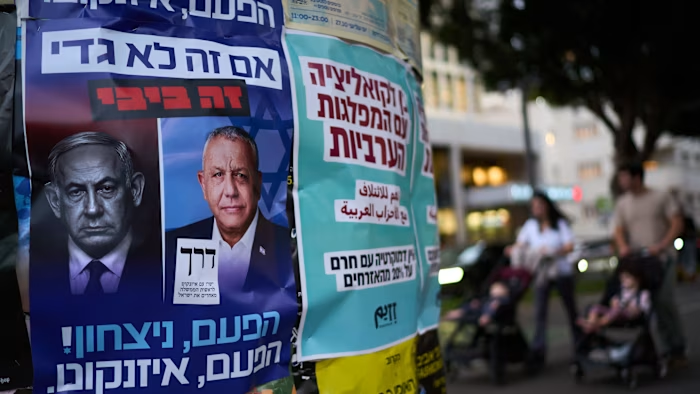
The poll, the first since Hamas’s devastating October 7, 2023 attack on Israel, pits Prime Minister Benjamin Netanyahu’s incumbent far-right coalition – which has governed for the past four years – against a bloc of Jewish opposition groups coalescing around former general Gadi Eisenkot’s Yashar party. The high stakes were immediately evident in voter engagement.
By noon local time, turnout had reached 31.5 per cent, marking the highest figure recorded by that time on an election day since 1977. Politicians from all camps aggressively urged their supporters to vote, leading to visible queues at many polling stations. This enthusiastic participation underscores the deep societal divisions that, if unaddressed by a stable government, could translate into prolonged policy paralysis—a significant deterrent for both domestic and foreign investment.
In an effort to rally his base, Netanyahu strategically invoked demographic concerns, claiming that voters from Israel’s Arab minority — who constitute a fifth of the population — were flocking to the polls. He exhorted right-wing supporters to respond in kind, deploying rhetoric that has historically stoked his base.
“The voter turnout there is very high. We are the ones who need to flock to the polling stations,” Netanyahu, who has repeatedly utilized divisive language against his opponents, stated after casting his vote in Jerusalem. “We can’t leave the battle here in the hands of the left and the Arab parties that want to bring an end to the Jewish state — that’s what’s at stake.” Such rhetoric, while politically potent, often creates social friction that can unsettle markets, particularly those sensitive to social cohesion and national unity.
Opinion surveys suggest the race remains on a knife-edge, with neither Netanyahu’s coalition nor the Jewish opposition parties appearing on track to secure an absolute majority in Israel’s parliament. This precarious balance means that forming a government will likely depend on complex post-election dealmaking, a process overseen by Israel’s President Isaac Herzog that could extend for several weeks. This period of heightened political uncertainty is typically viewed negatively by financial markets, potentially leading to increased volatility for the Israeli Shekel (ILS) and government bond yields.
However, the choice presented to Israeli voters is widely perceived as exceptionally stark. “This is not about one settlement or one economic policy or one specific issue,” remarked Shmuel Rosner, a prominent Israeli pollster. “It’s about the core identity of this place.” This fundamental ideological clash directly impacts long-term policy predictability, a crucial factor for investors assessing risk and reward in the Israeli market.
Members of Netanyahu’s coalition, often described as the most right-wing in Israeli history, are proposing a range of contentious measures. These include initiatives like emptying Gaza of Palestinians and annexing the occupied West Bank – policies that could trigger international condemnation, potential sanctions, and further isolate Israel, complicating trade relationships and directly impacting export-oriented industries, including its thriving agricultural and tech sectors. Crucially, they also aim to resume a controversial judicial overhaul that, when initially launched in 2023, sparked months of widespread protests, significant capital flight, and prompted warnings from economists and credit rating agencies about the erosion of democratic institutions and its detrimental effect on foreign direct investment (FDI).
The opposition, in contrast, has pledged a different course. Their agenda includes reversing the parts of the judicial overhaul that have already become law, which could signal a return to greater institutional stability and potentially reassure international investors and ratings agencies. They also propose launching a state inquiry into the failings surrounding October 7 – a move that could lead to significant shifts in defense procurement, intelligence spending, and potentially leadership within key state apparatuses, impacting defense contractors and national budget allocations. Another key pledge is to end the decades-old exemption from military service for ultra-Orthodox Jews. This contentious issue, long a source of societal division, would address a significant fiscal burden and potentially expand the national workforce, particularly in high-tech sectors where talent shortages are a concern, though its implementation could provoke social unrest.
Netanyahu’s Likud party and its allies, who were in power on October 7, have steadfastly resisted calls for a state inquiry into the intelligence and operational failures. Their coalition, which includes two ultra-Orthodox parties vital for their parliamentary majority, has also repeatedly postponed passing legislation on ultra-Orthodox conscription, highlighting the political sensitivities and economic implications of this issue.
As voting commenced on Tuesday, multiple parties alleged irregularities. However, the electoral commission swiftly dismissed these claims, stating there was no evidence of systematic tampering with votes, thus mitigating immediate concerns over electoral integrity that could otherwise have caused market jitters.
The final days of campaigning were conducted in an increasingly febrile atmosphere. Netanyahu sought to portray himself as the indispensable leader capable of protecting Israel from existential threats, particularly from Iran, which he insists is racing to build nuclear weapons. This hardline stance, while appealing to his base, could exacerbate regional tensions, potentially leading to spikes in oil prices and increased risk premiums for investments in the broader Middle East.
In a television interview on Sunday, he pledged to resume the US-Israeli war against Iran and posted an article from a right-wing activist warning of a “second Holocaust” if he were not re-elected, illustrated with an image of a mushroom cloud over Tel Aviv. Such alarmist rhetoric, when emanating from a sitting prime minister, can significantly impact global perceptions of regional stability, affecting tourism, trade, and capital flows.
Opposition politicians swiftly hit back, accusing the veteran prime minister of politicizing Israel’s security. “The man on whose watch the greatest disaster in the state’s history occurred refuses to understand that Israel’s security is not a political bargaining chip . . . and the State of Israel is not his personal property,” Eisenkot wrote on X on Sunday. This critique suggests a desire for a more pragmatic and less confrontational approach to security, which might appeal to risk-averse international investors seeking greater predictability.
Many Netanyahu voters remained unmoved by such criticisms. “The most important thing about this election is that Netanyahu will win,” said Moti, a start-up founder who voted in the settlement of Efrat in the West Bank and declined to give his second name. “He is a diplomat. He is strong. He has what it takes to be a leader.” This sentiment highlights a preference for experienced leadership in a volatile region, which some investors might interpret as a stabilizing force, particularly for defense and security-related industries.
However, others believe fresh leadership is urgently needed. “I always voted for [Netanyahu]. But October 7 was the tipping point. To reach this type of situation did not take one or two weeks. It was 25 years in the making,” said Sharon, an English teacher from the town of Gedera, who declined to give her second name and indicated she would vote for B’Yachad, part of Eisenkot’s opposition bloc.
“I asked my students what other country has someone who has been in power for 20 years. And they said Russia. We need a change.” This widely held desire for accountability and change is crucial for restoring institutional trust, a cornerstone of a healthy investment climate, especially for Israel’s dynamic tech sector that thrives on stable, predictable governance.
The final result will hinge on which parties successfully cross the 3.25 per cent electoral threshold to gain seats in Israel’s 120-seat parliament. Final polls from last week indicated Eisenkot’s bloc could secure approximately 54 seats, Netanyahu’s coalition around 50, with the remaining seats going to Arab and unaligned parties. However, the outcome could significantly deviate from pollsters’ forecasts, as each small group failing to cross the threshold can dramatically shift the balance of power, creating an unpredictable landscape for policy formation and budget allocation.
President Herzog has publicly committed to doing everything in his power to prevent a recurrence of the inconclusive election cycles that plagued Israel between 2019 and 2021. This raises the prospect that he might pressure Eisenkot and Netanyahu to form a national unity government if neither can independently build an administration. While a unity government could offer a semblance of political stability, it might also struggle with internal policy disagreements, potentially leading to watered-down reforms or continued indecision on critical economic issues, thus impacting long-term growth strategies.
Ultimately, if no politician can command a majority in the new Knesset, the nation would face the unfortunate prospect of fresh elections. This scenario would extend the period of deep political uncertainty, further dampening investor enthusiasm, potentially leading to additional capital outflows, and increasing the risk of credit rating downgrades for Israeli sovereign debt.
Market Impact
Regardless of the eventual victor, the outcome of this pivotal Israeli election will profoundly shape the nation’s economic future. Prolonged political instability, the resumption of contentious judicial reforms, or aggressive territorial policies could trigger significant capital outflows, weaken the Israeli Shekel (ILS), and exert downward pressure on sovereign credit ratings. This would particularly affect the high-tech sector, which thrives on stability and investor confidence, and could deter foreign direct investment. Conversely, a government that prioritizes institutional stability, addresses pressing fiscal challenges like the rising defense budget, and fosters social cohesion could restore investor confidence, bolster the tech sector’s appeal, and attract much-needed foreign investment. However, this must occur within a persistently complex and often volatile geopolitical landscape. Investors will be closely monitoring the intricate coalition negotiations for clear signals on economic policy direction, particularly regarding budget allocations, regulatory frameworks, and Israel’s international standing, as these will dictate market performance in the coming months and years.