
Boeing CEO Kelly Ortberg expressed significant optimism on October 27 regarding the future of the company’s defense sector, signaling a potential turnaround from recent financial difficulties. Speaking to investors during an earnings call, Ortberg projected substantial revenue growth for Boeing’s Defense, Space, and Security (DSS) division, a marked improvement from the low single-digit growth anticipated just a year prior. The company now forecasts at least mid-single-digit growth, or potentially higher.
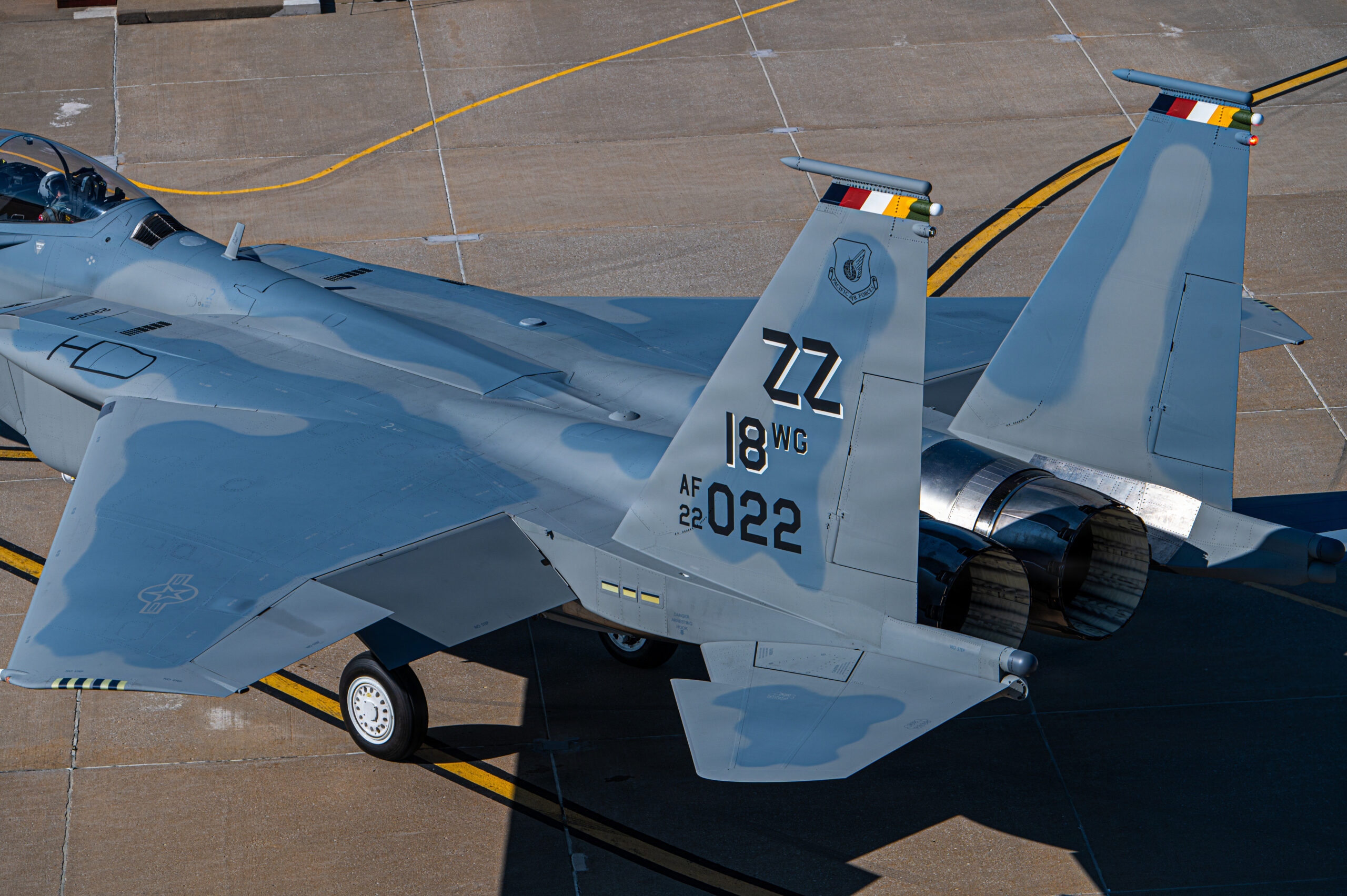
This renewed confidence stems from a series of high-profile contract wins. On September 29, Boeing secured the highly coveted $20 billion contract to develop the U.S. Navy’s sixth-generation F/A-XX fighter aircraft. On the same day, the company also won a $2.38 billion U.S. Air Force contract for an additional 22 F-15EX Eagle II fighters, expanding its role in modernizing the Air Force’s combat fleet. These victories followed the U.S. Air Force’s March 2025 selection of Boeing to build its F-47, its own sixth-generation fighter. This means Boeing now holds contracts for both of the U.S. military’s next-generation fighter programs, positioning the company as a dominant force in future air combat capabilities.
The financial performance of Boeing’s defense sector in the first three quarters of 2026 reflects this positive trend. The DSS division reported $23 billion in revenue and $710 million in earnings, a notable increase from $19.8 billion in revenue and $379 million in earnings during the same period a year earlier. These figures underscore the division’s improving profitability and operational efficiency.
Ortberg attributed part of this recovery to a strategic shift in how Boeing approaches defense contracts. The company has consciously moved away from what it deems “risky” fixed-price contracts, which have historically led to significant financial losses on major programs. A prominent example is the KC-46 Pegasus aerial refueling tanker program, a fixed-price contract that has cost Boeing billions of dollars in overruns. Fixed-price contracts require the contractor to absorb any cost increases beyond the agreed-upon price, placing all financial risk on the company.
“The important part is, all these programs are also being underwritten with the right contract type,” Ortberg stated. “So not only are we booking more orders, we’re booking more orders that won’t result in some of the challenges we’ve had.” He confirmed that the F-47 contract is a cost-plus agreement, which allows the contractor to be reimbursed for allowable costs plus an agreed-upon profit. While declining to specify the exact contract type for the F/A-XX, Ortberg assured investors it was “an appropriate contract type,” implying it aligns with the company’s new risk-averse strategy.
This shift in contracting strategy was first championed by Ted Colbert, who took over leadership of Boeing’s defense sector in 2022. Colbert publicly pledged to avoid further fixed-price contracts with the Pentagon. Months into his tenure, he informed reporters in London that Boeing had declined to compete for the Air Force’s Survivable Airborne Operations Center (SAOC) program, partly due to its requirement for fixed-price elements. At the time, Colbert also reaffirmed the importance of fighter aircraft to Boeing’s business, despite not having secured a contract for an entirely new fighter in years. Later in 2022, he initiated a reorganization of the defense sector to address persistent revenue losses and quality control issues.
Despite these efforts, Boeing Defense continued to face significant challenges. By 2024, the division appeared increasingly troubled, grappling with mounting financial losses and persistent quality problems. These difficulties culminated in Colbert’s dismissal in September 2024. The company’s defense operations were further complicated by labor disputes, including a massive strike involving its machinists in 2024 and a smaller one in 2025, which impacted production rates, including the delivery pace of the F-15EX.
However, this past year has brought a series of positive developments beyond the major fighter contracts. Boeing’s T-7 Red Hawk trainer aircraft for the Air Force and the MQ-25 Stingray unmanned aerial refueling drone for the Navy both achieved Milestone C approvals in 2026, transitioning them into low-rate initial production. This progression from development to production is a critical step for military aerospace programs and signals a maturation of these projects. Ortberg noted the defense team’s success in “finding win-win scenarios with our customers to get these projects moved forward.”
Concluding his remarks with an optimistic outlook, Ortberg stated, “The outlook is strong, our products are in strong demand, and the budget supports additional growth. I think our defense portfolio is a little bit of a sleeper.” His comments suggest that the defense sector, despite its recent struggles, is poised for a robust future within the company’s overall portfolio.
Why This Matters
Boeing’s resurgence in the defense sector holds significant implications for national security, the global aerospace industry, and the U.S. economy. For **national security and military readiness**, securing both the U.S. Navy’s F/A-XX and the Air Force’s F-47 sixth-generation fighter programs is paramount. These advanced aircraft are designed to maintain U.S. air superiority in future conflicts, integrating cutting-edge technologies like artificial intelligence, stealth capabilities, and advanced networking. The F-15EX Eagle II additions further ensure the modernization of current U.S. air fleets, providing crucial capabilities as next-generation systems are developed. The progress of the T-7 Red Hawk and MQ-25 Stingray also signifies a healthy pipeline of future military assets, from pilot training to unmanned aerial refueling, essential for maintaining operational effectiveness.
Economically, Boeing is a major U.S. employer and industrial powerhouse. This upswing in its defense division translates directly into **job creation and economic stability**. Thousands of highly skilled jobs at Boeing’s facilities and across its extensive supply chain – involving countless smaller businesses in diverse industries – will be secured or created. This investment in high-tech manufacturing and research and development contributes significantly to regional economies and strengthens the U.S. industrial base, fostering innovation and technological leadership.
For **Boeing’s financial health and investor confidence**, this turnaround is crucial. The defense sector has been a drag on the company’s overall performance in recent years, overshadowed by issues in its commercial aircraft division and significant losses on fixed-price defense contracts. A profitable and growing defense division provides diversification and stability, reassuring shareholders and bolstering the company’s long-term viability. It signals that Boeing has learned from past mistakes and is implementing effective strategies to manage risk and deliver on large-scale government contracts.
Finally, this situation highlights evolving **trends in defense procurement and industry contracting**. Boeing’s explicit shift away from fixed-price contracts towards cost-plus arrangements reflects a broader industry debate about risk allocation between government and contractors. While fixed-price contracts offer cost certainty for the government, they can stifle innovation and lead to significant contractor losses if program complexities are underestimated. Cost-plus contracts, while potentially more expensive for taxpayers, can encourage contractors to undertake more ambitious development programs and maintain quality, as the financial risk is shared. Boeing’s success with this new approach could influence how the Pentagon structures future procurement deals, shaping the future landscape of defense contracting.