
Financial influencer Taylor Price joins ‘Varney & Co.’ to break down how shifting your mindset can help Americans grow wealth and achieve the American dream.
Walmart’s Holiday Meal Basket: A Strategic Play in the Inflationary Retail Arena
As American households brace for the holiday season amidst persistent, albeit moderating, inflationary pressures, retail giant Walmart has unveiled a significant strategic initiative: its 2026 Holiday Meal Basket priced at a mere $35. Designed to feed 10 people, this offering translates to an eye-catching $3.50 per person, representing a calculated move by the Bentonville, Arkansas-based retailer to solidify its position as the ultimate budget-friendly destination during a critical shopping period. This aggressive pricing underscores the fierce competition among retailers vying for consumer dollars, as inflationary headwinds continue to shape spending habits across the nation.
Key Takeaways:
- **Strategic Price Leadership:** Walmart’s $35 holiday meal basket reinforces its “Everyday Low Price” strategy, aiming to capture budget-conscious consumers and drive foot traffic in a highly competitive, inflation-sensitive retail environment.
- **Intensifying Retail Wars:** The offering, priced 12% lower than last year for 18% more food, sets a benchmark that forces rivals like Target and Aldi to respond with their own value propositions, intensifying the holiday retail price war and potentially compressing sector margins.
- **Inflationary Consumer Behavior:** These aggressive promotions reflect retailers’ understanding of shrinking discretionary income and a consumer shift towards value, particularly in the grocery sector, where “food at home” inflation, while easing, remains a significant concern for household budgets.
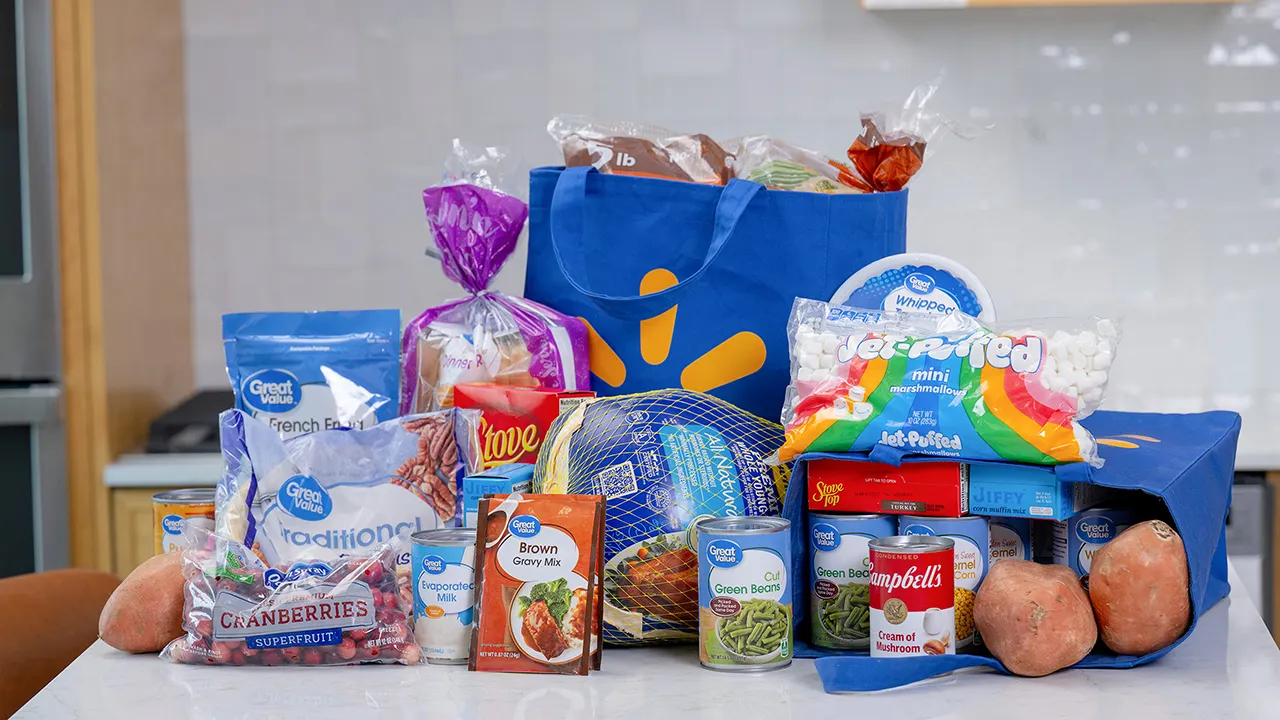
The 2026 Holiday Meal Basket bundles 26 essential items, offering a comprehensive spread that is not only more expansive but also significantly more affordable than previous iterations. Walmart proudly states this year’s basket includes 18% more food items while costing 12% less than the same products did last year. At $3.50 per person, this marks the lowest price point since Walmart initiated the program in 2022, a notable reduction from $4 per person last year. This deliberate reduction in price, despite an increase in volume, signals Walmart’s commitment to leveraging its immense scale and supply chain efficiencies to deliver unparalleled value, effectively turning the holiday meal into a loss leader designed to draw customers into stores where they may make additional, higher-margin purchases.
This aggressive pricing strategy is not isolated; it’s a direct response to, and a driver of, the broader retail landscape. Rivals are already in lockstep, recognizing the imperative to cater to cost-conscious shoppers. Target, for instance, countered with its own $30 meal designed to feed six, while German discount powerhouse Aldi rolled out a version for under $39, also serving 10. These competitive offerings highlight a crucial trend: the battle for the consumer’s holiday grocery spend is heating up, with retailers strategically sacrificing immediate margin for market share and long-term customer loyalty.
The Bentonville, Arkansas-based retailer said its 2026 Holiday Meal Basket includes 26 items and works out to about $3.50 per person.(Walmart)
The economic backdrop for these retail maneuvers is crucial. According to the Bureau of Labor Statistics’ September Consumer Price Index (CPI), food prices overall are up 2.5% compared with last year. Digging deeper, the “food at home” index, which directly impacts grocery bills, saw a monthly decrease of 0.1% but remains up 1.8% from a year ago. In contrast, the “food away from home” index, reflecting restaurant and takeout costs, rose 0.2% for the month and is up a more significant 3.5% from last year. These figures paint a clear picture: while the pace of grocery inflation has slowed, cumulative price increases over the past year continue to pinch household budgets. Consumers are feeling the strain, leading many to consolidate shopping trips, opt for private-label brands, and actively seek out deals – precisely the behavior Walmart’s holiday meal basket aims to capture.
Walmart’s basket is meticulously curated to fulfill the traditional holiday spread, featuring a Butterball turkey, stuffing, cranberry sauce, mashed potatoes, gravy, green bean casserole, and dinner rolls. For dessert, a pumpkin pie with whipped topping completes the feast. This comprehensive selection ensures that families can procure all their holiday essentials in one convenient, budget-friendly package, minimizing the need for multiple trips and potentially higher costs elsewhere.
WALMART TO OFFER FREE GLP-1 DRUGS, MORE THAN 250 MEDICATIONS AS IT EXPANDS EMPLOYEE HEALTH BENEFITS

Walmart said this year’s basket includes 18% more food items while costing 12% less than the same products did last year.(Walmart)
A key component of the basket is the turkey, which Walmart has strategically priced at 97 cents per pound, a price point unchanged from last year. This specific detail highlights Walmart’s ability to absorb or negotiate stable pricing on critical anchor items, a testament to its formidable buying power and supply chain management. Maintaining price stability on a marquee item like turkey sends a strong message of reliability and value to consumers, further cementing Walmart’s reputation as a cost leader. This move also reflects a broader industry trend where retailers often use holiday staples as loss leaders to attract shoppers.
WALMART DOUBLES DOWN ON PLEDGE AGAINST AI-POWERED PERSONALIZED PRICING
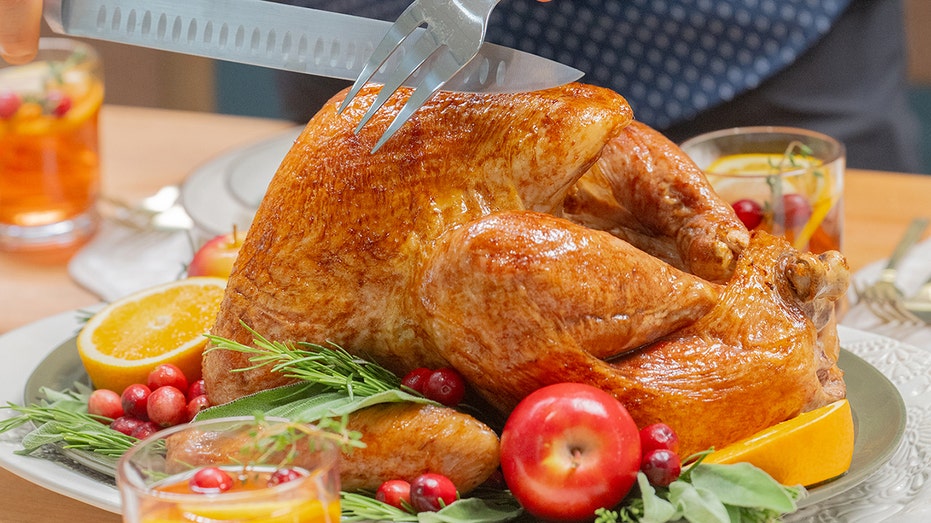
The turkey is priced at 97 cents per pound, which is unchanged from last year.(Walmart)
The holiday meal basket will be available to consumers through December 24, strategically covering both Thanksgiving and Christmas festivities. This extended availability maximizes the program’s reach, allowing families to plan multiple budget-friendly holiday gatherings. Furthermore, Walmart-owned Sam’s Club is amplifying its holiday meal offerings this year, targeting a slightly different segment of the market with bulk purchases. Its largest Thanksgiving meal offering to date is designed to feed 16 people for less than $10 per person, demonstrating a complementary strategy within the Walmart ecosystem to cater to a broader spectrum of consumer needs, from individual families to larger gatherings or even small businesses.
These initiatives are more than just seasonal promotions; they are integral to Walmart’s overarching strategy to maintain its dominance in a turbulent economic environment. By aggressively tackling the cost of holiday meals, Walmart not only addresses a core consumer pain point – the rising cost of living – but also reinforces its brand identity as the champion of affordability. This approach is particularly effective when consumer confidence is fragile and household budgets are stretched, making every dollar count.
CLICK HERE TO GET FOX BUSINESS ON THE GO
Market Impact:
Walmart’s aggressive holiday meal pricing strategy carries significant implications across the retail sector and broader market. For Walmart (WMT), it’s a clear signal of their commitment to volume and market share, potentially boosting foot traffic and online orders, which could positively impact top-line revenue, even if it pressures margins on specific items. However, the ripple effect on competitors is notable, as Target (TGT), Aldi, and traditional grocers like Kroger (KR) are forced to follow suit with their own deep discounts, potentially leading to sector-wide margin compression in the grocery segment. This intensifying price war could benefit consumers with more affordable options but poses challenges for retailers trying to maintain profitability in an inflationary environment. Furthermore, such widespread discounting on essential goods could help temper the “food at home” component of the Consumer Price Index, influencing broader inflation metrics and potentially impacting Federal Reserve policy considerations if sustained across the retail landscape. Investors will be closely watching Q4 earnings for insights into how these pricing strategies affect sales volumes, customer acquisition, and overall profitability for major retailers.
Reuters contributed to this report.