
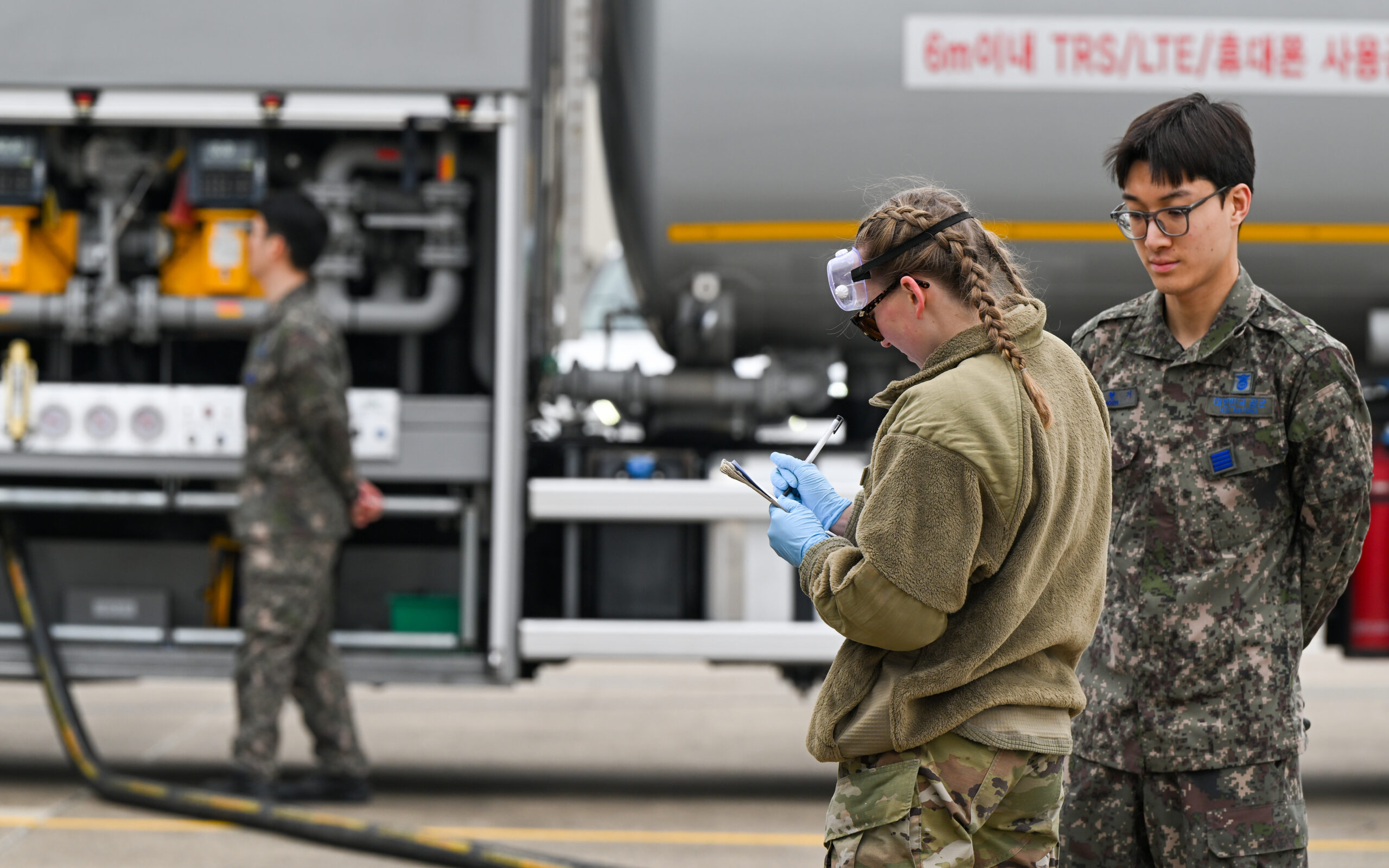
For decades, the United States and the Republic of Korea (ROK), commonly known as South Korea, have articulated a shared objective: to transition wartime operational control (OPCON) of American forces on the Korean Peninsula to Seoul’s military command should conflict arise. This arrangement, if finalized, would grant South Korean commanders authority over combined U.S. and ROK forces during wartime, a setup largely unprecedented in modern U.S. alliance history.
The implications for U.S. service members, including Airmen and Guardians, remain a subject of ongoing discussion and planning. Recent statements from both U.S. and South Korean leaders, however, highlight the intricate and at times contentious nature of this long-standing goal, underscoring the deep complexities involved in its eventual realization.
Historically, since the end of World War II, the United States has maintained ultimate command authority over its combined forces during wartime operations globally. In Korea, this authority has been a cornerstone of the alliance forged during the 1950-53 Korean War. However, South Korea has consistently advocated for the finalization of the OPCON transfer, viewing it as a crucial step towards greater national sovereignty and military self-reliance. South Korean leadership, including the current administration of President Yoon Suk-yeol, has expressed a desire to finalize the transfer by 2030 or potentially sooner, building on targets set by previous administrations.
Despite Seoul’s stated timeline, U.S. officials have adopted a more cautious tone. Army Gen. Xavier T. Brunson, commander of U.S. Forces Korea (USFK), emphasized a “conditions-based” approach during an Oct. 14 summit at the Center for Strategic and International Studies. He noted that evolving security concerns, particularly recent ballistic missile launches by North Korea, have introduced “new standards” that must be met before any OPCON transfer can proceed. Brunson explicitly stated that the transfer must be dictated by these conditions, rather than adhering to a political timeline.
These remarks from Gen. Brunson prompted immediate concern and, at times, strong reactions from South Korean officials. Defense Minister Kan Shin-chul and National Security Advisor Wi Sung-lac publicly contended that Brunson’s comments about “new conditions” amounted to “shifting the goalposts,” potentially making the agreed-upon transfer impossible to achieve.
On Oct. 29, during a parliamentary audit, National Security Advisor Sung-lac reiterated that the South Korean government had been actively consulting with Washington to complete the transfer by or before 2030. Adding to the perception of challenges, a planned Security Consultative Meeting, initially scheduled for December in Washington to address various alliance and security concerns, was subsequently postponed to the following year.
In response to inquiries regarding the conditions required for the transfer, a U.S. Pacific Command (PACOM) spokesperson offered a statement to Air & Space Forces Magazine, declining to elaborate on specific details. Navy Lt. Cmdr. Chloe Morgan stated, “The transition of wartime operational control (OPCON) remains a conditions-based process mutually agreed upon by the United States and the Republic of Korea. Both nations remain committed to ensuring that the necessary conditions are met before any transition occurs. We will not prejudge decisions or outcomes of this bilateral process.” This statement reinforced the U.S. position that the transfer is contingent on specific readiness criteria, not a predetermined schedule.
While the OPCON transfer process continues, and South Korean leaders actively push for its progression, not all American defense experts are convinced of its immediate advisability. During an Oct. 27 symposium hosted by the Institute for Korean-American Studies, two former USFK commanders, retired Army four-star Generals Walter Sharp and Paul LaCamera, voiced concerns regarding the potential impact on the strength of the U.S.-Korea alliance, as reported by the Korea JoongAng Daily.
Gen. Sharp expressed apprehension that the combined nature of the forces, a hallmark of the alliance, could diminish. He stated, “That whole combined nature goes away and … [I] really do see it as a doorway to greatly reducing the alliance, greatly reducing our work with Korea.”
Gen. LaCamera offered an even more direct assessment of the potential risks, warning of degraded effectiveness in the initial stages of a conflict. “It will be suboptimal when the fighting starts, and then we will quickly get to optimization because it is adapt or perish,” he commented, suggesting that only the harsh realities of combat would force necessary adjustments.
Despite the ongoing debate and differences in timelines, joint military preparedness continues. South Korea recently led combined missions during the two-week, biannual, air-focused Freedom Flag exercise. The top ROK air commander, Col. Lee Seung-hwan, highlighted the significant role of his airmen in these exercises and their broader objective. “While using this as an opportunity to build teamwork among South Korean and U.S. pilots and polish combat skills, we will also cultivate capabilities in preparation for the OPCON transfer,” Seung-hwan stated, underscoring Seoul’s commitment to readying its forces.
To Transfer or Not: Historical Context and Expert Perspectives
The concept of transferring wartime OPCON to South Korea is not new. Its origins trace back to the 1980s, when President Roh Tae-woo made it a campaign promise in 1987, driven by a desire to assert South Korean sovereignty. The United States eventually transferred peacetime control to Seoul in 1994. However, the subsequent expectation of a swift transfer of wartime control was disrupted during the 1993-1994 North Korean nuclear crisis, which highlighted persistent regional security challenges.
The South Korean push for transfer saw a renewed impetus under President Roh Moo-hyun in 2003. Then-U.S. Secretary of Defense Donald Rumsfeld was a proponent of the idea, describing it as “pushing on an open door.” He saw it as an opportunity to free up U.S. forces on the peninsula, thereby granting the Pentagon greater strategic flexibility for global deployments. This led to a formal agreement between the two nations in 2006 to initiate the wartime OPCON transfer process.
Achieving a transfer that is mutually beneficial and strategically sound for both allies has proven to be a complex undertaking, according to multiple retired commanders with extensive experience on the peninsula who spoke to Air & Space Forces Magazine.
Retired U.S. Army Special Forces Col. David S. Maxwell emphasized the primacy of readiness over arbitrary deadlines. “Conditions should determine the timeline,” Maxwell told Air & Space Forces Magazine. “The timeline should never determine the conditions.”
Maxwell clarified that while target dates can be useful for driving budgets, procurement, training, and accountability, they cannot substitute for demonstrated combat capability. He added, “If political leaders want to accelerate transition, they must accelerate the fielding of equipment, development of personnel, and combined exercises required to meet the agreed conditions. Political authority cannot manufacture readiness.”
Retired Lt. Gen. David Deptula, Dean of the Mitchell Institute for Aerospace Studies, echoed the importance of avoiding a rushed transfer. “My principal concern would be any arrangement that sacrifices combat effectiveness to satisfy an arbitrary political timeline or the symbolism of transferring command,” Deptula stated. “We cannot afford to discover deficiencies in command and control after a conflict begins.”
However, Maxwell, now vice president of the Center for Asia Pacific Strategy, also cautioned against indefinite delays, stressing that changing conditions “cannot become an unexplained justification for indefinite delay.”
He advised, “Both allies must identify what has changed, which operational requirements it affects, and what capabilities will close the resulting gaps. We should distinguish the agreed conditions from the evolving military capabilities required to satisfy them. The objective is a successful transition that strengthens deterrence and combined defense. Most importantly, political leaders cannot base decisions on threat assessments from five, 10, or 20 years ago.”
Both Maxwell and Deptula identified several critical conditions that South Korea should meet before the OPCON transfer can proceed effectively:
- **Demonstrated Command and Control Capabilities:** The ROK military must possess fully integrated and interoperable command, control, communications, computers, intelligence, surveillance, and reconnaissance (C4ISR) systems capable of orchestrating large-scale combined operations.
- **Robust Military Strengths:** This includes having sufficient combat power across all domains—land, air, sea, cyber, and space—to deter and defend against North Korean threats independently. Key areas include advanced air defense, long-range precision strike capabilities, and robust ground forces.
- **Personnel Development and Training:** The ROK must have a fully trained and experienced officer corps capable of leading complex combined forces, alongside comprehensive joint training programs with U.S. forces to ensure seamless interoperability.
- **Integrated Logistics and Sustainment:** South Korea needs to demonstrate the logistical infrastructure and capacity to sustain prolonged high-intensity combat operations for both its own forces and, potentially, U.S. forces under its command.
- **Strategic Intelligence and Threat Assessment:** The ability to independently gather, analyze, and disseminate intelligence to effectively assess and respond to evolving threats, particularly from North Korea.
- **Public and Political Consensus:** A clear and stable political and public consensus within South Korea regarding the timing and implications of the transfer, ensuring long-term commitment.
Why This Matters
The transfer of wartime operational control (OPCON) from the United States to South Korea is far more than a technical military arrangement; it represents a significant geopolitical shift with profound implications for regional stability, alliance dynamics, and military readiness. For South Korea, achieving OPCON is a matter of national sovereignty and a long-held aspiration to assert full command over its defense in the face of persistent threats from North Korea. It symbolizes the maturation of its military capabilities and its standing as a powerful, independent actor on the global stage. This move could empower Seoul to make swift, decisive actions during a crisis, tailored precisely to its national interests.
For the United States, the transfer touches upon the core tenets of its alliances and its strategic flexibility. While potentially allowing the U.S. to reallocate forces to other global hotspots, as envisioned by former Secretary Rumsfeld, it also raises questions about the seamless integration of forces and the potential for a dilution of the combined defense posture that has deterred North Korean aggression for decades. Any perceived weakening of the alliance or a misstep in the transfer process could embolden Pyongyang, leading to increased regional instability. The debate highlights the delicate balance between burden-sharing, sovereignty, and maintaining a credible deterrent force.
Ultimately, the success or failure of the OPCON transfer will have direct consequences for the security of the Korean Peninsula and the broader Indo-Pacific region. A poorly executed transfer could create dangerous gaps in command and control during a critical moment, potentially risking the lives of service members and undermining the alliance’s ability to respond effectively to aggression. Conversely, a successful, conditions-based transition that strengthens South Korea’s military while maintaining robust U.S. support could serve as a model for evolving alliances, fostering greater shared responsibility and enhancing collective security in an increasingly complex global environment. The outcome will shape not only the future of the U.S.-ROK alliance but also the strategic calculus of allies and adversaries worldwide.
U.S.-South Korea Operational Control Transfer: Navigating the Complexities of Combined Air Warfare
SEOUL — The long-standing alliance between the United States and the Republic of Korea (ROK) is undergoing a significant transition as discussions continue regarding the transfer of wartime operational control (OPCON) of combined forces. This planned shift, which would see a South Korean general assume command of the joint U.S.-ROK defense posture in the event of conflict, introduces complex considerations, particularly concerning the command and employment of air power.
Currently, the U.S. Forces Korea (USFK) commander simultaneously leads the Combined Forces Command (CFC), with a South Korean deputy. The proposed OPCON transfer would reverse this structure, placing a South Korean four-star general at the helm of the CFC, supported by a U.S. four-star deputy. While this move aims to bolster South Korea’s self-defense capabilities and strategic autonomy, it raises intricate questions about the integration and independent command of highly specialized U.S. military assets, especially those of the 7th Air Force, based at Kunsan and Osan Air Bases.
Prerequisites for a Successful Transition
For the OPCON transfer to proceed effectively, both nations have identified a series of critical capabilities and conditions that the ROK military must meet. These benchmarks are designed to ensure that the alliance remains fully capable of deterring and responding to potential threats, particularly from North Korea:
- Demonstrated Leadership Capability:The ROK military must clearly demonstrate its capacity to lead combined defense and coordinate offensive actions at scale, integrating diverse forces and complex strategies.
- Comprehensive Alliance Response:The alliance requires robust and comprehensive capabilities to respond effectively to North Korean nuclear and missile threats, encompassing detection, deterrence, and defensive measures.
- Stable Security Environment:A stable security environment on the Korean Peninsula is a foundational requirement, ensuring that the transfer occurs under conditions conducive to sustained defense readiness.
- Integrated Intelligence and Warning:An integrated architecture for intelligence, surveillance, reconnaissance (ISR), and early warning is crucial for providing near-real-time, actionable data to commanders.
- Integrated Air and Missile Defenses:Seamlessly integrated air and missile defenses across U.S. and ROK forces are essential to protect critical assets and personnel from aerial threats.
- Secure Command and Control:Command and control (C2) systems must be secure and resilient, capable of operating effectively even in the face of sophisticated cyber and electronic attacks.
- Sufficient Sustainment:Adequate munitions, robust logistics, comprehensive infrastructure protection, and reliable sustainment capabilities are vital to support prolonged operations.
- Certified Readiness:The ROK must achieve certified initial operational capability (IOC), full operational capability (FOC), and full mission capability (FMC) assessment results, demonstrating readiness across all critical functions.
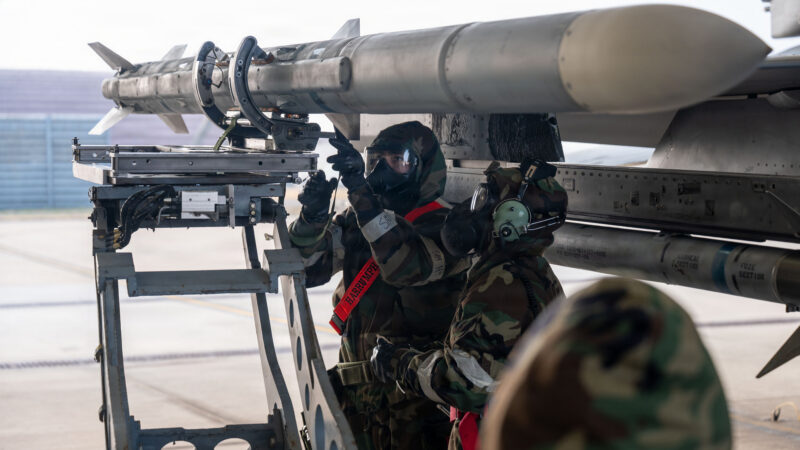
The Air Power Dimension
While the overall wartime control of U.S.-ROK forces is under review, the use of the U.S. 7th Air Force, the primary U.S. air component in South Korea, presents distinct challenges. Under the new arrangement, retired Lt. Gen. Jeffrey A. Remington, who commanded the 7th Air Force from 2008 to 2012, explained that the U.S. 7th Air Force commander would continue to serve as the air component commander, reporting to the South Korean four-star general. This commander would present wartime options and implications, seeking agreement on air operations.
However, the Pentagon typically retains ultimate control over its forces, especially major airpower assets in the Pacific. This means that even with a South Korean general leading the CFC, Washington would likely maintain significant oversight on critical decisions involving U.S. air forces.
John A. “Doc” Deptula, a retired U.S. Air Force lieutenant general and dean of the Mitchell Institute for Aerospace Studies, emphasized that the core issue is not the South Korean general’s capability but whether the command structure provides the necessary authority, experience, capabilities, and operational flexibility to employ airpower effectively. He noted that while the ROK military is highly professional and a strong U.S. ally, commanding a modern, integrated air campaign involves far more than managing individual missions.
A sophisticated air campaign, Deptula elaborated, requires integrating hundreds of aircraft, advanced intelligence and surveillance capabilities, electronic warfare, space-based systems, and long-range strike assets into a coherent strategy. Day-to-day operations at the Combined Air Operations Center (AOC) at Osan Air Base are already conducted jointly. However, the critical challenge lies in creating a “master air attack plan” (MAAP), which translates strategic and operational objectives into coordinated tactical actions across offensive and defensive counterair, strategic attack, interdiction, close air support, and other vital capabilities.
Combined vs. Coalition Warfare
The U.S. has participated in combined force operations, such as during World War II and with NATO in Bosnia and Kosovo, and has led numerous coalition operations, like those during the Global War on Terror. However, the U.S. has historically maintained ultimate authority for wartime OPCON in combined force settings. This situation differs from coalition operations, where separate militaries often cover distinct areas of responsibility, such as the British forces operating near Basra during the Iraq War.
Remington clarified that “combined warfare” implies forces are mixed and executing operations together, necessitating deep integration in command and control. In contrast, coalition operations often involve more separated command structures. From a technical perspective, combined warfare could mean U.S. aviators being controlled through another nation’s airborne early warning or air battle management systems. In Korea, this could involve the ROK Air Force’s Master Control and Reporting Centers (MCRCs)—”Watchman” at Osan and “Acacia” at Daegu—which serve as nerve centers for air operations on the peninsula and have been in operation for decades.
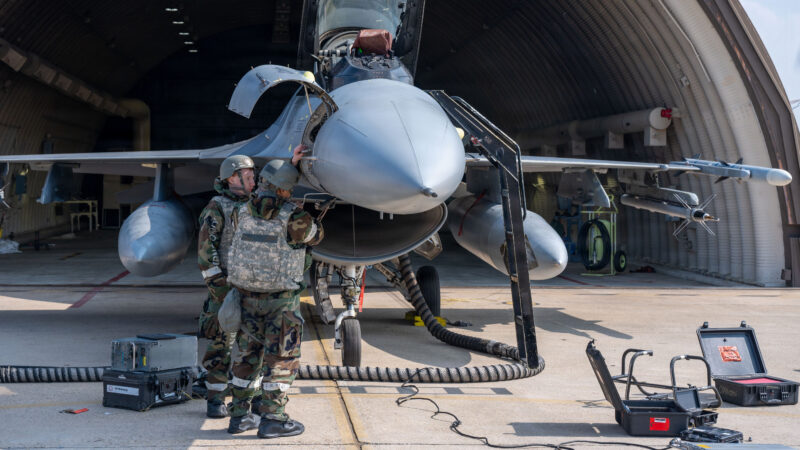
Beyond the Peninsula
The 7th Air Force’s role extends beyond the immediate defense of South Korea. It also relies on and contributes to the broader strategic requirements of Pacific Air Forces (PACAF) and U.S. Pacific Command (PACOM). Should a conflict arise elsewhere in the Indo-Pacific, such as with China, the U.S. Air Force might need to reallocate assets, including those currently assigned to the 7th Air Force.
Deptula highlighted that with declining U.S. force structure globally, aircraft, aircrews, munitions, and intelligence platforms cannot be committed to multiple major campaigns simultaneously without incurring significant operational risk. This reality underscores the importance of contingency planning, clear force allocation, and well-defined command relationships in the context of OPCON transfer.
Any transfer must preserve the ability of U.S. commanders to deploy their capabilities where they can achieve the greatest strategic effect across the Indo-Pacific region. Ultimately, Deptula emphasized that any future defense of South Korea must prioritize achieving air superiority. This foundational element provides freedom to attack and freedom from attack, enabling all other military operations. The campaign design, therefore, must focus on securing the necessary degree of air superiority to allow the joint force to operate effectively, rather than merely contesting the airspace.
Why This Matters
The transfer of wartime operational control from the United States to South Korea is a critical development for several reasons:
- Strengthening the Alliance:It signifies a maturation of the U.S.-ROK alliance, reflecting South Korea’s growing military capabilities and its desire for greater self-reliance in national defense. A successful transfer could redefine the U.S. role from direct command to a more supportive and enabling partnership.
- Deterrence and Regional Stability:The effectiveness of the transferred command structure is paramount for deterring North Korea. Any perceived weakness or lack of seamless integration could embolden adversaries, while a strong, unified command enhances regional stability.
- U.S. Strategic Flexibility:The nature of the OPCON transfer impacts the U.S.’s ability to project power and respond to other contingencies in the Indo-Pacific region. Clear agreements on resource allocation and command authority are crucial for maintaining U.S. strategic agility.
- Military Modernization and Burden Sharing:This process incentivizes South Korea to continue investing in its military modernization and to develop the advanced command, control, and air power capabilities necessary to lead a complex, combined defense. It also raises questions about the future distribution of defense burdens within the alliance.
- Precedent for Future Alliances:The U.S.-ROK OPCON transfer could serve as a model or provide valuable lessons for other U.S. alliances globally, especially in regions where partners are also developing advanced military capabilities and seeking greater operational autonomy.
- Complexity of Modern Warfare:The focus on air power in this discussion highlights the increasing complexity of modern warfare, which demands sophisticated integration of diverse platforms, intelligence assets, and cyber capabilities across national lines. The success of this transfer will largely depend on addressing these intricate operational details.