
UK Intensifies Call for Defence Investment Amidst European Conflict, Unveils New Industrial Offset Policy
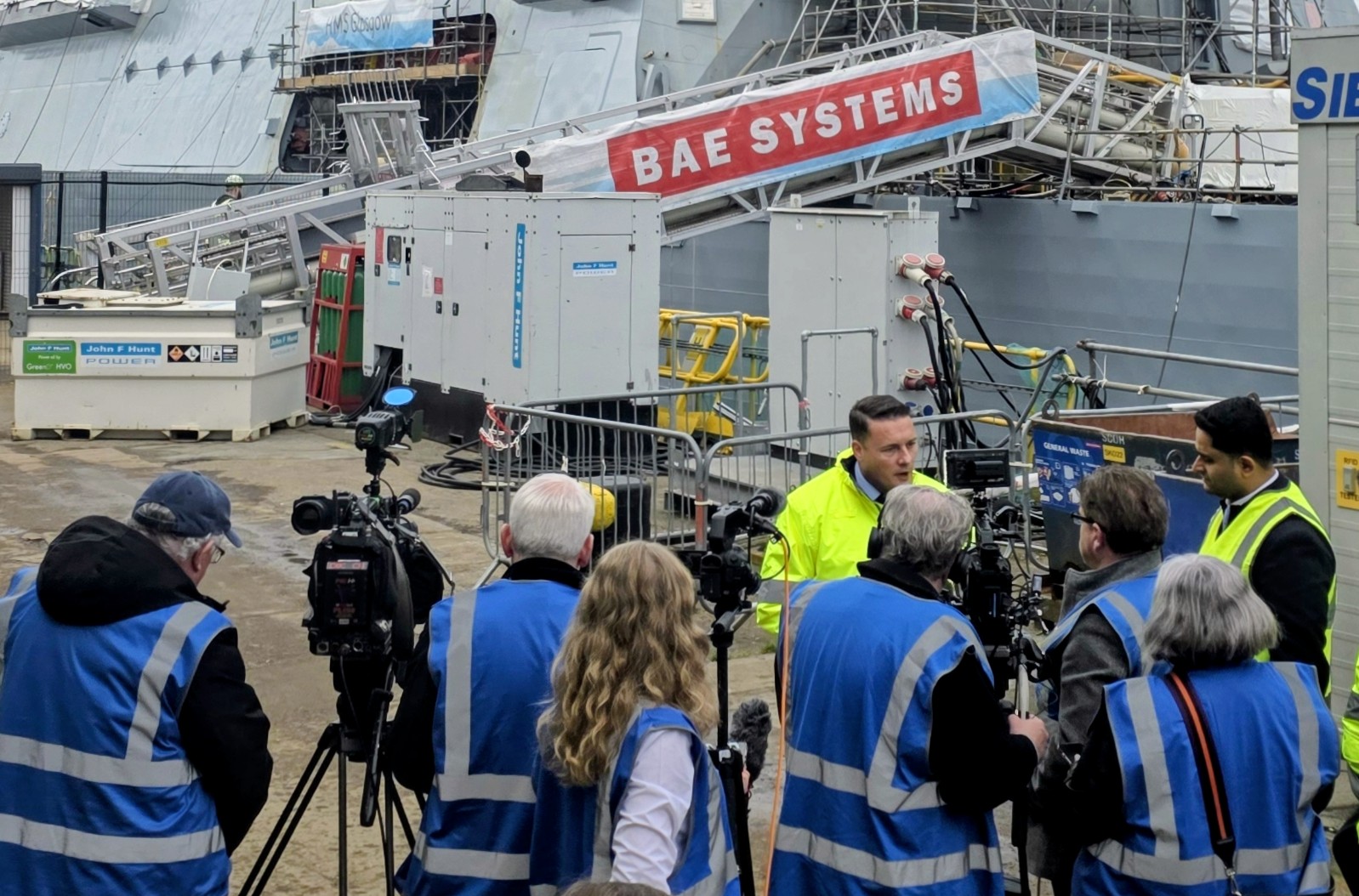
A senior UK political figure has underscored Britain’s urgent need to bolster its defence capabilities, industrial base, and alliances, citing the ongoing war in Europe and the unpredictable nature of Russian President Vladimir Putin’s intentions. Speaking to reporters in Glasgow, John Healey, the UK Shadow Secretary of State for Defence, emphasized that such robust investments are crucial for strengthening deterrence and thereby reducing the likelihood of future conflict.
Mr. Healey’s remarks reiterated a growing call for increased defence readiness across Europe, following a recent warning about the urgency of preparedness. He pointed to Russia’s full-scale invasion of Ukraine, noting that President Putin had previously offered assurances of no invasion just weeks before launching the military assault. This pattern of deception and aggression, according to Mr. Healey, demonstrates a critical need for substantial investment to safeguard national security. He asserted, “We don’t seek confrontation with Russia. We have no quarrel with the Russian people. But what we can’t avoid is the hard reality that at the same time that President Putin says he’s not interested in war in Europe, he’s currently waging one, and he gave the Ukrainians those assurances that he had no plans to invade only weeks before the Russian invasion took place.”
The strategy articulated by Mr. Healey centers on deterrence, the principle that a sufficiently strong military force can dissuade potential adversaries from attack by making the costs of conflict unacceptably high. He elaborated on the pillars of this strategy, stating, “We’re investing in our capability, we’re investing in our defence industrial base, and we’re investing in our alliances. Those things make us stronger, and the stronger we are, the stronger our deterrence, and the less likely we are to find ourselves at war.” Regarding the financial commitment required, Mr. Healey indicated that contributions towards national defence are expected across all government departments, as highlighted in the recent national budget delivered by Chancellor Jeremy Hunt. He underscored that defence remains the government’s paramount duty and priority, committing to ensuring efficient spending and maximizing value for jobs and economic growth across the United Kingdom, including Scotland.
A significant announcement accompanying these discussions was the introduction of a new ‘offsets policy’ for defence procurement, a government initiative. This policy, set to apply from April 2027 to a select number of procurements, mandates that overseas companies winning UK defence contracts exceeding £50 million must reinvest benefits into the UK economy. These benefits can include job creation, apprenticeships, new factories, investment in British suppliers, or technology transfers, potentially up to the full value of the contract. A central Offset Authority will be established to agree, value, and monitor each arrangement, following industry consultations conducted earlier this year. The aim is to ensure that British taxpayers’ money “works twice,” by securing essential defence capabilities while simultaneously bolstering domestic industry and job creation.
While commenting on the policy, Mr. Healey highlighted the importance of directing defence investment towards British jobs and businesses. He drew parallels with Norway’s long-standing industrial cooperation requirements, which resemble the newly introduced UK policy. Norway, for example, has procured five Type 26 frigates from Britain in a £10 billion deal, supporting 2,000 jobs on the Clyde. In return, Oslo has operated an industrial cooperation requirement for decades, obliging foreign suppliers of significant equipment to place work with Norwegian firms. Since 2016, the UK has spent over £35.2 billion with overseas defence industries, representing 11 percent of direct departmental expenditure with industry and commerce, while 85 percent already goes to British firms. The new offsets policy aims to further enhance this domestic return.
Mr. Healey also addressed the Scottish National Party’s (SNP) position on nuclear weapons, directly challenging remarks made by the First Minister regarding Scotland’s defence provision. He dismissed claims that the government is leaving Scotland inadequately defended, citing the visible presence of naval assets like HMS Prince of Wales on major exercises as “visible proof” to the contrary. He criticized the SNP for “playing party politics with national defence and security.” A primary concern raised by Mr. Healey was the SNP’s policy of unilateral nuclear disarmament, which he described as “by far and away the most important deterrent that we have.” He underlined that this deterrent serves not only the UK but also NATO.
Mr. Healey questioned how an independent Scotland, advocating for nuclear disarmament, could credibly join NATO, an alliance whose strategic concept defines nuclear weapons as the “supreme guarantee of allied security.” He pointed out that the SNP’s policy would entail removing the British nuclear deterrent from Faslane and Coulport. He emphasized that new members are admitted to NATO by unanimous agreement of the existing ones, implying a significant hurdle for an independent Scotland with such a stance. The SNP voted narrowly in 2012 to drop its opposition to NATO membership while retaining its opposition to nuclear weapons, a position that would require an independent Scotland to reconcile its anti-nuclear stance with a nuclear alliance.
Regarding the potential for Russia to target Scotland or the wider UK, Mr. Healey offered reassurance, stating that citizens “can draw comfort and security in the knowledge that we have some extraordinary capability at our disposal.” He cited the strength of the UK’s armed and special forces, coupled with the protective umbrella of the NATO alliance’s “an attack on one is an attack on all” principle. While expressing doubt that President Putin would be “foolish enough to seek a direct war with NATO today,” he acknowledged the uncertainty of future intentions, reflecting NATO’s threat assessment. This uncertainty, he explained, is precisely why the UK is building its capabilities, defence industry – including in Scotland – and alliances to ensure strength and deter any potential Russian threat. He further stressed the importance of national resilience, with local councils and governments across the UK playing their part in a program led by the Cabinet Office through the Home Defence Programme, which launched a public awareness campaign in October.
Addressing fiscal matters, Mr. Healey refuted claims by the Scottish government that its budget is being cut by £650 million in real terms, asserting that “The Scottish budget is bigger than it’s been before.” The broader UK budget, delivered by Chancellor Jeremy Hunt, set a target for defence spending to reach three percent of Gross Domestic Product (GDP) by 2030, with a further commitment to reach three and a half percent by 2035 to be detailed in next year’s Spending Review. The Defence Investment Plan is supported by £298 billion over four years. Scotland’s defence economy significantly contributes to the national picture, valued at £2.5 billion and directly supporting 12,200 jobs, including 300 roles in Edinburgh related to a £453 million Typhoon radar contract.
Why This Matters
The statements from the UK Shadow Defence Secretary highlight a critical period for European and global security, driven by Russia’s aggressive actions in Ukraine. The emphasis on increased defence investment, strengthening alliances, and a robust deterrence strategy underscores a fundamental shift in the UK’s security posture, moving from an era of relative peace to one of heightened geopolitical tension. This commitment to readiness has several far-reaching implications:
- Geopolitical Stability:The UK’s defence investments directly contribute to NATO’s collective security, aiming to deter further Russian expansionism and maintain stability in Europe. The effectiveness of this deterrence impacts the security calculations of both allies and potential adversaries.
- Economic Impact and Industrial Strategy:The new offsets policy represents a strategic shift in defence procurement, designed to leverage significant government spending to boost domestic industries, create jobs, and foster technological innovation within the UK. This could lead to a revitalization of the defence industrial base and enhanced economic resilience.
- International Alliances:The focus on strengthening alliances, particularly NATO, reaffirms the UK’s commitment to multilateral defence structures. This is crucial in an interdependent world, as collective security arrangements provide a stronger front against shared threats.
- Internal Political Dynamics:The debate over defence spending and nuclear weapons, particularly with the Scottish National Party, highlights deep-seated political and constitutional questions within the United Kingdom. These discussions have implications for the future of the Union, Scotland’s potential role in international alliances, and the strategic positioning of the UK’s nuclear deterrent.
- Societal Resilience:Calls for national resilience and public awareness campaigns reflect a broader understanding that modern security threats, from conventional warfare to hybrid attacks, require a whole-of-society response. This encourages greater public engagement and preparedness for various contingencies.
- Fiscal Priorities:The long-term commitment to increasing defence spending to specific GDP targets signifies a major reordering of government fiscal priorities. This allocation of substantial resources will inevitably impact other areas of public expenditure and reflects a strategic choice to prioritize national security in the face of evolving global threats.