
U.S. Air Force Officially Retires A-29 Super Tucano Fleet
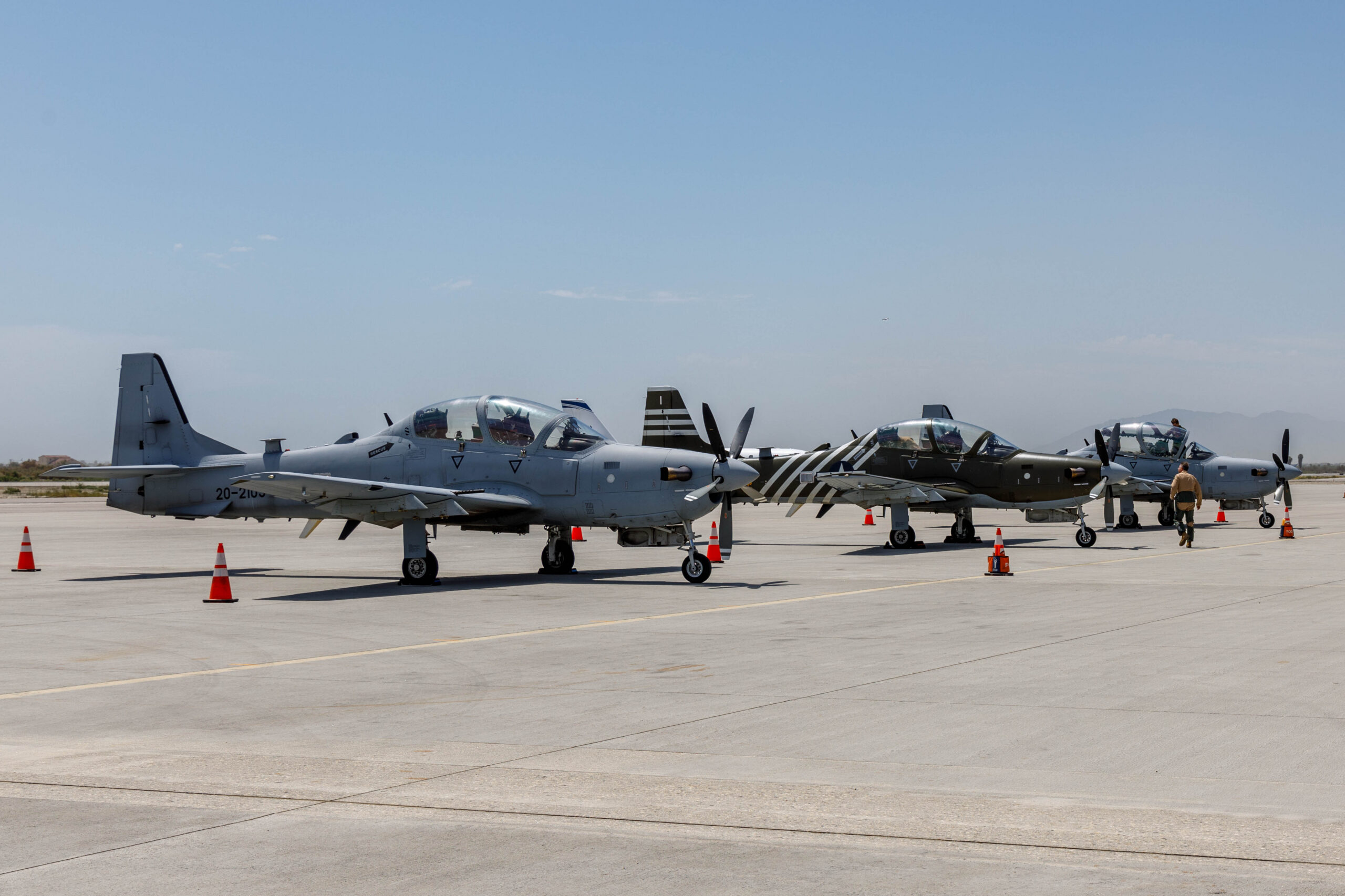
The United States Air Force has officially retired its small fleet of A-29 Super Tucano light attack aircraft, with the three airframes now being prepared for long-term storage at Edwards Air Force Base, California. This development marks the formal conclusion of the Air Force’s direct operational engagement with the A-29 platform, which had been acquired as part of a broader experiment into the utility of light attack aircraft.
A spokesperson for Edwards Air Force Base confirmed in a Nov. 4 email to Air & Space Forces Magazine that the A-29s are no longer part of the active Air Force inventory. These three aircraft constituted the entirety of the Air Force’s Super Tucano holdings.
The A-29s were initially procured in the 2010s under the Light Attack Aircraft (OA-X) experiment, a program designed to explore the feasibility of using low-cost, off-the-shelf platforms for close air support in permissive environments, particularly relevant for counter-insurgency and counter-terrorism operations. The program aimed to identify an aircraft that could provide affordable combat capability, reduce operational costs compared to high-end fighters, and potentially serve as a training and partnership-building tool for allied nations.
Although the Air Force did not ultimately adopt a light attack aircraft for widespread operational use, these three A-29s continued to serve in various experimental capacities. Most recently, they were deployed to the Air Force Test Pilot School (AFTPS) at Edwards Air Force Base, where they saw active flight operations in 2024 and 2025. The primary objective at the AFTPS was to assess their suitability for the school’s unique flight test mission, specifically exploring their potential to integrate into the student flight curriculum.
A July 2025 release from the 412th Test Wing, the host unit at Edwards, highlighted the school’s efforts to incorporate the A-29. Initial plans focused on utilizing the aircraft to teach student pilots advanced aerodynamic concepts, including recovery procedures from stalls and spins – critical skills for test pilots. The A-29, known for its robust flight characteristics and ease of maintenance, was seen as a potential candidate for this specialized training role.
However, the Test Pilot School ultimately concluded that the A-29 did not meet its specific requirements for a “sustainable spin and mission systems aircraft.” The Edwards spokesperson confirmed this assessment in the Nov. 4 statement, indicating that the school is now evaluating other aircraft options to fulfill these specialized training needs. The decision marks a significant turn for the aircraft’s brief career within the U.S. Air Force, effectively closing the chapter on its direct involvement in Air Force operations or training.
The retirement of the A-29 fleet was initially reported by Aviation Week, preceding the official confirmation from Edwards Air Force Base. Before their deployment to Edwards for the Test Pilot School evaluation, these three Super Tucanos were stored at the 309th Aerospace Maintenance and Regeneration Group (AMARG) at Davis-Monthan Air Force Base, Arizona, commonly known as the “Boneyard,” a facility for long-term aircraft storage and reclamation.
Despite their retirement from active service, the aircraft will not immediately return to the Boneyard. Edwards Air Force Base officials have stated that, for the foreseeable future, the planes will be maintained and stored on base. This decision necessitates ongoing support for the now-retired airframes.
In line with this requirement, the Air Force issued a notice on SAM.gov on Oct. 29, indicating its intention to award a sole-source contract to Sierra Nevada Corporation (SNC). The contract is for the provision of essential maintenance support for the A-29s at Edwards, which the notice described as “fully sealed” for preservation. Sierra Nevada Corporation, in partnership with the Brazilian firm Embraer Defense and Security, was responsible for manufacturing the U.S. Air Force’s A-29s, as well as the numerous units sold to international allies through Foreign Military Sales programs.
The Air Force clarified that while the planes are not expected to return to flight status, on-call maintenance support is crucial for their safe storage and ground mobility. The scope of work outlined in the contract includes mitigating potential oil leaks, repairing or replacing worn or flat tires, towing the aircraft on the ground for repositioning, and maintaining critical components such as fuel and hydraulic systems to ensure their preserved state. The proposed contract term is for up to three years, comprising a one-year base period with two subsequent one-year option periods.
The A-29 Super Tucano is a turboprop aircraft designed for light attack, counter-insurgency, close air support, aerial reconnaissance missions, and pilot training. It has been widely adopted by numerous air forces globally for its operational versatility and cost-effectiveness in low-threat environments. The U.S. Air Force’s decision to retire its small fleet underscores a strategic pivot away from the direct integration of such platforms into its core force structure, even as it continues to facilitate their acquisition by partner nations.
Why This Matters
The official retirement of the U.S. Air Force’s A-29 Super Tucano fleet, though small in number, carries significant implications for defense strategy, resource allocation, and international partnerships.
Firstly, it signals a clearer strategic direction for the U.S. Air Force. The initial acquisition of the A-29s was part of the Light Attack Aircraft experiment, exploring cost-effective solutions for counter-insurgency and irregular warfare. The decision not to fully integrate these aircraft, and now to retire them, suggests a continued strategic pivot towards great power competition and high-end warfare against near-peer adversaries. While the Air Force still recognizes the need for light attack capabilities, it appears to be emphasizing that such roles will either be filled by more advanced platforms or primarily through supporting allied nations rather than directly operating these types of aircraft within its own active fleet. This impacts future procurement decisions and research and development priorities, likely favoring advanced stealth fighters, long-range bombers, and sophisticated intelligence, surveillance, and reconnaissance (ISR) assets over light attack platforms.
Secondly, the outcome at the Air Force Test Pilot School is noteworthy. The AFTPS is a premier institution for evaluating new aircraft and training future test pilots. Its conclusion that the A-29 did not meet its specific needs for spin and mission systems training indicates that even for specialized applications, the aircraft’s capabilities or operational costs did not align with the school’s requirements. This forces the AFTPS to continue its search for an alternative training platform, potentially impacting future test pilot curriculum development and the adoption of new training methodologies.
Thirdly, the ongoing maintenance contract with Sierra Nevada Corporation, despite the aircraft being “fully sealed” and retired from flight, highlights the costs associated with even mothballed assets. While necessary to prevent deterioration and ensure safe ground handling, these expenditures represent continued resource allocation towards non-operational equipment. It underscores the long-term financial commitments involved in military procurement, extending far beyond the initial acquisition and operational phases.
Finally, while the U.S. Air Force is divesting itself of the A-29, the aircraft remains a crucial component for many allied nations, particularly in Africa, Latin America, and Southeast Asia, where it is used extensively for counter-terrorism, border patrol, and drug interdiction missions. The U.S. has actively supported the sale of A-29s to these partners through Foreign Military Sales programs, recognizing its value in their specific operational contexts. The Air Force’s retirement of its own small fleet does not diminish the A-29’s utility for these allies, but it does solidify the distinction between U.S. core capabilities and the capabilities it helps partners develop. This decision reinforces the notion that while the U.S. may not operate every effective platform, it can still facilitate its allies’ access to them, thereby strengthening international security cooperation.