
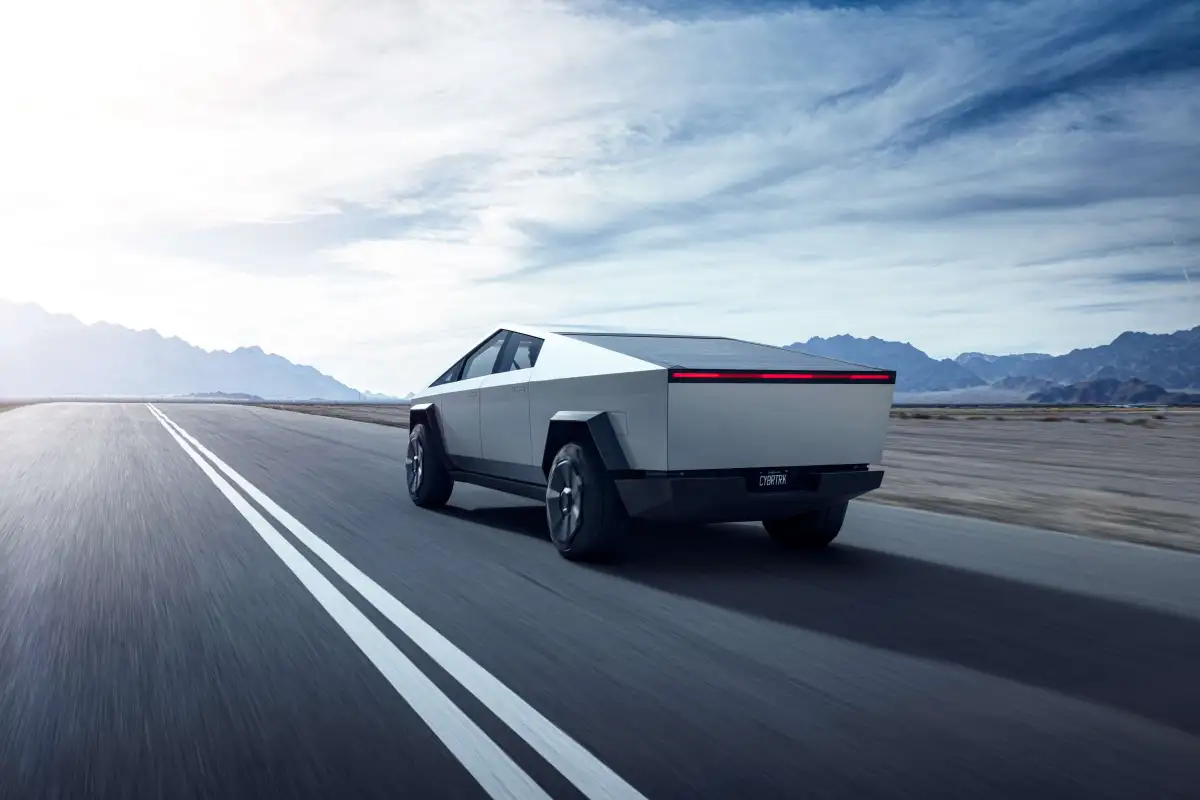
Tesla will stop making the Cybertruck next year, according to CEO Elon Musk, who said on X that the company will use the factory space to build more two-seater Cybercab robotaxis.
Tesla Axes Cybertruck Production to Accelerate Robotaxi and AI Ambitions
In a significant strategic pivot, Tesla CEO Elon Musk has announced the discontinuation of Cybertruck production starting next year. The unconventional, stainless-steel electric pickup, which only began deliveries in late 2023, will yield its factory space to the company’s burgeoning robotaxi program, Cybercab, as Tesla doubles down on its vision to become an AI and robotics powerhouse.
Key Takeaways
- Cybertruck’s Short Run Ends:Tesla will cease production of its polarizing Cybertruck in 2026, marking an abrupt end to a product heavily championed by CEO Elon Musk.
- Strategic Shift to Autonomy:The factory capacity freed by the Cybertruck’s exit will be repurposed for Cybercab robotaxi production, aligning with Tesla’s broader pivot towards AI, robotics, and autonomous services.
- Underwhelming Performance & Unmet Promises:Despite ambitious sales projections and a radical design, the Cybertruck failed to meet its initial price, range, and sales targets, compounded by polarizing aesthetics and external controversies.
The Great Repurposing: Tesla’s Bold Bet on Autonomy
Tesla is aggressively reallocating its manufacturing resources, signaling a clear departure from certain conventional vehicle lines in favor of its long-term AI and robotics initiatives. The decision to halt Cybertruck production is not an isolated incident but rather the latest move in a pattern established earlier this year. The company previously announced the end of production for its flagship Model S sedan and Model X SUV, redirecting those factory lines to accelerate the development and manufacturing of Optimus humanoid robots. This wholesale reimagining of Tesla’s production landscape underscores Musk’s unwavering commitment to an autonomous future.
Central to this strategic shift are Tesla’s robotaxi ambitions. The two-seater Cybercabs, which have been undergoing trials in Austin, Texas, for the past two months without major incident, represent a critical pillar of Tesla’s future revenue streams. The company has expressed confidence in expanding these operations, with Dallas slated as the next launch city. Beyond the dedicated Cybercab units, Tesla also operates robotaxi versions of its Model Y SUVs across Austin, Houston, Dallas, and several Florida cities, demonstrating a scalable approach to autonomous ride-hailing.
The Cybertruck’s Rocky Road: From Cyberpunk Dream to Early Retirement
The Cybertruck’s journey has been anything but conventional. First unveiled in 2019 with a dramatic, almost theatrical presentation, the stainless-steel behemoth was born from Elon Musk’s personal obsession. He had frequently touted the idea of an “amazing pickup truck,” one that would draw inspiration from cyberpunk sci-fi aesthetics, particularly Ridley Scott’sBlade Runner. The resulting design was undeniably radical, a sharp departure from traditional truck forms, polarizing opinions from its very inception.
However, the initial hype was quickly overshadowed by a series of unmet promises and unforeseen challenges. During the infamous 2019 reveal, a demonstration of the truck’s “armor glass” went awry when chief designer Franz von Holzhausen inadvertently shattered the windows with steel balls. More critically, the foundational promises of a sub-$40,000 starting price and a range exceeding 500 miles failed to materialize. Production delays, exacerbated by the global COVID-19 pandemic, pushed the truck’s market debut back by two years.
When the first Cybertrucks were finally handed over to customers in late 2023, the event itself was notably subdued by Tesla’s usual standards. A poorly-lit Musk, standing in the truck bed, offered a rather cryptic endorsement, calling it “the finest in apocalyptic equipment” fit for “late civilization vibes.” The revised specifications revealed a starting price closer to $60,000 and a top-end range that had shrunk by over 100 miles from the original projection.
Sales Stall and Public Perception Shifts
Musk had initially projected sales of around 250,000 Cybertrucks per year, envisioning it as a cornerstone of Tesla’s future. Indeed, the Gigafactory Texas was often referred to as the “Cybertruck factory” in its early planning stages. Yet, the reality has been starkly different. Over its brief three-year production run, Tesla has sold only tens of thousands of units in total – a mere fraction of the CEO’s optimistic forecast.
Several factors contributed to the truck’s underwhelming market performance. The polarizing design, while capturing attention, struggled to translate into broad consumer appeal, especially at a higher-than-anticipated price point. Furthermore, the Cybertruck found itself inadvertently caught in the crosscurrents of political discourse. In its first full year of sales in 2024, Elon Musk’s public endorsement and financial backing of Donald Trump transformed the instantly recognizable vehicle into a symbolic target for protesters. This trend reportedly continued into 2025, as Musk’s leadership of the “Department of Government Efficiency,” which resulted in significant federal layoffs, further solidified the Cybertruck’s contentious public image. These external factors, coupled with its niche design and premium price, ultimately hindered its ability to achieve mainstream market penetration.
The Bottom Line
Tesla’s decision to discontinue the Cybertruck, barely a year after its first deliveries, marks a definitive end to one of the most audacious product launches in automotive history. While it garnered immense attention and embodied Elon Musk’s futuristic vision, its commercial struggles and the company’s urgent pivot towards AI and robotics underscore a pragmatic shift. The move clarifies Tesla’s priorities: securing leadership in autonomous technology and intelligent robots, even if it means sacrificing iconic, albeit underperforming, vehicles. This strategic refocus positions Tesla not just as a car manufacturer, but as a full-fledged technology giant betting its future on the ubiquitous presence of its autonomous systems, from robotaxis to humanoid automatons.
When you purchase through links in our articles, we may earn a small commission. This doesn’t affect our editorial independence.
{content}
Source:{feed_title}