
**Washington D.C.** – The Pentagon’s Office of Strategic Capital (OSC) has announced a conditional loan agreement totaling $150 million to LeoLabs, a space intelligence company. This financing aims to significantly expand LeoLabs’ manufacturing capabilities and enhance its global network of space radars by 2030, a move critical for bolstering Space Domain Awareness (SDA) for the United States and its allies.
According to a statement released by LeoLabs on November 5, the OSC financing is specifically designed to accelerate the company’s expansion of its U.S. manufacturing capacity. This includes the completion of two large-scale manufacturing facilities by 2028. Furthermore, the investment is intended to augment LeoLabs’ ability to supply “sovereign radars” to the U.S. government and its international partners, ensuring secure, domestically sourced data for critical space operations.
The loan from the Office of Strategic Capital is contingent upon LeoLabs fulfilling a series of financial, legal, and technical requirements. A key condition of the agreement mandates that LeoLabs secure an equivalent amount of private investment, effectively matching the government’s contribution dollar-for-dollar. This stipulation will bring the total new investment into LeoLabs’ expansion efforts to $300 million, leveraging government funds to catalyze broader private sector participation in national security technology.
David Lorch, Director of the OSC, emphasized the strategic importance of this investment. “This financing equips the Department of Defense with unparalleled Space Domain Awareness capabilities and demonstrates our commitment to unleashing private capital to solve our most pressing national security challenges,” Lorch stated. He added that supporting “the expansion of a globally distributed, wholly domestic space radar architecture” strengthens U.S. resilience against potential geopolitical disruptions in orbit and ensures the integrity of next-generation space technologies.
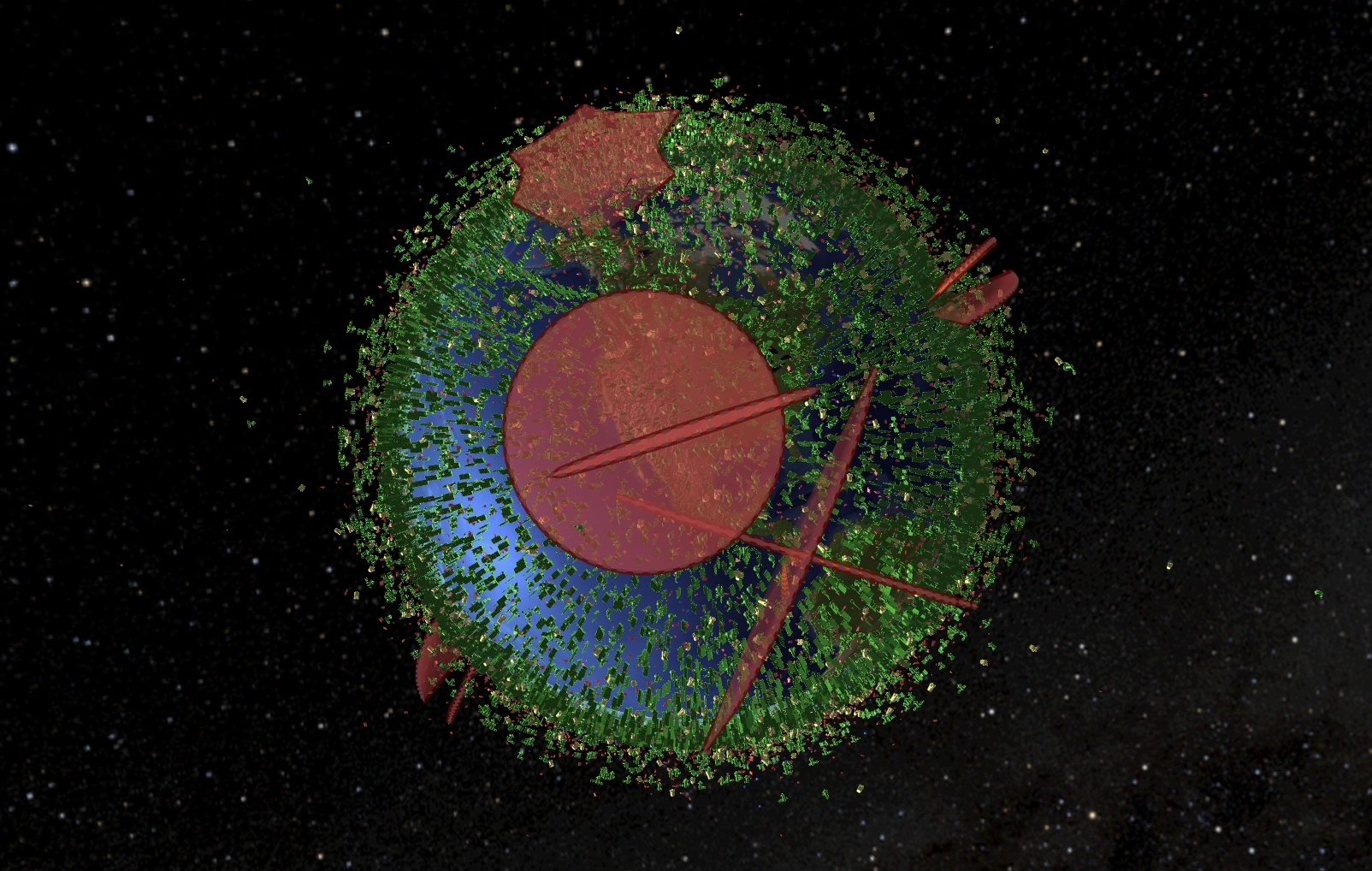
LeoLabs specializes in operating a sophisticated global radar network designed to detect, track, and monitor objects in space, including foreign launches, active satellites, and orbital debris. This capability is a high priority for military space leaders, particularly given the increasing congestion and complexity of the orbital environment. The company’s radar systems are strategically located around the world, with sites in New Zealand, Australia, Alaska, Texas, and Hawaii, providing a wide observational reach. LeoLabs employs various radar types, including its fixed-site Seeker and Ranger radars, and its mobile Scout radar, which is engineered for rapid deployment and repositioning as operational needs dictate.
Established in 2016, LeoLabs has cultivated a strong relationship with the U.S. government, securing several contracts with the Space Force and other Department of Defense (DOD) agencies. These agreements focus on integrating observation data and demonstrating the efficacy of its radar capabilities. In August, for example, the Space Force awarded LeoLabs a $20 million prototype contract to deliver a modified version of its Scout radar specifically tailored to support defense missions. Looking ahead, by September 2025, the Office of Space Commerce and the Space Force’s Joint Commercial Operations cell are slated to gain licensed access to LeoLabs’ extensive object-tracking catalog, which encompasses nearly 29,000 government and commercial space objects, alongside real-time radar observations and crucial maneuver detection data. This access is vital for maintaining a comprehensive understanding of activities in orbit.
LeoLabs’ strategic importance is further underscored by its selection as one of only six companies to support the Space Force’s nascent Commercial Augmentation Space Reserve (CASR). This program aims to integrate commercial space domain awareness capabilities into national security operations, providing essential support during peacetime and offering crucial surge capacity during potential conflicts, thereby enhancing the overall resilience of U.S. space operations.
Jordan Sebold, Senior Managing Director at OSC, highlighted the broader economic and defense implications. “High-precision orbital tracking is integral to the U.S. economy and the defense industrial base, and its importance is only going to grow on account of the rapid commercialization of space,” Sebold stated. He reiterated that OSC’s investment in LeoLabs is designed to “help ensure we maintain persistent custody of the objects that matter most” in an increasingly dynamic and contested space environment.
This announcement follows closely on the heels of another significant OSC commitment: a $150 million loan to Stoke Space, an emerging rocket builder, intended to support the expansion of its launch infrastructure at Cape Canaveral Space Force Station in Florida. Stoke Space currently operates one launch pad at the facility, and the OSC’s October 26 announcement indicated that the loan would help finance a second. These investments reflect the OSC’s broader strategy.
The Pentagon established the Office of Strategic Capital in 2022 with the explicit mission to bridge the gap between firms developing critical defense technologies and the private capital needed to scale these innovations. Beyond the recent space-related loans, the OSC has announced other significant agreements in October, including a $1.5 billion loan to Wolfspeed, Inc., for the production of advanced semiconductor components and materials, and a conditional commitment with Antheia, Inc., to scale its biomanufacturing efforts. These initiatives collectively underscore the OSC’s role in fostering domestic industrial capacity for technologies deemed vital to U.S. national security.
Why This Matters
The Pentagon’s $150 million conditional loan to LeoLabs represents a significant strategic investment with far-reaching implications for national security, the burgeoning space economy, and the future of defense innovation. In an era where space has become a critical domain for both economic prosperity and military advantage, the ability to accurately track and understand activities in orbit is paramount.
**Enhancing Space Domain Awareness (SDA):** Space Domain Awareness is the foundational capability for all space operations. Without a clear picture of what is in orbit, where it is, and what it is doing, nations risk collisions, misinterpretations, and vulnerability to adversaries. As the number of satellites, both government and commercial, continues to grow exponentially, the problem of space debris and potential intentional interference becomes more acute. LeoLabs’ expanding radar network and object-tracking catalog provide essential data for collision avoidance, intelligence gathering, and monitoring the activities of potential adversaries. This capability directly supports the U.S. Space Force’s mission to ensure freedom of action in space for the nation and its allies.
**Bolstering National Security and Resilience:** The investment in “sovereign radars” and U.S. manufacturing capacity means that critical SDA data and infrastructure will be domestically controlled and produced. This reduces reliance on foreign sources, mitigating supply chain risks and ensuring data integrity in a contested geopolitical environment. The ability to deploy mobile radars and leverage a globally distributed network also enhances resilience against potential attacks or disruptions, allowing for continuous monitoring even if some assets are compromised. This is crucial for maintaining strategic stability and deterrence in space.
**Fostering Public-Private Partnerships in Defense Innovation:** The Office of Strategic Capital’s model of leveraging government loans to catalyze private investment marks a new paradigm for defense procurement and innovation. By requiring LeoLabs to match the government’s contribution with private capital, the OSC ensures that taxpayer money is amplified, encouraging market-driven efficiency and innovation. This approach acknowledges that many cutting-edge technologies critical for national security are developed in the commercial sector, and that traditional government contracting methods may not be agile enough to harness these advancements quickly. This partnership model could become a blueprint for accelerating the development of other critical defense technologies.
**Supporting the Commercial Space Economy and Sustainability:** Beyond military applications, enhanced SDA is vital for the long-term health and sustainability of the commercial space industry. Accurate tracking prevents costly and potentially catastrophic collisions between satellites, protecting billions of dollars in commercial assets and ensuring the continued flow of services that modern societies rely upon, such as GPS, weather forecasting, and internet connectivity. By investing in better space traffic management, the U.S. is helping to create a safer and more predictable environment for all space operators, from telecommunications companies to burgeoning space tourism ventures.
In summary, the Pentagon’s loan to LeoLabs is more than just a financial transaction; it is a strategic maneuver to secure vital capabilities in a rapidly evolving domain. It reflects a proactive approach to national security challenges in space, emphasizing technological sovereignty, collaborative innovation, and the critical importance of understanding and safeguarding the orbital environment for generations to come.