
U.S. Military Chiefs Seek End to Joint Basing Program, Citing Inefficiency and Cultural Differences
KISSIMMEE, Fla.—The leadership of the United States military services has reached a consensus favoring a return to individual service control over their respective installations, according to Air Force Chief of Staff Gen. Kenneth S. Wilsbach. This potential policy shift, signaling a reevaluation of the nearly two-decade-old “joint basing” experiment, aims to enhance warfighter readiness and streamline operations.
While discussions are ongoing, the Pentagon confirmed that it is actively reviewing its Joint Basing policy and related installation-support arrangements. A Department of Defense spokesperson stated, “We remain actively engaged with the Military Services and congressional committees of jurisdiction throughout the process. Our primary focus is to improve warfighter readiness and reduce bureaucracy to ensure our installation management practices are efficient, effective, and aligned to mission requirements. No base closures or force structure changes are anticipated.” The statement underscores that no final decision has been made regarding the future of the joint basing initiative.
General Wilsbach revealed that the Joint Chiefs of Staff agreed approximately a year ago that each service should manage its own bases. Speaking at the Airlift/Tanker Association’s 2026 Symposium on November 6, Wilsbach articulated the shared sentiment: “We had consensus that we were very interested in having control of our own destiny, and what that meant for our bases was that we wanted to basically own and run our own bases and not rely on another service.”
The rationale behind this push for autonomy, according to Wilsbach, stems from the inherent differences in service cultures and priorities. “If you think about the logic behind this, it makes sense,” Wilsbach explained. “In a place where another service has to lead, do they have our interests at the top of their mind? Probably not. Just like we don’t when we have the lead for them.” He emphasized that distinct service cultures lead to varied operational approaches, making it logical for each service to manage its unique base requirements.
Chief Master Sergeant of the Air Force David R. Wolfe, also present at the symposium, informed Air & Space Forces Magazine that if an agreement to dismantle joint basing is reached, the initial phases could focus on installations where the Navy and Air Force share management responsibilities. He cited examples such as Joint Base Andrews-Naval Air Facility Washington in Maryland, Joint Base Charleston (referred to in the article as Joint Base Lindsey Graham) in South Carolina, and Joint Base Pearl Harbor-Hickam in Hawaii.
The joint base program was established following recommendations from the 2005 Base Realignment and Closure (BRAC) Commission. Its primary objective was to conserve resources by consolidating and sharing various support functions across different military branches. These shared services included medical facilities, childcare, grounds maintenance, public affairs, safety protocols, housing management, dining services, and finance departments. The initiative aimed to reduce redundancy and achieve significant cost savings.
As a result of the 2005 BRAC recommendations, 26 individual installations, including 11 Air Force bases, were merged into 12 consolidated joint installations. These included:
- Joint Base Lewis-McChord, Wash. (combining McChord Air Force Base and Fort Lewis)
- Joint Base McGuire-Dix-Lakehurst, N.J. (combining Naval Air Engineering Station Lakehurst, Fort Dix, and McGuire Air Force Base)
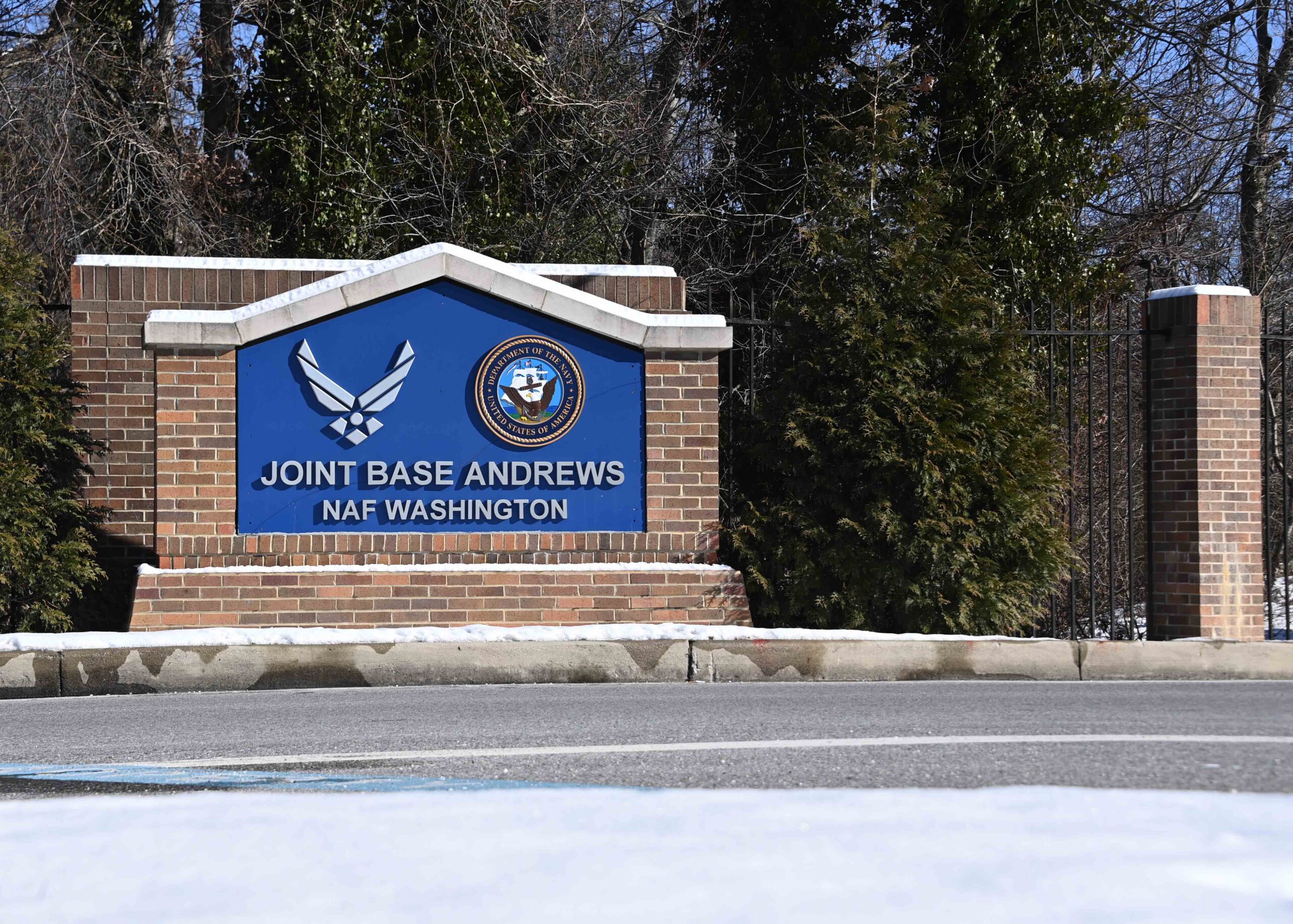
- Joint Base Andrews-Naval Air Facility Washington, Md. (combining Naval Air Facility Washington and Andrews Air Force Base)
- Joint Base Anacostia-Bolling, D.C. (combining Bolling Air Force Base and Naval Station Anacostia)
- Joint Base Myer-Henderson Hall, Va. (combining Henderson Hall and Fort Myer)
- Joint Base Elmendorf-Richardson, Alaska (combining Fort Richardson and Elmendorf Air Force Base)
- Joint Base Pearl Harbor-Hickam, Hawaii (combining Hickam Air Force Base and Naval Station Pearl Harbor)
- Joint Base San Antonio, Texas (combining Fort Sam Houston, Randolph Air Force Base, and Lackland Air Force Base)
- Joint Base Charleston, S.C. (referred to in the article as Joint Base Lindsey Graham, combining Naval Weapons Station Charleston and Charleston Air Force Base)
- Joint Base Langley-Eustis, Va. (combining Fort Eustis and Langley Air Force Base)
- Joint Expeditionary Base Little Creek-Fort Story, Va. (combining Fort Story and Naval Expeditionary Base Little Creek)
- Joint Region Marianas, Guam (combining Andersen Air Force Base and Naval Base Guam)
From its inception, the joint basing concept faced considerable debate and controversy. As early as 2008, then-Air Force Secretary Michael W. Wynne highlighted that the Air Force possessed “a very different concept of operations… in managing its bases.” His sentiment was echoed by Chief of Staff Gen. T. Michael Moseley, who emphasized that Air Force bases serve as direct “fighting positions” from which forces are launched, implying a unique operational imperative. These differing perspectives led to significant points of contention between Secretary Wynne and then-Defense Secretary Robert Gates.
Crucially, the joint basing program ultimately failed to deliver on its primary promise of cost efficiency. Despite projections of annual savings exceeding $25 billion by 2011, the initiative did not achieve these financial goals. According to findings from the Government Accountability Office (GAO), the program incurred higher-than-anticipated construction costs, was impacted by inflation, and operated under incorrect initial assumptions. Rather than yielding savings, the GAO concluded that the changes resulted in a net cost increase, even when amortized over a 20-year period.
General Wilsbach expressed optimism for a swift resolution, stating his hope to see a return to individual service control over bases “late this year, or perhaps early next year.” The Pentagon’s ongoing review will ultimately determine the future direction of this significant aspect of military installation management.
Why This Matters
The potential reversal of the U.S. military’s joint basing policy carries significant implications across various facets of national defense, military operations, and public expenditure. This shift is not merely an administrative adjustment but a fundamental reconsideration of how military forces operate and are supported at home and abroad.
Military Effectiveness and Readiness:At its core, this debate centers on warfighter readiness. If service chiefs believe that individual control over bases will lead to more efficient, tailored support and operations, it suggests the current joint model is hindering effectiveness. Optimal base management directly impacts the training, maintenance, and deployment capabilities of military units. Streamlining these processes according to specific service needs could enhance responsiveness and agility, crucial elements in an evolving global security landscape.
Financial Stewardship and Taxpayer Impact:The original joint basing program was touted as a cost-saving measure but ultimately proved more expensive. Undoing it, while potentially incurring initial transition costs, could lead to long-term efficiencies and better allocation of resources. For taxpayers, this represents an opportunity for more accountable and effective use of defense budgets, moving away from a system that demonstrably failed to meet its financial objectives. The potential for genuine savings, as opposed to projected ones, directly impacts how defense funding is utilized.
Service Culture and Personnel Morale:Each military branch possesses a distinct culture, ethos, and set of operational requirements. Base management under a ‘joint’ umbrella can sometimes lead to friction or a dilution of service-specific priorities, affecting everything from infrastructure development to personnel services like housing, healthcare, and recreational facilities. A return to individual service control could allow bases to better cater to the unique needs and traditions of their primary tenant force, potentially boosting morale and retention among service members and their families.
Bureaucracy and Agility:The Department of Defense explicitly mentions a focus on reducing bureaucracy. The complexity of managing shared resources across different service cultures often creates administrative hurdles and slows decision-making. Devolving control could simplify command structures, accelerate response times for base-level issues, and enable more agile adaptation to new threats or operational demands. This streamlining could free up resources and personnel previously dedicated to resolving inter-service coordination challenges.
Strategic Planning and Adaptability:The way military bases are managed is integral to national security strategy. As geopolitical dynamics shift, the role and function of military installations must adapt. Allowing each service to manage its own “fighting positions” with a clearer focus on its unique mission sets could enable more precise and strategic investments in infrastructure and technology. This flexibility is vital for maintaining a competitive edge and responding effectively to future challenges, from conventional warfare to cyber threats and humanitarian aid missions.