
UK Minister Calls for Integrated Joint Expeditionary Force Defence Supply Chains for Naval Interchangeability
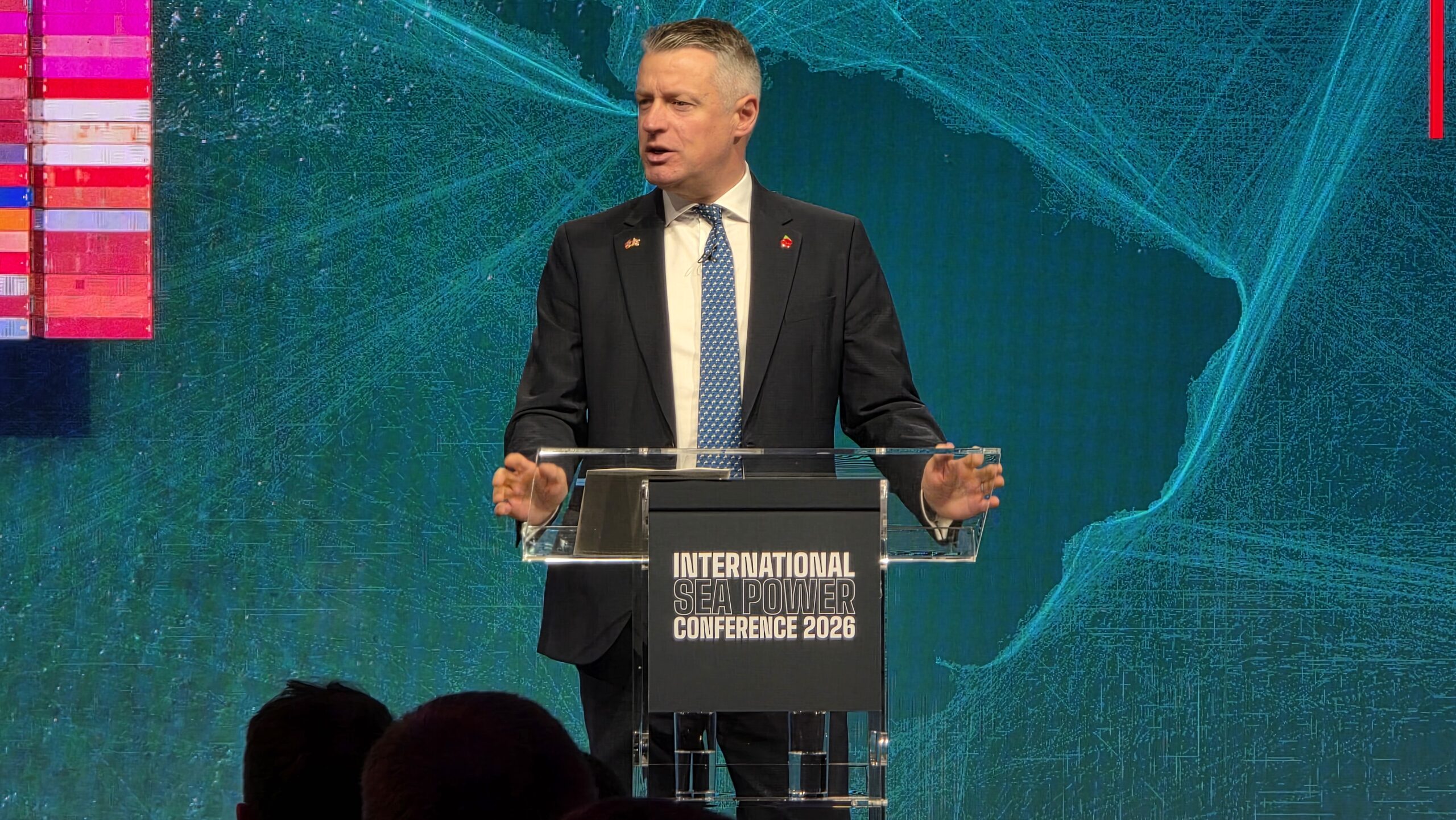
OSLO, Norway– Luke Pollard, the United Kingdom’s Minister for Defence Readiness and Industry, has issued a comprehensive call for Joint Expeditionary Force (JEF) nations to fully integrate their defence supply chains, aiming for a future where their navies are not merely interoperable but entirely interchangeable. The remarks were made this morning at the International Sea Power Conference in Oslo, delivered from the deck of the Royal Navy’s aircraft carrier, HMS Prince of Wales.
Pollard underscored the strategic imperative of this deeper collaboration, stating, “If we’re going to fight together, we should be designing and delivering side by side too. Shared challenges need shared solutions.” This statement highlighted a vision where the collective defence capabilities of JEF members are seamlessly interwoven, allowing for unprecedented operational flexibility and resilience.
The Minister specifically advocated for the JEF to become the driving force behind this industrial and logistical integration across Northern Europe. He articulated an ambitious goal: “Our aspirations should be JEF-wide supply chains that allow a British frigate to be repaired in Estonia, a Dutch warship to restock here in Norway, not just interoperable but interchangeable.” This level of integration would mean that naval assets could be serviced, maintained, and resupplied across national borders within the JEF framework without significant logistical or administrative hurdles, dramatically enhancing their operational reach and sustainability.
During his address, Pollard directly challenged delegates and national representatives to identify and dismantle the regulatory and bureaucratic impediments hindering faster integration. He posed the question, “What are the stupid rules that are getting in the way?”, suggesting that such rules, while perhaps acceptable during periods of peace, are now detrimental in what he termed “a period of contest.” This implicit reference to the current geopolitical landscape, marked by increased instability and aggression in Eastern Europe and the High North, underscored the urgency of streamlining defence cooperation.
The Joint Expeditionary Force (JEF) is a high-readiness, multinational force comprising ten Northern European nations: the United Kingdom, Denmark, Estonia, Finland, Iceland, Latvia, Lithuania, the Netherlands, Norway, and Sweden. Established in 2014, its primary purpose is to respond rapidly to crises in the Euro-Atlantic area, with a particular focus on the High North, the Baltic Sea region, and the North Atlantic. The JEF is designed to operate across land, sea, and air domains, often complementing broader NATO efforts and acting as a flexible instrument for collective security.
Pollard cited the close defence partnership between the UK and Norway as a leading example of successful integration. He noted that Norway’s decision to procure five Type 26 frigates, which will operate alongside the Royal Navy’s eight, is creating a highly capable and unified anti-submarine warfare (ASW) fleet. The Type 26 Global Combat Ship is a technologically advanced platform designed primarily for ASW, and a combined fleet significantly amplifies the ability of both nations to detect and neutralize underwater threats in strategically vital maritime zones. Pollard emphasized Norway’s role not just as an important ally but as an “indispensable strategic partner” in this context.
Further solidifying this partnership is the Lunna House agreement, announced last December. This comprehensive accord outlines deeper collaboration across several critical defence areas. It includes continued joint work on the Type 26 fleet, Norway’s innovative programme for motherships designed to support uncrewed mine warfare systems, and shared efforts concerning Sting Ray torpedoes and Naval Strike Missiles. These initiatives represent tangible steps towards creating shared industrial bases and aligning advanced defence capabilities between the two nations.
Beyond procurement and industrial links, JEF nations are already engaged in significant operational integration. Operation Nordic Warden, for instance, leverages artificial intelligence (AI) to track vessels belonging to Russia’s “shadow fleet.” These are often older, unregulated ships suspected of circumventing international sanctions, engaging in illicit activities, or gathering intelligence, particularly in proximity to vital undersea communication cables. The protection of these critical underwater infrastructure assets, which carry the vast majority of global internet traffic and data, is an escalating security concern for all JEF members.
Earlier this year, JEF navy chiefs signed a statement of intent outlining their commitment to an enhanced JEF navy. This agreement aims to further formalize and accelerate the operational and logistical integration of their naval forces, moving towards a more cohesive maritime command and control structure. Formal ratification of this statement is anticipated later this month in Norway, signaling a collective commitment to deepening naval cooperation and readiness.
Why This Matters
The call by the UK’s Defence Minister for integrated defence supply chains and truly interchangeable navies within the Joint Expeditionary Force represents a significant pivot in defence policy and has profound implications for regional security, economic efficiency, and operational effectiveness. This initiative is particularly pertinent given the current geopolitical climate, characterized by heightened tensions and increased military activity in Northern Europe.
Firstly, **Enhanced Deterrence and Response Capabilities**: A fully integrated defence supply chain dramatically bolsters the JEF’s ability to deter potential adversaries and respond effectively to crises. In a high-intensity scenario, the capacity to repair, refuel, and rearm warships across multiple allied nations without logistical bottlenecks is crucial for sustaining operations and maintaining combat effectiveness. This sends a powerful signal of collective resolve and preparedness, significantly increasing the perceived risk for any potential aggressor. The ability to seamlessly utilize each other’s maintenance facilities and logistical networks reduces reliance on single national points of failure, making the collective force more resilient and adaptable.
Secondly, **Economic Efficiency and Resilience of the Defence Industrial Base**: Pooling resources and streamlining supply chains can lead to substantial cost savings for participating nations through economies of scale in procurement, maintenance, and logistics. By sharing industrial capacity and expertise, JEF members can avoid redundant investments and foster specialized capabilities across the alliance. This collaborative approach enhances the resilience of the overall defence industrial base, making it less vulnerable to disruptions from geopolitical events, cyberattacks, or targeted aggression. It optimizes defence spending, ensuring that resources are allocated more efficiently to build and sustain a robust collective capability.
Thirdly, **Strategic Depth in a Critical Region**: The JEF operates in a strategically vital area encompassing the High North, the Baltic Sea, and the North Atlantic – regions of increasing geopolitical competition, particularly with Russia. Stronger naval integration ensures greater control over these crucial sea lines of communication, which are essential for safeguarding energy routes, global trade flows, and critical undersea infrastructure. By strengthening their collective maritime power, JEF nations reinforce the security architecture of Northern Europe and contribute significantly to wider Euro-Atlantic security, complementing and reinforcing NATO’s overall posture.
Fourthly, **Elevating Beyond Interoperability to Interchangeability**: The distinction between “interoperable” and “interchangeable” is critical. While interoperability means different national systems can work together (e.g., communicate or share data), interchangeability implies a far deeper level of integration where components, support services, and even entire units can be seamlessly swapped or utilized across different nations’ forces. This higher level of integration reduces complexity, speeds up operational tempo, and effectively multiplies the collective strength of the JEF navies, making them a far more formidable, agile, and adaptable force capable of sustained operations in contested environments.
Finally, **A Potential Model for Broader Alliance Integration**: The success of JEF nations in achieving this ambitious level of defence integration could serve as a valuable blueprint for other multinational alliances, including NATO itself. By effectively overcoming national regulatory hurdles, fostering deeper industrial collaboration, and demonstrating the tangible benefits of shared logistical and maintenance capabilities, the JEF could pave the way for enhancing collective defence capabilities on a larger scale. This precedent could ultimately strengthen the overall security and resilience of the entire Euro-Atlantic area, fostering a more cohesive and responsive Western defence posture.