
German Defence Official Highlights Russia’s Role in Awakening European Publics to Security Risks
Dr. Martin Schäfer, Defence Policy Director at Germany’s Ministry of Defence, recently articulated a provocative perspective on Russia’s escalated hybrid warfare campaign, suggesting that it paradoxically serves to educate and awaken European publics to genuine security threats. Speaking at the Atlantic Future Forum in Oslo, Schäfer contended that by intensifying its non-conventional attacks, the Kremlin is, in a sense, performing a critical function for Europe by demonstrating the tangible risks at hand.
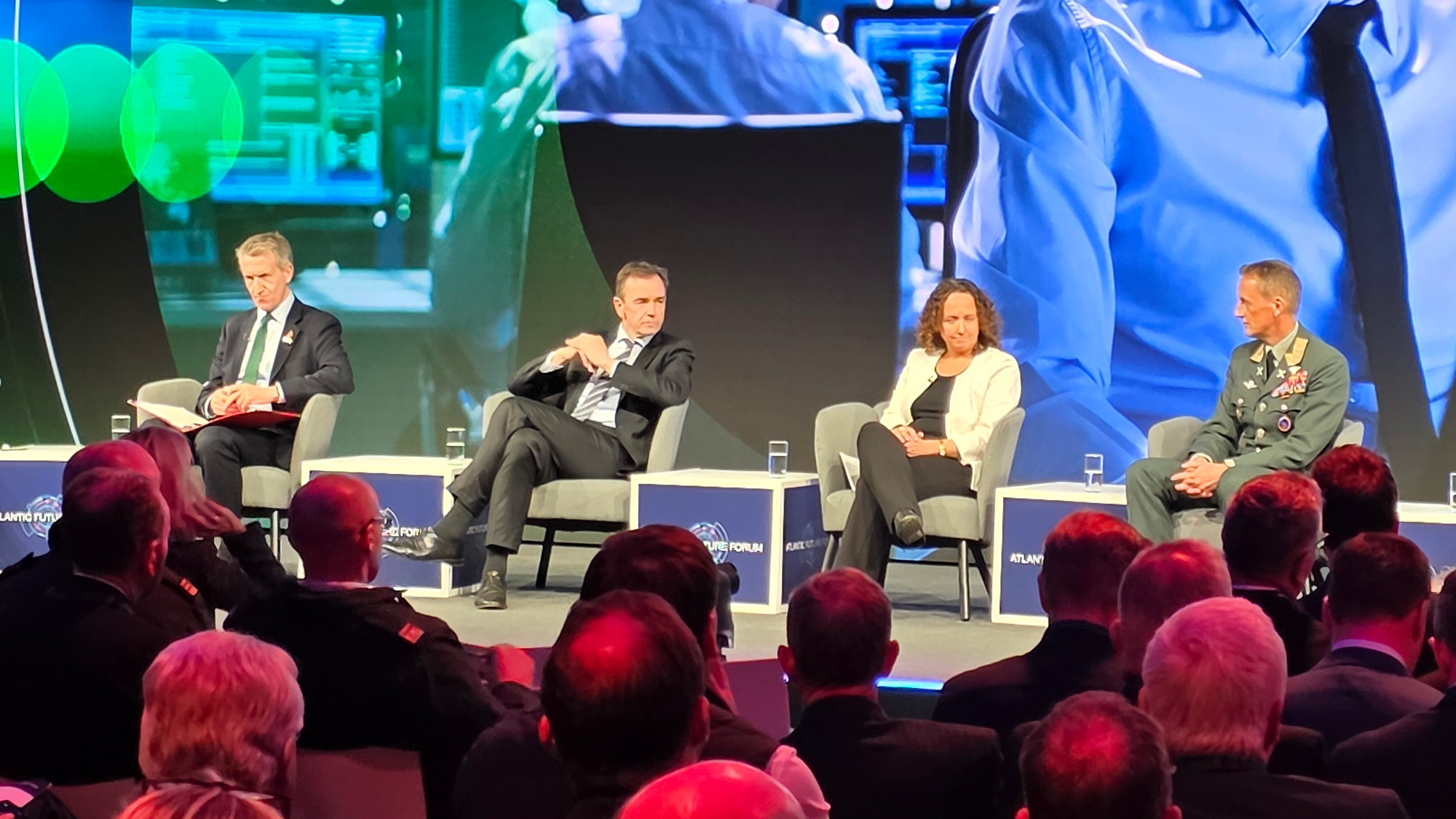
During a discussion held aboard HMS Prince of Wales, Schäfer was asked about Germany’s insights gained from the Nordic approach to total defence—a comprehensive strategy integrating civilian and military resources to ensure national resilience. He underscored the crucial importance of both the tone and timing of government communications in this context. He remarked, “In a sense, Vladimir Putin is doing our job by stepping up the hybrid warfare.”
Schäfer elaborated that Russia’s daily actions are exposing public opinion in allied nations to the undeniable reality of contemporary security challenges. He drew upon the insights of the 19th-century Danish philosopher Søren Kierkegaard to differentiate between two forms of apprehension: a constructive fear born from a concrete, understandable danger that individuals can rationally address, and an irrational anxiety stemming from an undefined, pervasive threat that is difficult to pinpoint or combat. According to Schäfer, governments must carefully calibrate their messaging to instill the appropriate level of constructive fear.
He stressed the need for leaders to communicate effectively, stating, “for maybe for lack of a better word to tell our people that there are real dangers out there, but we have all the resources in the world. We have all the allies in the world that we need to be able to counter this threat.” This delicate balance, he suggested, involves acknowledging threats without inducing panic, while simultaneously reassuring publics of their collective capacity to respond.
Earlier in his remarks, Schäfer reflected on Germany’s particular situation, acknowledging that his nation might be slower than others to fully grasp and adapt to the evolving security landscape. He attributed this to Germany having been a primary beneficiary of decades of European peace and integration following World War II, a period that fostered a deep-seated aversion to military engagement and a focus on economic cooperation.
In a profound observation, Schäfer stated, “I think, in a dialectic sense, we are the victims of our own success.” He invoked the wisdom of Niccolò Machiavelli, the Renaissance philosopher who expressed pity for societies that had experienced prolonged periods of peace, arguing that such tranquility can erode vigilance and preparedness. Schäfer noted the inherent difficulty in convincing a populace accustomed to peace that they must cultivate resilience and readiness to defend the achievements they have built.
The context for Schäfer’s comments is the documented intensification of Russia’s campaign of sabotage, drone incursions, and cyber attacks across Europe. These hybrid tactics target critical infrastructure, spread disinformation, and seek to destabilize societies without overt conventional military engagement. Mark Rutte, NATO’s Secretary General, also addressed the forum, asserting a clear retaliatory stance: “For every Russian hybrid attack against our nations, we are sending more support to Ukraine.” Similarly, Dan Jarvis, the UK Security Minister, participating in the same panel, articulated Britain’s goal for its citizens to be “alert but not alarmed,” echoing Schäfer’s emphasis on balanced communication.
These discussions underscore a growing consensus among European defence and security officials regarding the multifaceted nature of contemporary threats and the urgent need for a societal-wide approach to defence, extending beyond traditional military readiness to encompass cyber resilience, critical infrastructure protection, and public awareness campaigns.
Why This Matters
Dr. Martin Schäfer’s observations at the Atlantic Future Forum are significant for several reasons, illuminating the evolving strategic thinking within European defence establishments and the complex psychological dimensions of national security. His argument that Russia’s hybrid warfare inadvertently serves to “do Europe’s job” by exposing real risks represents a pivotal shift in how threats are perceived and communicated to the public.
Firstly, this perspective highlights a fundamental challenge for democratic governments: how to prepare their populations for conflict and crisis without generating undue panic or fear. Schäfer’s reference to Kierkegaard’s distinction between “constructive fear” and “irrational anxiety” is crucial here. Governments aim to cultivate a rational understanding of threats, enabling citizens to support necessary defence measures and contribute to societal resilience, rather than succumbing to debilitating anxiety. Russia’s actions, by making threats concrete (e.g., cyberattacks on infrastructure, GPS jamming), force this understanding upon publics that might otherwise remain disengaged.
Secondly, Schäfer’s remarks shed light on Germany’s specific historical and geopolitical context. As a nation that benefited immensely from post-war peace and integration, Germany has historically been hesitant to re-arm or adopt a more assertive defence posture. Its economic ties with Russia, particularly in energy, also fostered a period of rapprochement. His “victims of our own success” assertion, coupled with Machiavelli’s warning about the complacency bred by prolonged peace, underscores the deep cultural and political shift required for Germany to adapt to a more confrontational geopolitical reality. This has broad implications for NATO’s collective defence, given Germany’s economic power and central geographic location within Europe.
Thirdly, the discourse at the Atlantic Future Forum reflects a broader European awakening to the nature of modern warfare. Russia’s aggression in Ukraine, preceded and accompanied by extensive hybrid campaigns, has shattered the illusion of perpetual peace on the continent. The “Nordic approach to total defence,” which integrates civilian preparedness, infrastructure protection, and societal resilience with military capabilities, is gaining traction as a model for other European nations. This holistic approach recognizes that modern conflicts extend beyond battlefields to target societies’ entire fabric, including their digital networks, energy supplies, and public discourse.
Finally, the statements from NATO Secretary General Mark Rutte and UK Security Minister Dan Jarvis reinforce the collective determination of allied nations to counter Russia’s destabilizing actions. Rutte’s pledge to increase support for Ukraine in response to every Russian hybrid attack signals a unified and robust strategy of deterrence and punishment. Jarvis’s call to be “alert but not alarmed” encapsulates the delicate balance governments must strike: fostering vigilance without paralyzing fear. Ultimately, Schäfer’s commentary is a stark reminder that in an era of hybrid threats, public awareness and psychological resilience are as vital to national security as military hardware and strategic alliances, shaping the future of European defence and international stability.